 Save
If you are choosing one position for digestion comfort, start with your left side. The clearest research advantage is for nighttime reflux: studies in people with gastroesophageal reflux found less acid exposure or faster acid clearing when lying left-side down compared with right-side or flat-back positions. That does not mean left-side sleeping fixes every stomach complaint, and comfort still matters. The most useful bedtime plan combines left-side positioning with an earlier, lighter evening meal and upper-body elevation when reflux symptoms wake you up.
What Sleeping Position Can and Cannot Do
Sleep posture mainly changes the mechanics of what happens after you lie down. When you are upright, gravity helps keep stomach contents moving downward. When you lie flat soon after eating, the stomach and esophagus sit in a different relationship, so reflux symptoms may be easier to notice. The National Institute of Diabetes and Digestive and Kidney Diseases says that people with GERD symptoms at night or while lying down may feel better when meals are eaten at least 3 hours before lying down or going to bed, which makes timing part of the answer rather than a separate detail NIDDK.
Why the Left Side Gets the Most Attention
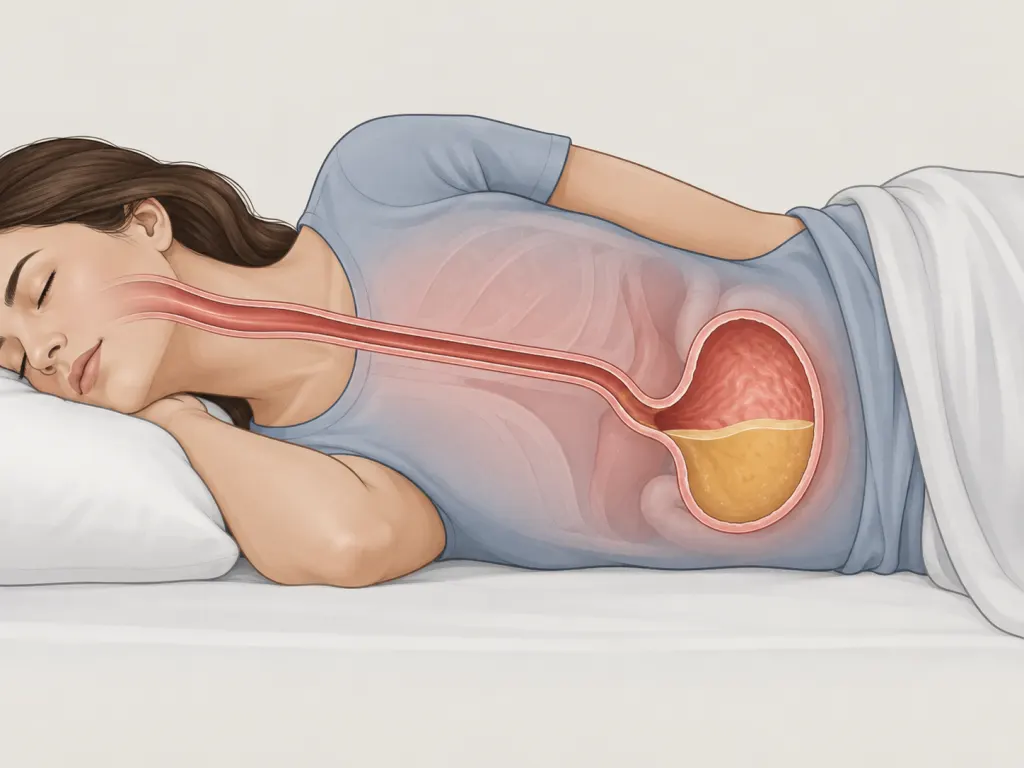
The left side is not a folk rule; it has a plausible body-mechanics explanation and some clinical evidence behind it. In a 2023 systematic review and meta-analysis focused on GERD, left lateral sleeping was associated with lower acid exposure time and shorter acid clearance time than right-side or back sleeping in the included studies PMC. A smaller PubMed-indexed study of spontaneous sleep positions also found that right-side lying was linked with greater acid exposure and slower acid clearing than left-side lying in patients with nocturnal reflux PubMed.
The key limitation is the population studied. These findings apply best to people with nighttime reflux or GERD-like symptoms, not necessarily to someone whose main concern is occasional fullness, gas, constipation, or vague abdominal discomfort. For a reader who simply wants to feel less heavy after dinner, left-side sleeping is a reasonable low-effort trial, but the more dependable habit is still to avoid lying down too soon after a large meal.
Dinner Timing May Matter More Than the Pillow
For many households, the biggest change is not which side of the body touches the mattress. It is the time between dinner and sleep. The American College of Gastroenterology guideline suggests avoiding meals within 2 to 3 hours of bedtime and elevating the head of the bed for nighttime GERD symptoms ACG guideline. NIDDK gives similar advice for nighttime or lying-down symptoms, noting that eating at least 3 hours before bed may improve symptoms NIDDK.
A simple evening routine can be easier to follow than a strict list of forbidden foods:
- Finish the main meal 2 to 3 hours before bed when possible.
- Make late meals smaller and less fatty if dinner has to be close to bedtime.
- Notice personal triggers rather than banning every commonly blamed food.
- Stay upright after eating, especially after a heavy or rich meal.
- Choose left-side sleeping first if reflux tends to appear after lying down.

When Raising the Upper Body Helps
If left-side sleeping helps a little but symptoms still wake you, upper-body elevation is another evidence-supported option. The ACG guideline notes that several trials have shown improvement in nocturnal reflux symptoms or nighttime acid exposure with head-of-bed elevation or wedge sleeping ACG guideline. An evidence-based consensus on reflux-like symptoms also recommends head-of-bed elevation for night-time reflux-like symptoms and supports left lateral positioning for the same problem PMC consensus.
The practical difference is important: elevating only the head with a pile of pillows can bend the neck or torso without lifting the stomach-to-chest angle very much. A bed wedge or raising the head end of the bed supports the upper body more evenly. MedlinePlus describes sleeping with the head raised about 6 inches for heartburn and notes that extra pillows do not work well for this purpose because a person may slide off them overnight MedlinePlus.
Back, Right-Side, and Stomach Sleeping
Back sleeping is comfortable for many people and may be preferred for spine or shoulder reasons, but lying flat on the back can be less helpful for people with reflux after meals. In the PubMed-indexed sleep-position study, reflux episodes were more frequent while supine than in other recorded positions, while right-side lying was associated with greater acid exposure than left-side lying PubMed. If back sleeping is the only comfortable option, raising the upper body may be more realistic than forcing a side position all night.
Right-side sleeping is not automatically harmful, and no article can decide your best posture without knowing your pain, breathing comfort, shoulder mobility, and medical history. Still, for a person whose main nighttime issue is heartburn or sour regurgitation, the right side is usually not the first position to test. Stomach sleeping is less studied for reflux guidance and can bother the neck or lower back for some people, so it is usually chosen for comfort rather than digestion evidence.

A Practical Way to Try Left-Side Sleeping
Try changing one variable at a time for a week. If you switch position, dinner timing, pillow height, and food choices all on the same night, it becomes hard to tell what helped. Start with the least disruptive change: finish dinner earlier for several nights, then add left-side sleeping, then consider upper-body elevation if needed. Keep notes on what time you ate, what you ate, when symptoms appeared, and whether they woke you.
Internal consistency matters more than perfection. A person who falls asleep on the left side but rolls over naturally may still learn something from the pattern. A person with shoulder pain may do better with a supportive pillow behind the back or between the knees, but persistent pain is a good reason to choose another posture. For related reading on the site, see Cinnamon, Sleep, and Bloating: What the Evidence Supports and Why Feet Cramp at Night.
When Symptoms Need More Than Position Changes
Frequent heartburn, trouble swallowing, unexplained weight loss, vomiting blood, black or maroon stools, or symptoms that continue despite sensible routine changes should be discussed with a qualified health professional. MedlinePlus also warns that chest discomfort can come from causes other than heartburn and lists urgent warning signs such as crushing chest pressure, pain spreading to the jaw or arm, sweating, dizziness, racing heartbeat, or shortness of breath MedlinePlus.
Wrap-Up
The best sleeping position for digestion comfort is left-side sleeping when the problem is nighttime heartburn or reflux. The evidence is strongest for people with GERD or reflux-like symptoms, where left-side lying may reduce nighttime acid exposure compared with right-side or flat-back positions. For everyday comfort, position works best alongside earlier dinners, smaller late meals, staying upright after eating, and raising the upper body when reflux persists. Choose comfort and breathing ease first, and seek medical guidance for frequent, severe, unusual, or chest-related symptoms.
Frequently Asked Questions
- → Is the left side always the best side to sleep on for digestion?
No. Left-side sleeping has the best evidence for nighttime reflux, but it is not a universal rule for every digestive feeling. If the left side causes shoulder, neck, back, or breathing discomfort, choose a position that lets you rest and discuss persistent symptoms with a qualified health professional.
- → How long should I wait after eating before lying down?
For people with nighttime reflux or heartburn, authoritative sources commonly suggest leaving about 2 to 3 hours between eating and bedtime. A larger or fattier meal may need more time than a light meal, so the most practical habit is to make late dinners smaller and stay upright afterward.
- → Does sleeping on the right side make digestion worse?
Right-side sleeping is not automatically bad. However, studies in people with nocturnal reflux have found more acid exposure or slower acid clearing in right-side positions compared with left-side positions. If reflux is your issue, the right side may be less useful as the first position to try.
- → Is a wedge pillow better than extra pillows for reflux?
For reflux symptoms at night, raising the upper body is usually more useful than stacking pillows under the head alone. A wedge or raised head end of the bed keeps the upper torso at an angle, while extra pillows may bend the neck and allow sliding during sleep.
- → When should heartburn at night be checked by a professional?
Seek medical guidance if heartburn is frequent, worsening, linked with trouble swallowing, unexplained weight loss, vomiting blood, black or maroon stools, or ongoing cough or wheeze. Get urgent help for chest pressure, pain spreading to the jaw or arm, sweating, dizziness, racing heartbeat, or shortness of breath.
References
This content was developed and refined using reliable sources.
- https://pmc.ncbi.nlm.nih.gov/articles/PMC10643078
- https://pubmed.ncbi.nlm.nih.gov/10445529
- https://www.niddk.nih.gov/health-information/digestive-diseases/acid-reflux-ger-gerd-adults/eating-diet-nutrition
- https://pmc.ncbi.nlm.nih.gov/articles/PMC8754510
- https://pmc.ncbi.nlm.nih.gov/articles/PMC10695341
- https://www.medlineplus.gov/ency/article/003114.htm
- https://www.medlineplus.gov/ency/article/003079.htm