 Save
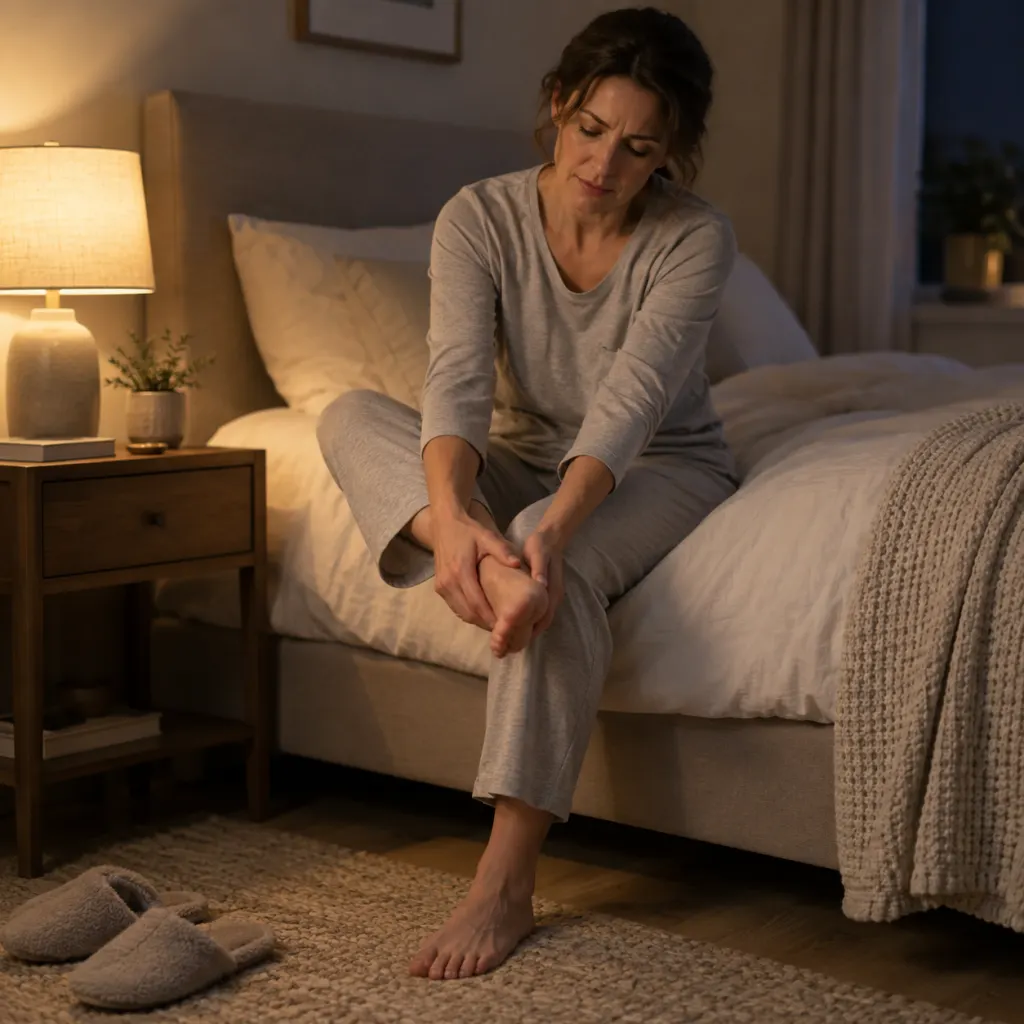
Feet can cramp at night because small muscles in the foot or nearby calf suddenly contract while you are resting. The reason is often ordinary, such as muscle fatigue, holding the foot pointed under tight bedding, long standing, long sitting, dehydration, or a change in activity. Sometimes, repeated cramps can be linked with nerve, circulation, kidney, thyroid, or medicine-related factors. Medical sources note that nocturnal leg cramps can involve the feet as well as the calves and thighs, and the cause is often not fully clear Mayo Clinic. The practical goal is to relieve the cramp safely, look for patterns, and know when the symptom deserves medical attention.
What a Night Foot Cramp Feels Like
A foot cramp is different from a mild ache. It usually arrives suddenly, tightens part of the foot, and may pull the toes into an uncomfortable position. The muscle may feel hard, and the pain can last seconds to several minutes. Afterward, the area can feel tender or tired. MedlinePlus describes muscle cramps as sudden, involuntary contractions that can happen in the feet, hands, legs, arms, abdomen, and other muscles MedlinePlus. At night, the sensation can feel more dramatic because it interrupts sleep and gives you little warning.
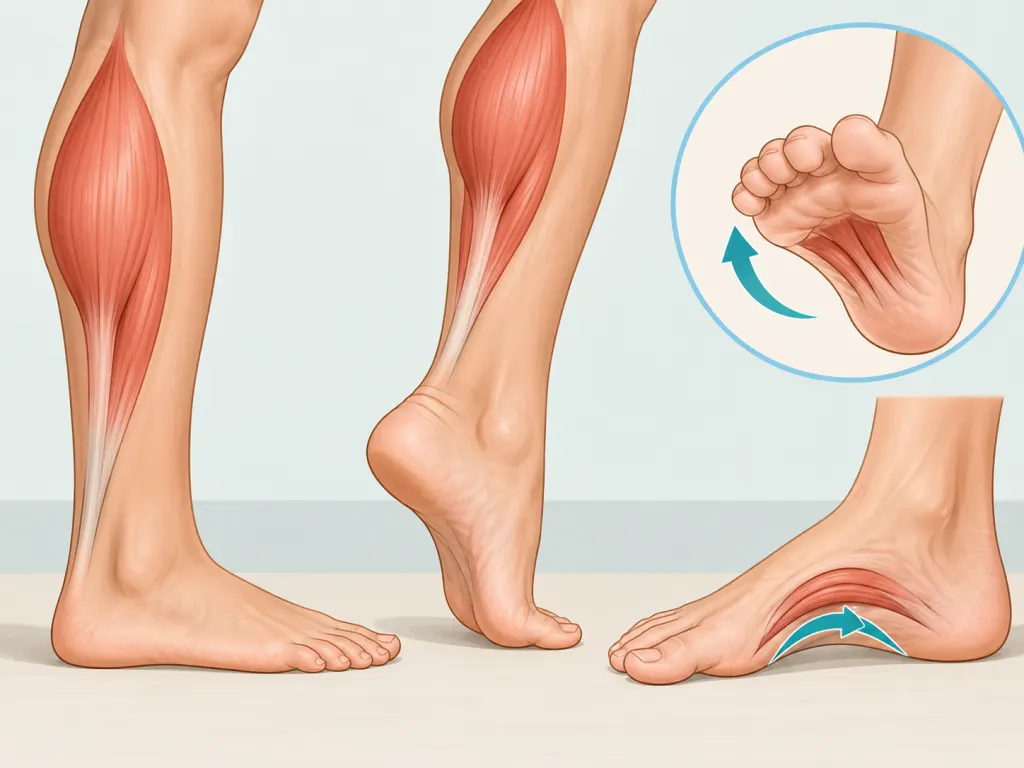
The foot has many small muscles and tendons that help support the arch, flex the toes, and stabilize each step. Those tissues work all day even when you are not exercising. A longer walk, a new pair of shoes, standing on hard floors, climbing stairs, or sitting with the toes pointed downward can leave the foot muscles more reactive at bedtime. A cramp is not a diagnosis by itself. It is a symptom pattern, and the surrounding details matter: where it happens, how often, whether both feet are involved, what you did that day, and whether there are other signs such as numbness, swelling, warmth, color change, or weakness.
Why Cramps Often Happen While You Are Resting
Night cramps can feel puzzling because they happen when you are not actively using the foot. Rest changes the setup: the foot may be held in one position for a long time, bedding may keep the toes pointed, and muscles that were tired earlier in the day may be slower to relax. Mayo Clinic notes that night leg cramps are often likely related to tired muscles and nerve issues, even when no single cause can be identified Mayo Clinic. That uncertainty is important. If someone has an occasional cramp after an unusually active day, the explanation may be simple. If the cramps keep returning or come with other symptoms, the pattern deserves more attention.
Common Contributors to Nighttime Foot Cramps
Several everyday factors can make nighttime foot cramps more likely. They can overlap, so the answer is not always one cause. Cleveland Clinic lists long sitting, muscle overuse, standing or working on hard surfaces, posture, kidney failure, diabetic nerve damage, mineral deficits, and blood flow issues among possible contributors to nocturnal leg cramps Cleveland Clinic. Useful patterns to review include:
- Activity load: more walking, standing, lifting, or exercise than usual can leave foot and calf muscles tired.
- Position: sitting for hours, crossing legs, tucking feet under the body, or sleeping with toes pointed can keep muscles shortened.
- Fluids and sweating: heavy sweating, hot weather, vomiting, diarrhea, or low fluid intake can affect muscle function.
- Footwear: tight shoes, high heels, worn-out soles, or low support can increase strain through the toes, arches, and calves.
- Medicines: some medicines are associated with cramping in some people. A prescriber or pharmacist can help review timing and options.
- Health conditions: nerve, circulation, kidney, thyroid, and diabetes-related issues can be part of the medical picture for some people.
Minerals are often blamed first, but the story is more careful than that. Calcium, potassium, magnesium, and sodium all help muscles contract and relax, yet routine nighttime cramps are not always caused by a simple shortage. Cochrane reviewed magnesium for skeletal muscle cramps and found that magnesium was unlikely to provide a clinically meaningful benefit for older adults with cramps; evidence in other groups was less certain Cochrane. That does not mean nutrition is irrelevant. It means frequent cramps should not be answered with automatic supplements, especially if someone has kidney disease, takes regular medicines, or has other health concerns.

What to Do During a Foot Cramp
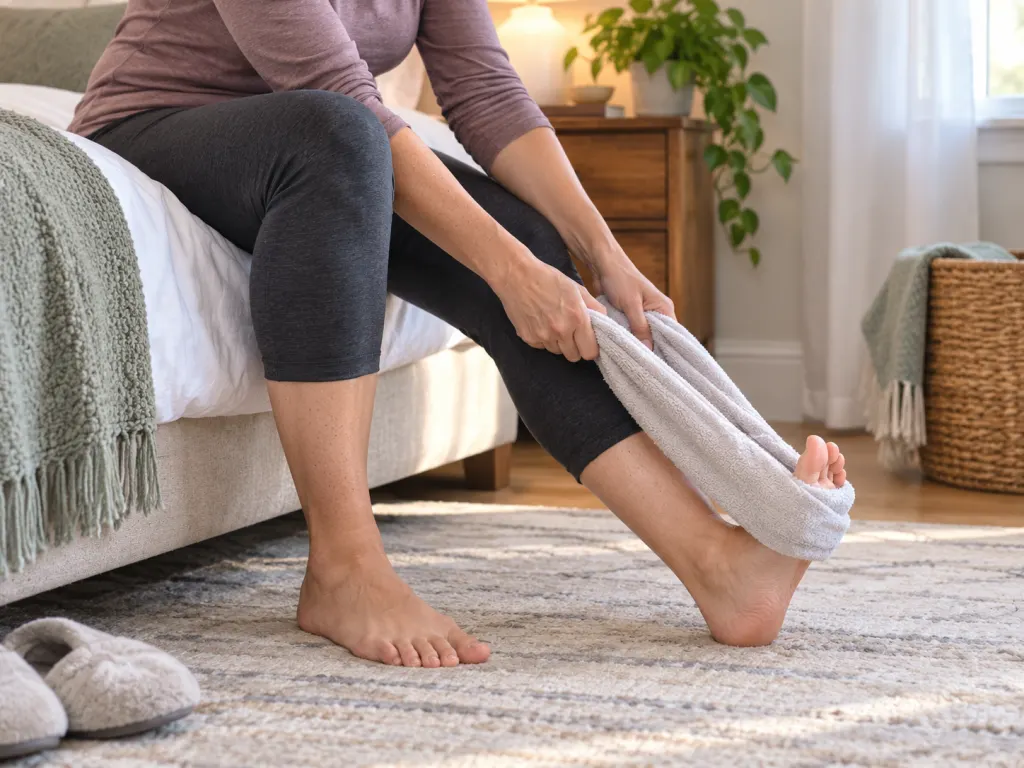
When a cramp wakes you, move slowly and focus on lengthening the tightened area. For a cramp through the arch or toes, try gently pulling the toes upward toward the shin, spreading the toes, or placing the foot flat on the floor. If it feels safe to stand, shifting weight onto the foot for a few moments may help the muscle relax. Gentle massage can also help, especially along the arch, ball of the foot, and calf. Heat may feel soothing while the muscle is tight; a cool pack may feel better later if the area is sore. Mayo Clinic and MedlinePlus both include stretching and massage among common self-care steps for muscle cramps MedlinePlus.
Try not to force a painful stretch. A strong, sudden pull can irritate already tense tissue. It is usually better to breathe slowly, lengthen the foot in small increments, and wait for the spasm to settle. If the cramp keeps returning the same night, loosen bedding around the feet, change leg position, and take a few careful steps if balance is steady. People who are at risk of falling should avoid rushing out of bed in the dark. Keeping a lamp, sturdy slippers, and a clear path beside the bed can make nighttime movement safer.
Habits That May Reduce Recurrence
For recurring night foot cramps, small routine changes are often more useful than dramatic fixes. A short evening stretch for calves, arches, and toes may help some people, especially when tightness follows long sitting or long standing. Hydration is also worth reviewing, particularly after heat exposure or heavy sweating. Footwear matters more than many people expect: shoes that fit poorly can make toe and arch muscles work harder throughout the day. If cramps started after a new exercise routine, increase activity more gradually and add rest days. If they started after a new work setup, look at floor surface, standing time, chair height, and whether feet are held in one position for hours.
A simple cramp log can make the pattern clearer. For two weeks, note the date, time, foot involved, activity that day, footwear, alcohol or caffeine intake, fluid intake, and any other symptoms. Also note whether the cramp happened after a new medicine, a long drive, extra exercise, illness, or a change in sleep position. Bring that pattern to a clinician if the cramps are frequent or disruptive. The point is not to self-diagnose; it is to give a health professional better information than a vague memory of several bad nights.
When Foot Cramps Need Medical Attention
Most occasional foot cramps pass quickly and do not point to a serious problem. Still, certain patterns should be checked. Contact a health professional if cramps are severe, keep coming back, last a long time, do not improve with simple stretching and fluids, or are accompanied by swelling, redness, warmth, weakness, numbness, or changes in skin color. MedlinePlus recommends contacting a provider when cramps are severe, recurrent, long-lasting, or accompanied by swelling, redness, warmth, or muscle weakness MedlinePlus. Mayo Clinic also advises prompt care for severe cramping that continues or cramps after contact with a toxin such as pesticide, industrial chemicals, or heavy metals Mayo Clinic.
It is also worth arranging a medical review if cramps repeatedly interrupt sleep, happen mostly on one side, occur with walking and ease with rest, or appear alongside new balance problems. A clinician may ask about medical history, medicines, exercise, hydration, nerve symptoms, circulation symptoms, and recent illness. Depending on the situation, they may examine the feet and legs or consider lab work. The goal is to identify whether the cramps are part of an everyday muscle pattern or whether another health issue needs attention.
How to Tell Foot Cramps From Restless Legs
Night foot cramps can be confused with restless legs syndrome, but they usually feel different. A cramp is a painful tightening that may visibly pull the toes or arch. Restless legs usually creates an urge to move the legs, often with uncomfortable sensations, and movement may ease it for a while. Mayo Clinic notes that restless legs syndrome is usually not painful in the same way and tends to last longer than a night cramp Mayo Clinic. If the problem feels more like repeated urges, crawling sensations, or sleep disruption without a hard muscle spasm, describe it that way when seeking care.
The Bottom Line
Night foot cramps are common, uncomfortable, and usually brief. The most useful response is practical: stretch gently during the cramp, review the day's triggers, improve foot position and footwear, and watch for repeat patterns. Be cautious with easy explanations. Dehydration, muscle fatigue, position, and footwear can matter, but so can nerve, circulation, thyroid, kidney, diabetes-related, or medicine-related factors. Frequent cramps are not something to panic about, but they are worth discussing with a qualified professional when they affect sleep, keep returning, or come with other body changes.
Wrap-Up
Feet cramp at night when muscles in the foot or lower leg tighten suddenly during sleep or rest. Common contributors include fatigue from standing or activity, long sitting, foot position, hydration changes, footwear strain, some medicines, and certain health conditions. During a cramp, gentle toe and calf stretching, massage, careful walking, and heat may help. For frequent, severe, long-lasting, one-sided, or symptom-linked cramps, a health professional can review the pattern and decide whether further evaluation is needed.
Frequently Asked Questions
- → Are night foot cramps usually serious?
Occasional night foot cramps are usually brief and not dangerous. They often follow muscle fatigue, position, dehydration, or a change in activity. A medical review is sensible when cramps are frequent, severe, long-lasting, mostly one-sided, or linked with swelling, redness, warmth, weakness, numbness, or color change.
- → Why do my toes curl during a foot cramp?
The small muscles and tendons that control the toes can tighten suddenly during a cramp. When those muscles contract, the toes may pull downward, upward, or inward. Gently lengthening the toes, placing the foot flat, and massaging the arch may help the muscle release.
- → Can dehydration cause foot cramps at night?
Dehydration can make muscle cramps more likely in some situations, especially after sweating, heat exposure, vomiting, diarrhea, or low fluid intake. It is not the only possible reason. If cramps keep returning despite ordinary hydration and stretching habits, look for other patterns and consider asking a qualified professional.
- → Should I take magnesium for night foot cramps?
Do not assume magnesium is the answer. A Cochrane review found magnesium was unlikely to provide meaningful benefit for older adults with skeletal muscle cramps, and evidence was uncertain in some other groups. Supplements can be inappropriate for some people, especially with kidney problems or regular medicines, so ask a qualified professional first.
- → What can I do before bed if foot cramps keep waking me?
Try a gentle routine: loosen bedding around the feet, stretch calves and arches, move ankles through a comfortable range, review fluid intake, and wear supportive shoes during the day. If cramps still disrupt sleep, keep a short symptom log and bring it to a health professional.