 Save
Normal blood pressure for most adults is less than 120/80 mm Hg. The common chart does not give a separate “normal” number for every adult decade; instead, the same adult categories are used from age 18 onward, while age helps explain why higher readings become more common later in life. Children are different: before age 13, clinicians compare blood pressure with what is typical for a child’s age, sex, and height. This guide explains the numbers, the age-related patterns, and how to read a home or office measurement without turning one reading into a conclusion.
What A Blood Pressure Reading Is Measuring
Blood pressure is written as two numbers, such as 118/76 mm Hg. The first number is systolic pressure, which reflects pressure in the arteries when the heart beats. The second number is diastolic pressure, which reflects pressure between beats. MedlinePlus explains that the reading is measured in millimeters of mercury, abbreviated mm Hg, and that results are interpreted by category rather than by a single isolated number https://www.medlineplus.gov/lab-tests/measuring-blood-pressure/.
For adults, U.S. public-health sources define normal blood pressure as below 120 systolic and below 80 diastolic. The CDC describes high blood pressure as readings that are consistently at or above 130/80 mm Hg, while noting that blood pressure changes across the day with activity, rest, stress, food, caffeine, tobacco, and other factors https://www.cdc.gov/high-blood-pressure/about/index.html. That word “consistently” matters: a single number is useful information, but it is not the same as a confirmed pattern.
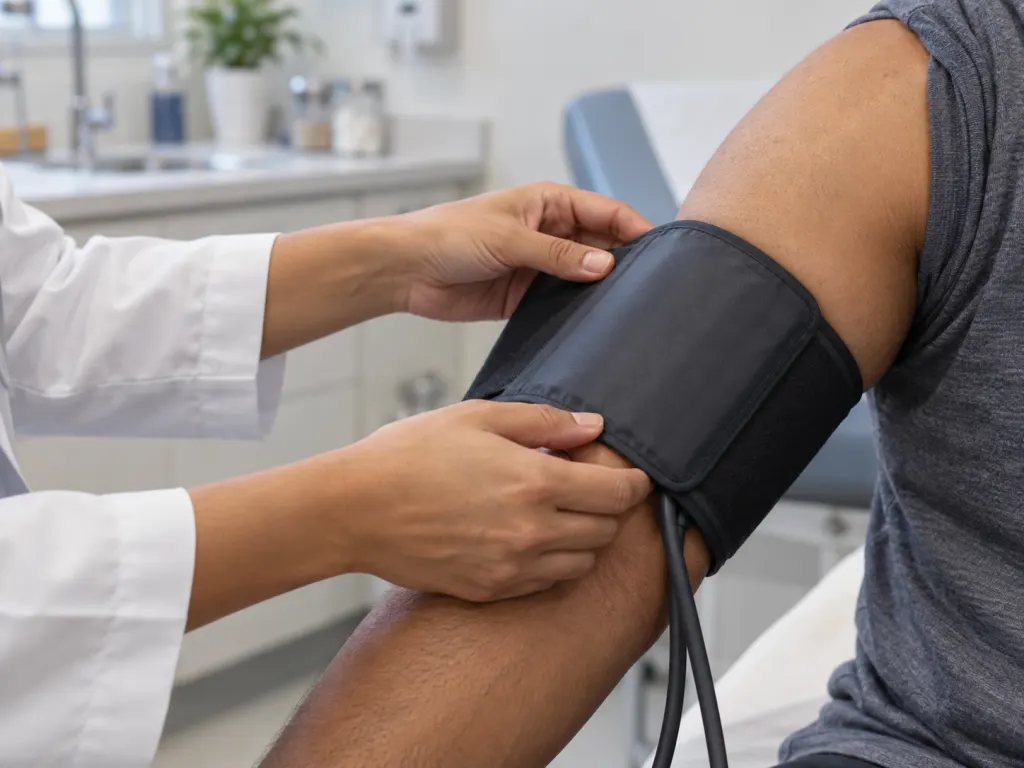
Adult Blood Pressure Categories
The main adult categories used by U.S. clinical and public-health sources are straightforward. Normal is less than 120/80 mm Hg. Elevated is 120 to 129 systolic with diastolic still below 80. Stage 1 high blood pressure is 130 to 139 systolic or 80 to 89 diastolic. Stage 2 begins at 140 systolic or 90 diastolic. The American Heart Association presents these same adult categories and adds that very high readings over 180 systolic or over 120 diastolic need careful, prompt attention depending on symptoms https://www.heart.org/en/health-topics/high-blood-pressure/understanding-blood-pressure-readings.
A helpful way to think about the adult chart is that either number can move the reading into a higher category. A reading of 118/82 is not “normal” just because the top number is below 120; the bottom number still matters. Likewise, a reading of 132/76 is above the normal adult range because the systolic number is in the 130s. Clinicians look at both numbers, repeated readings, overall health, and the context in which the measurement was taken.
Blood Pressure By Age: A Practical View
For adults, “by age” means patterns and risk context more than a new normal number every decade. The normal adult category remains below 120/80 mm Hg, but higher readings become more common as people get older. CDC National Center for Health Statistics data from August 2021 through August 2023 found that hypertension prevalence increased by age group: 23.4% among adults 18 to 39, 52.5% among adults 40 to 59, and 71.6% among adults 60 and older https://www.cdc.gov/nchs/products/databriefs/db511.htm.
Here is a reader-friendly age view that keeps the official categories intact:
- Children younger than 13: “normal” depends on age, sex, and height percentile, so a pediatric chart or clinician interpretation is needed.
- Teens 13 to 17: many current pediatric approaches use adult-style cut points for elevated and high readings, while still considering the teen’s growth and health context.
- Adults 18 to 39: less than 120/80 mm Hg is still the normal category; high readings are less common than in older groups but still occur.
- Adults 40 to 59: the same categories apply, and repeated higher readings become more common.
- Adults 60 and older: systolic pressure often rises because arteries can stiffen with age, but below 120/80 mm Hg remains the standard normal adult category for most adults.
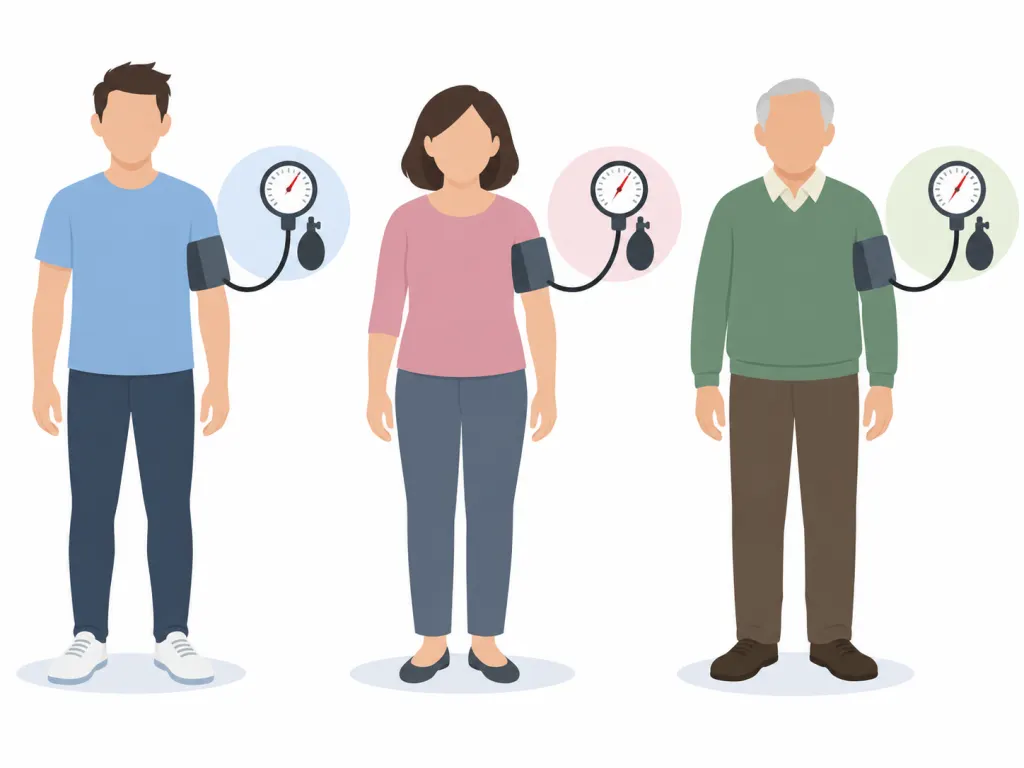
Why The Top Number Often Rises With Age
The National Institute on Aging explains that blood vessels change with age and arteries can become stiffer, which can cause systolic pressure to rise even in people who feel well and have steady everyday habits https://www.nia.nih.gov/health/high-blood-pressure/high-blood-pressure-and-older-adults. In older adults, it is common to see the top number at 130 or higher while the bottom number remains below 80. This pattern is called isolated systolic hypertension, and it is one reason an age-aware reading focuses on the two numbers separately rather than averaging them in your head.
Age is not the only reason readings differ. Family history, sleep, stress, alcohol intake, sodium intake, physical activity, body size, kidney and endocrine conditions, and some medicines can all be part of the larger picture. The World Health Organization also lists older age, genetics, high-salt eating patterns, tobacco use, alcohol use, and low physical activity among factors associated with hypertension worldwide https://www.who.int/en/news-room/fact-sheets/detail/hypertension. The useful takeaway is not to assign blame; it is to collect good readings and discuss patterns with a qualified professional.
How Children’s Blood Pressure Is Different
Children are not simply smaller adults when it comes to blood pressure charts. MedlinePlus notes that for children younger than 13, clinicians compare a child’s reading with what is common for children of the same age, sex, and height https://www.medlineplus.gov/lab-tests/measuring-blood-pressure/. NHLBI’s pediatric materials likewise describe separate percentile tables for boys and girls by age and height for ages 3 to 17 https://www.nhlbi.nih.gov/resources/pocket-guide-blood-pressure-measurement-children.
This is why a simple internet chart can be misleading for a young child. A reading that looks ordinary for a teenager may be high for a smaller child, and a reading that seems low by adult standards may be expected in a healthy younger child. The CDC’s review of childhood blood pressure research also notes that pediatric classification changed with the 2017 American Academy of Pediatrics guideline, including use of age, sex, and height percentiles for younger children and adult-style cut points for adolescents 13 and older https://www.cdc.gov/pcd/issues/2019/18_0528.htm.

How To Get A More Useful Reading
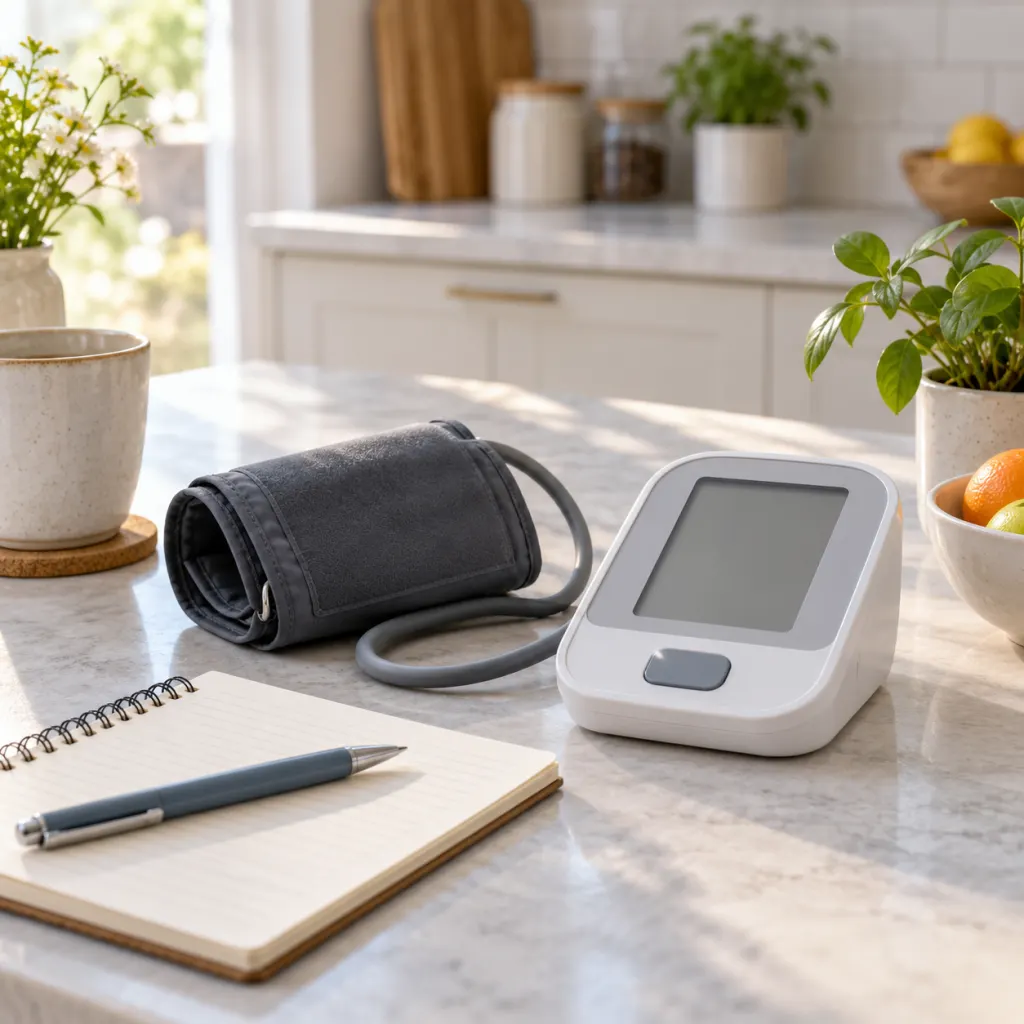
Technique can change the number enough to confuse the picture. NHLBI advises people to avoid exercise, coffee, and cigarettes for 30 minutes before a measurement; empty the bladder; sit quietly for at least five minutes; keep feet flat on the floor; avoid talking; uncover the arm; and support the arm at heart level https://www.nhlbi.nih.gov/health/high-blood-pressure/diagnosis. MedlinePlus adds that an upper-arm cuff is generally more accurate than wrist or finger devices for home use.
If you check blood pressure at home, write down the date, time, reading, arm used, and any context that might matter, such as recent exercise, caffeine, pain, poor sleep, or unusual stress. Take the reading while seated and still. If the first number surprises you, rest quietly and repeat it according to the instructions from your clinician or device manual. A small log is usually more useful than memory because it lets your health professional see patterns rather than isolated moments.
When A Reading Needs Prompt Attention
Very high readings deserve a different kind of caution. MedlinePlus says to seek immediate medical attention or call 911 if blood pressure is over 180/120 mm Hg along with symptoms such as chest pain, shortness of breath, back pain, numbness or weakness, trouble speaking, or vision changes https://www.medlineplus.gov/lab-tests/measuring-blood-pressure/. The American Heart Association gives similar emergency boundaries for readings higher than 180/120 mm Hg with concerning symptoms.
Low readings can also matter when they come with symptoms. The National Institute on Aging describes low blood pressure as systolic below 90 or diastolic below 60, and notes that dizziness, weakness, lightheadedness, or fainting can occur in some people https://www.nia.nih.gov/health/high-blood-pressure/high-blood-pressure-and-older-adults. A person who feels unwell should not use a chart as a substitute for care, especially if symptoms are sudden, severe, or new.
What To Discuss With A Health Professional
Bring more than the number. Useful details include your usual readings, whether they were taken at home or in an office, cuff size, the time of day, symptoms, family history, current medicines and supplements, sleep concerns, alcohol and tobacco use, activity level, and typical eating pattern. The CDC notes that a health care team can diagnose high blood pressure and make individualized decisions by reviewing both systolic and diastolic levels along with guideline categories https://www.cdc.gov/high-blood-pressure/about/index.html.
The Bottom Line On Age And Blood Pressure
The simplest accurate answer is this: for most adults, normal blood pressure is below 120/80 mm Hg, and that adult category does not become “higher normal” just because someone is older. What changes with age is the likelihood of higher readings, especially higher systolic pressure. For children, normal is not one universal number; it is interpreted against pediatric percentiles or adolescent cut points. Good measurement technique, repeated readings, and professional interpretation make the chart far more useful than any single number on its own.
Wrap-Up
Normal adult blood pressure is less than 120/80 mm Hg. Adults use the same main categories across decades, but higher readings become more common with age, particularly after midlife. Children younger than 13 need age-, sex-, and height-based interpretation, so pediatric readings should be reviewed with a clinician. If a reading is very high or symptoms are concerning, seek prompt medical help rather than relying on a chart.
Frequently Asked Questions
- → What is normal blood pressure for adults?
For most adults, normal blood pressure is less than 120/80 mm Hg. The first number is systolic pressure and the second is diastolic pressure. A repeated pattern above the normal category should be discussed with a qualified health professional.
- → Does normal blood pressure change after age 60?
The adult normal category remains less than 120/80 mm Hg, but higher systolic readings become more common with age because arteries can become stiffer. Older adults should review repeated readings with their clinician, especially if the top number is often higher while the bottom number stays below 80.
- → What is normal blood pressure for children?
For children younger than 13, there is no single universal number. Clinicians compare the reading with values for children of the same age, sex, and height. That is why a pediatric reading is best interpreted by a child’s health professional.
- → Is one high reading enough to know I have high blood pressure?
Usually, no. Blood pressure changes through the day, and readings can be affected by activity, caffeine, stress, cuff fit, posture, and timing. Health professionals generally look for repeated readings and the person’s overall health context.
- → When should a blood pressure reading be treated as urgent?
Seek immediate medical attention or call emergency services if blood pressure is over 180/120 mm Hg with symptoms such as chest pain, shortness of breath, weakness, numbness, trouble speaking, back pain, or vision changes.
References
This content was developed and refined using reliable sources.
- https://www.cdc.gov/high-blood-pressure/about/index.html
- https://www.cdc.gov/nchs/products/databriefs/db511.htm
- https://www.nia.nih.gov/health/high-blood-pressure/high-blood-pressure-and-older-adults
- https://www.nhlbi.nih.gov/health/high-blood-pressure/diagnosis
- https://www.medlineplus.gov/lab-tests/measuring-blood-pressure
- https://www.nhlbi.nih.gov/resources/pocket-guide-blood-pressure-measurement-children
- https://www.cdc.gov/pcd/issues/2019/18_0528.htm
- https://www.heart.org/en/health-topics/high-blood-pressure/understanding-blood-pressure-readings
- https://www.who.int/en/news-room/fact-sheets/detail/hypertension