 Save
The main takeaway is simple: stroke warning signs are usually sudden, and waiting to see whether they pass can cost valuable time. Use B.E. F.A.S.T. as a quick check: balance, eyes, face, arms, speech, and time to call emergency services. The CDC lists sudden trouble walking, vision changes, one-sided weakness or numbness, confusion, speech difficulty, and severe unexplained headache as signs that need immediate action. A brief episode that disappears can still be a transient ischemic attack, or TIA, and MedlinePlus notes that you cannot tell at home whether symptoms are from a TIA or a stroke. This guide explains what to watch for, what to do in the moment, and how to talk with a qualified clinician about risk after the urgent situation is handled.
Stroke Signs Are Usually Sudden, Not Scheduled
A common misunderstanding is that a stroke announces itself days or weeks ahead with a neat checklist. In reality, many warning signs begin suddenly. The National Heart, Lung, and Blood Institute explains that stroke symptoms often happen quickly, though they can sometimes develop over hours or days. That means the useful question is not, “How long should I watch this?” The safer question is, “Did something new and neurological start suddenly?”
Sudden neurological changes can be easy to minimize because they may look like clumsiness, tiredness, confusion, dizziness, or a bad headache. A person may insist they are fine, especially if they feel embarrassed or the symptom comes and goes. Treat the pattern seriously anyway. Stroke care is time sensitive, and emergency responders can start assessment and direct the person to an appropriate hospital more safely than a private ride.

Use B.E. F.A.S.T. as the First Check
B.E. F.A.S.T. is a memory tool that helps turn a frightening moment into a short checklist. It does not catch every possible stroke, but it covers several common warning signs and helps people act quickly. The CDC and major stroke organizations emphasize calling 911 right away when these signs appear.
- B: Balance. Sudden dizziness, loss of coordination, stumbling, or trouble walking can matter, especially when it is new or paired with another symptom.
- E: Eyes. Sudden blurred vision, double vision, loss of sight, or trouble seeing in one or both eyes needs urgent attention.
- F: Face. Ask the person to smile. One-sided drooping or numbness is a warning sign.
- A: Arms. Ask the person to raise both arms. One arm drifting down, weakness, or numbness on one side can be a warning sign.
- S: Speech. Slurred speech, unusual words, trouble understanding, or difficulty repeating a simple phrase can signal trouble.
- T: Time. Call emergency services immediately and note when symptoms first began.
Other Symptoms Can Still Matter
Not every stroke looks like the classic face-arm-speech pattern. Mayo Clinic lists additional symptoms such as trouble understanding speech, vision problems, sudden severe headache, and difficulty walking or keeping balance. Some people may seem confused, unusually quiet, unable to find words, or unable to follow a simple request. Others may have sudden numbness or weakness in a leg rather than an arm.
Headache deserves careful wording. Many headaches are not strokes, and a headache alone cannot identify a stroke at home. The concern rises when a headache is sudden, severe, unexplained, or accompanied by weakness, numbness, vision change, balance loss, confusion, fainting, or speech trouble. When symptoms are sudden and neurological, treat the situation as urgent rather than trying to sort out the cause yourself.

Why Brief Symptoms Still Need Emergency Assessment
A transient ischemic attack, often called a TIA, can cause stroke-like symptoms that fade. MedlinePlus describes TIA symptoms as similar to stroke symptoms but shorter lasting, and says they may disappear within an hour or last up to 24 hours. The American Heart Association has also highlighted that symptoms disappearing within an hour still need emergency assessment because some people with suspected TIA are found to have had a stroke on imaging.
The practical point is not to diagnose the label at home. If someone has sudden facial droop, arm weakness, speech trouble, vision change, balance loss, one-sided numbness, or confusion and then seems better, the event still matters. Call emergency services if it is happening now or happened recently, especially within the last day. If an older episode was never evaluated, arrange prompt medical care and describe exactly what occurred, how long it lasted, and whether it has happened before.
What To Do While Waiting for Help
After calling emergency services, keep the person as calm and safe as possible. Have them sit or lie down if they are dizzy or weak. Do not give food, drink, or medication unless emergency personnel or a qualified clinician instructs you to do so. Watch for changes in breathing, alertness, speech, strength, and balance. If the person becomes less responsive, tell the dispatcher immediately and follow their instructions.
Write down the time the person was last known to be well and the time the first symptom was noticed. These may be different. For example, if someone woke up confused at 7 a.m. but was normal at 10 p.m. the night before, both details are important. Also note medications, known medical conditions, allergies, recent falls or injuries, and the person’s usual pharmacy or clinician if you know them. Hand that information to responders instead of relying on memory during a stressful moment.
When To Call Instead of Driving
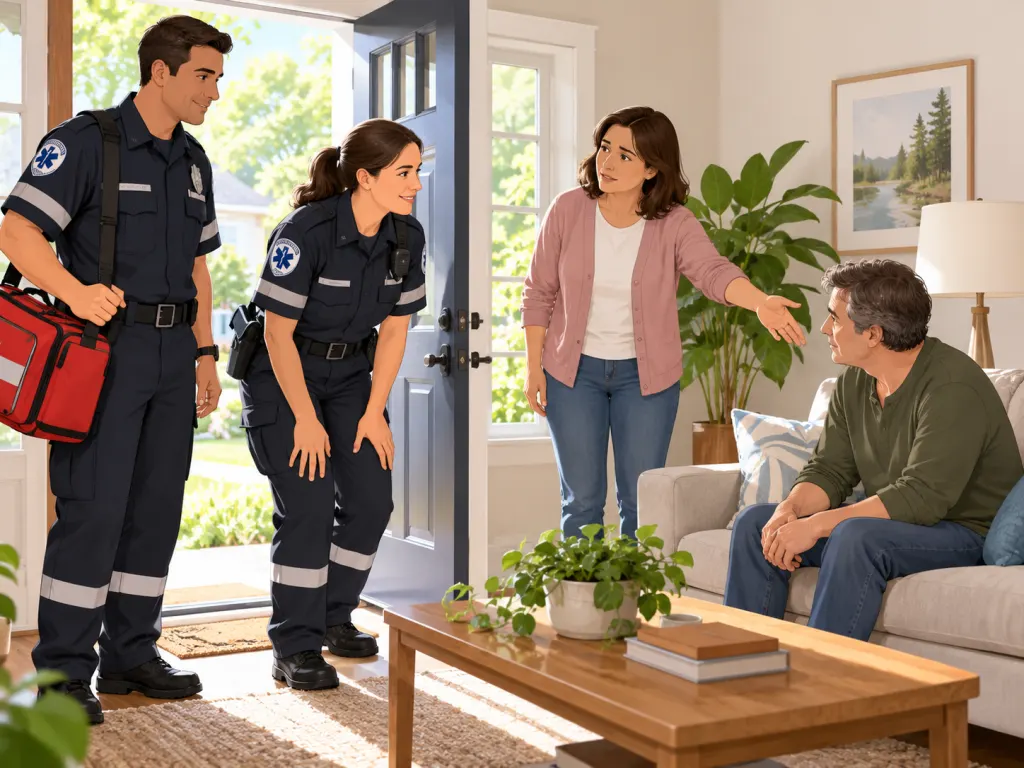
Call 911 or your local emergency number for sudden stroke warning signs. The CDC specifically advises against driving yourself or having someone else drive you when stroke is suspected, because ambulance personnel can begin assessment on the way and help choose an appropriate destination. Driving also creates risk if symptoms worsen during the trip.
If you are unsure, call. Dispatchers are trained to help sort urgent symptoms. If the person argues, becomes embarrassed, or says the symptom is gone, stay calm and focus on facts: “Your speech changed suddenly,” “Your smile is uneven,” or “You could not keep both arms raised.” The goal is not to win a debate. The goal is to get professional assessment quickly.
Risk Factors Are a Separate Conversation
Warning signs tell you when to seek urgent help. Risk factors help guide longer-term health conversations. The CDC lists high blood pressure, high cholesterol, heart disease, diabetes, tobacco use, prior stroke or TIA, family history, older age, and some lifestyle factors among issues that can raise stroke risk. These do not mean a person will have a stroke, and their absence does not rule one out.
After any suspected TIA or stroke-like episode, a clinician may discuss blood pressure, cholesterol, blood sugar, heart rhythm, sleep, tobacco exposure, activity level, and other personal factors. Keep this conversation individualized. A neighbor’s plan, a viral post, or a supplement claim is not a substitute for a qualified clinician who knows the person’s history. For broader health-reading habits, it can help to separate evidence-based guidance from dramatic headlines, as in How to Read Viral Legend Headlines Responsibly.
Prepare Before There Is an Emergency
Preparation is not about worrying every day. It is about making the first few minutes easier if something happens. Keep a current medication list, allergy list, emergency contacts, clinician names, and major medical conditions in a place family members can find. If you live with someone at higher risk, agree on the language you will use: “If I see face drooping, arm weakness, speech trouble, vision change, or sudden balance loss, I will call emergency services.”
Families may also need practical planning after a neurological event, especially around transportation, independence, and safety. A related guide, When Should Seniors Stop Driving?, looks at driving decisions in a broader aging and safety context. Stroke symptoms themselves, however, belong in the emergency category, not in a wait-and-see household discussion.
A Calm Action Plan to Remember
If you remember only one thing, remember this: sudden neurological change deserves urgent attention. Check balance, eyes, face, arms, and speech. Call emergency services. Note the time symptoms began or the last time the person was well. Do not drive. Do not wait for symptoms to prove themselves. If symptoms fade, still take the episode seriously and seek emergency guidance, because a TIA and a stroke can look alike outside a medical setting.
Wrap-Up
Stroke warning signs usually begin suddenly, and brief symptoms still matter. Face drooping, arm weakness, speech trouble, vision changes, balance problems, one-sided numbness, confusion, or a sudden severe unexplained headache should prompt a call to emergency services. B.E. F.A.S.T. is a practical memory tool, but it is not the only way stroke can appear. The safest response is quick professional assessment, careful timing notes, and follow-up with a qualified clinician about personal risk.
Frequently Asked Questions
- → Can stroke warning signs appear days before an emergency?
Sometimes people have a transient ischemic attack, or TIA, before a later stroke, but there is no reliable day-by-day warning calendar. Treat sudden stroke-like symptoms as urgent whether they last minutes or continue.
- → What is the fastest way to check for possible stroke signs?
Use B.E. F.A.S.T.: balance, eyes, face, arms, speech, and time to call emergency services. Ask the person to smile, raise both arms, and repeat a simple phrase, while also watching for sudden vision or balance changes.
- → Should I call 911 if the symptoms went away?
Yes, if stroke-like symptoms happened suddenly or recently, especially within the last day. Temporary symptoms can be a TIA or a stroke, and the cause cannot be confirmed at home.
- → Is a sudden severe headache always a stroke?
No. Many headaches have other causes. A sudden severe headache with no clear cause, especially with weakness, numbness, confusion, speech trouble, vision change, fainting, or balance problems, needs urgent medical assessment.
- → Can younger adults have a stroke?
Yes. Stroke is more common with older age, but it can happen at any age. Sudden face, arm, speech, vision, balance, numbness, confusion, or severe unexplained headache symptoms should be treated as urgent in adults of any age.
References
This content was developed and refined using reliable sources.
- https://www.cdc.gov/stroke/signs-symptoms/index.html
- https://www.medlineplus.gov/transientischemicattack.html
- https://www.nhlbi.nih.gov/health/stroke/symptoms
- https://www.mayoclinic.org/diseases-conditions/stroke/symptoms-causes/syc-20350113
- https://newsroom.heart.org/news/stroke-symptoms-even-if-they-disappear-within-an-hour-need-emergency-assessment
- https://www.cdc.gov/stroke/risk-factors/index.html