 Save
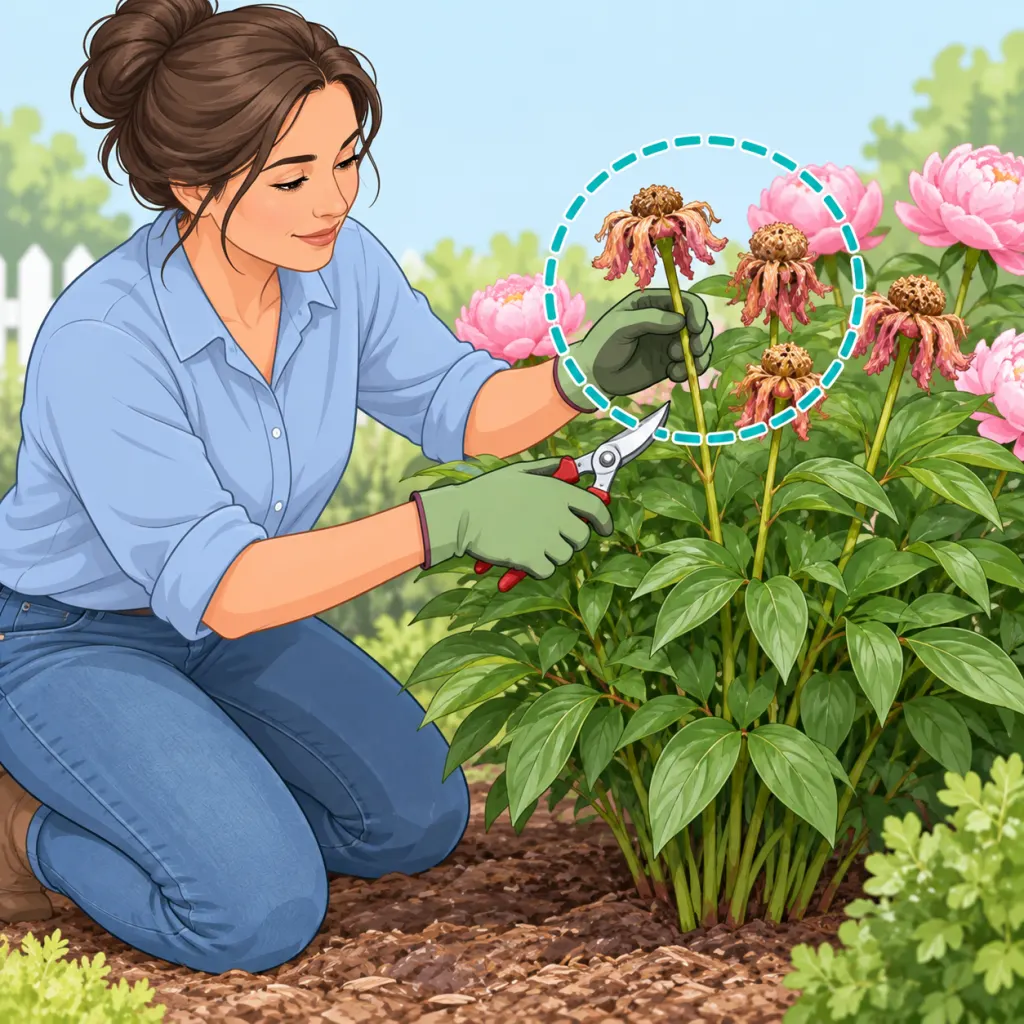
Peonies do not need complicated care after their flowers fade, but the timing matters. The main goal is to remove spent blooms while keeping the leaves working until fall, since early foliage removal can reduce next year’s flowers according to Iowa State University Extension. This guide covers the simple after-bloom tasks that keep established peonies tidy and ready for the next growing season.
Step 1: Snip off faded flowers
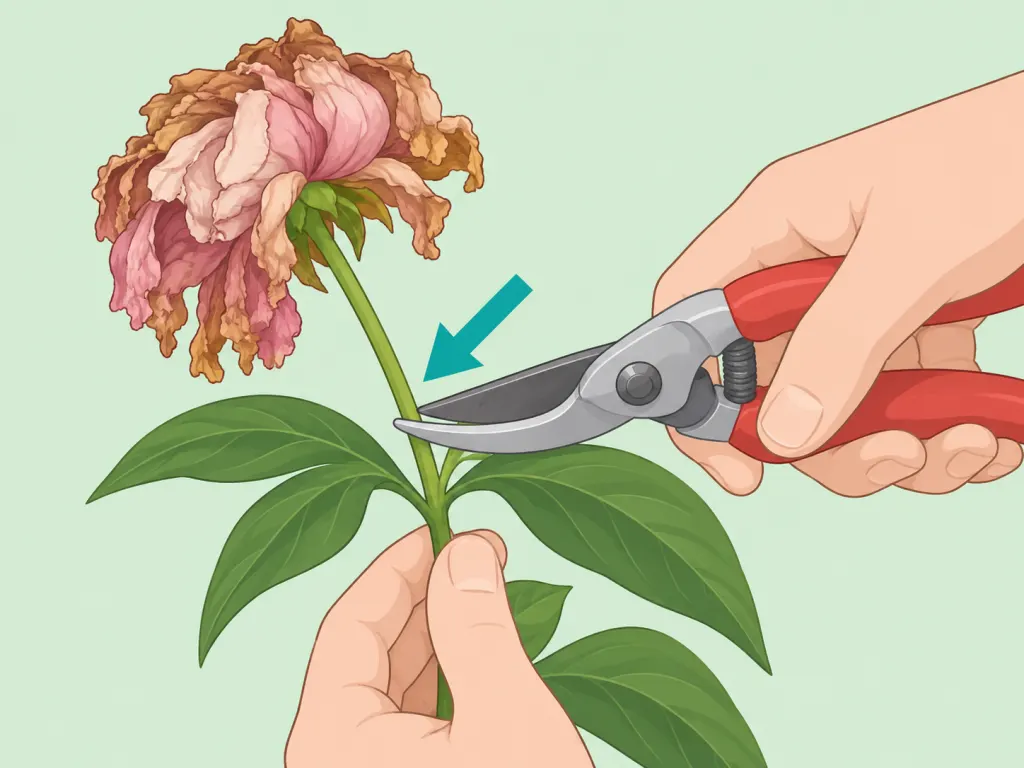
Once the petals wilt or drop, use clean pruners to remove each spent flower stem just above a set of leaves. Deadheading keeps the plant tidy and helps stop energy from going into seed pods.
Step 2: Leave the green foliage in place
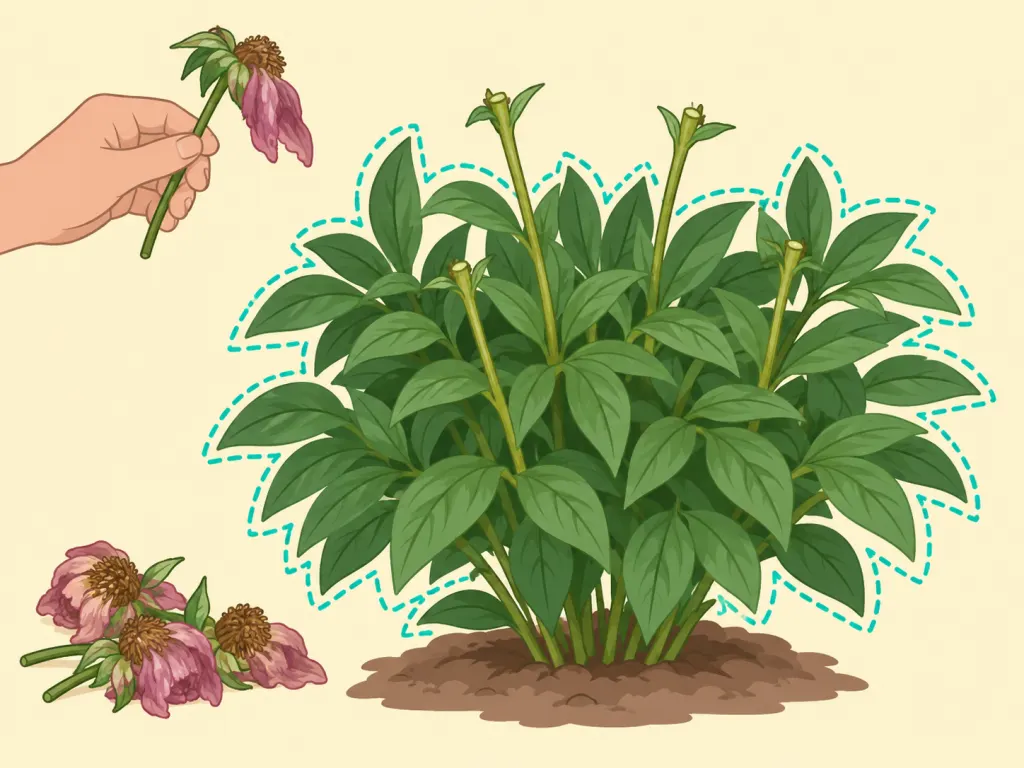
Do not cut the whole plant down after flowering. Peony leaves keep feeding the roots through summer, and Iowa State University Extension warns that early foliage removal can lead to fewer blooms.
Step 3: Water during dry spells
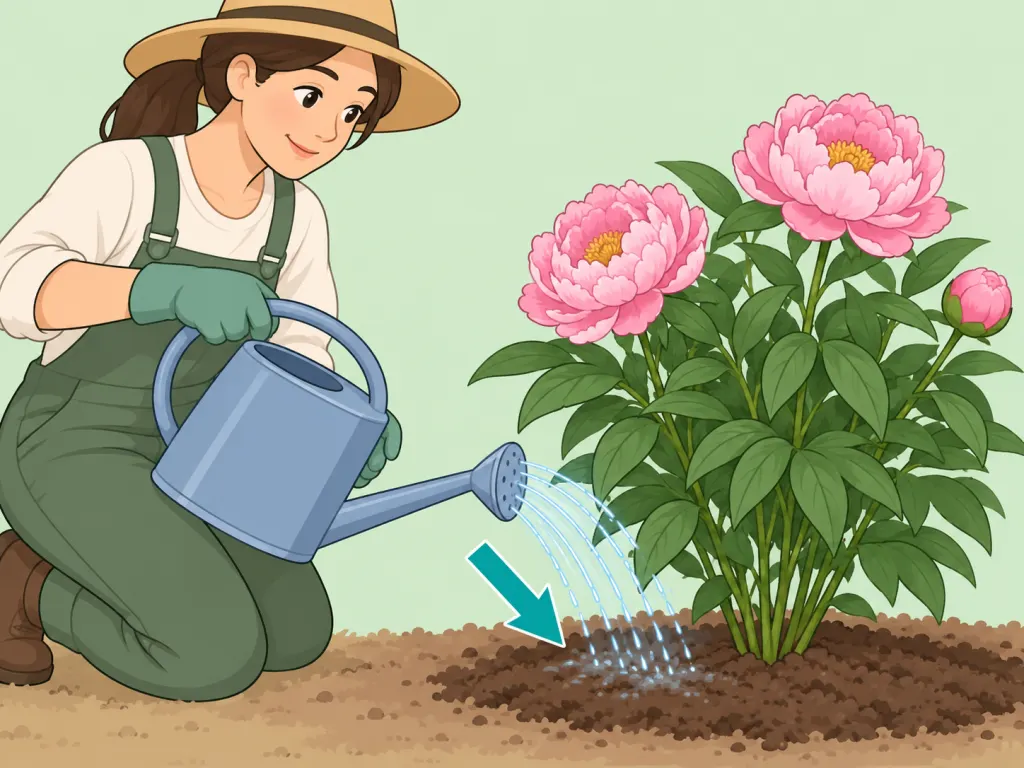
Established peonies are deep-rooted and usually do not need routine watering, but they benefit from water during long dry periods. The RHS peony guide recommends watering in prolonged dry weather, especially around the base rather than over the leaves.
Step 4: Keep mulch clear of the crown
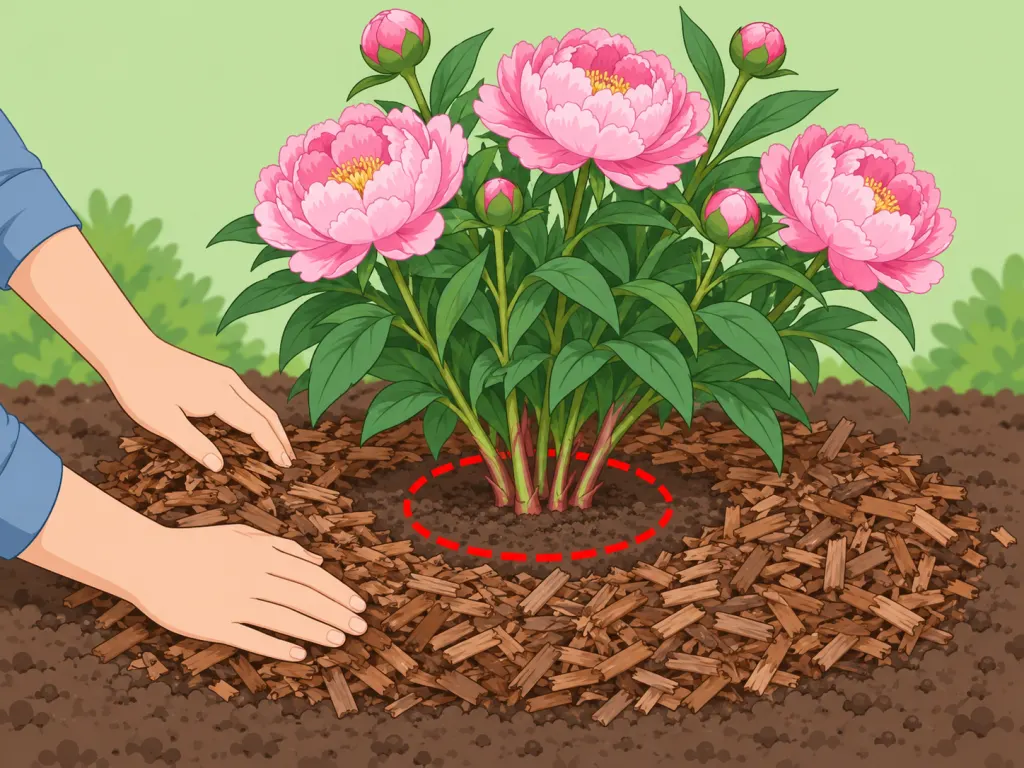
Refresh a light layer of compost or well-rotted organic mulch if the soil dries quickly or weeds are moving in. Keep the center of the plant uncovered, since the RHS cautions that covering the crown can damage the buds.
Avoid a heavy feeding after bloom, especially later in summer. The University of Connecticut advises not fertilizing peonies in late summer or fall, and excess nitrogen can encourage leaves instead of flowers.
Step 6: Remove spotted or collapsed leaves
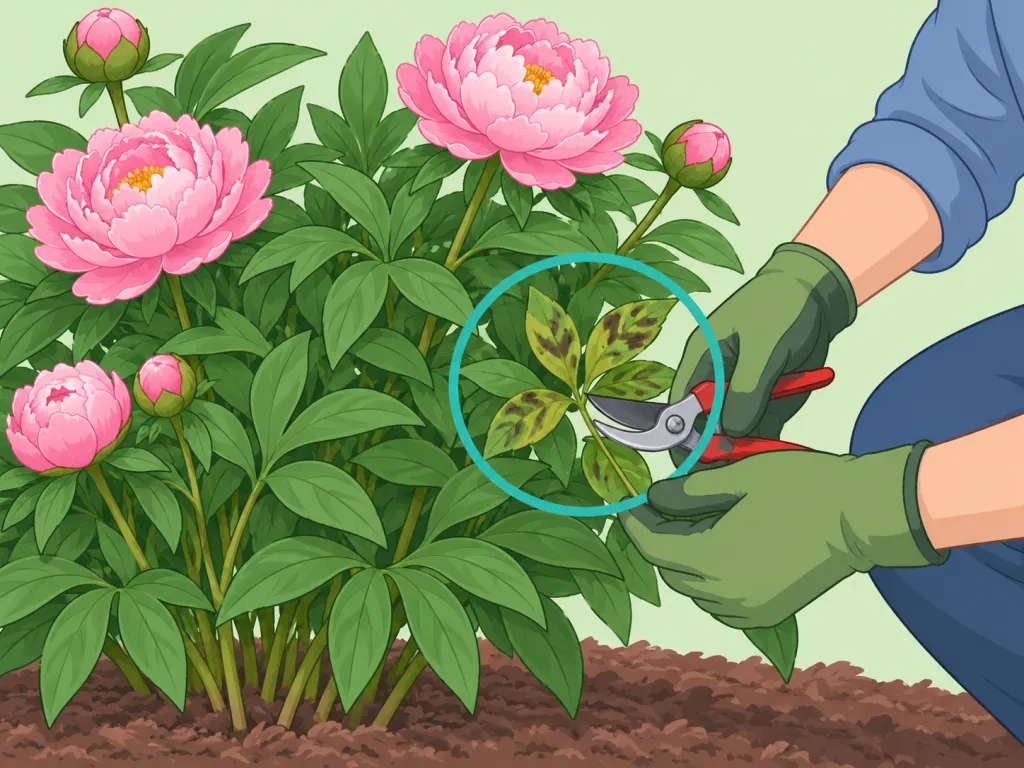
Check the plant occasionally for badly spotted, mildewed, or collapsed foliage and remove only the affected parts while leaving green growth. For common peony leaf problems, Iowa State University Extension recommends removing problem debris in fall and not composting it.
Step 7: Plan fall division only if the plant needs it
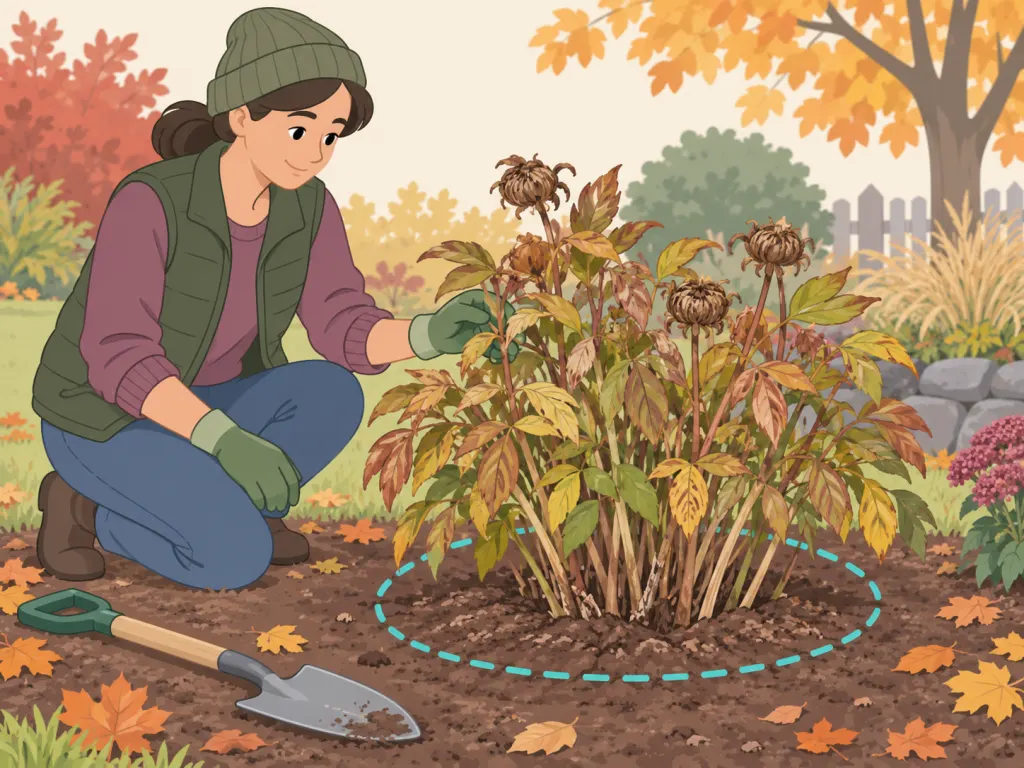
Most peonies prefer to stay undisturbed, so do not divide them every year. If an older clump flowers poorly, is too crowded, or needs a sunnier site, RHS guidance recommends dividing in late autumn and replanting with buds just below the soil surface.
Step 8: Cut herbaceous peonies down after a hard freeze
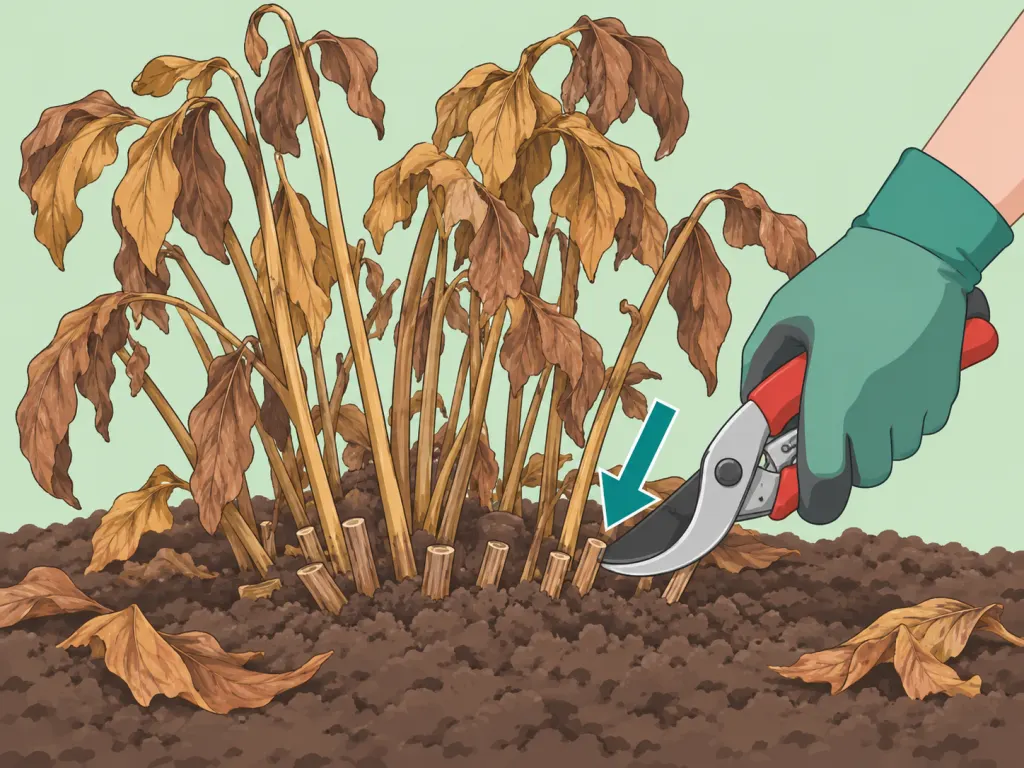
Wait until fall, after a hard freeze damages the foliage, then cut herbaceous peony stems near ground level and remove the debris. Iowa State University Extension notes that cutting back too early can reduce the next year’s flowers.
Wrap-Up
The bottom line: after peonies bloom, remove the faded flowers but leave the green foliage alone. Water in dry spells, keep mulch off the crown, watch for leaf problems, and wait until a hard fall freeze before cutting herbaceous peonies down.
Frequently Asked Questions
- → Should I deadhead peonies after they bloom?
Yes. Deadheading removes faded flowers and helps prevent seed pod formation; RHS guidance says to cut spent flowers back to just above a leaf or bud on most plants.
- → Can I cut peony leaves back right after flowering?
No. Leave the green foliage in place through summer, because Iowa State University Extension notes that removing peony foliage in July or August can weaken the plant and reduce future flowers.
- → When should herbaceous peonies be cut down?
Cut herbaceous peonies near ground level after the foliage has been damaged by a hard freeze. Iowa State University Extension says late October or early November is typical in Iowa, but your local frost timing may differ.
- → Do peonies need fertilizer after blooming?
Usually not. The University of Connecticut advises against fertilizing peonies in late summer or fall, and RHS recommends feeding in spring instead.
- → Are ants on peonies a problem?
No. UConn explains that ants visit peony buds for sugary nectar and do not harm the plant, so sprays are not needed just because ants are present.
- → When should I divide peonies?
Divide peonies only when flowering has declined or a clump truly needs moving. RHS recommends lifting and dividing older clumps in late autumn, with each division keeping several buds and roots.
References
This content was developed and refined using reliable sources.
- https://www.rhs.org.uk/plants/peony/herbaceous/growing-guide
- https://www.rhs.org.uk/garden-jobs/deadheading-plants
- https://yardandgarden.extension.iastate.edu/how-to/reasons-why-peonies-fail-bloom
- https://yardandgarden.extension.iastate.edu/faq/when-can-i-cut-back-peony-foliage
- https://yardandgarden.extension.iastate.edu/how-to/how-manage-potential-problems-growing-peonies
- https://homegarden.cahnr.uconn.edu/factsheets/peonies