 Save
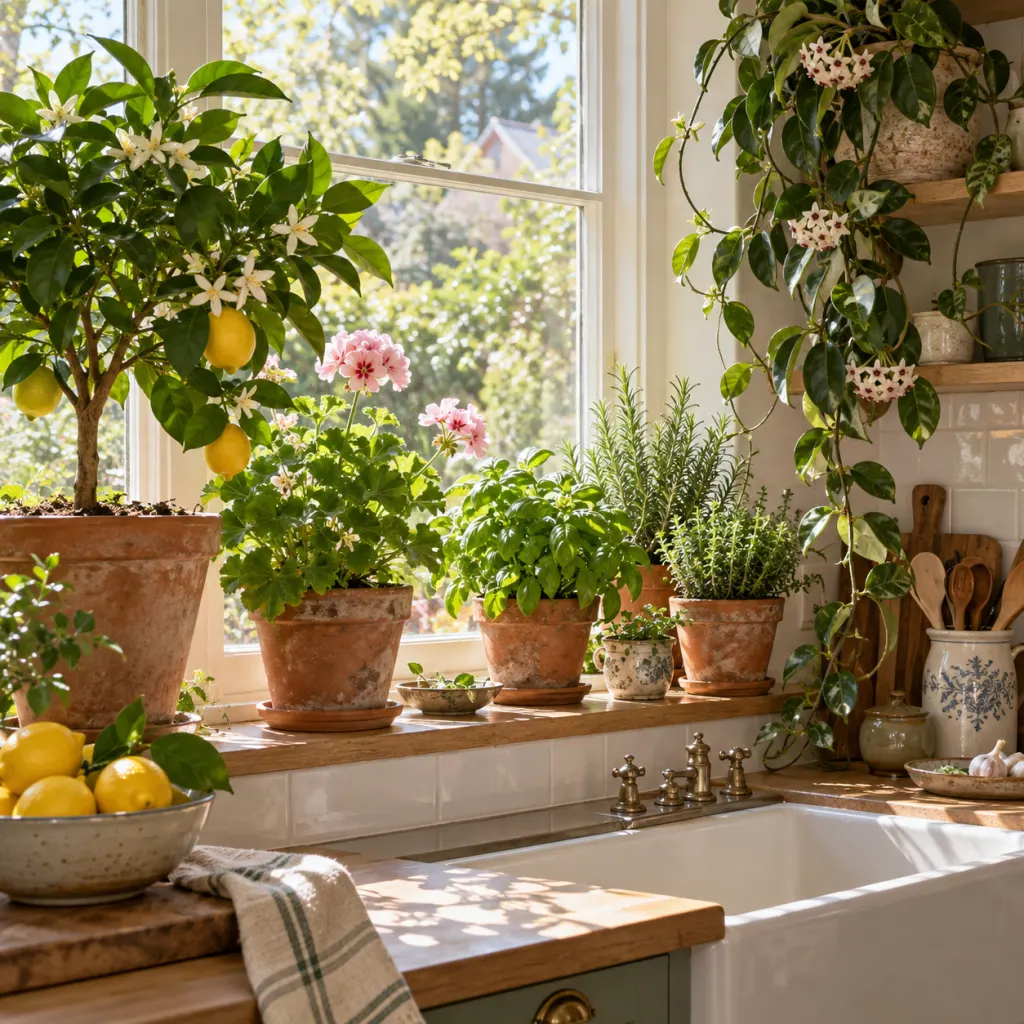
If you want a home that smells naturally inviting, start with fragrant plants that fit your light. Citrus, gardenia, hoya, scented geranium, herbs, sweet bay, and lemon-scented foliage can all bring noticeable scent indoors, but each works differently. Some perfume a room only when they flower; others release aroma from leaves when touched or trimmed. University extension guides consistently point to the same practical rule: fragrant houseplants need the right light, drainage, watering pattern, and room conditions before they can reward you with scent. A sunny kitchen windowsill may suit herbs or citrus, while a bright living room may be better for hoya, gardenia, or scented geranium.
Start With How the Plant Releases Scent
Fragrant houseplants fall into two useful groups: bloom-scented plants and foliage-scented plants. Bloom-scented plants, such as citrus, gardenia, hoya, orchids, and plumeria, usually smell strongest during flowering. Foliage-scented plants, such as scented geranium, sweet bay, basil, rosemary, and lemon eucalyptus, are more hands-on; their leaves often release fragrance when brushed, warmed, harvested, or lightly crushed. The University of Florida IFAS guide to fragrant houseplants lists citrus, herbs, gardenia, hoya, orchids, plumeria, scented geranium, and sweet bay as indoor scent options, while noting that adequate sunlight matters especially when flowers are the goal: UF/IFAS fragrant houseplants.
That distinction helps you avoid disappointment. A gardenia with no buds is handsome, but it will not fill a room with fragrance every day. A scented geranium may look modest in bloom, yet its leaves can offer rose, lemon, mint, or spice notes when you pass by and touch them. A dwarf citrus may have a short but memorable bloom period, while basil or rosemary can give a more everyday kitchen scent as you cook. Think of fragrance as a plant behavior, not just a label on the pot.
Best Choices for a Noticeable Indoor Fragrance
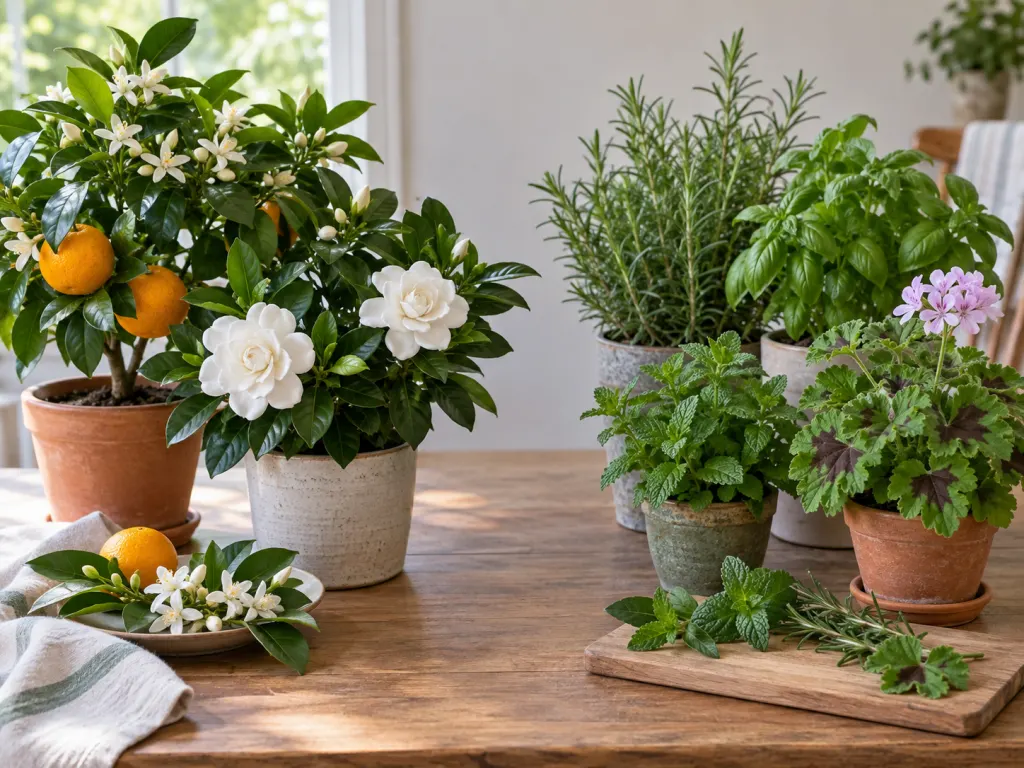
For most homes, the strongest candidates are compact plants with either aromatic foliage or blooms that can form indoors. These are practical starting points:
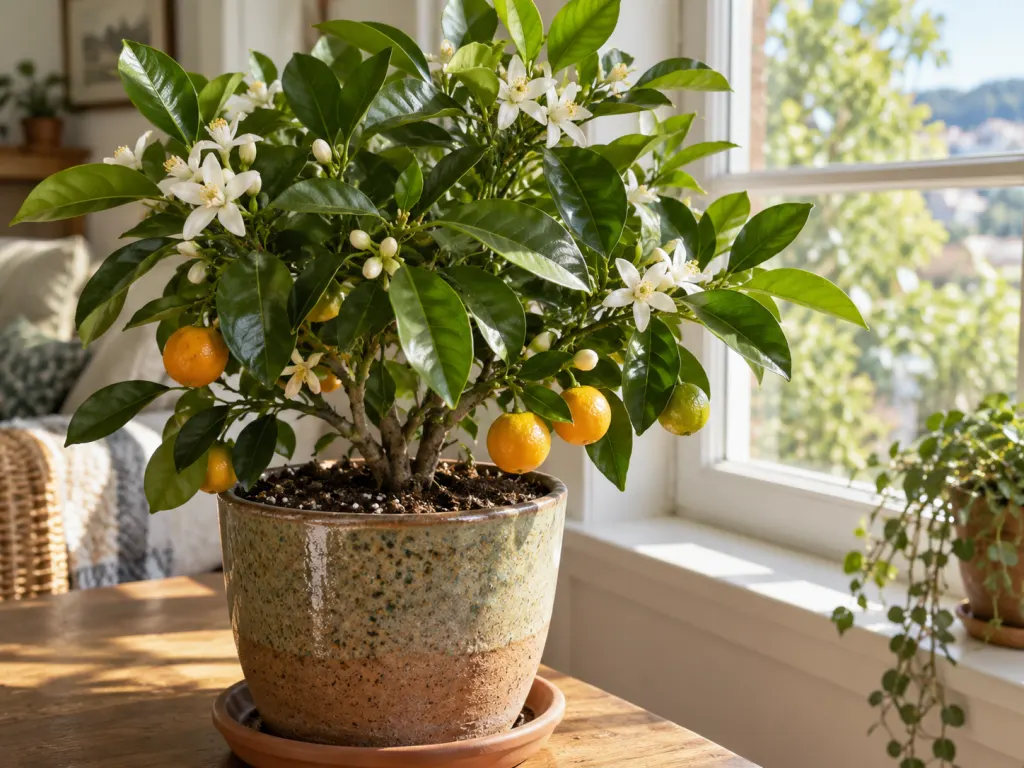
- Dwarf citrus: Meyer lemon, kumquat, calamondin, and small orange types offer fragrant flowers and glossy leaves in bright rooms.
- Gardenia: Rich, creamy white flowers make it one of the most recognizable fragrant container plants, but it needs steady care.
- Hoya: A classic houseplant with clusters of waxy flowers that can be fragrant once mature and settled.
- Scented geranium: Grown mainly for aromatic leaves, with scents ranging from rose and lemon to mint and apple.
- Indoor herbs: Basil, rosemary, sage, thyme, and similar herbs bring scent plus everyday usefulness near a bright window.
- Sweet bay: A small container shrub with delicately scented leaves and a polished, kitchen-friendly look.
- Lemon eucalyptus: A container candidate where space and light allow, with lemon scent from the leaves.
Citrus deserves special mention because it gives both flowers and visual presence. University of Minnesota Extension notes that tangerine, lemon, kumquat, and small orange trees can be grown as houseplants, and that the flowers and fruit can be fragrant and attractive: UMN Extension on growing citrus indoors. It also names calamondin, Otaheite orange, tangerines, Satsuma, Meyer lemon, Ponderosa lemon, citron, and kumquat as indoor possibilities when properly cared for. The important word is “properly.” Citrus wants direct light for at least part of the day, and fruit should be treated as a bonus rather than the main promise.
Gardenia is the showier floral choice, but it asks more from the grower. Missouri Extension describes gardenia as having glossy deep-green foliage and fragrant waxy white flowers, while also calling it a difficult plant for home culture. It prefers fairly even moisture with good drainage, acidic conditions, and sunny south or west windows: Missouri Extension care of flowering potted plants. If your home is dry, dim, or drafty, gardenia may drop buds or fade after bloom. If you can offer bright light, even watering, and a stable spot, it can be one of the most memorable scented houseplants you will own.
Choose by Room, Not Just by Name
The best plant for a kitchen is often different from the best plant for a bedroom, entry, or work area. A kitchen windowsill can be ideal for herbs because frequent trimming keeps them compact and releases aroma while you cook. A dining room or entry with strong light can suit a citrus tree, especially if you enjoy the look of glossy leaves. A bright living room shelf can work for hoya, which often looks attractive even between bloom cycles. A bathroom with good natural light may suit a humidity-loving plant, but low-light bathrooms are usually poor spots for bloom-scented plants.
Use the plant’s fragrance pattern to place it well. Put foliage-scented plants where hands naturally pass: near a kitchen prep area, a sunny desk, or a windowsill you open often. Put floral plants where you can enjoy them during bloom without needing them to perform constantly. A gardenia beside a bright window, a citrus near a glass door, or a hoya on a light-filled shelf can feel more rewarding than crowding several fragrant plants into one dim corner. Scent disperses better when the plant is healthy and the room is not stagnant, but strong drafts can stress many houseplants.
Light Is the Difference Between Pretty Leaves and Fragrant Flowers
Light is the most common reason a fragrant plant underperforms indoors. Wisconsin Horticulture explains that light and temperature are two of the most important factors in houseplant placement, and that too little light can cause faded leaves, weak growth, and lack of flowers on flowering plants: Wisconsin Horticulture houseplant care. That is especially relevant for citrus, gardenia, plumeria, orchids, and other plants purchased for bloom fragrance. They may survive in moderate light but flower rarely.
Before buying, observe your home at different times of day. A south or west window may offer the strongest indoor light in many homes, but hot glass and afternoon sun can still scorch sensitive foliage. East light is often gentler and can work well for many fragrant plants. If you rely on grow lights, choose full-spectrum fixtures and keep them close enough to be useful without overheating the plant. The goal is not simply “bright enough to see.” It is enough usable light for the plant to maintain compact growth and, for flowering types, enough energy to set buds.
Watering and Drainage Keep the Scent Coming
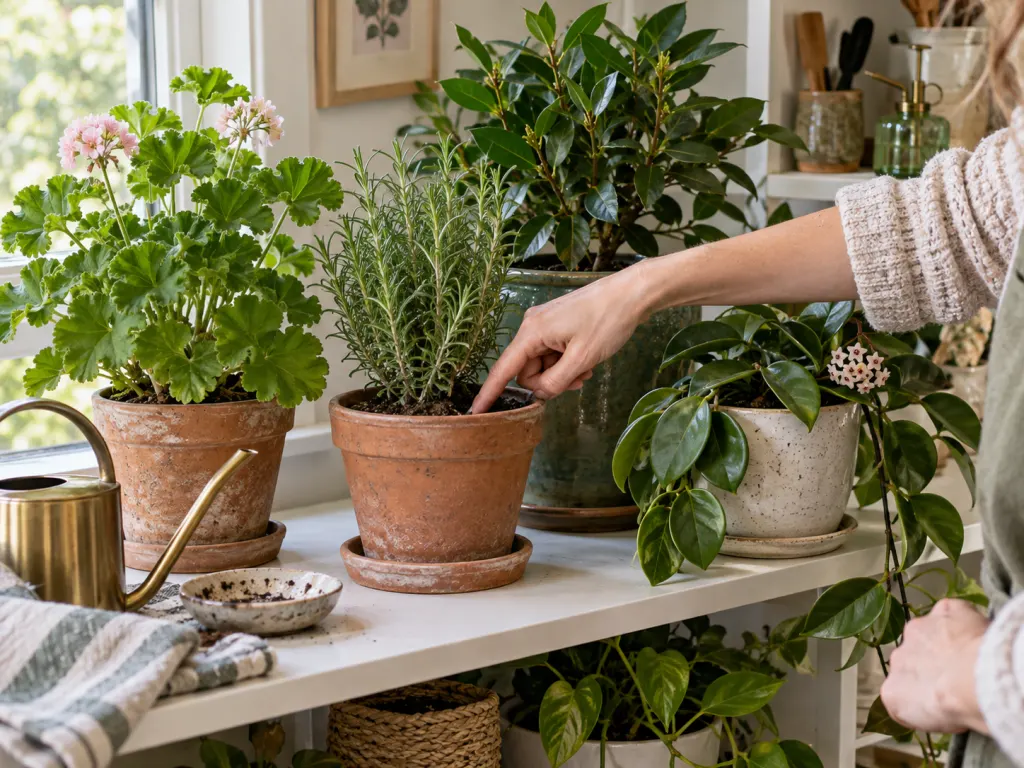
Fragrance is tied to overall plant vigor. A stressed plant may stop flowering, drop leaves, or lose the lush growth that makes aromatic foliage worth having. Wisconsin Horticulture advises matching watering to the plant and pot conditions, noting that some plants prefer evenly moist soil while others should be watered when the soil is dry to the touch. The same guide warns that too much water can suffocate roots and contribute to root rot problems. For fragrant houseplants, that means drainage holes are not optional. Decorative cachepots are fine, but the nursery pot inside should drain fully.
A simple routine works better than a rigid calendar. Check the soil with your finger, lift the pot to feel its weight, and learn how quickly each plant dries in your room. Citrus and gardenia generally dislike wild swings between soggy and dry. Hoya and plumeria prefer a freer-draining approach and should not sit wet. Herbs in small pots dry faster than larger shrubs, especially in sun. Scented geranium likes a container with drainage and soil that can dry somewhat between waterings, according to Illinois Extension: Illinois Extension on scented geranium.
Foliage Plants Are the Quiet Workhorses
Flower fragrance is dramatic, but aromatic foliage is often more reliable for everyday scent. Scented geranium is the clearest example. Illinois Extension notes that scented geraniums are grown mainly for their attractive, highly scented foliage, with fragrances that can include apple, mint, lemon, coconut, and rose. They prefer full sun, container growing, drainage holes, and pruning or pinching to maintain a good plant habit. That makes them excellent for sunny windowsills where you want a plant that responds to light touch and regular trimming.
Lemon-scented foliage plants work in a similar way. Wisconsin Horticulture explains that lemon eucalyptus, also called lemon-scented gum, has a strong lemon scent when leaves are bruised or when warm conditions release oils: Wisconsin Horticulture lemon-scented plants. The same page notes that many lemon-scented culinary plants need to be crushed to release fragrance. That matters for expectations: a lemon thyme or lemon balm plant may not perfume an entire room from across the house, but it can smell wonderful when watered, trimmed, brushed, or used in the kitchen.
A Practical Buying Checklist
When shopping, ignore vague tags such as “aromatic” until you inspect the plant and the care requirements. A fragrant plant that cannot thrive in your room will become a short-lived decoration. Look for compact growth, clean leaves, no sticky residue, no webbing, and no roots circling heavily out of the pot. If flowers are the feature, choose a plant with both open blooms and buds so you can confirm the scent and still enjoy more bloom time at home. If leaves are the feature, gently rub one leaf only if store staff allow it, then smell your fingers rather than crushing the plant.
Match the plant to your real routine. Choose herbs, scented geranium, or sweet bay if you like trimming and interacting with plants. Choose hoya if you want a slower, sculptural plant and can wait for flowers. Choose citrus if you have strong light and space for a container shrub. Choose gardenia if you enjoy attentive watering and can provide a bright, stable position. If your home has limited light, start with one easier scented foliage plant and improve the location before investing in several bloom-dependent plants.
How to Keep Fragrance From Becoming Overwhelming
Natural fragrance can still be too much in a small room. Gardenia, citrus bloom, and plumeria can feel intense at close range, while scented foliage is usually easier to control because it releases scent mainly when disturbed. Place stronger floral plants in larger rooms or near a doorway rather than right beside a pillow, reading chair, or small desk. If a plant blooms heavily, you can move it temporarily to a better-ventilated room as long as the light and temperature remain suitable.
Also avoid mixing too many competing scents. A citrus tree, rosemary pot, and scented geranium may be pleasant together in a sunny kitchen, but gardenia plus several floral plants in a small entry can feel muddled. A better approach is to create scent zones: herbal in the kitchen, floral in the living room, and clean lemon notes near a sunny utility space or enclosed porch. This keeps each plant’s character distinct and makes the home smell intentional rather than crowded.
What to Skip if You Want Easy Results
Skip any fragrant plant that needs conditions you cannot provide. Plumeria, for example, can be beautifully scented, and UF/IFAS includes it among fragrant houseplant options, but it needs bright sunlight for indoor blooming. Some orchids can be pleasantly scented, but the experience varies by type, and buyers should read cultivar labels carefully rather than assuming every orchid has a noticeable aroma. Large tropical shrubs may smell wonderful outdoors yet become frustrating indoors if they need more light, space, or humidity than the home can offer.
Be cautious with novelty purchases, too. A tiny blooming plant bought for a strong scent may have been forced for seasonal sale and may not rebloom easily in ordinary home conditions. That does not make it a bad purchase; it simply changes the expectation. Enjoy it while it blooms, then decide whether you want to keep it as a longer project. For a dependable indoor scent collection, build around one or two steady foliage plants, then add a flowering plant as a seasonal highlight.
Wrap-Up
Fragrant houseplants work best when chosen for both scent and fit. For sunny homes, dwarf citrus, gardenia, scented geranium, herbs, sweet bay, hoya, and lemon-scented foliage are all strong candidates. Flowering plants usually need brighter light and more patience, while aromatic foliage plants can offer a more regular scent when touched or trimmed. Start with the room conditions you actually have, choose one plant that matches them, and let fragrance become part of plant care rather than a promise on a label.
Frequently Asked Questions
- → Which houseplant makes a room smell good the fastest?
A blooming gardenia or citrus plant can give the fastest noticeable floral scent if it already has open flowers. For a more regular everyday scent, choose aromatic foliage such as scented geranium, basil, rosemary, or sweet bay and place it where you will brush or trim it often.
- → Do fragrant houseplants smell all the time?
Usually not. Many flowering plants smell strongest only while blooming, and some release more scent at certain times of day. Foliage-scented plants often smell most when leaves are touched, warmed by sun, pruned, or harvested.
- → What is the easiest fragrant houseplant for beginners?
Scented geranium is a friendly first choice for a bright window because it is grown mainly for aromatic leaves rather than perfect flowers. Kitchen herbs such as basil, rosemary, thyme, or sage are also practical if you have enough sun and remember to water by soil feel.
- → Can citrus trees really grow indoors?
Yes, small citrus such as Meyer lemon, kumquat, calamondin, and some tangerines can be grown as houseplants when they receive strong light, suitable potting mix, and careful watering. Flowers are often fragrant, but fruit should be treated as a bonus rather than a guaranteed result.
- → Why did my fragrant plant stop smelling strong?
The plant may be out of bloom, short on light, overwatered, underwatered, or adjusting to a new room. Check whether the scent comes from flowers or leaves, then correct the basics: brighter placement if appropriate, drainage, steady watering, and enough time for new growth.
References
This content was developed and refined using reliable sources.
- https://gardeningsolutions.ifas.ufl.edu/plants/houseplants/fragrant-houseplants
- https://extension.umn.edu/garden-and-home/yard-and-garden/gardening-in-minnesota/growing-citrus-indoors
- https://hort.extension.wisc.edu/articles/houseplant-care
- https://extension.illinois.edu/herbs/scented-geranium
- https://hort.extension.wisc.edu/articles/lemon-scented-plants
- https://extension.missouri.edu/publications/g6511