 Save
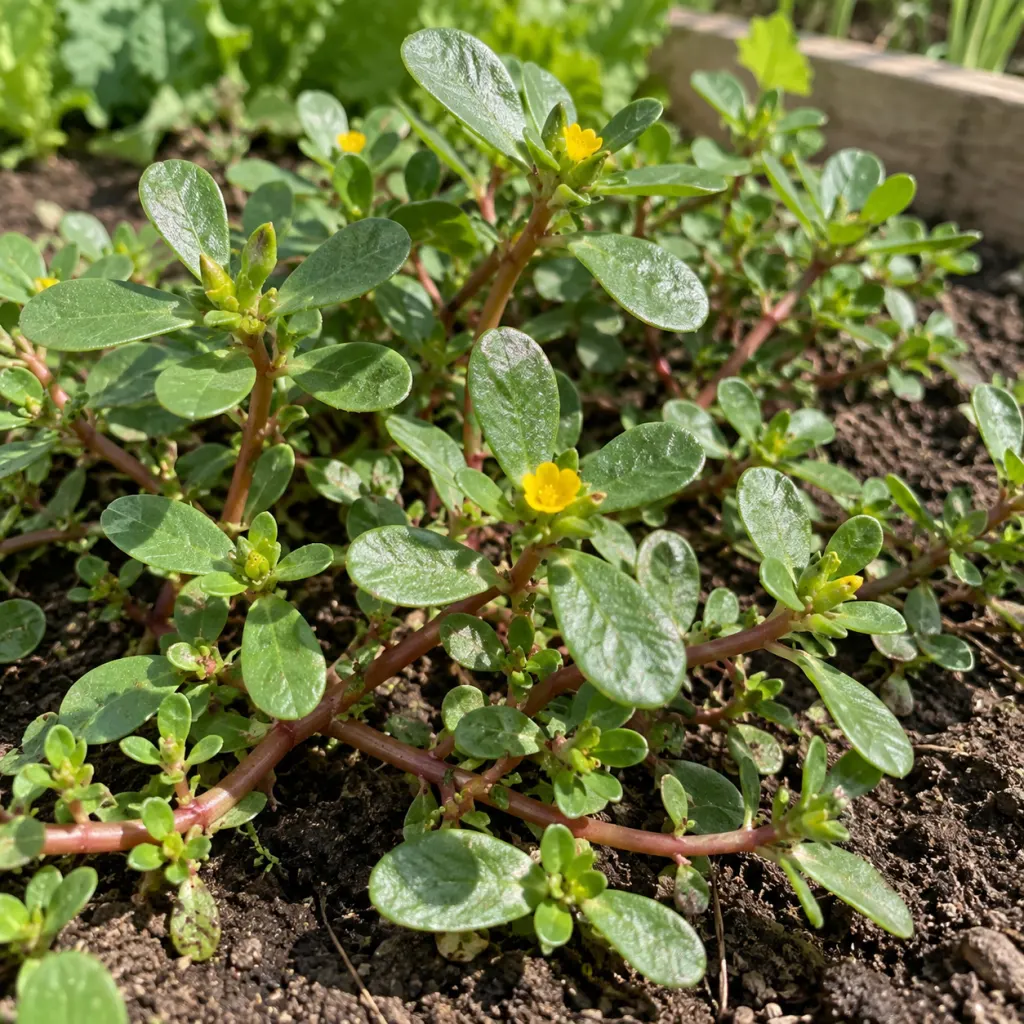
If a flat, succulent plant with reddish stems and small fleshy leaves appears in your garden, it may be common purslane, Portulaca oleracea. The sensible answer is not to leave every plant untouched, but not to yank it blindly either. Purslane can be a useful edible green and a living clue about warm, open soil, yet it can also spread quickly if it is allowed to flower and shed seed. The better move is to identify it, decide whether the growing spot is clean enough for harvest, and manage a small patch before it manages the garden for you.
The Plant Is Usually Common Purslane
Common purslane is a summer annual plant that often shows up in vegetable beds, landscape beds, bare soil, and thin lawns. The University of California Statewide IPM Program describes it as a succulent, mat-forming plant with stems and leaves that can spread across warm, moist garden spaces, and notes that it is also grown or gathered as a salad green in some places https://ipm.ucanr.edu/home-and-landscape/common-purslane/. That combination explains why gardeners argue about it: in the wrong spot it competes with seedlings, but in the right spot it can be treated as a volunteer crop.
The plant has many common names, including verdolaga, garden purslane, little hogweed, and pusley. North Carolina Extension identifies Portulaca oleracea as an annual succulent in the Portulacaceae family, with smooth reddish stems, alternate fleshy oval leaves, and small yellow flowers that may open only briefly https://plants.ces.ncsu.edu/plants/portulaca-oleracea/. Those traits are far more useful than relying on a social media caption or a plant app alone, because several low-growing plants can look similar at a quick glance.
How to Recognize It Before You Make a Decision
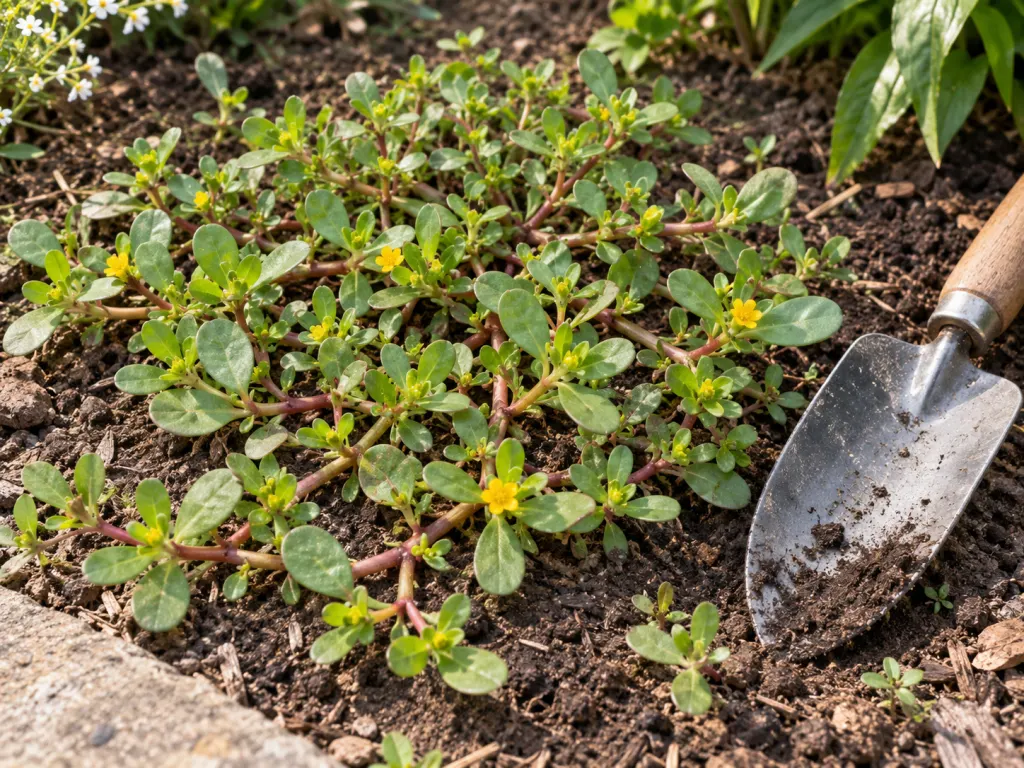
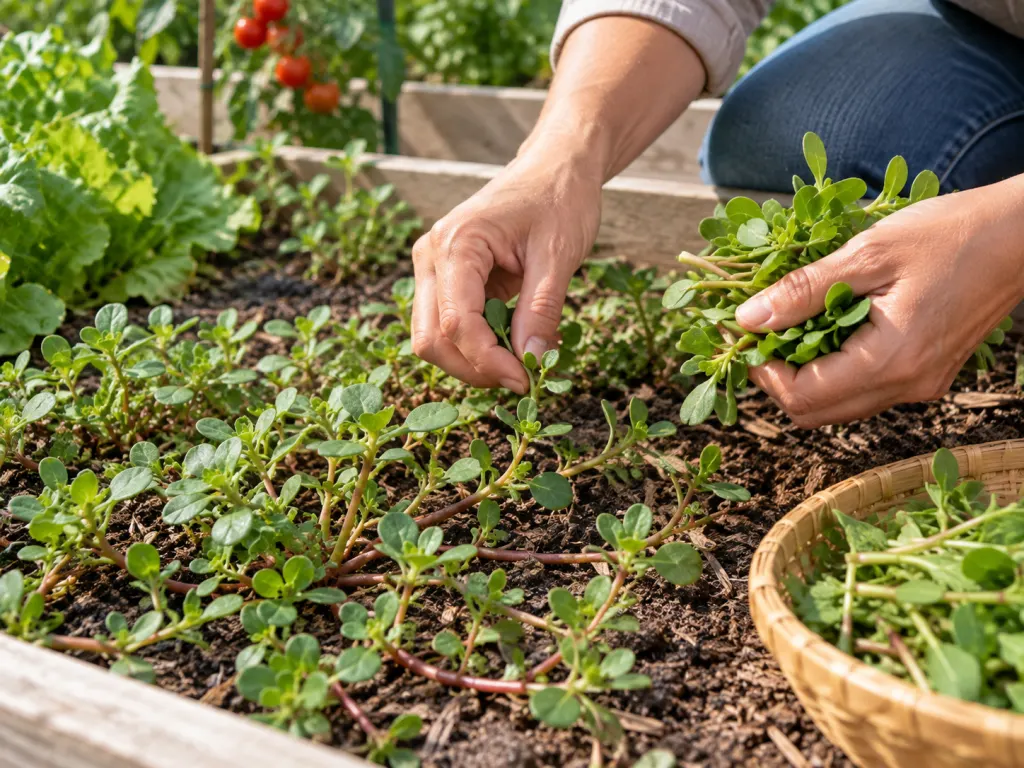
Start with the growth habit. Purslane usually hugs the ground, spreading outward from a central point. Its stems are smooth, fleshy, and often pinkish red to maroon. The leaves are thick, smooth, and oval to club-shaped, with a glossy succulent look. Cornell’s weed science profile describes mature plants as crawling, highly branched, and capable of forming circular patches that can reach several feet across under favorable conditions https://cals.cornell.edu/weed-science/weed-profiles/common-purslane. In a vegetable bed, it may look like a tidy green mat until you notice how much soil surface it covers.
Then look for the flowers and seeds. Purslane flowers are small and yellow, usually with five petals, and they tend to open in bright sunny weather. Seed capsules are small and can mature quickly. UC IPM notes that a single plant may produce very large numbers of tiny seeds and that those seeds can remain viable for years in soil https://ipm.ucanr.edu/home-and-landscape/common-purslane/. That is the main reason a gardener might keep a patch but still remove flowering stems before they turn into a future carpet.
Why Gardeners Sometimes Keep It
Purslane earns its second look because it is edible when correctly identified and harvested from a suitable place. University of Maine Cooperative Extension describes purslane as a familiar garden weed with fleshy reddish-green stems, oval leaves, and bright yellow blooms, and says the entire plant is edible, with leafy tips able to regrow if picked carefully https://extension.umaine.edu/publications/4060e/. The texture is juicy and slightly mucilaginous, which is why some cooks use it fresh, lightly cooked, or as a thickening green in soups and stews.
It can also be useful in the garden as an observation plant. Purslane often thrives where soil is warm, open, and disturbed. If it is appearing repeatedly in one bed, it may be telling you that the soil surface is exposed and receiving enough light for small weed seeds to germinate. That does not make it magical, and it does not mean it belongs everywhere. It means you can read its presence as a practical signal: the bed may benefit from mulch, closer plant spacing, or less summer disturbance.
When You Should Not Eat or Keep It
Do not eat any volunteer plant unless you are confident about its identity and its growing conditions. Purslane may be edible, but a wrong identification changes the whole decision. Cornell notes that spurges can be distinguished from purslane because spurges release a milky white sap when cut, while purslane is fleshy and succulent without that milky sap https://cals.cornell.edu/weed-science/weed-profiles/common-purslane. If the plant has milky sap, unfamiliar flowers, hairy leaves, or a growth habit that does not match purslane, leave it alone until a local extension office or qualified plant expert can help with identification.
Location matters as much as identification. Skip plants growing along roadsides, near pet waste areas, in beds treated with herbicides or pesticides, under roof runoff from questionable surfaces, or in soil you do not trust. The FDA’s produce safety advice is written for fruits and vegetables generally, but the same common-sense handling applies to garden greens: wash produce under running water, keep it away from raw meat and seafood in the kitchen, and use clean hands, boards, and utensils https://www.fda.gov/food/buy-store-serve-safe-food/selecting-and-serving-produce-safely.
A Practical Keep-or-Pull Checklist
Use a simple decision process instead of treating purslane as either treasure or trouble every time it appears:
- Keep a small patch if the plant is confidently identified, growing in clean soil, and not crowding young vegetables.
- Harvest tender tips before the plant flowers heavily, leaving only what you can actually use.
- Remove plants near seedlings because dense mats can compete for light, water, and space.
- Do not compost seed-heavy plants unless your composting system reliably handles weed seeds.
- Mulch bare soil after removal so a new flush of seedlings is less likely to appear.
- Dry pulled plants thoroughly before disposal, because succulent stem pieces can re-root in moist conditions.
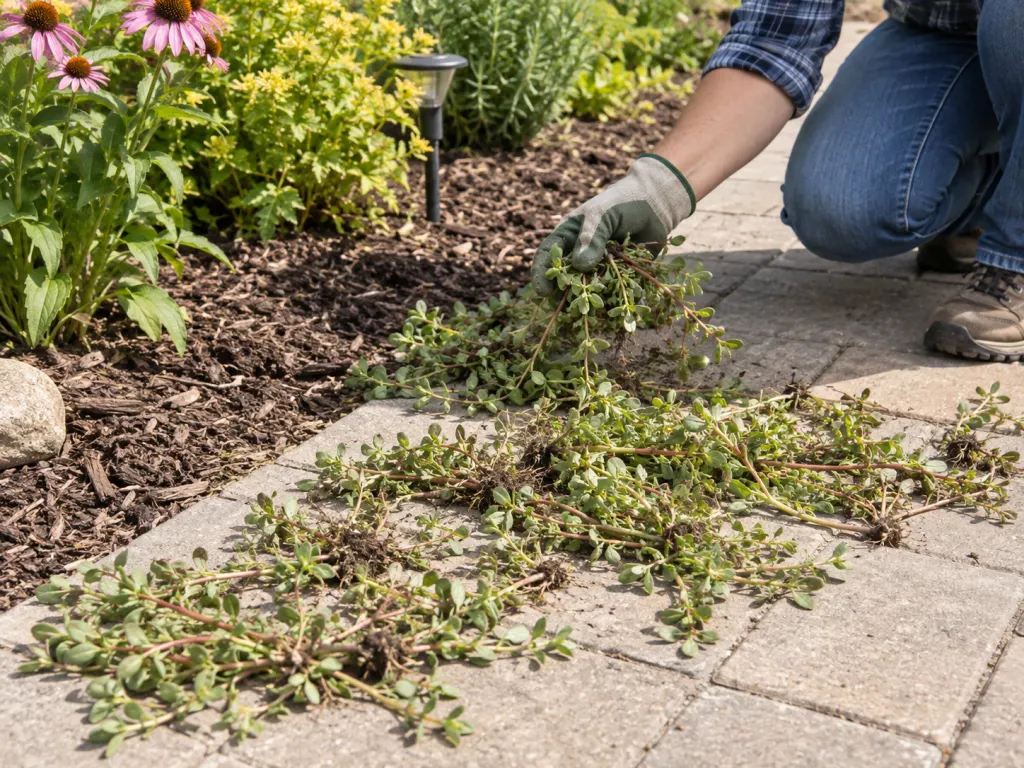
That last point is easy to underestimate. UC IPM warns that fleshy purslane stems can remain viable for several days after hoeing and may re-root when gardens are irrigated again https://ipm.ucanr.edu/home-and-landscape/common-purslane/. Pulling purslane and dropping it back onto damp soil is sometimes less like weeding and more like relocating it. If you are removing it, lift the whole plant, shake off soil, and let it dry on a hard surface or dispose of it before watering the bed.
How to Manage It Without Losing Control
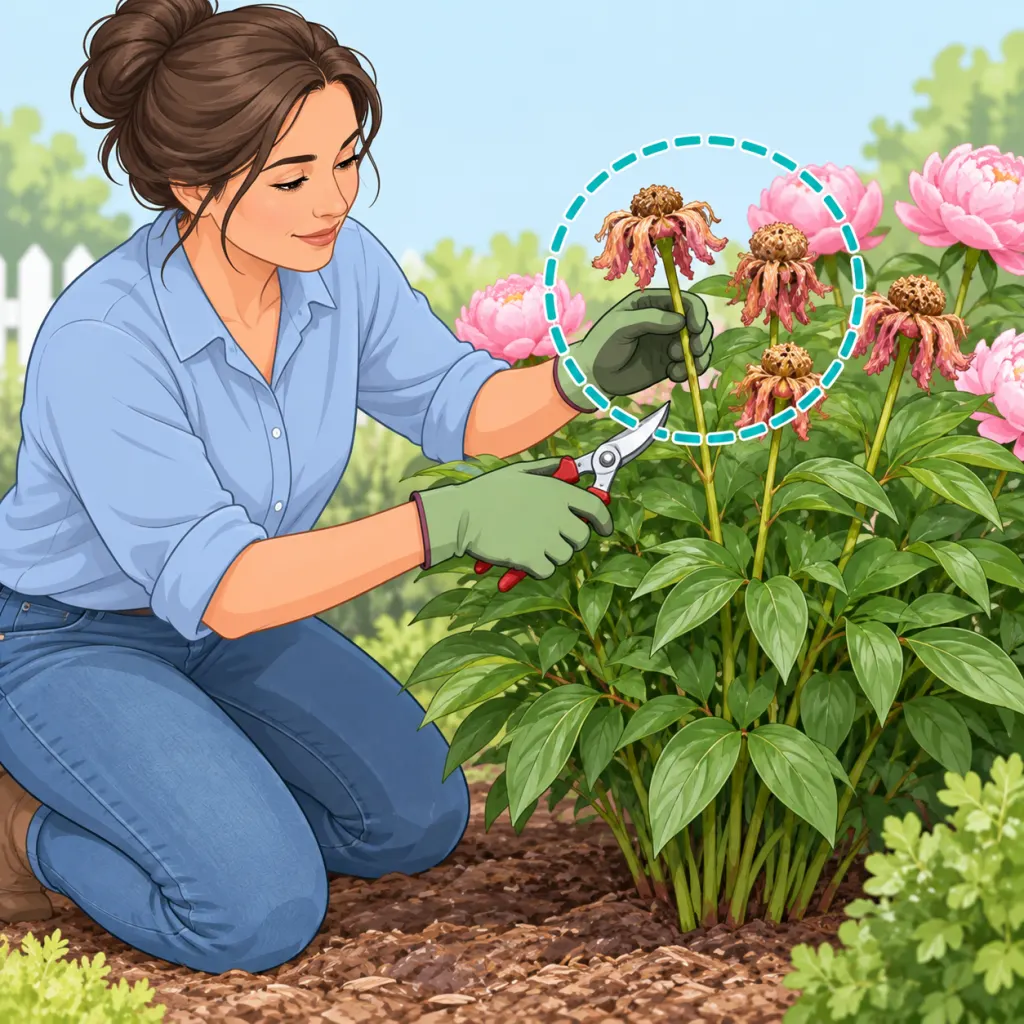
If you want to keep purslane, give it boundaries. A container, the edge of a bed, or a clearly marked corner is better than allowing it to weave through carrots, lettuce, herbs, or new transplants. Pinch the tender tips often and remove flower-heavy stems before seed capsules mature. If you simply let the plant sprawl until late summer, the choice may be made for you next season by a wide flush of seedlings.
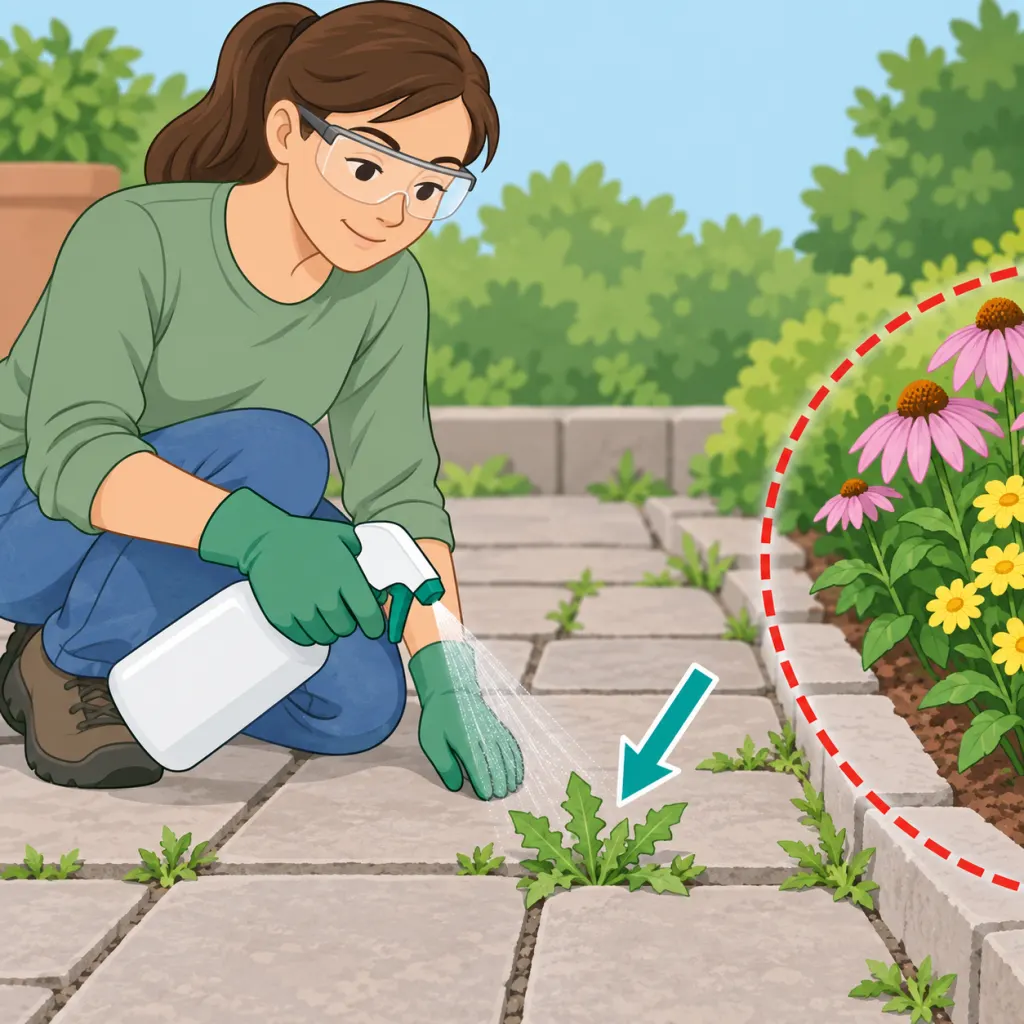
If you do not want purslane, act early. Utah State University Extension recommends hand-pulling plants in planting beds before seed maturation and using a mulch layer about 3 inches deep to reduce seed germination https://extension.usu.edu/planthealth/ipm/ornamental-pest-guide/weeds/w_common-purslane. Young seedlings are much easier to disturb than mature succulent mats. Once stems are thick and flowers have started, removal takes more care because broken pieces and ripening seed can keep the problem going.
Why Uprooting Can Backfire
The headline advice to never uproot purslane is too absolute, but it points toward a real gardening mistake: rough uprooting at the wrong stage can scatter plant pieces and expose fresh soil. Cornell explains that common purslane often germinates in response to conditions associated with summer soil disturbance, including light and warm soil, and that larger plants can re-root or continue setting seed after being disturbed https://cals.cornell.edu/weed-science/weed-profiles/common-purslane. In other words, careless hoeing can turn one patch into several smaller jobs.
A better approach is deliberate removal or deliberate cultivation. If you are pulling it, do it before seed capsules mature, remove as much of the crown and stems as possible, and do not irrigate immediately over scattered fragments. If you are keeping it, harvest regularly and prevent seed drop. Either way, the goal is the same: make purslane a controlled choice instead of an accidental groundcover.
Using Purslane in the Kitchen, Carefully
For a culinary harvest, choose young, clean tips from a plant you have confidently identified. Rinse them well under running water, trim away gritty or damaged parts, and use them soon after picking. University of Maine Extension notes that purslane can be washed and cooked like spinach and that raw purslane can be served in salad https://extension.umaine.edu/publications/4060e/. Its flavor is often described as tart, lemony, or slightly salty, which makes it more of an accent green than a neutral leafy base.
Keep the serving idea modest. This article is not recommending purslane as a treatment for any condition or as a substitute for professional guidance. It is simply explaining why gardeners may choose to identify, harvest, or manage a plant that is too often dismissed at first sight. If you have a personal medical concern, a history of issues with high-oxalate foods, or uncertainty about whether wild greens fit your situation, treat that as a question for a qualified professional rather than for a garden article.
The Bottom Line for Home Gardeners
Do not uproot purslane automatically, but do not romanticize it either. Confirm the plant, check the location, decide whether you can use it, and manage it before it produces a seed problem. In a clean, known bed, a small patch can become a useful edible volunteer. In a crowded vegetable row, a seed-heavy mat is a weed. The difference is not the plant alone; it is timing, placement, and the gardener’s attention.
Wrap-Up
Common purslane is worth pausing over because it is both a vigorous garden weed and a usable edible green when correctly identified. Keep it only where it is clean, controlled, and not crowding your crops. Remove it early where it competes, dry pulled plants before disposal, and prevent mature plants from dropping seed. The smartest choice is not “never pull it” or “always pull it,” but to recognize the plant and manage it on purpose.
Frequently Asked Questions
- → What plant is usually meant by “never uproot this plant” in garden posts?
Those posts usually refer to common purslane, Portulaca oleracea. It is a low-growing annual succulent with fleshy leaves, reddish stems, and small yellow flowers. Confirm the plant by several traits before deciding what to do with it.
- → Is purslane a weed or a useful plant?
It can be both. Purslane is useful when correctly identified, growing in a clean place, and kept as a controlled edible green. It is a weed when it crowds crops, spreads through a bed, or is allowed to drop large amounts of seed.
- → How can I tell purslane from similar low-growing plants?
Look for smooth succulent leaves, reddish fleshy stems, a mat-forming habit, and small yellow flowers. Avoid lookalikes that release milky sap when broken, and do not eat any plant if the identification is uncertain.
- → Can I leave purslane growing around vegetables?
Only in moderation. A small patch at the edge of a bed may be manageable, but dense mats can compete with young vegetables for light, water, and space. Remove it from seedling rows and harvest or cut it before it sets seed.
- → What is the safest way to harvest garden purslane?
Harvest only from clean soil where no herbicides, pesticides, pet waste, roadside runoff, or unknown contamination is likely. Pick tender tips from a confirmed plant, rinse under running water, and use clean kitchen tools.
References
This content was developed and refined using reliable sources.
- https://ipm.ucanr.edu/home-and-landscape/common-purslane
- https://plants.ces.ncsu.edu/plants/portulaca-oleracea
- https://extension.usu.edu/planthealth/ipm/ornamental-pest-guide/weeds/w_common-purslane
- https://extension.umaine.edu/publications/4060e
- https://cals.cornell.edu/weed-science/weed-profiles/common-purslane
- https://www.fda.gov/food/buy-store-serve-safe-food/selecting-and-serving-produce-safely