 Save
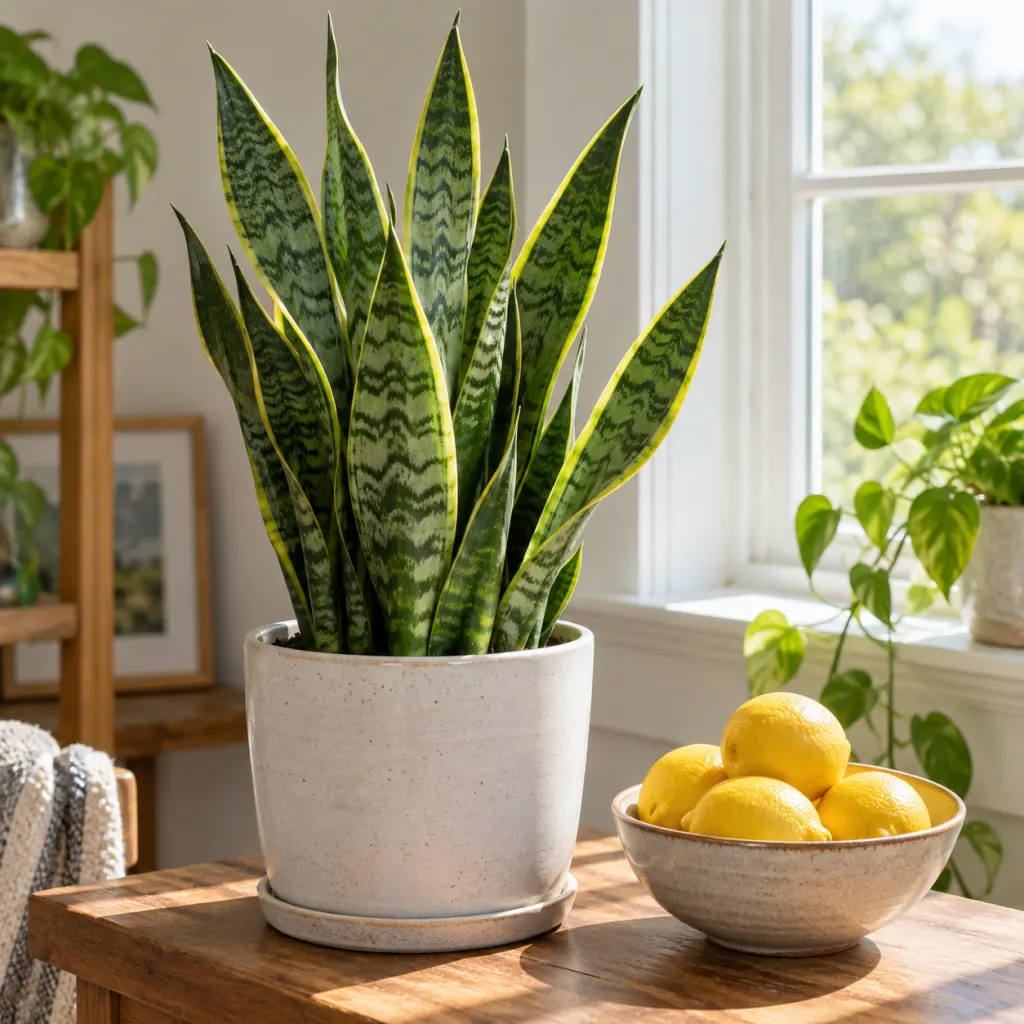
No, lemon juice is usually not a good routine treatment for a snake plant. It can make water more acidic, but that does not mean it improves growth, repels pests, or fixes yellow leaves. Snake plant care is simpler and less dramatic: use a container with drainage, let the potting mix dry between waterings, keep the leaves clean, and respond to pests with proven houseplant practices. North Carolina Extension describes Dracaena trifasciata, the plant many people still call Sansevieria, as durable and drought-tolerant, but also notes that well-drained soil and careful watering are essential because overwatering can rot roots (North Carolina Extension Gardener Plant Toolbox). Lemon juice does not solve those basics. In many homes, it adds one more variable to a plant that prefers restraint.
What Lemon Juice Actually Changes
Lemon juice is acidic. University of Minnesota Extension notes that lemon or lime juice used in food acidification commonly falls in a low pH range, with bottled juice more consistent than fresh juice (University of Minnesota Extension). That fact is useful in a kitchen, but a plant pot is not a jar of pickles. The growing medium contains bark, peat, coir, perlite, fertilizer salts, lime, tap-water minerals, and decomposing organic material. A splash of lemon water may briefly lower the acidity of the water moving through the pot, but it does not give you a controlled, lasting soil adjustment.
Snake plants also are not classic acid-loving plants. North Carolina Extension lists snake plant cultural conditions as neutral to alkaline soil pH and good drainage (North Carolina Extension Gardener Plant Toolbox). That does not mean every snake plant wants a high-pH pot, but it does undercut the idea that lemon juice is automatically beneficial. If the plant is already in a modern commercial mix, the more important question is usually whether the mix drains freely and dries on a reasonable schedule.
Why Routine Lemon Watering Is a Poor Trade
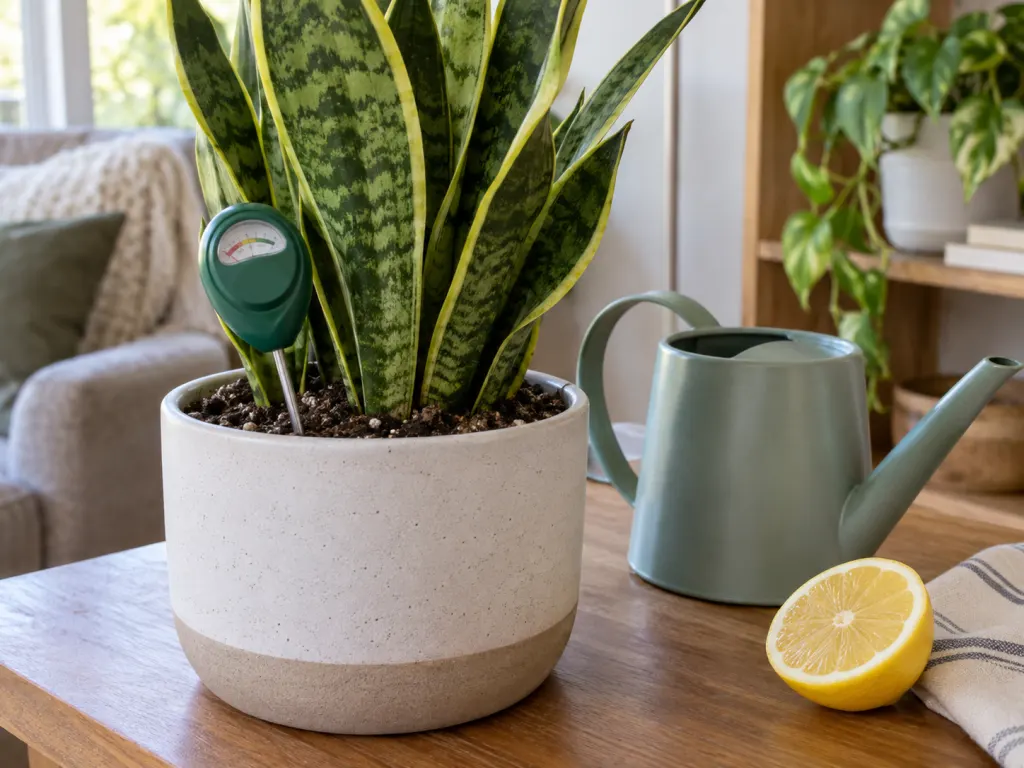
The biggest practical risk is not that one accidental drop of lemon juice will destroy the plant. The risk is that repeated acidic watering can make care less predictable. University of Maryland Extension explains that potting media in containers must supply roots with air, water, support, and nutrients, and that container roots depend on a small volume of material compared with garden soil (University of Maryland Extension). In that small volume, repeated home additives can concentrate, react with minerals, or leave residues faster than they would outdoors.
There is also no need to use lemon juice as a regular watering schedule. University of Maryland Extension says excess water reduces oxygen in soil and can damage fine roots, while overwatered indoor plants may show wilting, yellowing, scorch, leaf drop, or collapse (University of Maryland Extension). Those signs are often mistaken for a need for a booster. For a snake plant, they usually mean the grower should check the pot, mix, and watering rhythm before adding anything else.
- If leaves are yellowing: check whether the lower potting mix is still wet before watering again.
- If leaves are soft near the base: inspect drainage and roots rather than adding an acidic liquid.
- If growth is slow: consider light level, season, pot size, and whether fertilizer has been used sensibly during active growth.
- If the surface looks crusty: review fertilizer and water quality because mineral buildup can collect in potting media.
Better Ways to Support a Snake Plant
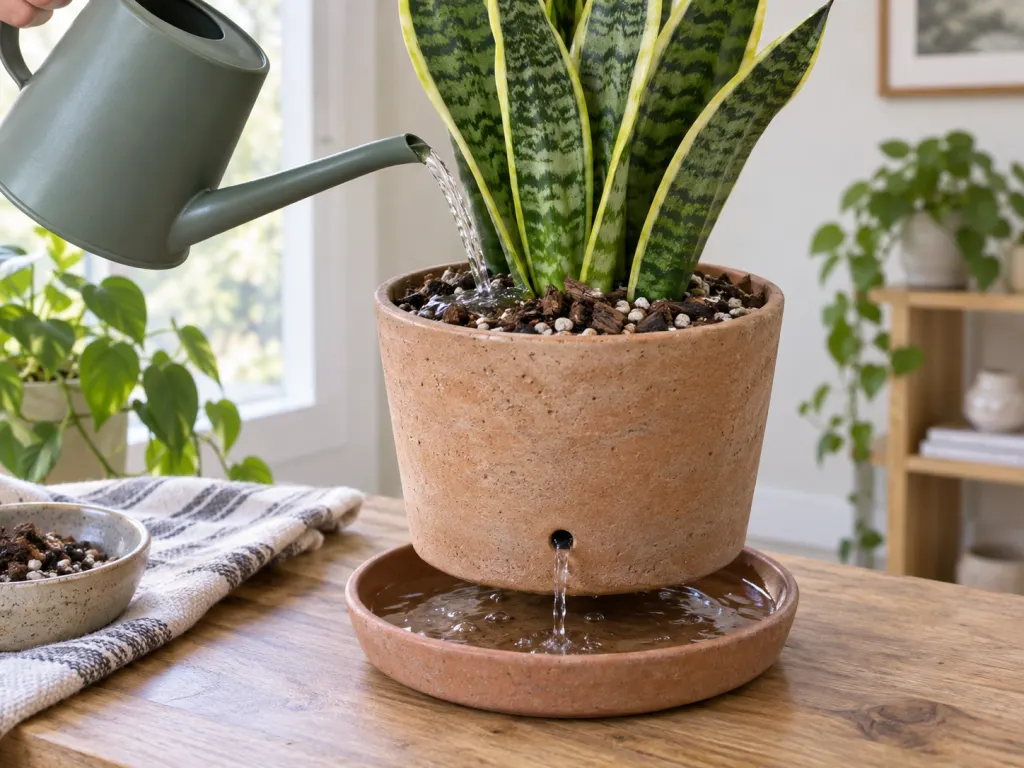
Start with the pot. It should have a drainage hole, and the plant should not sit in water collected in a saucer. University of Maryland Extension recommends watering indoor plants thoroughly so water exits the bottom, then emptying excess water from below the pot (University of Maryland Extension). This flush-through habit is more useful than adding lemon juice because it hydrates the mix evenly and helps reduce concentrated soluble salts.
Next, let the plant guide the timing. A snake plant has thick, water-storing leaves and generally tolerates drying better than staying wet. Lift the pot after watering and again several days later; the change in weight teaches you how the mix dries. For deeper containers, a wooden skewer or dowel can show whether moisture remains lower in the pot. Watering by calendar alone is a common reason a tough plant starts to decline.
If Leaves Look Dull or Dusty
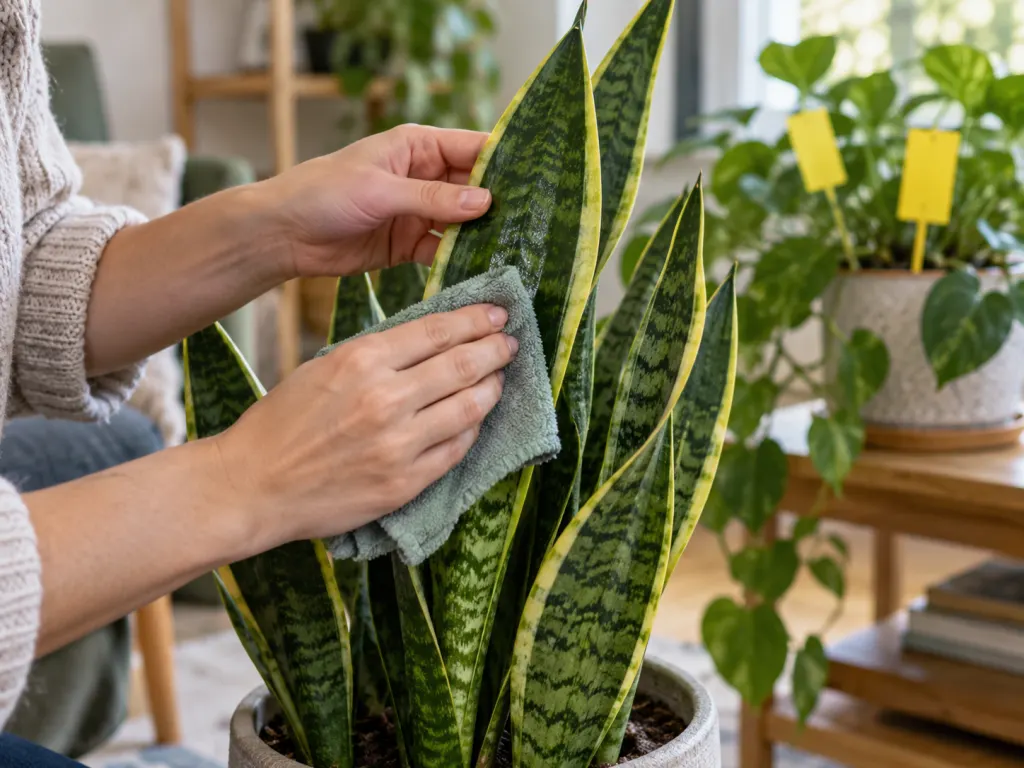
Lemon juice is sometimes suggested as a leaf wipe because people want shine. A plain damp cloth is the better first choice. University of Minnesota Extension recommends keeping indoor plants clean by washing leaves with a damp cloth and avoiding leaf-shine products or milk (University of Minnesota Extension). That advice fits snake plants well because their upright leaves collect dust but do not need polish.
If you wipe leaves with lemon water, even lightly diluted, the liquid can dry unevenly and leave sticky or acidic residue in leaf grooves and along the margins. It can also make the plant look streaky, especially on variegated varieties with pale edges. Dust removal is a physical job, not a chemistry project: support each leaf with one hand, wipe gently from base to tip, and rinse the cloth often so you are not just moving dust from one leaf to another.
If Gnats Are the Reason You Reached for Lemon
Small flies around houseplants are often fungus gnats, and lemon juice is not the most dependable response. University of Maryland Extension says fungus gnat larvae breed in moist potting soil and that overwatering contributes to the fungi the larvae feed on (University of Maryland Extension). The first fix is to let the surface dry, adjust watering, remove fallen plant debris, and use yellow sticky traps to monitor adults. For persistent problems, labeled products containing Bacillus thuringiensis israelensis are an established option for larvae in potting soil.
It is tempting to treat pests with whatever is already in the kitchen, but pests are better handled by identification and habit change. Check the undersides and bases of leaves for mealybugs or mites, isolate a newly troubled plant from nearby pots, and avoid leaving old leaves or soggy debris on the soil surface. A cleaner, drier surface makes the pot less inviting to gnats without pushing the soil chemistry around.
What to Do If You Already Used Lemon Juice
If you used a weak lemon-water mix once, do not panic. Stop using it, let the potting mix dry appropriately, and watch the plant over the next two to four weeks. If the plant looks normal, there may be nothing else to do. The bigger concern is repeated use, direct application to leaves, or adding lemon juice to a pot that was already wet.
If the pot smells sour, stays wet for many days, or the leaf bases soften, remove the plant from the pot and inspect the root area. Firm pale or tan roots are preferable; dark, mushy roots suggest the mix has stayed too wet. Trim collapsed tissue with clean tools, repot into a fresh, fast-draining houseplant or succulent-style mix, and choose a container that is not much larger than the root mass. Oversized pots hold moisture longer than a snake plant usually needs.
When pH Testing Makes Sense
Most snake plant owners do not need to chase exact pH numbers. Testing becomes useful when several plants in the same home show persistent poor growth despite correct watering, good light, and fresh potting mix. It also makes sense if tap water leaves heavy mineral deposits or if fertilizer has been used often. In those cases, a simple pH and soluble-salt check can tell you more than guessing with lemon juice.
For an ordinary potted snake plant, the more practical reset is fresh potting medium. University of Maryland Extension notes that commercial soilless mixes are lightweight, drain well, hold water and nutrients, and are commonly formulated with ingredients such as peat moss, perlite, bark, compost, or coir (University of Maryland Extension). Repotting into an appropriate mix corrects many container problems more predictably than repeated homemade acid additions.
A Quick Decision Guide
Use this rule of thumb: if the problem can be explained by water, light, drainage, dust, or pests, address that cause first. Lemon juice should not be the default answer.
- Use plain water when the potting mix is dry enough to need it.
- Use fresh potting mix when old mix is compacted, sour, or slow to drain.
- Use a damp cloth when leaves are dusty.
- Use sticky traps and drier soil surface management when fungus gnats appear.
- Use measured fertilizer only during active growth and according to the product label.
Wrap-Up
Lemon juice sounds natural, but it is not a reliable snake plant care tool. It can acidify water, yet snake plants are valued partly because they tolerate ordinary indoor conditions and prefer restraint. Their most important needs are good drainage, careful watering, suitable light, clean leaves, and prompt attention to pests. If a snake plant is struggling, read the pot before reaching for the lemon: check moisture, drainage, root firmness, leaf dust, and signs of insects. In most cases, plain water and better timing do more good than a kitchen acid.
Frequently Asked Questions
- → Can I put lemon juice directly on snake plant leaves?
It is better not to. If the leaves are dusty, wipe them with a soft cloth dampened with plain water. Lemon juice can dry into streaks or residue and does not provide a reliable benefit for the leaf surface.
- → Will lemon water make a snake plant grow faster?
There is no good reason to treat lemon water as a growth shortcut. Snake plants usually respond more predictably to appropriate light, a draining potting mix, careful watering, and modest fertilizer during active growth.
- → What should I do if my snake plant has yellow leaves?
Check the potting mix first. Yellowing often follows overly wet conditions, poor drainage, or a pot that is too large for the root mass. Let the mix dry, empty saucers after watering, and inspect the roots if the base of the plant feels soft.
- → Can lemon juice get rid of fungus gnats in a snake plant pot?
Do not rely on lemon juice for fungus gnats. Let the soil surface dry between waterings, remove debris, use yellow sticky traps to monitor adults, and consider a labeled indoor-plant product for larvae if the problem persists.
- → Is there ever a reason to adjust soil pH for a snake plant?
Most home growers do not need to adjust pH for a snake plant. If several plants struggle despite good watering, light, and fresh mix, testing the potting medium is more useful than guessing with acidic kitchen ingredients.
References
This content was developed and refined using reliable sources.
- https://plants.ces.ncsu.edu/plants/dracaena-trifasciata
- https://extension.umn.edu/food/preparing/cooking-at-home/food-preservation/pickling
- https://extension.umd.edu/resource/growing-media-potting-soil-containers
- https://www.extension.umd.edu/resource/overwatered-indoor-plants
- https://www.extension.umd.edu/resource/watering-indoor-plants
- https://extension.umn.edu/garden-and-home/yard-and-garden/yard-and-garden-insects/insects-on-indoor-plants
- https://www.extension.umd.edu/resource/fungus-gnats