 Save
Celery juice can be a refreshing way to drink a vegetable, but it is not a shortcut to total wellness. The most accurate view is modest: celery contributes water, flavor, and some nutrients, while the larger benefits of eating well come from an overall pattern of varied foods. Popular online claims often make one ingredient sound more powerful than it is. A better question is not whether celery juice is special, but whether it helps you build a routine you can repeat without crowding out fiber-rich foods, balanced meals, and basic food safety.
Start with what celery juice actually is
Celery juice is simply the liquid extracted from celery stalks. That sounds obvious, but it matters because many wellness claims attach broad meanings to a very ordinary food. Celery belongs in the vegetable category, and its nutritional profile is best understood through food composition data, not social-media anecdotes. The USDA describes FoodData Central as its comprehensive source for food composition data, including nutrient databases for foods and beverages (USDA FoodData Central). Nutrition.gov also directs readers to FoodData Central as a way to look up what is in the foods they eat (Nutrition.gov).
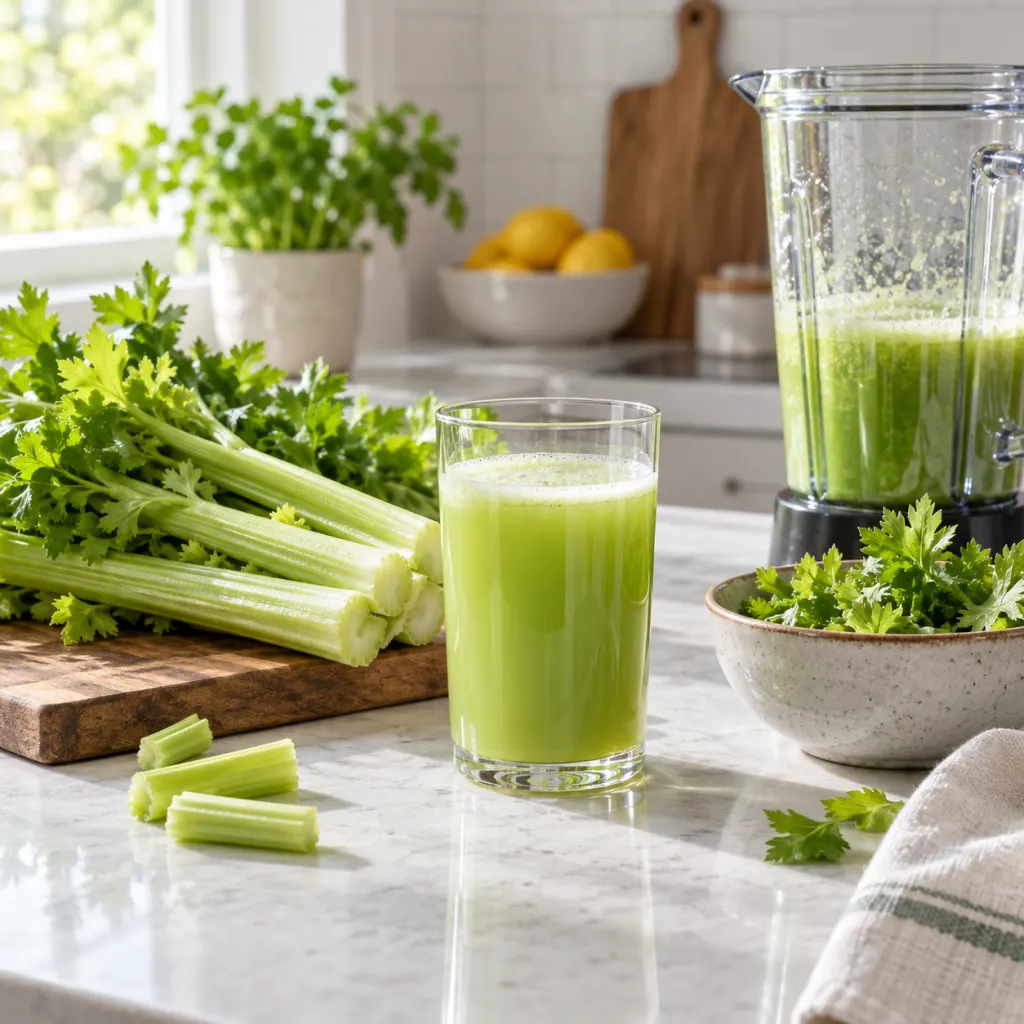
In practical kitchen terms, celery juice is mostly water from a crisp, low-calorie vegetable, plus smaller amounts of minerals, vitamins, and plant compounds naturally found in celery. That makes it different from plain water, but it does not make it a complete breakfast, a full vegetable plan, or a substitute for eating a variety of foods. Its main value for many people is behavioral: it may be an enjoyable morning drink, a lower-sugar swap for sweet beverages, or a way to use extra celery before it wilts.
Why juicing changes the vegetable
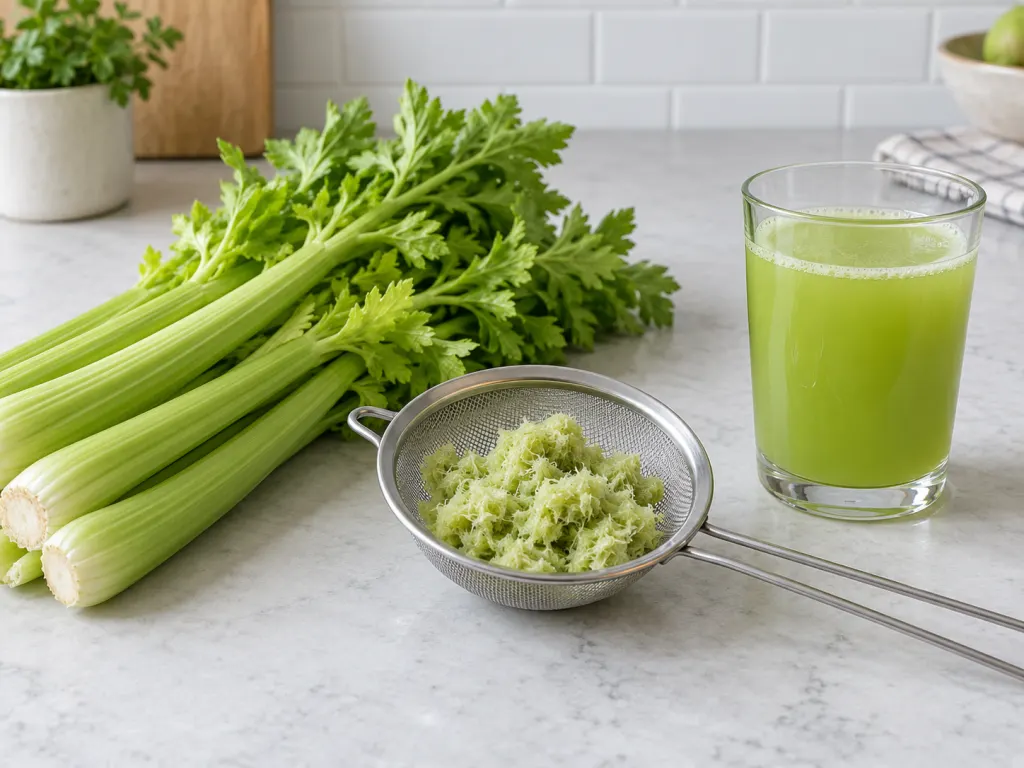
Juicing is not the same as eating celery stalks. Mayo Clinic explains that juice contains many vitamins, minerals, and plant chemicals from fruits or vegetables, but whole produce also contains fiber that is lost during most juicing (Mayo Clinic). This is the first place where many celery juice claims need a pause. If the drink has been strained, it may feel light and easy to sip, but it will usually be less filling than chewing the vegetable or blending the edible parts into a thicker drink.
That fiber difference matters for everyday satisfaction. CDC guidance on vegetables and fruits notes that their water and fiber can slow digestion and help people feel full; the same page points out that many fruit juices have little to no fiber and are less filling than whole fruit (CDC). Celery juice can still fit into a meal pattern, but it should not be judged as though it keeps everything that whole celery offers.
A claim-by-claim way to think about it
The most useful way to evaluate celery juice is to separate ordinary food facts from oversized promises. Ordinary food facts are narrow and testable: celery is a vegetable, juicing changes texture and fiber, raw produce should be washed, and a single drink has limited nutritional range. Oversized promises usually leap from those facts to sweeping outcomes for energy, skin appearance, digestion, or organ function. Those leaps are where readers should slow down.
Use this quick filter when you see a bold celery juice post:
- Does the claim name a specific measurable outcome, or does it use vague wellness language? Vague language is easier to market and harder to verify.
- Is celery juice being compared with whole celery, a mixed meal, water, or a sugary drink? The comparison changes the answer.
- Does the post mention what was removed by juicing, especially fiber? If not, the explanation is incomplete.
- Does it make one food sound responsible for broad body changes? That is usually a sign to look for stronger evidence.
- Does it discuss safe handling of raw produce? A practical food article should include that, not just benefits language.
Where celery juice can fit well
Celery juice is most reasonable when it is treated as a beverage choice, not as the center of a wellness identity. For someone who likes its clean, savory taste, it may be a pleasant alternative to sweet drinks. For someone who does not enjoy chewing raw celery, it may make the flavor more approachable. For someone trying to cook at home more often, using celery in juice, soups, salads, and snacks can reduce waste and make vegetables more visible in the kitchen.
It still works best alongside variety. CDC healthy eating guidance emphasizes whole, nutrient-dense foods, including vegetables, fruits, protein foods, healthy fats, and whole grains, and notes that many people in the United States need more nutrient-dense foods while limiting highly processed foods, added sugars, added sodium, and refined carbohydrates (CDC Healthy Eating Tips). A glass of celery juice cannot provide that whole pattern. It can only participate in it.

Fiber, fullness, and the blender option
If your goal is to feel satisfied, blending may be more useful than juicing because it keeps more of the edible plant material in the glass. Mayo Clinic suggests thinking about a blender instead of a juicing machine because blending the edible parts can create a drink with more plant compounds and fiber (Mayo Clinic). The result will be thicker and may need water, cucumber, lemon, herbs, or ice to make the texture pleasant, but it is closer to the original vegetable.
That does not mean everyone must blend. Some people prefer a strained juice because it is lighter, less pulpy, and easier to drink. The key is honesty about the tradeoff. A clear celery juice is more like a flavored vegetable water with some nutrients; a blended celery drink is more like a thin smoothie. Whole celery with hummus, yogurt dip, beans, eggs, or a meal offers chewing, crunch, and more staying power. Each choice can make sense in a different moment.
Electrolytes are real, but context still matters
Celery naturally contains minerals, including sodium and potassium, which are part of the broader electrolyte conversation. CDC explains that sodium and potassium help the body maintain fluid and blood volume and support nerve and muscle function (CDC Sodium and Potassium). That does not mean celery juice should be framed as a special electrolyte plan. Most people get electrolytes from many foods and drinks throughout the day, and celery is only one modest contributor among many.
This context is especially important because celery has a naturally salty flavor compared with many other raw vegetables. For most home cooks, that flavor can be useful: celery juice with lemon or herbs may taste satisfying without added sweeteners. But if a person has been given an individualized sodium, potassium, or fluid plan, a clinician or registered dietitian is the right person to ask about how any concentrated vegetable drink fits.
Food safety matters because celery juice is raw
Celery juice is usually made from raw stalks, so safe handling is not a side note. FDA guidance on produce safety explains that fresh fruits and vegetables can become contaminated in the field, during storage, or during preparation, and recommends choosing produce that is not bruised or damaged, keeping raw produce separate from raw meat, poultry, and seafood, and washing produce under running water before eating or preparing it (FDA).
For celery juice, that means rinsing stalks thoroughly, trimming damaged areas, washing hands and surfaces, using clean equipment, and drinking freshly made juice soon after preparation. Mayo Clinic also notes that harmful bacteria can grow quickly in freshly made juice and advises making only as much as you can drink at once; when buying fresh juice, it recommends choosing a pasteurized product (Mayo Clinic). These steps are less glamorous than wellness claims, but they are far more useful.

Vitamin K is a nutrient, not a magic signal
Celery contains vitamin K, a nutrient found in many foods. NIH's Office of Dietary Supplements explains that vitamin K is needed for normal clotting and healthy bones, and that green leafy vegetables and some other foods provide it (NIH Office of Dietary Supplements). This is a good example of a grounded claim: celery can contribute a nutrient. It is not a reason to assign broad effects to celery juice beyond what the evidence supports.
Readers who have been told to keep vitamin K intake steady should treat celery juice like any other regularly consumed green vegetable drink and ask their care team for individual guidance. Consistency matters more than chasing trends. If celery juice is occasional, it is simply one beverage. If it becomes a daily habit, it becomes part of a person's usual intake pattern, which is worth mentioning during nutrition or health conversations.
How to make a calmer choice
A good celery juice routine is boring in the best way: wash the celery, prepare a small amount, drink it because you enjoy it, and keep eating real meals. Avoid turning it into a test of discipline. If you dislike the flavor, there is no reason to force it. If you like it, pair it with breakfast or a snack that includes protein, fat, or fiber so the drink is not doing work it cannot do on its own.
It also helps to compare celery juice with your actual alternative. If the alternative is a sugary bottled drink, unsweetened celery juice may be a useful swap. If the alternative is a bowl of whole vegetables, beans, grains, and protein, the meal is doing much more. If the alternative is water, celery juice adds flavor and some nutrients but also takes more prep and cleanup. Context is the difference between a reasonable kitchen habit and an exaggerated wellness ritual.
The bottom line on celery juice claims
Celery juice is best understood as a simple vegetable drink with limits. It can hydrate, add a savory flavor, and contribute some nutrients. It can also be overvalued when posts ignore fiber, overall diet quality, safe handling, or individual needs. The most evidence-aligned approach is to enjoy celery juice if it helps you drink fewer sweet beverages or use more vegetables, while giving whole produce, varied meals, and professional guidance the larger role they deserve.
Wrap-Up
Celery juice does not need to be either dismissed or glorified. It is a raw vegetable drink that may be refreshing and may help some people include more vegetables in their routine. The evidence supports a modest view: juicing changes celery by removing much of the fiber, whole vegetables are usually more filling, and raw produce should be handled carefully. Celery juice fits best when it is unsweetened, freshly prepared, and paired with a broader eating pattern that includes varied vegetables and fruits, protein foods, whole grains, healthy fats, and enough fiber. Treat strong wellness claims as a prompt to ask better questions, not as proof.
Frequently Asked Questions
- → Is celery juice healthier than eating celery?
Not usually. Juicing makes celery easier to drink, but it removes much of the fiber that whole celery provides. If fullness and fiber matter to you, whole celery or a blended drink is usually the stronger choice.
- → Can celery juice count as a vegetable?
It can contribute to vegetable intake, but it should not be the only form of vegetables in your day. Whole vegetables offer chewing, texture, and fiber, so celery juice works best alongside salads, cooked vegetables, soups, beans, and other plant foods.
- → Is it better to drink celery juice in the morning?
The time of day is less important than the overall pattern. Morning celery juice is fine if you enjoy it, but it does not become more powerful because of the clock. Pairing it with a balanced breakfast may make the routine more satisfying.
- → Should I juice or blend celery?
Choose based on texture and purpose. Juicing creates a thinner drink and removes more pulp. Blending keeps more edible plant material, which can make the drink thicker and usually more filling.
- → How can I prepare celery juice more safely?
Start with fresh celery that is not damaged, wash it under running water, use clean hands and equipment, keep raw produce away from raw animal foods, and make only what you plan to drink soon. If buying fresh juice, pasteurized options are the more cautious choice.
References
This content was developed and refined using reliable sources.
- https://fdc.nal.usda.gov
- https://www.nutrition.gov/topics/whats-food
- https://www.mayoclinic.org/healthy-lifestyle/nutrition-and-healthy-eating/expert-answers/juicing/faq-20058020
- https://www.cdc.gov/healthy-weight-growth/healthy-eating/fruits-vegetables.html
- https://www.cdc.gov/nutrition/features/healthy-eating-tips.html
- https://www.cdc.gov/salt/sodium-potassium-health/index.html
- https://www.fda.gov/food/buy-store-serve-safe-food/selecting-and-serving-produce-safely
- https://ods.od.nih.gov/factsheets/VitaminK-Consumer