 Save
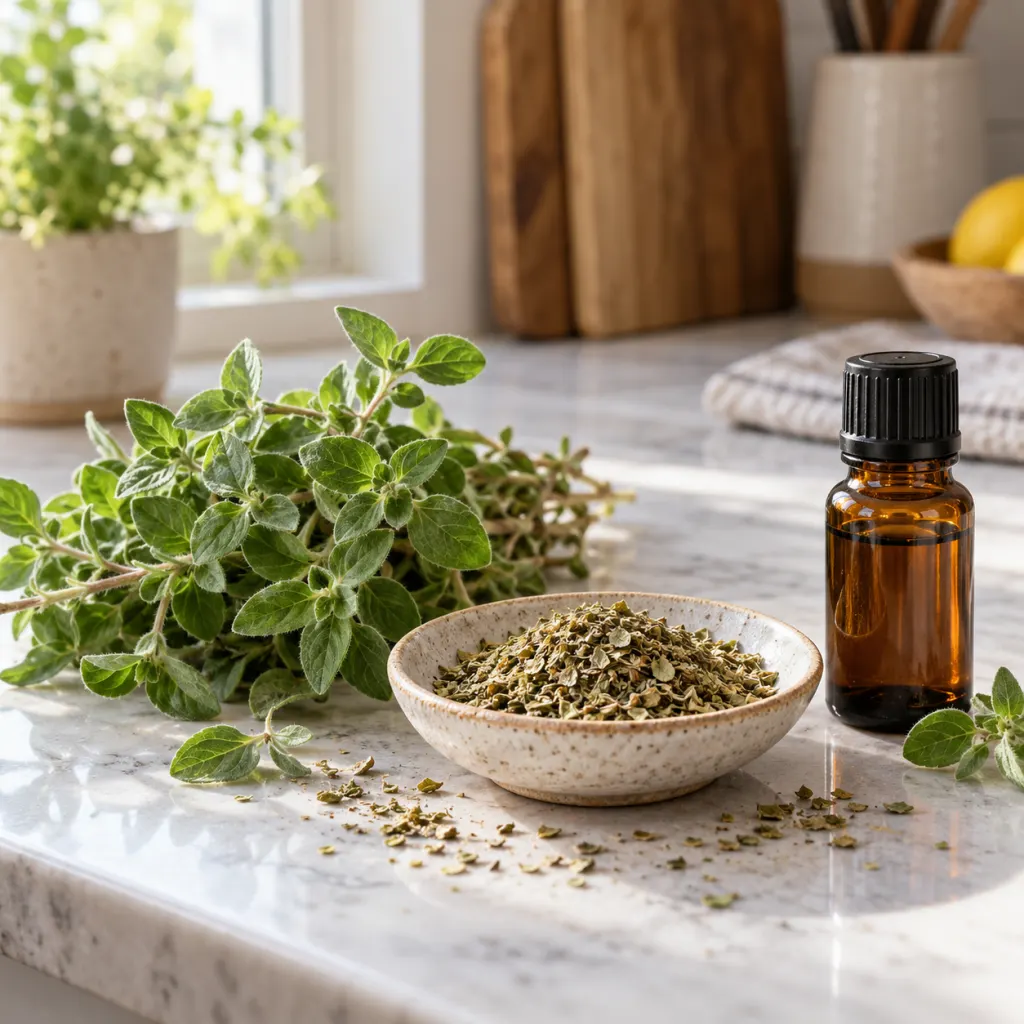
The short answer: oregano has real chemistry behind its reputation, but the boldest online claims usually stretch the evidence. Studies have found that oregano essential oil and compounds such as carvacrol and thymol can show antimicrobial activity in laboratory settings, including against selected bacteria and Candida species. That does not mean a sprinkle of dried oregano, a homemade infusion, or a retail oil product will work the same way. For everyday readers, the useful takeaway is simple: oregano is a worthwhile culinary herb, not a stand-in for food-safety steps, sanitation, or individualized health care.
What the evidence actually says
Oregano belongs to a group of aromatic herbs whose scent and flavor come partly from volatile compounds. The best-studied oregano preparations are usually essential oils, not the dried flakes sitting in a spice jar. A 2025 PubMed-indexed study reported in vitro antibacterial activity from oregano essential oils and active components including carvacrol and thymol, meaning the work was done under controlled experimental conditions rather than as a home-use result https://pubmed.ncbi.nlm.nih.gov/40264663/. Earlier research also examined oregano essential oil, thymol, and carvacrol against selected bacteria and described effects on microbial cell membrane integrity https://pubmed.ncbi.nlm.nih.gov/11556910/.
That distinction matters because many popular claims collapse several different things into one idea. Dried oregano, fresh oregano, oregano tea, concentrated essential oil, and supplement products are not interchangeable. Their chemical profiles, concentration, preparation, and intended use differ. A related article on this site, Oregano Compounds and Herbal Infusion Claims, looks more closely at the way oregano compounds become simplified in social posts. This article focuses on the antibacterial and antifungal wording itself: where it has a scientific basis, where it becomes too broad, and how to think about oregano in a calm, practical way.
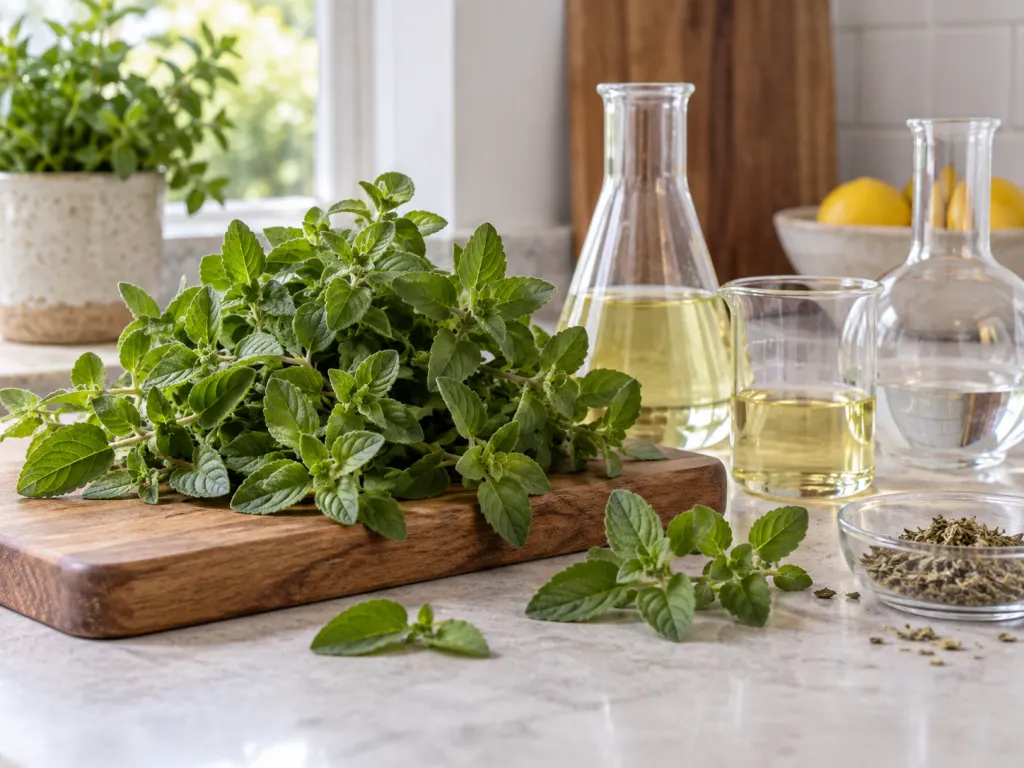
Oregano is not one single material
When a study says “oregano essential oil,” it usually means a concentrated mixture obtained from plant material, often analyzed by laboratory methods. When a recipe says “oregano,” it usually means a small amount of fresh or dried leaves used for flavor. Those are very different exposures. Reviews of Origanum vulgare describe volatile compounds, phenolic acids, and flavonoids, with carvacrol and thymol often discussed as important constituents in essential oils https://pubmed.ncbi.nlm.nih.gov/34567161/. But the amount and balance of these compounds can vary with species, growing conditions, harvest timing, drying, storage, and extraction method.
This is why a precise claim should name the preparation being studied. “Oregano essential oil showed activity in a lab assay” is a narrower statement than “oregano works against microbes.” The first statement can be checked against a defined experiment. The second may leave out the organism, concentration, contact time, safety context, and whether the result has been shown outside the lab. For a home cook, the difference is practical: seasoning a tomato sauce generously with oregano may make dinner taste better, but it should not change how you handle raw foods, leftovers, cutting boards, or refrigerator storage.
What laboratory studies can and cannot tell you
Laboratory studies are useful because they help researchers observe mechanisms under controlled conditions. Some work suggests that carvacrol and thymol can disturb microbial membranes, which may help explain why oregano essential oil attracts attention in food microbiology research https://pubmed.ncbi.nlm.nih.gov/11556910/. Antifungal research has also reported in vitro activity of Origanum vulgare essential oil against Candida species https://pubmed.ncbi.nlm.nih.gov/24031471/. These findings are scientifically interesting, but they should be read as pieces of evidence, not as household instructions.
The limits are important. In vitro experiments often use defined concentrations, controlled contact, isolated organisms, and conditions that do not match a salad bowl, a simmering stew, a digestive tract, or skin. Food contains fats, proteins, water, salt, acid, and heat, all of which can influence how compounds behave. Human use adds even more complexity: product quality varies, people differ, and outcomes depend on context. A careful reader can respect the research while still rejecting overbroad promises. The strongest conclusion is not that oregano is powerless; it is that evidence from a lab assay should not be stretched beyond what the assay measured.
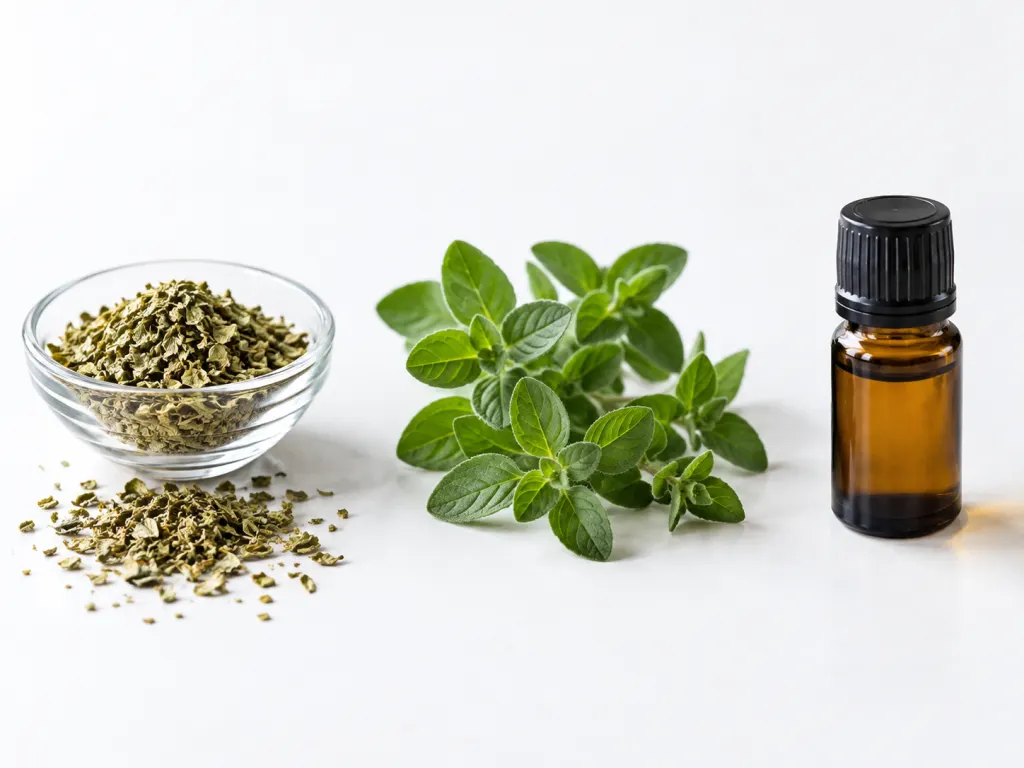
A practical way to judge strong oregano claims
When you see a dramatic oregano claim online, slow it down into checkable parts. Strong wording often hides missing details. A better question is not “Is oregano good or bad?” but “What exact oregano product, studied how, for what purpose, and with what evidence?” Use this quick screen:
- Preparation: Is the claim about dried leaves, fresh leaves, tea, essential oil, capsules, or a commercial blend?
- Setting: Was the evidence from a test tube, a food model, an animal model, or a human study?
- Target: Does it name the specific organism or does it use vague wording about germs?
- Amount and contact: Does the claim explain how concentrated the material was and how long it was in contact?
- Safety context: Does it tell readers to keep ordinary kitchen safety and personal health guidance in place?
- Source quality: Is the claim linked to a public-health agency, academic source, or peer-reviewed paper, rather than a sales page or viral caption?
Federal health sources also give useful context for products sold as supplements. The FDA explains that dietary supplements are regulated differently from conventional foods and prescription products, and that the agency does not approve supplements for safety and effectiveness before they are sold https://www.fda.gov/consumers/consumer-updates/fda-101-dietary-supplements. The NIH Office of Dietary Supplements similarly notes that supplement labels and quality can be difficult for consumers to judge from the front of a package alone https://ods.od.nih.gov/factsheets/DietarySupplements-Consumer/. That does not mean every product is poor quality; it means labels deserve careful reading.
Kitchen use: flavor first, safety basics always
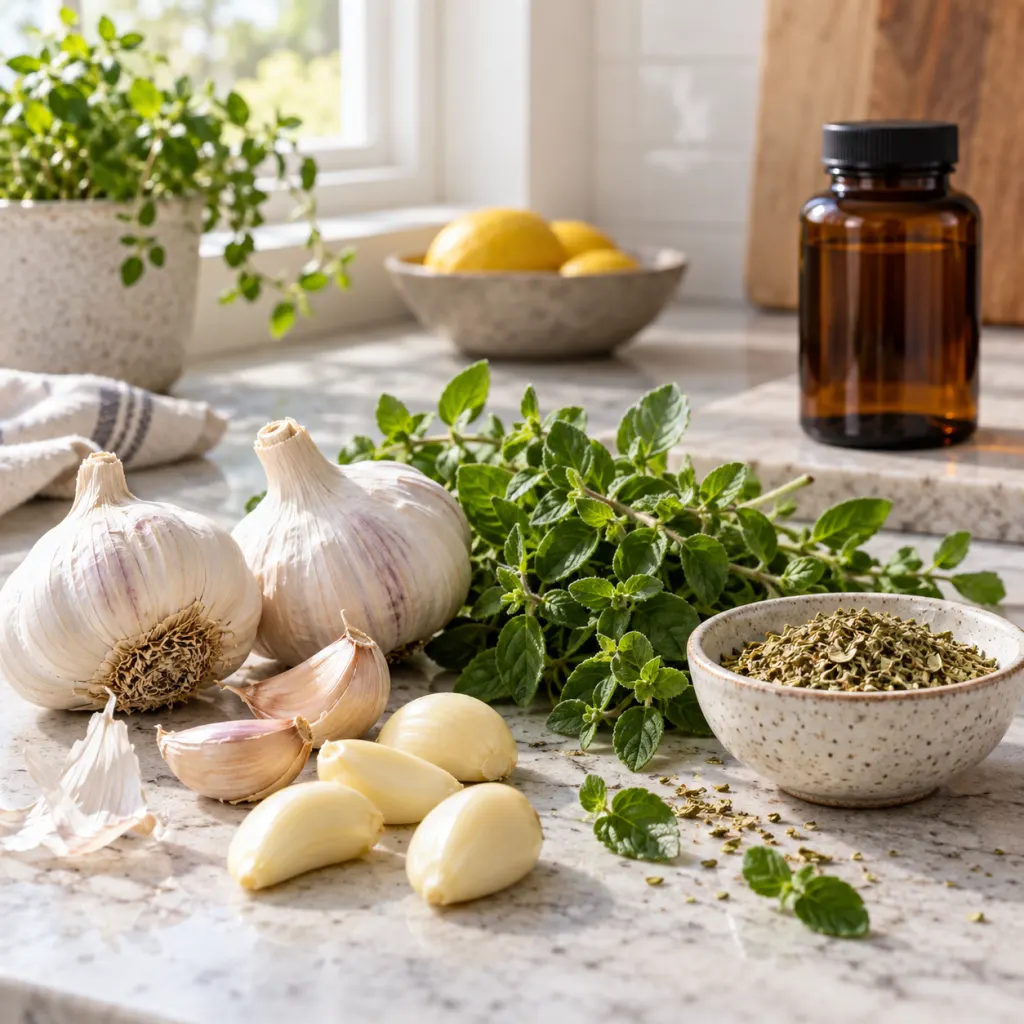
In the kitchen, oregano is best treated as a seasoning with character: warm, grassy, peppery, and slightly bitter in a pleasant way. It belongs naturally in tomato sauces, beans, roasted vegetables, grilled fish, chicken, lamb, vinaigrettes, and breads. But flavor is separate from food safety. The CDC advises clean hands and surfaces, separating raw animal foods from ready-to-eat foods, cooking to safe temperatures, and refrigerating promptly as core food-safety steps https://cdc.gov/food-safety/prevention/. FoodSafety.gov gives the same practical framework: clean, separate, cook, and chill https://www.foodsafety.gov/keep-food-safe/4-steps-to-food-safety.
That means an oregano-heavy marinade is still a marinade, not a safety control. A seasoned cutting board still needs washing. A leftover stew still needs prompt cooling and refrigeration. A chicken dish still needs a thermometer if temperature is uncertain. Oregano can make a meal more appealing, and it may be part of a broader interest in evidence-aware kitchen habits alongside articles such as Cinnamon, Sleep, and Bloating: What the Evidence Supports. The responsible pattern is the same: enjoy the ingredient, but do not ask it to do jobs that require tested safety practices.

Where the claim is reasonable, and where it stretches
A fair version of the claim would say this: oregano essential oil contains compounds that researchers study for antimicrobial activity, and some lab results are promising enough to justify continued research. A stretched version turns that into a broad promise about what ordinary oregano can do for a person or a kitchen. The stretch usually happens in three places. First, it swaps concentrated essential oil for dried herb without saying so. Second, it turns laboratory contact into real-life use. Third, it leaves out safety and product-quality questions.
The word “antifungal” deserves the same care. Candida studies can be meaningful for researchers, but the existence of an in vitro result does not tell a reader what to do with a bottle of oregano oil. It also does not tell whether a retail product has the same composition as the study material. A careful article should keep the language proportional: oregano chemistry is interesting; essential oils are concentrated; lab activity is not the same as a personal health plan; and culinary use remains mostly about taste, aroma, and pleasure.
Bottom line for home cooks
Oregano earns its place in the pantry because it makes food better. The research story is interesting because carvacrol, thymol, and related compounds can affect microbes in controlled studies. The everyday conclusion, though, is modest: use oregano as a flavorful herb, read supplement labels carefully, be skeptical of dramatic claims, and keep proven kitchen-safety habits in place. The most useful approach is neither fear nor hype. It is proportion: appreciate the plant, understand the preparation being discussed, and match each claim to the kind of evidence that actually supports it.
Wrap-Up
Oregano’s reputation has a real scientific thread, especially in studies of concentrated essential oil and compounds such as carvacrol and thymol. Still, those studies do not turn dried oregano, homemade infusions, or retail oil products into guaranteed antimicrobial tools. The evidence is strongest when described narrowly: specific preparations, specific organisms, specific laboratory methods. In everyday cooking, oregano is best used for flavor while standard food-safety practices do the safety work.
Frequently Asked Questions
- → Is dried oregano the same as oregano essential oil?
No. Dried oregano is the leaf used as a culinary herb, while oregano essential oil is a concentrated aromatic extract. Research on the oil should not be automatically applied to a sprinkle of dried oregano in food.
- → Why do studies focus on carvacrol and thymol?
Carvacrol and thymol are aromatic compounds often found in oregano essential oils. Researchers study them because they appear to contribute to antimicrobial activity in controlled laboratory settings.
- → Can oregano make food safer by itself?
Oregano should not be used as the safety step for food. For everyday cooking, rely on clean hands and surfaces, separation of raw and ready-to-eat foods, proper cooking temperatures, and prompt chilling.
- → Are oregano supplement labels always easy to compare?
Not always. Products may differ in plant part, extract type, concentration, added ingredients, and quality controls. Federal sources advise reading supplement labels carefully and using trustworthy information when evaluating herbal products.
- → What is the most balanced way to use oregano?
Use it generously where its flavor fits: tomato dishes, beans, roasted vegetables, grilled foods, vinaigrettes, and savory baked goods. Treat the health claims with caution unless they are tied to a specific preparation and solid evidence.
References
This content was developed and refined using reliable sources.
- https://pubmed.ncbi.nlm.nih.gov/40264663
- https://pubmed.ncbi.nlm.nih.gov/11556910
- https://pubmed.ncbi.nlm.nih.gov/34567161
- https://pubmed.ncbi.nlm.nih.gov/24031471
- https://www.medlineplus.gov/herbalmedicine.html
- https://www.fda.gov/consumers/consumer-updates/fda-101-dietary-supplements
- https://ods.od.nih.gov/factsheets/DietarySupplements-Consumer
- https://cdc.gov/food-safety/prevention
- https://www.foodsafety.gov/keep-food-safe/4-steps-to-food-safety