 Save
The best at-home care for wrinkles and age spots on hands and arms is not a dramatic kitchen mixture. It is a simple routine: protect exposed skin from ultraviolet light, moisturize often, avoid harsh scrubbing or bleaching products, and check changing spots with a qualified health professional. Age spots commonly appear on areas that have had repeated sun exposure, including the backs of the hands, shoulders, and arms, while wrinkles and crepey texture can reflect both normal aging and photoaging. Mayo Clinic describes age spots as flat areas of increased pigment that often appear on sun-exposed skin, and the FDA notes that ultraviolet exposure contributes to early skin aging such as spots and wrinkles (Mayo Clinic, FDA).
Why Hands and Arms Show Age So Clearly
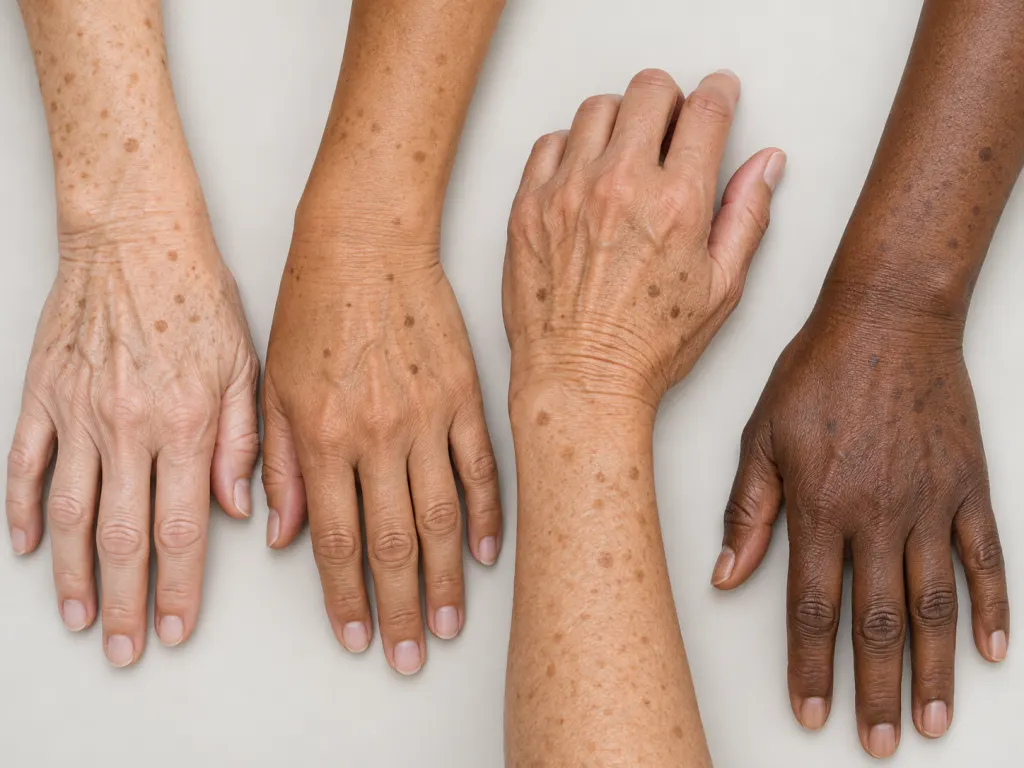
Hands and forearms get a lot of daily exposure: sunlight through errands and driving, repeated washing, gardening, dishwashing, cleaning products, wind, and dry indoor air. MedlinePlus explains that skin commonly becomes thinner, drier, and less plump with age, and that sunlight is a major contributor to skin aging (MedlinePlus). That means the hands can show two overlapping stories at once: normal age-related change and accumulated environmental exposure.
Age spots, also called sunspots or solar lentigines, are usually flat tan-to-brown areas on skin with years of sun exposure. Wrinkles and crepey texture come from several factors, including changes in collagen and elastin, dryness, and ultraviolet damage. Cleveland Clinic notes that photoaging is often visible on the face, neck, backs of the hands, arms, legs, and upper chest, with signs that can include wrinkles, pigment changes, uneven texture, and thinning skin (Cleveland Clinic).
- Wrinkles and crepey texture: often look more noticeable when the skin is dry or when the hands have lost some fullness.
- Age spots: usually appear as flat tan, brown, or darker patches on repeatedly sun-exposed areas.
- Rough or scaly patches: should not be assumed to be ordinary dryness, especially if they persist.
- New or changing spots: deserve attention because some concerning skin changes can resemble harmless pigmentation.
What At-Home Care Can Realistically Do
At-home care can support the skin barrier, make dryness-related lines look less pronounced, reduce irritation, and slow the cycle of new sun-related discoloration. It is less reliable for deeply set wrinkles, long-standing spots, or volume loss in the hands. The American Academy of Dermatology says daily sunscreen, moisturizer, and protective gloves for drying activities are practical ways to help maintain the appearance of the hands; it also lists dermatologist-performed procedures for concerns that do not respond enough to topical care (American Academy of Dermatology).
A useful home routine has three jobs. First, limit the ultraviolet exposure that keeps encouraging spots and texture change. Second, add moisture and reduce barrier stress so the skin looks smoother and feels more comfortable. Third, choose active cosmetic ingredients cautiously, one at a time, so you can tell whether your skin tolerates them. This is especially important on forearms and the backs of hands, where skin may already be dry or thin.
For readers interested in related skin changes, this site also has a guide to small white spots on the arms or legs and a separate discussion of baking soda face cream and wrinkles. Those topics can overlap with hand and arm concerns, but brown age spots, white spots, wrinkles, and irritation are not all the same thing.
Step One Is Daily Sun Protection
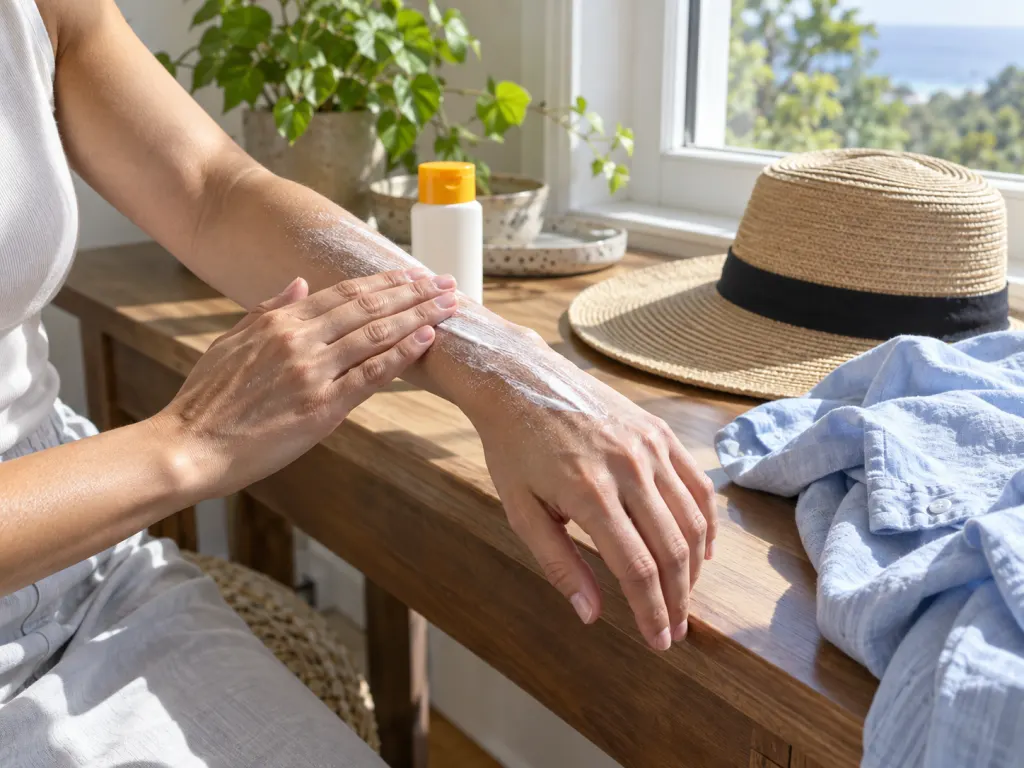
If one habit matters most, it is sun protection on the hands and arms. The FDA recommends broad-spectrum sunscreen with SPF 15 or higher, applied to uncovered skin and reapplied at least every two hours, with more frequent reapplication during sweating or swimming. It also emphasizes that sunscreen is only one part of sun protection; shade, clothing, hats, and sunglasses still matter (FDA).
The American Academy of Dermatology advises choosing sunscreen with SPF 30 or higher, broad-spectrum protection, and water resistance when possible (American Academy of Dermatology). For hands and forearms, placement is the practical challenge. Keep sunscreen near the door, in a bag, or beside hand cream. Reapply after handwashing when you will be outdoors again. When driving or gardening, lightweight sun-protective sleeves or gloves can reduce exposure without adding another layer of lotion.
Build a Gentle Moisture Routine
Moisturizer will not change a person’s age, but it can make dry skin look smoother by trapping water in the outer layer. The FDA describes moisturizing as a cosmetic effect when a product makes lines and wrinkles less noticeable by hydrating the skin (FDA). For hands and arms, this simple effect is worthwhile because dryness exaggerates texture.
Use a mild cleanser, rinse well, and apply cream or ointment while the skin is still slightly damp. After dishwashing, bathing, or handwashing, a fragrance-free moisturizer can help reduce tightness. At night, a thicker cream on the backs of the hands and forearms can be more comfortable than a thin lotion. If frequent washing is unavoidable, consider cotton-lined cleaning gloves for wet chores and separate gardening gloves for soil, plant sap, and friction.
- Morning: moisturize dry areas, then apply broad-spectrum sunscreen to exposed hands and arms.
- During the day: reapply sunscreen when outdoors and moisturize after repeated washing.
- Chores: use gloves for cleaning, dishwashing, and gardening to reduce irritation and dryness.
- Night: apply a richer moisturizer; cotton gloves can help keep hand cream in place if comfortable.
Use Retinol and Acids Carefully
Some over-the-counter skin products contain retinol, glycolic acid, lactic acid, or other alpha hydroxy acids. Cleveland Clinic describes retinol as a vitamin A derivative used in skin products to improve tone and texture; it also notes that retinol and acids can irritate the skin and are often introduced gradually (Cleveland Clinic). The FDA says alpha hydroxy acids are used in cosmetics for smoothing fine lines, texture, and tone, but they can increase sun sensitivity, especially with stronger exfoliating products (FDA).
If you use one of these products on hands or forearms, choose a clearly labeled product from a reputable source and introduce only one new active ingredient at a time. Apply a small amount to a limited area first, wait to see how your skin responds, and avoid layering several exfoliating or retinoid products together. Stinging, peeling, burning, or a rash is a sign to pause and reassess. Sunscreen becomes even more important when using exfoliating acids because newly exfoliated skin may react more easily to sunlight.

Be Careful With Brightening and Bleaching Products
Dark-spot products deserve extra caution. The FDA warns consumers not to use over-the-counter skin-lightening products that contain mercury or hydroquinone, and says there are no FDA-approved or legally marketed over-the-counter skin-lightening products of that kind (FDA). This is one reason kitchen mixtures and unlabeled creams are poor choices for age spots. A product that promises dramatic fading may also carry more risk than a simple moisturizer or sunscreen.
Be especially cautious with products that have no ingredient list, handmade labels, unfamiliar bleaching language, or instructions that encourage frequent application over large areas. Do not apply lemon juice, undiluted essential oils, abrasive scrubs, or cleaning chemicals to the skin. These can irritate the barrier, make the area more sun-sensitive, or leave the skin looking more uneven. Gentle care is slower, but it is also easier to adjust when your skin gives feedback.
When Spots Need a Medical Check
Most true age spots are harmless, but self-identification has limits. Mayo Clinic advises having a doctor look at spots that are black, increasing in size, irregular at the border, unusually mixed in color, or bleeding (Mayo Clinic). A rough, scaly patch that persists on the back of the hand or forearm also deserves attention. The American Academy of Dermatology notes that rough patches on sun-exposed hands may be actinic keratoses, which should be evaluated by a dermatologist (American Academy of Dermatology).
Seek a timely appointment if a spot is new and changing, looks very different from nearby spots, bleeds, crusts, hurts, or does not settle. Readers noticing broader aging changes may also find this site’s guide to common changes to recognize after age 70 useful, but skin changes that are new, persistent, or worrying should be judged individually.
A Simple Four-Week Reset
For a low-risk reset, keep the plan boring on purpose. For four weeks, stop harsh scrubs and unlabeled lightening products. Use a mild cleanser, moisturize after washing, protect the hands and arms from sun, and take a clear photo of the area in consistent lighting once a week. The goal is not to erase normal skin history. The goal is to reduce dryness, irritation, and avoidable UV exposure so you can see what remains.
After four weeks, ask practical questions. Does the skin feel less tight? Are dry lines less obvious? Are any spots changing despite protection? If the answer is mostly comfort and smoother texture, the routine is doing its job. If a particular spot worries you, or if you want procedures for cosmetic reasons, a board-certified dermatologist can explain options and risks in a way a home article cannot.
Wrap-Up
Wrinkles and age spots on hands and arms are common, especially on skin that has had years of sunlight, dryness, and daily wear. The most sensible at-home plan is steady sun protection, regular moisturizer, gentle cleansing, and careful product choices. Retinol and alpha hydroxy acids may improve the look of texture for some people, but they can irritate skin and increase sun sensitivity. Be cautious with brightening or bleaching products, especially unlabeled creams or products containing mercury or hydroquinone. Have new, changing, black, irregular, bleeding, painful, or persistent rough spots checked by a qualified health professional.
Frequently Asked Questions
- → Can a home routine make age spots disappear?
A home routine may make skin look calmer and more even, especially when dryness or irritation is part of the problem. Long-standing age spots often change slowly, and some people need a clinician’s guidance for stronger topical products or office procedures.
- → Is sunscreen still useful after spots and wrinkles are already visible?
Yes. Sunscreen and protective clothing are still useful because ultraviolet exposure keeps affecting exposed skin over time. Protection also helps keep active products, such as retinol or exfoliating acids, from causing extra sensitivity.
- → Are lemon juice or abrasive scrubs a good idea for dark spots on hands?
They are not a good first choice. Acidic kitchen ingredients and rough scrubs can irritate skin, especially on dry or thinner areas. A gentler plan is moisturizer, sun protection, and well-labeled products introduced slowly.
- → When should I ask a dermatologist about a spot on my hand or arm?
Ask for a medical check if a spot is black, changing, growing, bleeding, irregular, painful, crusted, or very different from your other spots. A persistent rough or scaly patch on sun-exposed skin also deserves professional review.
- → Can I use the same skin care on my hands, arms, neck, and face?
Often, yes, but tolerance varies by area. Start slowly with active ingredients, avoid applying several strong products at once, and use sunscreen on exposed skin. If irritation develops, pause the new product and ask a qualified health professional for individualized guidance.
References
This content was developed and refined using reliable sources.
- https://www.medlineplus.gov/skinaging.html
- https://www.mayoclinic.org/diseases-conditions/age-spots/symptoms-causes/syc-20355859
- https://www.fda.gov/consumers/consumer-updates/tips-stay-safe-sun-sunscreen-sunglasses
- https://www.aad.org/public/cosmetic/younger-looking/what-makes-hands-look-younger
- https://www.aad.org/public/everyday-care/sun-protection/shade-clothing-sunscreen/choosing-right-sunscreen
- https://my.clevelandclinic.org/health/diseases/5240-sun-damage-protecting-yourself
- https://my.clevelandclinic.org/health/treatments/23293-retinol
- https://www.fda.gov/cosmetics/cosmetic-products/wrinkle-treatments-and-other-anti-aging-products
- https://www.fda.gov/cosmetics/cosmetic-ingredients/alpha-hydroxy-acids
- https://www.fda.gov/consumers/health-fraud-scams/fda-warns-consumers-skin-products-containing-mercury-andor-hydroquinone