 Save
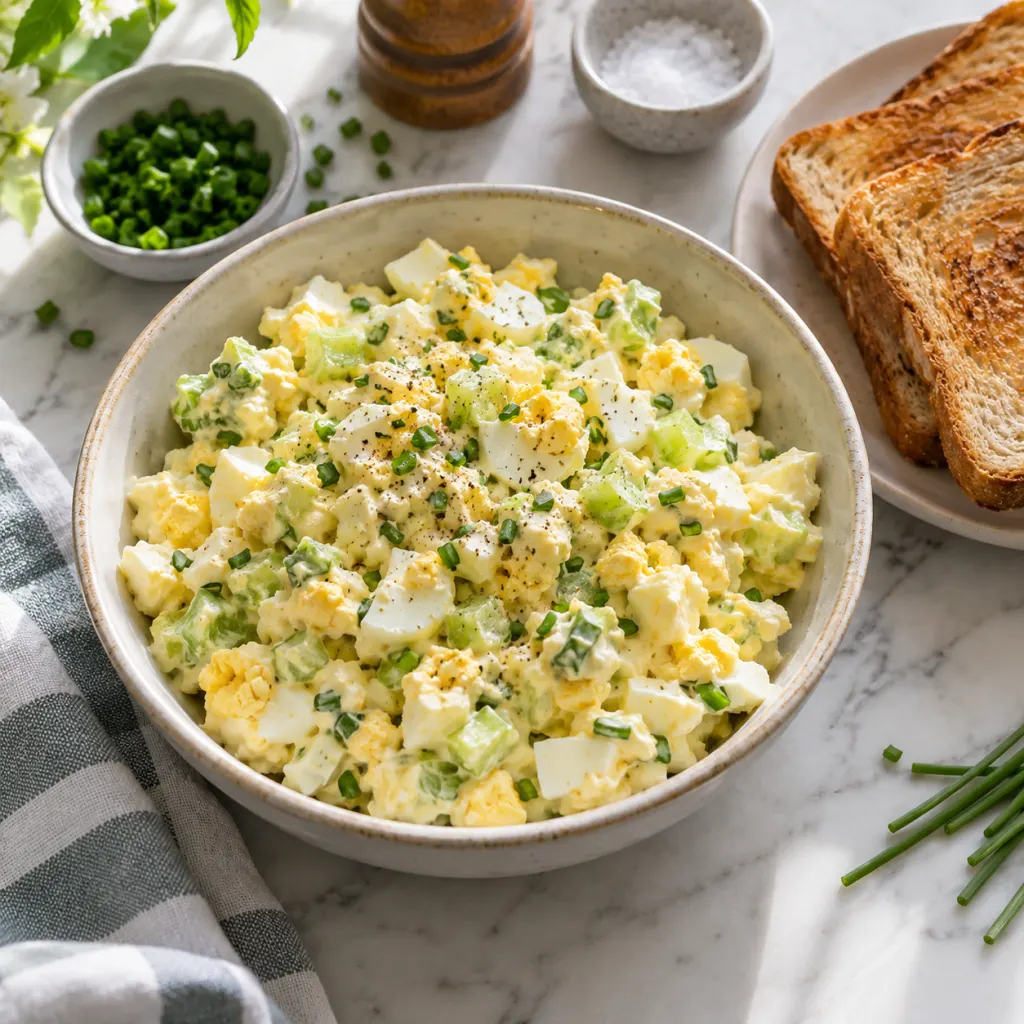
The fastest way to make egg salad taste more polished is to stop chopping everything into the same tiny pieces. Separate the cooked yolks from the whites, blend the yolks into the dressing, then fold in irregular pieces of white. That one texture move gives the salad a creamy base without turning it pasty, and it leaves enough bite for a good sandwich. The second secret is restraint: season the dressing before the eggs go in, use acid to brighten it, and keep the finished salad cold. Egg salad is simple food, but the best versions are built deliberately.
The Real Secret Is Texture, Not Extra Mayonnaise
Many disappointing egg salads share the same problem: the eggs are chopped evenly, the mayonnaise is added after the fact, and the mixture is stirred until the whites and yolks lose their separate character. More dressing can make that problem worse. It can make the salad loose, heavy, and one-note. A chef-minded approach starts with the cooked egg itself. Yolks are naturally crumbly and rich, so they work well as part of the dressing. Whites are springier and milder, so they are better when left in pieces large enough to notice.
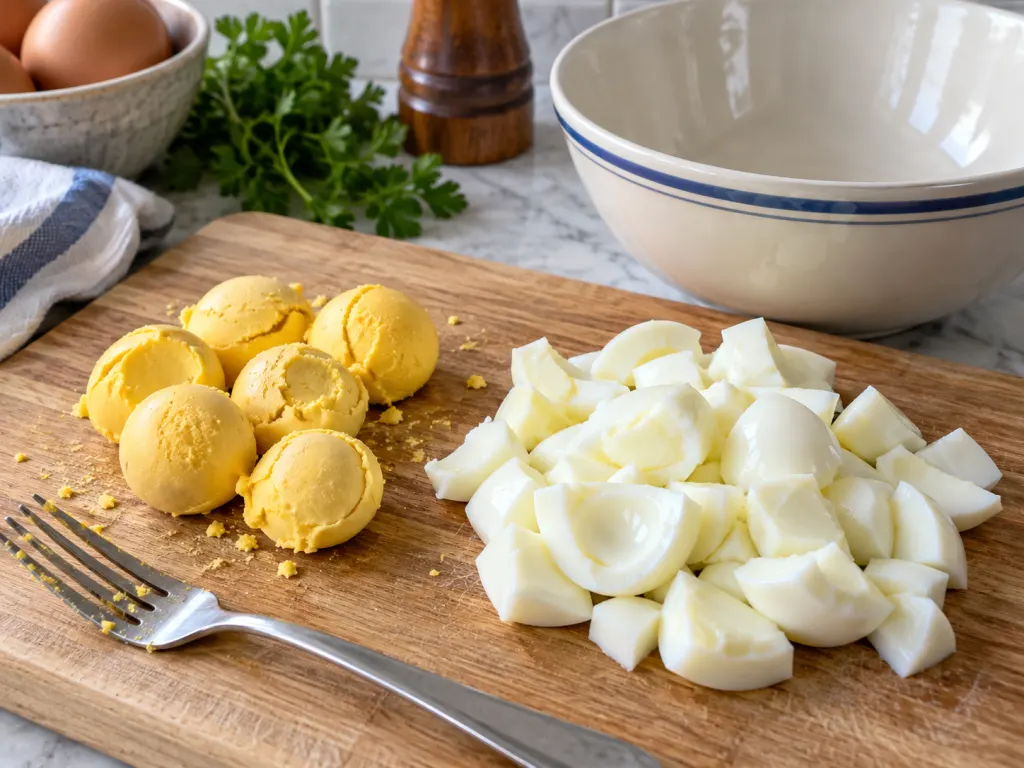
For a bowl that tastes creamy without feeling flat, remove the yolks from the whites after the eggs are peeled. Mash the yolks with mayonnaise, mustard, salt, pepper, and a little acid, then fold in the whites at the end. The whites can be chopped with a knife, pressed through a wide-mesh rack, or gently torn by hand for uneven edges. Those edges catch the dressing and make the salad feel fuller. This is a technique article rather than a fixed recipe, so the exact amounts can change, but the order matters: dressing first, whites last.
Why Separating Yolks and Whites Works
Egg salad needs contrast. If the whites are minced too finely, they disappear into the dressing and the result can feel like a spread. If the yolks stay in large dry chunks, the salad can taste uneven, with some bites creamy and others chalky. Separating the parts solves both issues. The yolks thicken and flavor the dressing, while the whites supply structure. In practical terms, this means less aggressive stirring and a better final texture.
Think of the bowl in three layers. The dressing carries salt, tang, herbs, and savoriness. The yolks enrich that dressing and help it cling. The whites bring the clean egg flavor and the gentle chew that makes the salad satisfying on toast, crackers, lettuce cups, or a soft sandwich roll. A fork is usually enough for the yolks; a food processor can make the dressing too smooth for some tastes unless used briefly. If you like a restaurant-style finish, mash the yolks until no dry pockets remain, but stop before the mixture becomes glossy and dense.
- For a chunkier salad: cut the whites into rough half-inch pieces and fold only a few times.
- For a softer sandwich filling: tear the whites smaller and let the salad rest for 15 minutes in the refrigerator.
- For a cleaner party platter: keep add-ins finely diced so the salad scoops neatly.
- For toast or open-face sandwiches: leave the whites slightly larger so the topping has height.
Build the Dressing Before the Eggs Go In
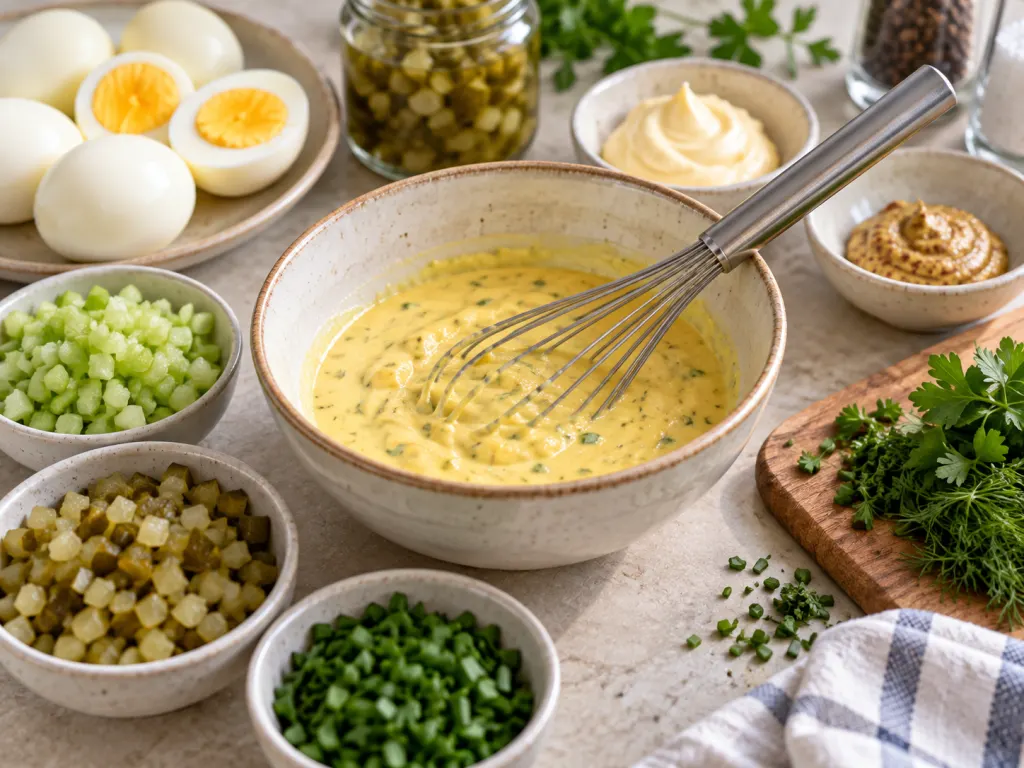
The dressing is where a good egg salad becomes balanced. Start with mayonnaise as the base, but do not rely on it alone. Mustard brings sharpness, finely chopped onion or shallot brings bite, and herbs bring freshness. A few drops of vinegar, pickle brine, or lemon can make the eggs taste more vivid. Add salt slowly because mustard, pickles, capers, and seasoned mayonnaise can already carry plenty. Stir the dressing and taste it before adding the whites; it should seem slightly bold because the eggs will soften the edges.
Small add-ins work best when they serve a purpose. Celery gives crispness. Chives give a clean onion note. Dill leans deli-style. Smoked paprika adds warmth. A spoonful of relish can be pleasant, but too much can make the salad sweet and wet. If you want inspiration from nearby classics, compare the creamier direction of Creamy Deviled Egg Salad with the simpler picnic mood of Just like Grandma's. The point is not to pile on everything at once; it is to choose one crunchy element, one bright element, and one herb or spice.
Egg Salad Still Needs Careful Chilling
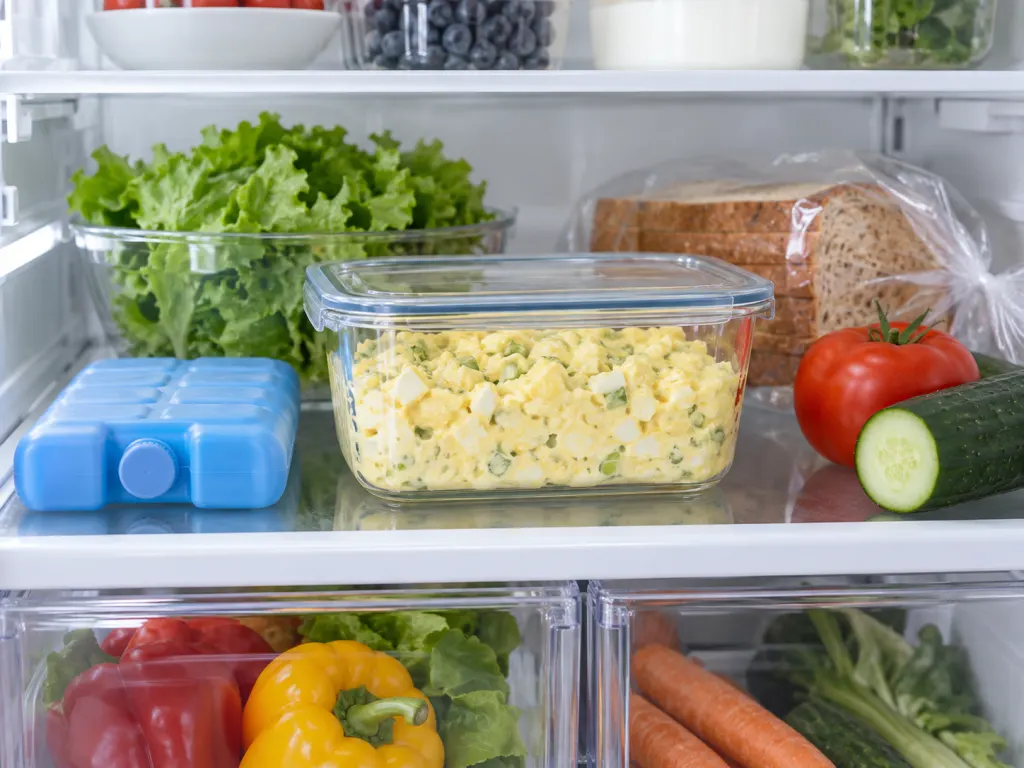
Because egg salad is made from cooked eggs and a moist dressing, storage is part of quality. The FDA advises buying eggs from a refrigerated case, storing them promptly at 40 degrees F or below, cooking eggs until the yolk and white are firm, and using hard-cooked eggs within one week after cooking FDA egg safety guidance. FoodSafety.gov's cold storage chart lists egg, chicken, ham, tuna, and macaroni salads at 3 to 4 days in the refrigerator at 40 degrees F or below, and notes that these salads do not freeze well FoodSafety.gov cold storage chart.
That guidance is useful in everyday cooking because egg salad is often made ahead for lunch, picnics, or gatherings. Chill the peeled eggs before mixing if possible, use a clean bowl and utensils, and return the finished salad to the refrigerator as soon as it is mixed. CDC food-safety guidance emphasizes the four steps of clean, separate, cook, and chill, including washing hands and surfaces, keeping risky raw foods away from ready-to-eat foods, cooking properly, and refrigerating promptly CDC food safety prevention guidance. For a cold egg salad, the most relevant habits are clean hands, clean cutting boards, a cold refrigerator, and short room-temperature time.
A Practical Make-Ahead Plan
If you want egg salad for several lunches, the best plan is to hard-cook the eggs first, chill them, and mix only what you expect to use over the next few days. Keep the salad in a shallow, covered container so it cools evenly and is easy to portion. If packing it for work or school, use an insulated lunch bag with a cold pack. If serving it outside, set a small bowl out and keep the rest cold until needed. CDC guidance says perishable food should not sit out for more than 2 hours, or more than 1 hour when exposed to temperatures above 90 degrees F CDC food safety prevention guidance.
How to Keep the Flavor Bright Instead of Heavy
Egg salad can become dull because eggs are gentle and mayonnaise is rich. The fix is not always more mustard. It is balance. A little acid wakes up the yolks. A crisp ingredient breaks the softness. Herbs add aroma before you even take a bite. If your bowl tastes flat, add a few drops of vinegar or pickle brine before adding more salt. If it tastes sharp, fold in a small spoonful of mashed yolk or mayonnaise. If it tastes watery, drain wet add-ins such as relish or pickles before they go into the bowl.
Texture also changes after resting. A salad that seems slightly firm right after mixing may loosen as salt draws moisture from onion, celery, and pickles. That is another reason to season carefully at the start and adjust just before serving. For sandwiches, spread a thin layer of butter, mayonnaise, or mustard on the bread to slow sogginess, then add lettuce if you want a barrier. Toast helps, but the filling should still be thick enough to mound on a spoon.
Common Mistakes That Flatten Egg Salad
The first mistake is overcooking the eggs until the yolks turn dry and the whites become rubbery. The second is chopping the eggs so finely that the salad loses structure. The third is adding wet ingredients without draining them. The fourth is skipping acid, which leaves the bowl tasting rich but not lively. Finally, many cooks season once and never taste again after the salad rests. Egg salad rewards a final adjustment because cold food often tastes more muted than warm food.
CDC's safer food choices page lists eggs cooked until yolks and whites are firm as the safer choice compared with raw or undercooked eggs, and it points to pasteurized eggs for foods that will not be cooked to a safe temperature CDC safer food choices guidance. For classic egg salad, that means fully cooked eggs, a clean prep area, and steady chilling. Once those basics are handled, the rest is culinary judgment: enough dressing to bind, enough egg white for bite, and enough tang to keep each spoonful lively.
A Chef-Minded Template You Can Use Without Measuring Everything
Start with fully cooked, chilled eggs. Peel them, split the yolks from the whites, and put the yolks in the mixing bowl. Add mayonnaise, mustard, salt, pepper, and a small splash of vinegar, lemon, or pickle brine. Mash until the yolks disappear into the dressing. Fold in chopped or torn whites, then add one crisp ingredient and one herb. Taste, chill briefly, and taste again. If it needs lift, add acid. If it needs roundness, add a little more yolk-rich dressing. If it needs contrast, add celery, chives, shallot, or a small spoonful of relish.
This method works because it respects what each part of the egg does best. Yolks become the creamy backbone. Whites remain distinct. Seasoning gets distributed before the salad is crowded with pieces. The result is still familiar egg salad, not a fussy reinvention, but it tastes more intentional. That is the real chef's secret: better handling before better ingredients. Once you learn the order, even a very plain egg salad can taste clean, rich, and balanced.
Wrap-Up
The best egg salad comes from technique more than a hidden ingredient. Separate cooked yolks from whites, turn the yolks into a seasoned dressing, then fold in the whites so the salad stays creamy with real texture. Use acid, herbs, and crunch with restraint, and keep the finished salad cold. For storage, rely on current food-safety guidance: hard-cooked eggs are best used within one week after cooking, and prepared egg salad belongs in the refrigerator and is best used within 3 to 4 days.
Frequently Asked Questions
- → What is the chef-style secret to better egg salad?
Separate the cooked yolks from the whites. Mash the yolks into the dressing first, then fold in chopped or torn whites. This makes the salad creamy without turning every piece of egg into the same texture.
- → Should egg salad be smooth or chunky?
It depends on how you plan to serve it. A slightly chunky salad is better for toast, crackers, and lettuce cups because it has structure. A softer salad works well in sandwiches, especially if the whites are cut smaller and the filling rests briefly before serving.
- → How long does egg salad keep in the refrigerator?
FoodSafety.gov lists egg salad at 3 to 4 days in a refrigerator kept at 40 degrees F or below. Store it in a covered container and keep it cold until serving.
- → Can egg salad be frozen?
Freezing is not a good choice for classic egg salad. FoodSafety.gov notes that egg, chicken, ham, tuna, and macaroni salads do not freeze well, and the dressing can separate after thawing.
- → Why does my egg salad taste bland?
It probably needs contrast. Add a small amount of acid such as vinegar, lemon, or pickle brine, then taste before adding more salt. Crisp celery, chives, shallot, dill, or a small amount of relish can also make the flavor feel more complete.