 Save
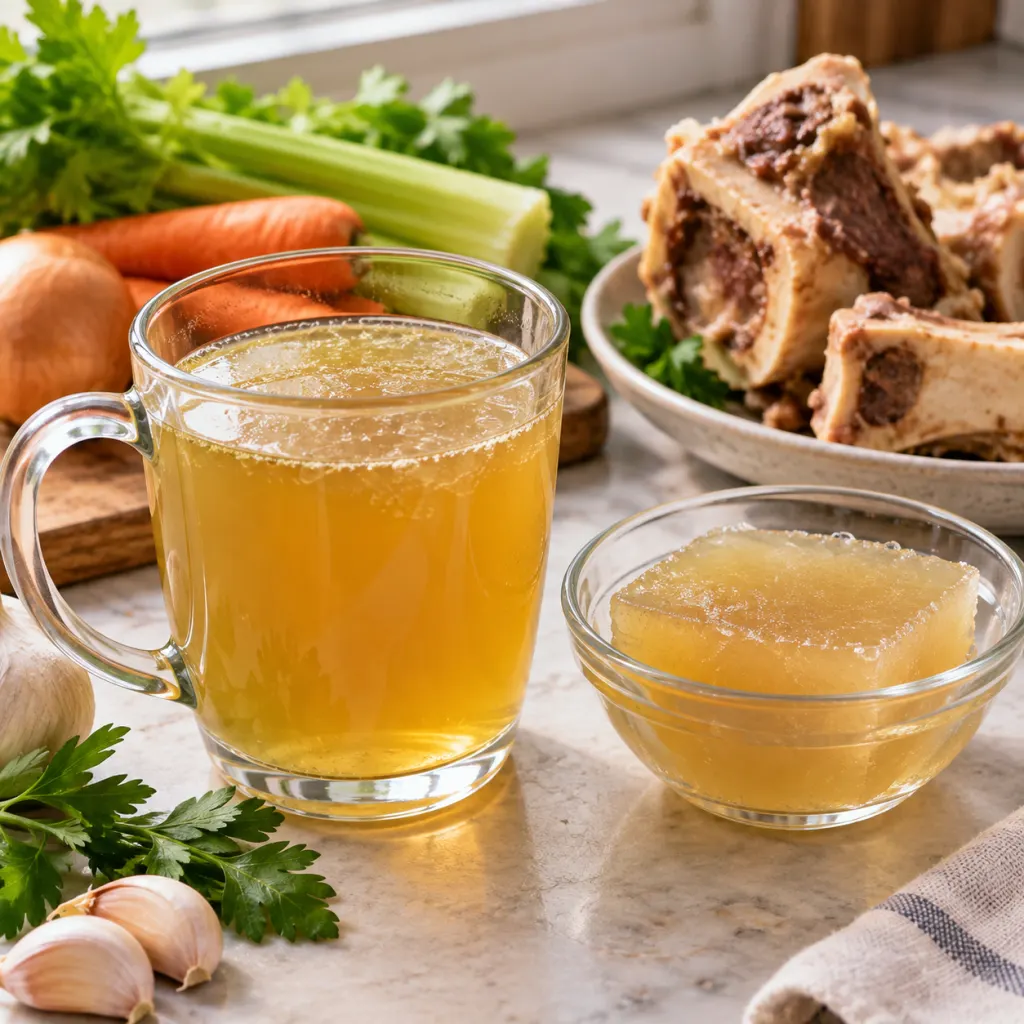
Bone broth is not magic mortar for the body. It is a long-simmered, collagen-rich stock that can add body, savory flavor, and some protein to soups, sauces, grains, and sipping mugs. The important part is expectation: a broth that gels in the refrigerator probably contains gelatin from connective tissue, but its mineral and protein content can vary widely from one pot to another. A careful home cook can value bone broth for taste, thrift, and kitchen usefulness while staying realistic about what the evidence supports.
What Bone Broth Actually Is
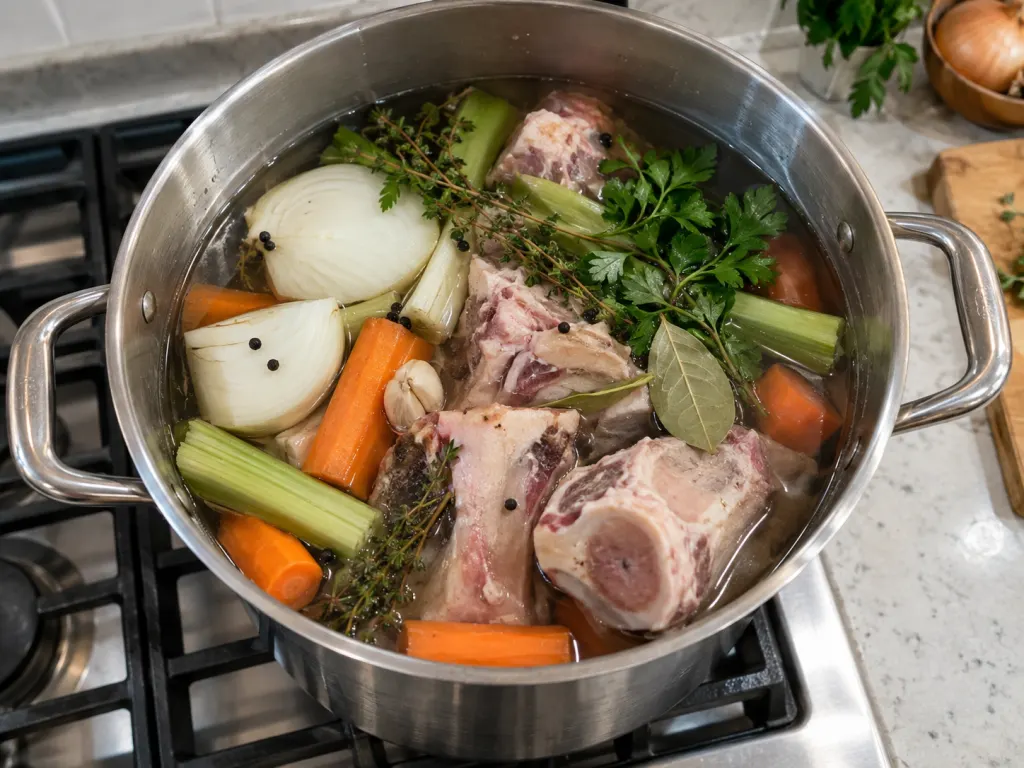
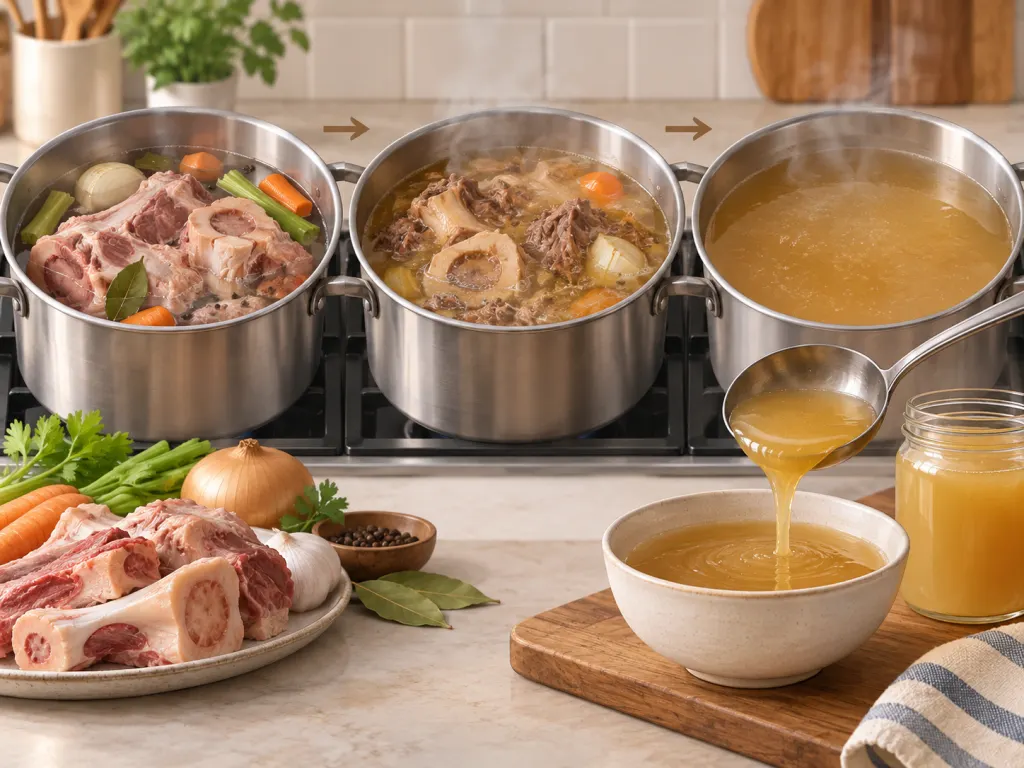
Bone broth sits somewhere between classic stock and a concentrated culinary broth. It is usually made by simmering animal bones, cartilage, skin, and sometimes meat scraps with water for many hours. Vegetables, herbs, and a small amount of vinegar or another acidic ingredient may be added for flavor and extraction. Harvard’s Nutrition Source describes bone broth as bones simmered in water with a little vinegar for anywhere from 4 to 24 hours, while noting that the amino acid content varies with the bones, cooking time, and processing method https://nutritionsource.hsph.harvard.edu/collagen/.
The reason cooks care about the long simmer is texture. Collagen is a structural protein found in connective tissues, and heat plus time can convert some of it into gelatin. When enough gelatin is present, chilled broth turns softly jiggly instead of staying thin. That gel is not a clinical sign; it is a kitchen clue. It tells you the pot extracted enough gelatin to change the texture. It does not tell you that every cup has the same protein amount, sodium level, or mineral profile as another batch.
Collagen, Gelatin, and Amino Acids in Plain English
Collagen is abundant in the body and helps provide structure and support to skin, muscles, bones, and connective tissues, according to Cleveland Clinic’s health library https://my.clevelandclinic.org/health/articles/23089-collagen. In food, collagen shows up most clearly in animal parts that contain connective tissue: bones with cartilage, joints, skin, feet, necks, knuckles, and tougher cuts that soften with time. In the pot, collagen does not remain exactly as it was in the animal. Heat, water, and time unwind it into gelatin and smaller protein fragments.
Once eaten, proteins are broken down into amino acids. MedlinePlus explains that amino acids combine to form proteins and that, when proteins are digested or broken down, amino acids are the result https://medlineplus.gov/ency/article/002222.htm. That matters because a bowl of broth is not a direct delivery system that travels unchanged to one body part. It contributes amino acids to the overall pool the body uses alongside the rest of the day’s food.
Why the Same Recipe Can Produce Different Broth
Two pots made with the same general idea can finish very differently. A broth made from chicken feet and backs may chill into a bouncy gel. A broth made from mostly clean marrow bones may taste rich but set only lightly. A pressure cooker may extract body faster than a low stovetop simmer, but both depend on the starting materials. Roasting bones first deepens flavor through browning, while blanching and rinsing can make a clearer broth. Neither choice automatically makes the broth more nourishing; it changes flavor, color, and texture.
The variables that matter most are practical ones: how much connective tissue is present, whether bones are cracked or cut, the ratio of water to solids, cooking time, temperature, salt, and how much the broth is reduced. A pot that evaporates by half will taste stronger and may feel richer simply because everything left in the liquid is more concentrated. A broth topped up repeatedly with water may be gentler and lighter. That is why rigid claims about one universal cup of bone broth are less useful than learning what your own batch looks and tastes like.
Minerals: Present, but Usually Not the Main Story
Bones contain minerals, so it is reasonable to ask whether a long simmer turns broth into a major mineral source. The answer is usually more modest. Harvard summarizes available evidence by noting that bone broth contains only small amounts of minerals such as calcium, magnesium, potassium, iron, phosphorus, sodium, and copper, and that mineral extraction varies with acidity, cooking time, cooking temperature, and bone type https://nutritionsource.hsph.harvard.edu/collagen/. In other words, a splash of vinegar and a long simmer can influence extraction, but the finished broth is still not a predictable substitute for a varied plate.
For calcium specifically, the NIH Office of Dietary Supplements points readers toward ordinary food sources such as milk, yogurt, cheese, canned fish with bones, some greens, fortified beverages, tofu, and fortified cereals https://ods.od.nih.gov/factsheets/Calcium-Consumer/. That does not make broth useless. It simply keeps the scale honest. Broth can be part of a meal pattern, but calcium planning is better anchored in foods with more consistent calcium content and clear labels.
The Role of Vitamin C and the Rest of the Meal
Collagen conversation often focuses so heavily on bones that it forgets vegetables and the rest of the plate. The NIH Office of Dietary Supplements states that the body needs vitamin C to make collagen and lists fruits and vegetables such as citrus, peppers, kiwi, broccoli, strawberries, cantaloupe, potatoes, and tomatoes as sources https://ods.od.nih.gov/factsheets/VitaminC/Consumer/. From a cooking perspective, that is a useful reminder: a mug of broth is not a complete meal, and a better bowl may include vegetables, beans, grains, herbs, and a protein food rather than broth alone.
Protein balance also matters. MedlinePlus notes that the body needs protein from food to build and maintain bones, muscles, and skin, and that protein needs vary by age, sex, health, and activity level https://medlineplus.gov/dietaryproteins.html. Bone broth may contribute some protein, but it is often lighter than meat, fish, eggs, dairy, legumes, or soy foods. If you are using broth as the base of lunch, adding noodles and herbs is pleasant; adding beans, shredded chicken, tofu, lentils, or eggs makes it more substantial.
How to Read the Gel Test Without Overreading It
A chilled gel is satisfying because it shows the broth extracted gelatin. It is also useful in the kitchen. Gelatin gives soups a rounded mouthfeel, helps pan sauces coat a spoon, and makes risotto, beans, and braised greens taste fuller without relying only on fat. But the gel test has limits. A very reduced broth can gel firmly because it is concentrated. A broth with plenty of flavor can remain liquid because it came from bones with less connective tissue. Salt, dilution, straining, and storage containers all affect what you notice.
Use the gel test as a sensory note, not a scorecard. If the broth sets, you have a useful cooking ingredient. If it does not set but tastes clean and savory, you still have a useful cooking ingredient. The better questions are simple: does it smell fresh, does it taste balanced, is the salt level manageable, and can it improve the dish you are making?
A Practical Checklist for Better Broth
For home cooks, the most reliable improvements are culinary rather than dramatic. Choose bones with some connective tissue, keep the water level sensible, simmer gently instead of boiling hard for hours, and strain carefully. If you want a clearer broth, skim early and avoid aggressive bubbling. If you want a richer broth, include joints, wings, feet, necks, knuckles, or oxtail along with meaty bones. If you plan to reduce the broth, salt lightly at first because reduction concentrates salt.
- For body: include collagen-rich parts such as joints, feet, wings, backs, necks, or knuckles.
- For flavor: roast beef or pork bones before simmering, or keep poultry bones unroasted for a lighter taste.
- For clarity: simmer gently, skim foam, and strain through a fine sieve.
- For flexibility: freeze unsalted or lightly salted broth in small containers so it can fit many dishes.
- For balance: use broth with vegetables, grains, legumes, or protein foods instead of treating it as the whole meal.
Food Safety for a Long-Simmered Pot
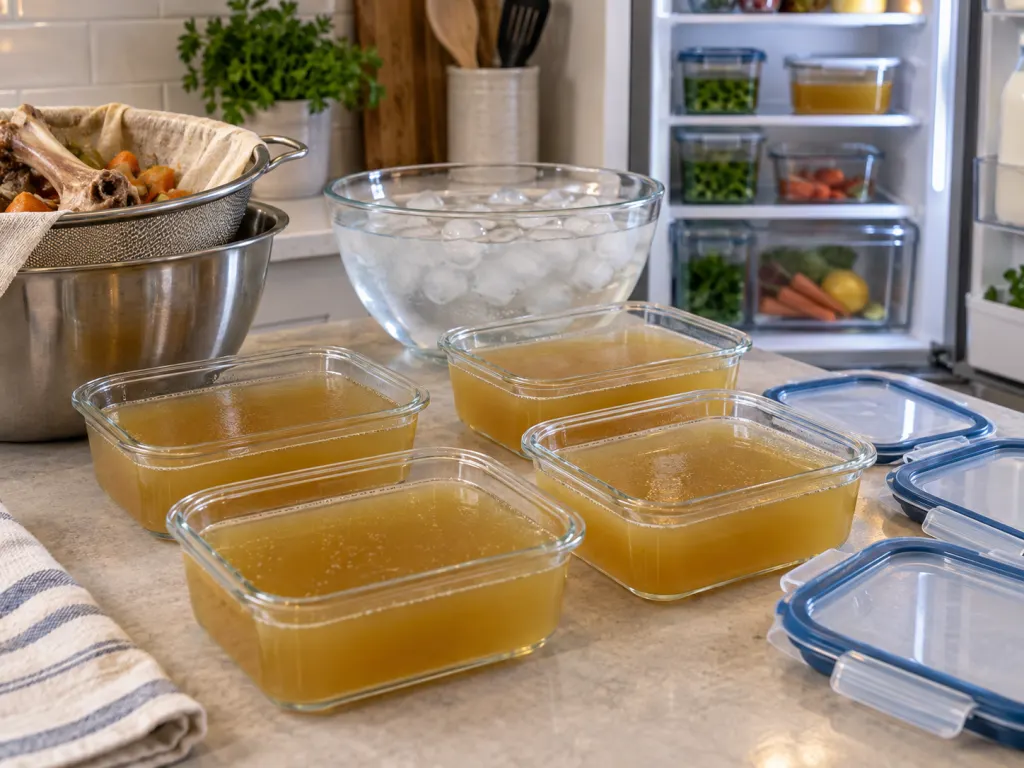
Bone broth asks for special attention after cooking because large pots cool slowly. FoodSafety.gov lists soups and stews with meat or vegetables as 3 to 4 days in the refrigerator and 2 to 3 months in the freezer for best quality, and says home-refrigerated foods should be kept at 40 degrees F or below https://akaprod-www.foodsafety.gov/food-safety-charts/cold-food-storage-charts. For a home batch, strain the broth, divide it into shallow containers, cool promptly, and refrigerate or freeze. Wide, shallow containers cool faster than one deep stockpot.
Skimming off chilled fat is a matter of preference and recipe use. Leaving a fat cap can add flavor, while removing it gives a cleaner broth for sipping and lighter soups. Either way, label containers with the date. Reheat only what you plan to use, and bring soups and sauces made with stored broth fully hot before serving. If the broth smells sour, looks oddly fizzy, has mold, or was left out too long, discard it.
How to Use Bone Broth Without Turning It Into a Promise
The best use of bone broth is as a quiet kitchen helper. It can replace water when cooking rice, barley, farro, beans, lentils, or savory oats. It can loosen a pan sauce, form the base of ramen-style bowls, enrich a vegetable soup, or give leftover roast meat a second life. Its value is partly flavor and partly economy: bones and trimmings that might otherwise be wasted can become the foundation for another meal.
Store-bought bone broth can be convenient, but labels deserve attention. Compare sodium, protein, serving size, and ingredients. Some cartons are closer to lightly seasoned stock; others are concentrated and salty. Powdered products are a different category and may have much higher protein per serving because they are processed concentrates. If your goal is cooking, flavor and sodium level may matter more than the front-label language. If your goal is a protein-rich meal, compare the actual protein grams with other foods you enjoy.
What to Say About the Trend
The most accurate description is also the least flashy: bone broth is a traditional stock-style food with collagen-derived gelatin, variable protein, modest minerals, and many good culinary uses. It can be comforting, aromatic, and efficient. It can also be oversold when vague language turns a pot of broth into a promise. A calm kitchen view leaves room for both appreciation and limits. Make it if you like the process, the flavor, the thrift, or the texture. Skip it if it does not fit your budget, schedule, or eating style.
Bottom Line for Home Cooks
A good broth does not need mystical language to be worth making. Start with bones and connective tissue, add water and aromatics, simmer gently, cool safely, and use it where savory depth helps. Notice whether it gels, but do not treat the gel as a health score. Pair it with varied foods, especially protein foods and fruits or vegetables, and let it be what it does best: a flavorful base that makes everyday cooking warmer, less wasteful, and more satisfying.
Wrap-Up
Bone broth is best understood as a long-simmered culinary stock that may contain gelatin from collagen-rich tissues. Its texture, protein, sodium, and mineral content vary by ingredients and method, so it should be valued for flavor and kitchen usefulness rather than treated as a guaranteed nutritional shortcut. Cool it quickly, store it safely, and use it as one part of a varied meal.
Frequently Asked Questions
- → Does bone broth always gel in the refrigerator?
No. Gel depends on the amount of connective tissue, water ratio, cooking time, reduction, and bone type. A broth that gels likely contains enough gelatin to change texture, but a non-gelled broth can still be flavorful and useful for cooking.
- → Is bone broth a reliable calcium source?
Not usually. Evidence summaries describe bone broth minerals as variable and often modest. For calcium planning, use foods with more consistent calcium content, such as dairy foods, fortified products, certain greens, tofu made with calcium, or canned fish with bones.
- → What is the difference between stock and bone broth?
The line is blurry. Stock is usually made from bones, meat scraps, aromatics, and water for a shorter time. Bone broth is often simmered longer and marketed for gelatin-rich texture. In the kitchen, both are savory liquids used for soups, sauces, grains, and braises.
- → How long can homemade bone broth stay in the refrigerator?
FoodSafety.gov lists soups and stews with meat or vegetables at 3 to 4 days in the refrigerator. Divide broth into shallow containers, chill promptly, keep it cold, and freeze portions you will not use soon.
- → Should I add vinegar to bone broth?
A small amount of vinegar can affect extraction and add brightness, but it is not mandatory. Use enough to support flavor without making the broth taste sharp. Ingredients, time, bone type, and water ratio all influence the finished result.
References
This content was developed and refined using reliable sources.
- https://nutritionsource.hsph.harvard.edu/collagen
- https://my.clevelandclinic.org/health/articles/23089-collagen
- https://medlineplus.gov/ency/article/002222.htm
- https://medlineplus.gov/dietaryproteins.html
- https://ods.od.nih.gov/factsheets/VitaminC/Consumer
- https://ods.od.nih.gov/factsheets/Calcium-Consumer
- https://akaprod-www.foodsafety.gov/food-safety-charts/cold-food-storage-charts