 Save
Washboard cookies are worth baking on repeat because they deliver a lot of character with very little fuss: a simple dough, a fork- or board-pressed ridged top, and a texture that can lean crisp, tender, or crumbly depending on how the dough is handled. The pattern is the hook, but the real appeal is control. Small choices, such as room-temperature butter, careful flour measuring, fresh baking powder, and cooled baking sheets, make the difference between a neat ridged cookie and one that spreads too far. This is not a recipe; it is a practical explainer for understanding why these cookies work and how to think about them before your next batch.
A photo-inspired ridged cookie recipe
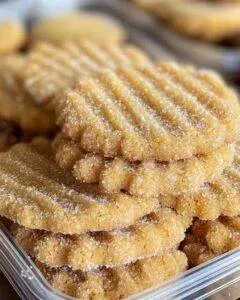
The photo shows golden cookies with parallel ridges. Their exact original formula is unknown. For a simple home version, cream 115 g softened butter with 100 g light brown sugar. Beat in 1 egg yolk, 1 teaspoon vanilla and 1 tablespoon milk. Stir in 180 g all-purpose flour, 1/2 teaspoon baking powder and a pinch of salt. Chill the dough for 30 minutes. Shape small oval cookies, flatten to about 6 mm thick, and press parallel ridges with a fork. Bake on a lined tray at 350°F (175°C) for about 12–15 minutes, until the edges are golden and the centers are set. Cool on the tray for 5 minutes, then move to a rack. Makes about 20 small cookies; size and oven variation affect timing.
This is a new recipe inspired by the visible ridged shape, not a claim that the photograph reveals its ingredients. It contains wheat, milk and egg. Do not taste raw dough.
What Makes a Washboard Cookie Different
A washboard cookie is usually recognized by the ridges pressed across the top before baking. The name points to the look: parallel grooves that resemble the scrubbing surface of an old laundry board. That visual cue matters because the cookie is otherwise modest. It is not built around frosting, elaborate fillings, or dramatic color. Its personality comes from shape, texture, and the way the ridges brown slightly at the high points.
That simplicity is why the cookie can become a repeat bake. A baker can mix a familiar butter-sugar-flour style dough, shape small portions, press in the pattern, and get a finished cookie that looks more intentional than a plain round. If you enjoy playful patterned cookies, the same design instinct shows up in recipes such as Cherry Wink Cookies Sweet Crunchy and Pumpkin Crinkle Cookies Treats, where surface texture does much of the visual work.
The Texture Starts With Sugar, Fat, Flour, and Liquid
Cookie texture is chemistry in everyday clothes. Iowa State University Extension explains that sugar, fat, flour, leavening agents, and binding ingredients each affect spread, color, tenderness, and structure in cookies (Iowa State University Extension). In a washboard cookie, that matters because the ridges need enough structure to remain visible, while the bite should still feel pleasant rather than hard.
Granulated sugar tends to encourage a lighter color and crisper texture, while brown sugar brings more moisture and a softer, denser result. Butter adds flavor and tenderness, but because it melts as the cookie bakes, too much warmth in the dough can blur the pattern. Flour provides the frame. Milk, egg, or another binder brings the dough together and helps it set. Baking powder or baking soda adds lift, but the kind and amount affect whether the cookie stays tidy or puffs beyond its intended shape.
Why the Ridges Matter More Than Decoration
The washboard pattern is not only decorative. Pressing the dough changes thickness, creates edges, and gives the cookie more surface variation. The raised ridges brown a little more readily than the lower channels, so a well-baked batch can taste subtly more complex than a smooth cookie made from the same dough. The pattern also creates a useful visual signal: if the grooves vanish in the oven, the dough was probably too warm, too wet, under-floured, or placed on a hot sheet.
For clean definition, the dough should be soft enough to press without cracking into pieces but firm enough to hold a shallow imprint. Very deep grooves can split or bake unevenly. Very faint grooves disappear. The sweet spot is a confident press that flattens the ball slightly and leaves parallel lines with rounded edges.
A Practical Texture Checklist
The most reliable washboard cookies come from controlling a few repeatable variables. Use this checklist before assuming the formula itself is wrong:
- Butter feel: it should be pliable, not oily or collapsing.
- Flour measuring: too little flour encourages spreading; too much can make the cookie dry and hard.
- Leavening freshness: old baking powder may give less lift than expected.
- Sheet temperature: a hot pan can melt the dough before the cookie sets.
- Spacing: ridged cookies still need room for modest spread.
- Cooling time: the cookie firms as it cools, so judging texture straight from the oven can mislead you.
Illinois Extension recommends reading the recipe first, assembling ingredients, measuring flour correctly, using room-temperature butter and eggs, rotating sheets during baking, and letting cookie sheets cool between batches (Illinois Extension). Those steps are especially helpful for a patterned cookie because a small process problem shows up immediately in the ridges.
Leavening Is Small but Powerful
Leavening agents are easy to overlook because the amounts are usually small, but they decide how much lift and openness the cookie gets. The FDA describes leavening agents as ingredients that promote rising in breads and other baked goods, with baking soda among the examples (FDA). For washboard cookies, the goal is usually restrained lift rather than a cake-like rise, because too much puff can soften the pressed ridges.
Baking powder deserves particular attention because it can lose performance after opening. Utah State University Extension notes that moisture can deteriorate baking powder and baking soda, and says opened baking powder can be tested by mixing it with warm water to check for bubbling (Utah State University Extension). If a familiar cookie suddenly bakes flat or dull, the can in the cabinet may be part of the explanation.
Why People Bake Them Again and Again
Part of the appeal is emotional, but it is not only nostalgia. Washboard cookies are efficient. They look handmade in a good way, they do not need icing, and they reward repetition. The more often you make them, the easier it becomes to recognize the right dough feel, the correct pressure for the ridges, and the ideal moment to pull them from the oven.
They also sit comfortably between plain and fancy. A plate of ridged cookies looks finished beside coffee or tea, but the process stays calm enough for a weeknight bake. If you like cookies that use a familiar base but still feel special, compare the idea with Soft Glazed Lemon Cookies or Coffee Cake Cookies Cinnamon Streusel: each turns a basic cookie format into something memorable through surface, aroma, or texture.
Common Problems and What They Usually Mean
If the cookies spread until the pattern nearly disappears, start with temperature. Butter may have been too soft, the dough may have waited too long in a warm kitchen, or the baking sheet may not have cooled between rounds. If the cookies stay pale and puffy, they may need slightly more time, a different rack position, or a check on whether the oven is running cooler than its dial suggests.
If the cookies bake up hard, the likely causes are too much flour, overbaking, or too much mixing after the flour goes in. Once flour is added, the dough only needs enough mixing to come together evenly. A ridged cookie benefits from structure, but it should not be worked like bread dough. If the dough cracks badly during pressing, let it soften briefly at room temperature or press more gently.
How to Think About Flavor Without Losing the Classic Feel
The classic washboard cookie is subtle, so small flavor choices show clearly. Vanilla gives roundness. A pinch of salt makes sweetness taste more balanced. A little citrus zest, spice, or finely chopped toasted nuts can work, but heavy additions may interrupt the ridged surface or make the dough harder to press evenly. The best variations respect the cookie’s main promise: a neat shape, a tender bite, and a simple flavor that invites another cookie without demanding attention.
For a more delicate finish, some bakers dust cooled cookies lightly or dip one edge in a thin glaze, but the ridges should remain visible. If every surface is covered, the cookie loses the feature that makes it a washboard cookie. The design is doing useful work, so let it show.
The Best Way to Make Them Your Own
The most useful approach is to change one variable at a time. If you want a crisper cookie, adjust sugar style, baking time, or thickness gradually. If you want a softer one, look at fat choice, brown sugar, and bake time. If you want sharper ridges, focus on dough temperature and pan temperature before changing ingredients. Keeping notes may sound fussy, but for a cookie you bake often, it quickly becomes the shortest path to the version you like best.
Washboard cookies last in memory because they are both humble and specific. A plain round cookie can taste wonderful, but a ridged cookie carries a signature. Once you understand the role of the basic ingredients and the process details, the cookie stops feeling like a mystery and starts feeling like a dependable little baking ritual.
Wrap-Up
Washboard cookies are easy to love because the effect is greater than the effort. The ridged top gives them identity, while the dough relies on familiar cookie principles: sugar shapes spread and browning, fat affects tenderness and melt, flour builds structure, and leavening controls lift. For better batches, keep butter pliable rather than greasy, measure flour carefully, use fresh leavening, cool baking sheets between rounds, and press the ridges firmly but not harshly. The result is a simple cookie that looks intentional, tastes familiar, and rewards being baked again.
Frequently Asked Questions
- → Are washboard cookies a specific recipe or a cookie style?
They are best understood as a cookie style identified by the ridged pattern on top. Many versions use a simple butter-sugar-flour dough, but the defining feature is the washboard-like surface.
- → Why did my washboard cookie ridges disappear?
The dough may have been too warm, too wet, or placed on a hot baking sheet. Try cooling the sheet between batches, keeping the dough slightly firmer, and pressing shallow but clear grooves.
- → Should washboard cookies be crisp or soft?
Either can be appropriate. A thinner cookie with more granulated sugar and a slightly longer bake tends to be crisper, while a thicker cookie or one with more moisture-retaining ingredients tends to be softer.
- → Can I press the pattern with a fork?
Yes. A fork is the simplest tool. Press parallel lines across each dough portion, or press once and avoid crosshatching if you want the more direct washboard look.
- → Why should baking sheets cool between batches?
A hot sheet can melt the dough before the cookie structure sets. That early melting can increase spread and blur the ridged surface, especially in butter-based doughs.
References
This content was developed and refined using reliable sources.
- https://blogs.extension.iastate.edu/answerline/2023/11/21/ingredients-affect-how-the-cookie-crumbles
- https://www.fda.gov/food/food-additives-and-gras-ingredients-information-consumers/types-food-ingredients
- https://extension.illinois.edu/blogs/be-smart-eat-well-get-healthy/2018-07-13-baking-cookies-exhibit
- https://extension.usu.edu/preserve-the-harvest/research/cooking-food-storage