 Save
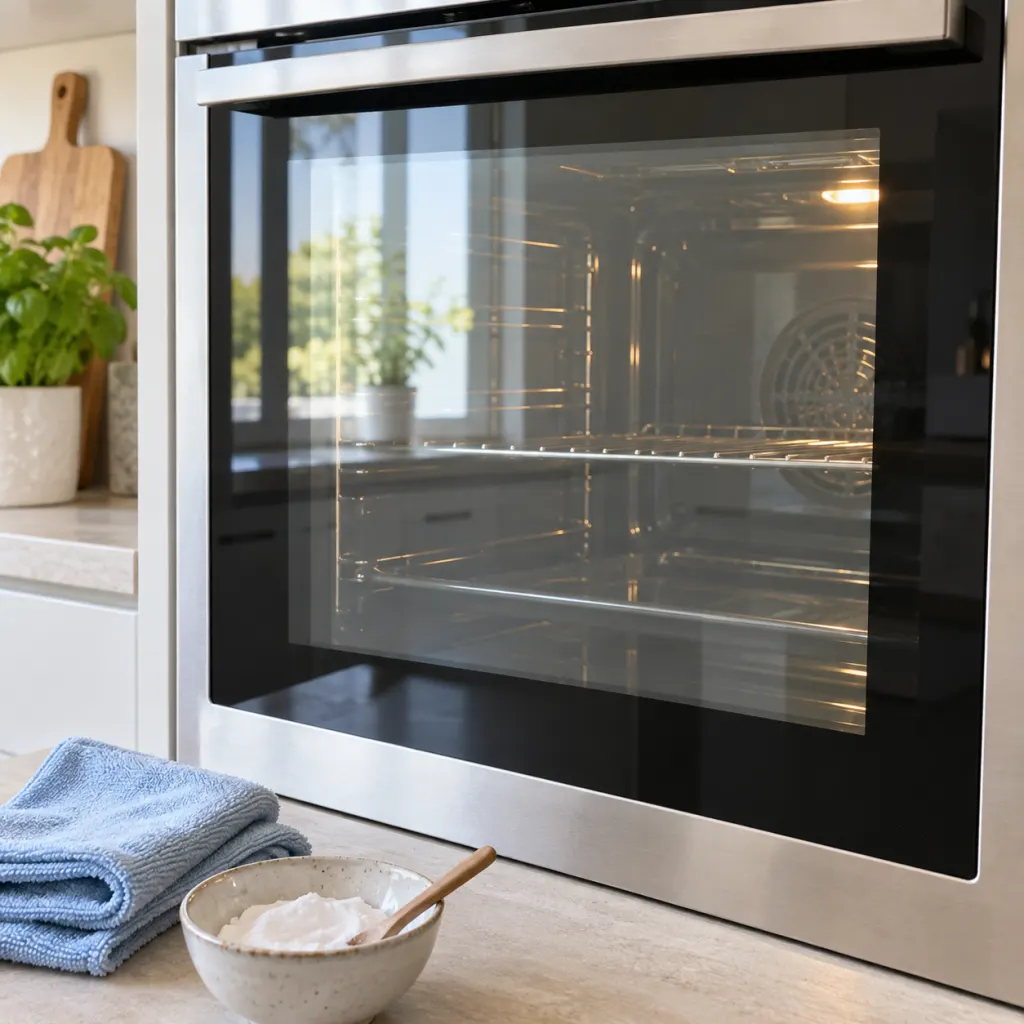
The simplest way to clean cloudy oven door glass is to use a thick baking soda paste on a completely cool door, give it time to sit, and then wipe it away with a damp cloth before polishing the glass dry. A light mist of vinegar can help loosen remaining film after most of the paste has been removed, but the real trick is not the fizz. It is dwell time, gentle abrasion, and repeated rinsing. Utah State University Extension describes baking soda as a gentle, non-abrasive cleanser that can be used on ovens, and vinegar as an acidic cleaner that can help dissolve some gummy buildup Utah State University Extension. This approach is best for grease and baked-on splatter on the accessible glass surface, not for dirt sealed between panes or for damaged appliance parts.
Why Oven Door Glass Gets Cloudy
Oven door glass gets dirty in a different way than a countertop. Spatters of fat, sugar, sauce, and starch land on the warm inner window, then keep reheating each time the oven is used. That repeated heat drives off moisture and leaves a darker, stickier residue that ordinary wiping may smear rather than remove. On glass, the grime also becomes more visible because light has to pass through it. A door can look worse than the rest of the oven even when the racks and floor are reasonably clean.
The baking soda paste method works because it changes the cleaning job from hard scrubbing into a slower softening process. Baking soda holds moisture against the stain and gives a mild scrubbing texture when you wipe it away. Vinegar is useful later in the process because its acidity can help with some films and mineral-like residues, but adding too much vinegar at the start neutralizes the paste quickly. For a practical home routine, think of baking soda as the main working layer and vinegar as a finishing rinse, not as a magic reaction.
Start With A Cool, Unplugged Mindset
Before cleaning, wait until the oven and door glass are fully cool. Heat makes grease softer, but it also increases burn risk, evaporates liquids faster, and can make glass less forgiving if someone presses hard with a tool. Remove loose crumbs from the door area with a dry cloth first so they do not scratch while you wipe. If the oven has a lock, latch, removable door, steam-clean function, or special coating, check the appliance manual before doing anything more involved than wiping the accessible glass.
Gather only what you need for a low-fume cleaning session:
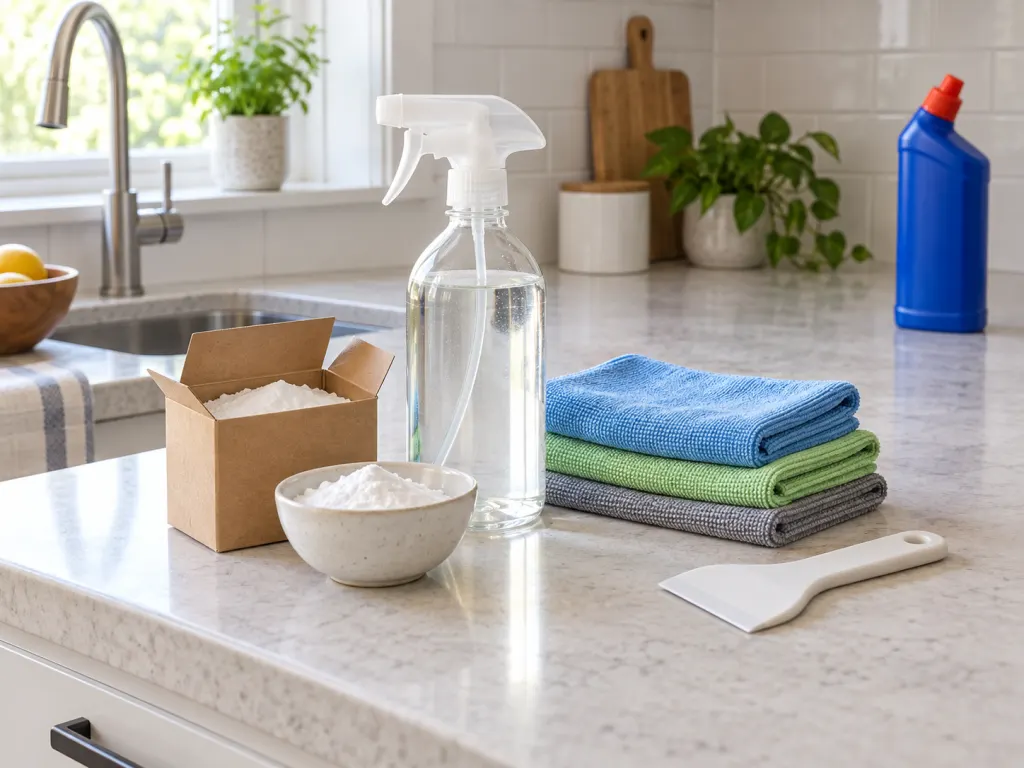
- Baking soda and a small bowl for mixing a thick paste.
- Water, added a spoonful at a time.
- White vinegar in a spray bottle, used lightly near the end.
- A soft sponge, microfiber cloths, and a plastic scraper or old plastic card.
- Dish soap for the final degreasing wipe if the glass still feels slippery.
- Gloves if your skin is sensitive or if you will be cleaning for more than a few minutes.
The Simple Paste Method
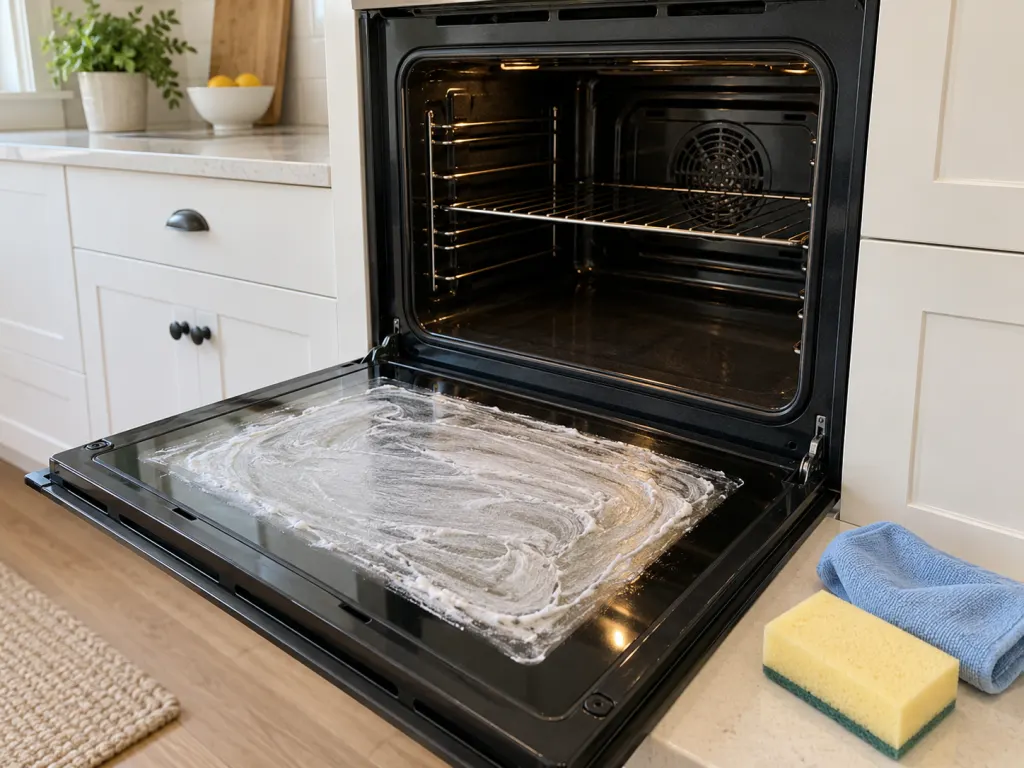
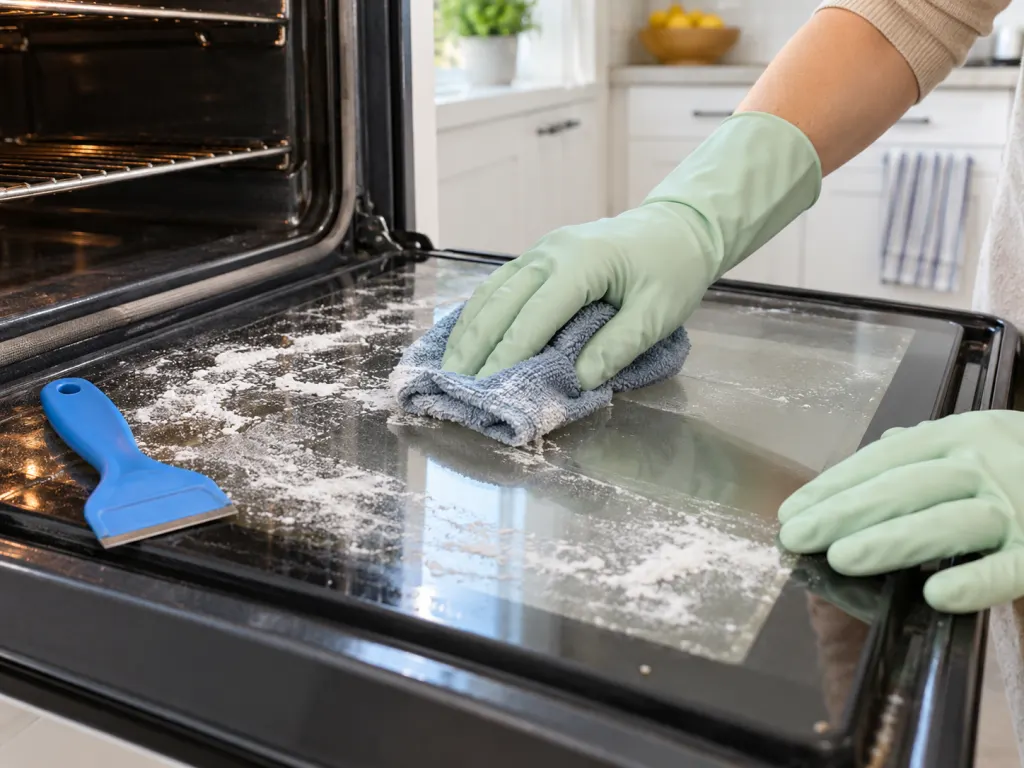
Mix baking soda with just enough water to make a spreadable paste, closer to frosting than liquid cleaner. Open the cool oven door and spread the paste over the stained glass, keeping heavy clumps away from vents, gasket edges, screw holes, and the gap between door panels. Let it sit for at least 20 to 30 minutes on light residue. For a door with a brown, baked-on haze, a longer rest can help, as long as the paste stays slightly damp and is not pushed into openings.
After the paste has rested, wipe a small test area with a damp cloth. If the residue releases, continue with firm but moderate pressure. If it still feels cemented on, re-dampen the paste and wait longer instead of attacking the glass. Use a plastic scraper held low to the surface for stubborn spots. Avoid metal knives, steel wool, and aggressive scouring pads because they can leave permanent scratches or damage nearby finishes. The goal is repeated softening and lifting, not grinding.
How To Rinse Without Leaving A White Film
Baking soda residue can dry into a chalky film, so rinsing matters as much as the paste. Remove the bulk of the paste with a damp cloth, folding the cloth often so you are not dragging the same gritty residue across the glass. Once the heavy layer is gone, mist a small amount of vinegar onto the remaining film or onto the cloth. It may fizz where baking soda remains. Wipe, rinse the cloth, and repeat until the glass no longer feels powdery.
If the glass still feels greasy after the baking soda is gone, use a drop of dish soap in warm water for a final pass, then wipe with plain water. Dry with a clean microfiber cloth. Look from several angles before deciding the job is done; oven glass often hides streaks until light catches it. A final dry polish is what turns a merely clean door into a clear one.
What About Dirt Between The Glass Panes?
Many oven doors have more than one glass layer. If streaks appear to be inside the door rather than on the inner surface, do not force the panels apart. Some doors are designed for service access, but others rely on seals, clips, insulation, and alignment that can be damaged by improvised disassembly. A narrow vent slot may collect dust or a drip from a boil-over, but pushing wet cloths or tools deep into the door can leave lint, moisture, or a bent part where you cannot easily retrieve it.
When A Commercial Oven Cleaner Makes Sense
A baking soda paste is a sensible first choice for ordinary door haze, but it may not remove every old carbonized spill. If you choose a commercial oven cleaner, treat it as a stronger chemical product, not as a shortcut to casual spraying. MedlinePlus notes that oven cleaners can contain corrosive alkalis and discusses harmful effects from swallowing or breathing them in MedlinePlus. Use the exact product label, ventilate the area, protect nearby surfaces, and keep people and pets away while the product is in use.
Avoid The Common Mistakes
The most common mistake is trying to clean the door while it is warm. The second is using too much liquid near the vents. The third is assuming that more reaction means more cleaning power. A dramatic fizz between vinegar and baking soda is visually satisfying, but it is short-lived; the paste needs contact time before any acidic rinse is useful. Another mistake is skipping the final rinse, which leaves the door looking cloudy again as soon as it dries.
Bleach is not needed for this job. The CDC explains that, in most home situations, cleaning with soap and water can remove most germs from surfaces, while disinfecting is a separate chemical process CDC. Oven door glass usually needs grease removal, not disinfection. The CDC also warns not to mix household bleach or disinfectants with other cleaners because dangerous vapors can be released. Keep that rule in mind if you are tempted to combine multiple products on a stubborn oven door.
A Maintenance Rhythm That Keeps The Door Clear
Once the glass is clean, maintenance is easier than rescue cleaning. After a messy roast, casserole, or pie, let the oven cool and wipe the inner glass with a damp soapy cloth before the spill bakes on repeatedly. Place dishes likely to bubble over on a rimmed baking sheet. Avoid overfilling pans, especially with sugary fruit fillings or fatty marinades. If splatter lands on the door, a quick wipe the same day usually prevents the brown haze that leads to long cleaning sessions later.
A monthly check is enough for many households, but heavy bakers may want to wipe the door more often. Use the mildest method that works: damp cloth first, soapy cloth second, baking soda paste for stuck-on haze, and labeled commercial cleaner only when the residue truly calls for it. If a cleaner is old, unlabeled, leaking, or no longer needed, the EPA recommends keeping hazardous household products in original containers, not mixing leftovers, and checking local disposal options for household hazardous waste EPA household hazardous waste guidance.
What Results To Expect
On a lightly hazed oven door, the paste method can restore a clear view in one session. On a door with years of baked-on grease, expect improvement rather than perfection on the first pass. Two gentle sessions are safer for the glass and surrounding trim than one harsh session with the wrong tool. If the remaining stain is actually between panes, beneath a coating, or caused by damage, surface cleaning will not remove it. That is the moment to consult the manual or an appliance technician instead of prying at the door.
Wrap-Up
The practical trick for oven door glass is a thick baking soda paste, time, gentle wiping, and careful rinsing. Use vinegar sparingly after most of the paste is removed, keep liquids away from vents and panel gaps, and avoid harsh tools that can scratch or damage the door. For ordinary grease, this method is usually a good first attempt. For sealed-in streaks, damaged parts, or chemical cleaners, slow down and follow the appliance manual and product labels.
Frequently Asked Questions
- → Can I use only vinegar to clean oven door glass?
Vinegar can help with some films, but it is not usually enough for baked-on grease by itself. A baking soda paste gives the cleaner more contact time and a mild scrubbing texture. Use vinegar lightly near the end to help remove leftover baking soda film, then rinse and dry well.
- → Is it safe to spray vinegar and baking soda together on the door?
A small vinegar mist after most of the paste has been wiped away is reasonable for rinsing residue. Do not mix them in a closed bottle, and do not assume more fizz means better cleaning. Keep liquids away from vents, seals, screws, and openings around the door glass.
- → Can I scrape oven door glass with a razor blade?
Use caution. Some appliance manuals allow specific scraping methods on certain surfaces, while others warn against sharp tools. A plastic scraper is the safer first choice for a general household guide. If you consider a razor, check the oven manual first and never use sharp tools on hot glass or near gaskets.
- → Why does the glass still look cloudy after cleaning?
The most common reason is leftover baking soda film. Wipe with a clean damp cloth, rinse the cloth often, use a very light vinegar mist if needed, and dry with microfiber. If the cloudiness appears between glass layers, surface cleaning will not reach it.
- → Should I use the oven self-clean cycle to clean the glass?
Not as the first solution for door glass haze. Self-clean cycles use very high heat and should only be used according to the appliance manual. For splatter on the accessible glass, a cool-door paste method is usually the more controlled place to start.
References
This content was developed and refined using reliable sources.
- https://extension.usu.edu/archive/greener-cleaners
- https://www.epa.gov/indoor-air-quality-iaq/volatile-organic-compounds-impact-indoor-air-quality
- https://www.cdc.gov/hygiene/about/cleaning-and-disinfecting-with-bleach.html
- https://www.medlineplus.gov/ency/article/002800.htm
- https://www.epa.gov/hw/household-hazardous-waste-hhw