 Save
Dark circles around faucets usually come from mineral scale, soap film, grime, or moisture trapped at the faucet base. Hard water can leave calcium and magnesium deposits on fixtures, and those deposits collect residue over time. This guide shows a careful way to clean the ring without scratching the sink or mixing harsh products.
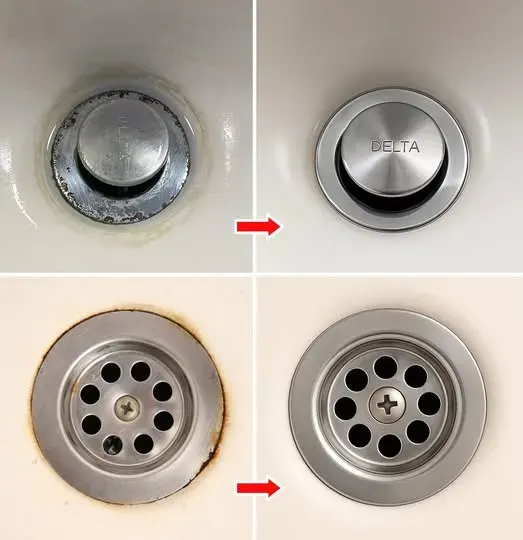
Step 1: The photo shows a drain rim and stopper
The dark ring in the original picture is around the sink drain and stopper, rather than the faucet base. Begin there with a soft cloth, mild dish detergent and warm water. If the stopper is designed to lift out, remove it according to its instructions and clean the underside separately. Do not force a fixed stopper or push loosened debris farther into the drain. Mineral scale, soap residue and worn metal finishes can look similar; a stain that does not lift may be damage rather than dirt. The surface-testing precautions below apply to both the drain rim and faucet base.
Step 2: Test the surface and loosen the ring
Look closely at the faucet base and the surrounding sink or countertop before you clean. Dark rings are often residue sitting on top of hard-water scale; University of Georgia Extension notes that hard water is tied to calcium and magnesium and can leave film or deposits on fixtures. Test any cleaner on a hidden spot first, especially around plated faucets, stone, enamel, or older finishes.
Step 3: Wash away soap film first
Wet a soft cloth with warm water and a small amount of dish detergent, then wipe around the faucet base in small circles. Detergents help lift grease and soil from surfaces, according to UGA Cooperative Extension, so this first pass removes the grime that can make mineral scale look darker. Rinse the cloth and wipe once more before moving to vinegar.
Step 4: Soften mineral scale with white vinegar
If the tested spot looks unchanged, soak a cloth or paper towel with white vinegar and wrap it around the faucet base for 10 to 15 minutes. White vinegar is acidic and can help loosen hard-water scale, as described by Utah State University Extension. Keep the cloth on the stained ring rather than spreading vinegar over nearby surfaces.
Remove the vinegar cloth, sprinkle a little baking soda on a damp soft sponge, and scrub the ring gently. USU Extension describes baking soda as a gentle, non-abrasive cleanser for sinks and similar surfaces, so it is a good next step when the scale has softened. Use a soft toothbrush around tight seams, but avoid steel wool or gritty pads that can scratch finishes.
Step 6: Clean stained caulk or grout separately
If the dark circle is in caulk, grout, or a seam rather than on smooth metal, clean that area with detergent and water and dry it fully. The EPA's basic mold cleanup guidance says hard surfaces should be scrubbed with detergent and water and dried completely. If caulk remains stained after cleaning, remove and replace it only after the surface underneath is clean and dry.
Step 7: Rinse and dry the area completely
Rinse the faucet base with clean water, then wipe away every trace of cleaner with a fresh damp cloth. Dry the faucet, seam, and surrounding sink with a microfiber cloth so minerals and soap residue do not settle back into standing water. Check from several angles to make sure no paste remains in the joint around the faucet.
Step 8: Seek medical help after a cleaner exposure
If a cleaner is swallowed, inhaled, or splashed on skin or eyes, follow the product label and get help promptly. MedlinePlus says cleaning and disinfecting products can cause harm if they are swallowed, inhaled, or absorbed through the skin. Move to fresh air after strong fumes, rinse exposed skin or eyes with water, and contact emergency services or Poison Help at 1-800-222-1222 when needed.
Step 9: Keep the faucet base dry after use
After the ring is gone, wipe the faucet base dry at the end of the day or whenever water pools around it. EPA WaterSense recommends inspecting faucets for scaling or calcium buildup and using white vinegar or an appropriate cleaner to remove buildup. Also watch for small leaks at the faucet base, since constant moisture makes residue return faster.
Wrap-Up
The bottom line: start with soap and water, use white vinegar only on surfaces that can handle mild acid, scrub with a soft tool, rinse thoroughly, and keep the faucet base dry so the ring is less likely to return.
Frequently Asked Questions
- → What causes a dark ring around a faucet?
The ring is often mineral scale mixed with soap film and grime. University of Georgia Extension explains that hard water is linked to calcium and magnesium, which can leave deposits and film on fixtures.
- → Can I use vinegar on every sink surface?
No. Vinegar is a mild acid, so test a hidden spot first and follow the sink or countertop maker's care instructions. If the finish dulls, changes color, or feels rough, rinse it off and use only mild dish detergent and water.
- → How long should vinegar sit around the faucet?
Start with 10 to 15 minutes. If the ring softens but does not lift, repeat once instead of leaving acid on the surface for a long time.
- → What if the dark color is in the caulk?
Clean the caulk with detergent and water, then dry it completely. If the stain remains embedded, the caulk may need to be removed and replaced after the area is clean and dry.
- → Should I use bleach on the faucet ring?
Bleach is not needed for ordinary mineral scale. If you use any disinfecting product for a separate reason, the CDC says to follow the label, ventilate the area, and never mix bleach with other cleaners.
- → How do I keep the ring from coming back?
Dry the faucet base after use, wipe the sink regularly, and inspect faucets for calcium buildup. EPA WaterSense recommends checking faucets for scaling and using white vinegar or an appropriate cleaner to remove buildup.
References
This content was developed and refined using reliable sources.
- https://fieldreport.caes.uga.edu/publications/B939/water-quality-and-common-treatments-for-private-drinking-water-systems
- https://www.epa.gov/watersense/home-maintenance
- https://extension.usu.edu/archive/greener-cleaners
- https://fieldreport.caes.uga.edu/publications/C1114/cleaning-healthy-cleaning-green
- https://www.epa.gov/mold/what-are-basic-mold-cleanup-steps
- https://www.cdc.gov/hygiene/about/cleaning-and-disinfecting-with-bleach.html
- https://www.medlineplus.gov/cleaningdisinfectingandsanitizing.html