 Save
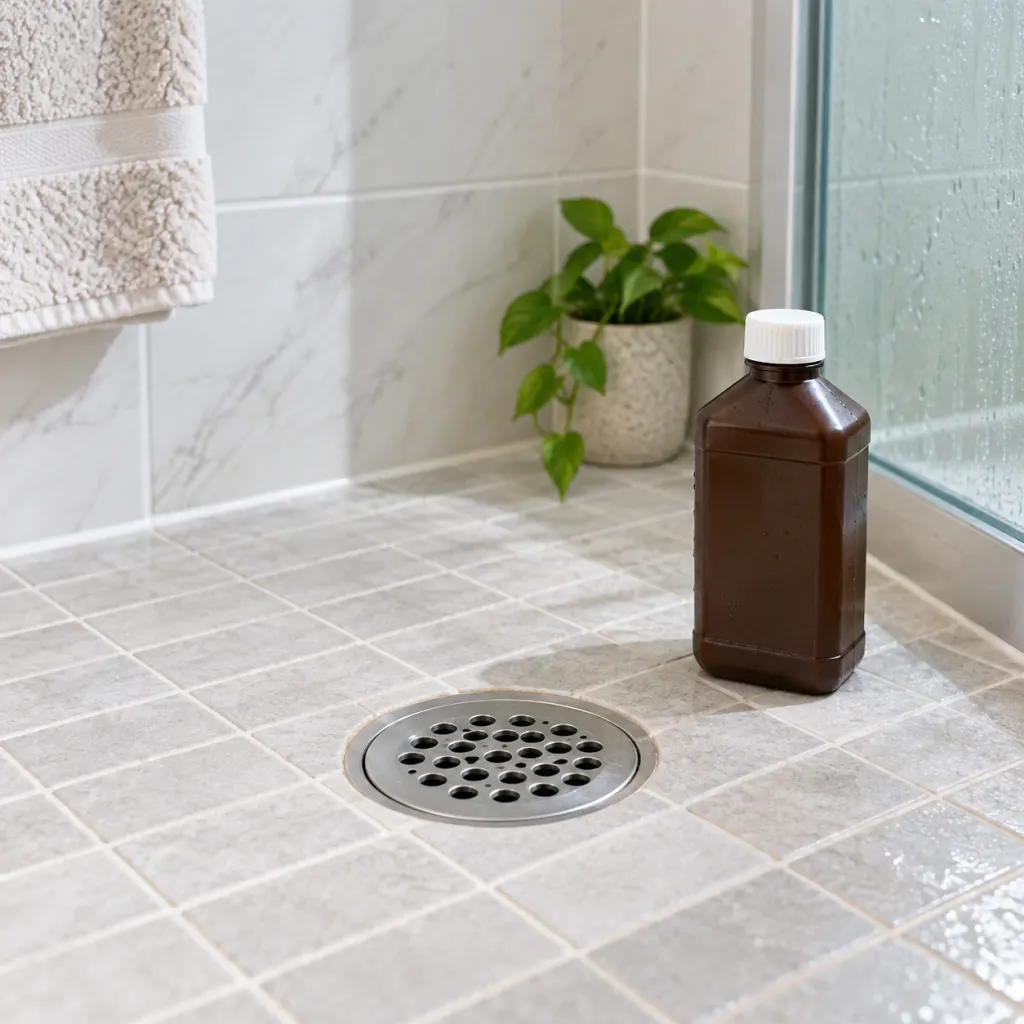
Pouring household hydrogen peroxide down a shower drain may cause fizzing, bubbling, and a temporary fresher smell, but it is usually a light maintenance step rather than a true plumbing fix. The common 3% solution can break down into water and oxygen, and that bubbling can disturb some soft organic residue, but hair mats, soap scum, mineral scale, damaged pipes, and venting problems often need mechanical cleaning or professional help. The key is to use it modestly, never mix it with other cleaners, and treat repeated slow drainage as a sign that the drain needs a closer look.
Hydrogen peroxide is familiar because it sits in many medicine cabinets and cleaning shelves, yet it is still a chemical oxidizer. The Agency for Toxic Substances and Disease Registry explains that hydrogen peroxide is unstable and readily decomposes to oxygen and water, while higher concentrations can irritate or injure skin, eyes, and mucous membranes https://wwwn.cdc.gov/TSP/ToxFAQs/ToxFAQsDetails.aspx?faqid=304&toxid=55. In a drain, that chemistry can look more dramatic than it really is. A little foam is not proof that the pipe is clean; it only tells you the liquid is reacting with something it touched.
Why the Drain Fizzes
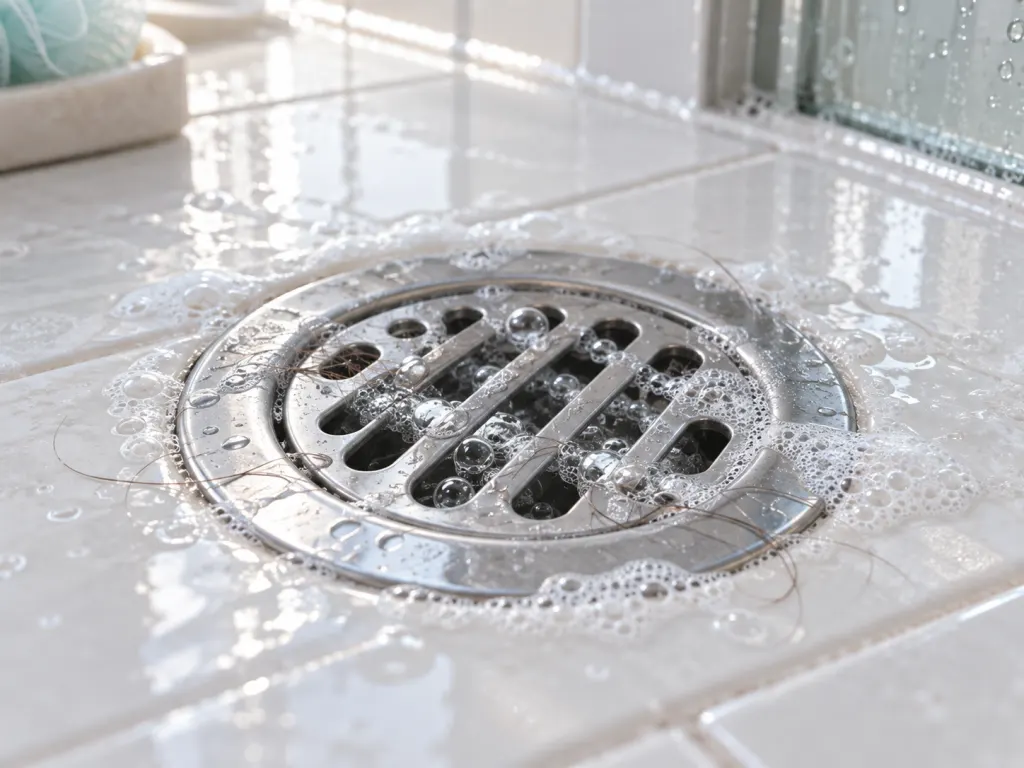
The fizz people notice is mostly oxygen being released as hydrogen peroxide decomposes. Organic material, metal traces, and rough surfaces can speed that process, so a shower drain with hair, skin oils, soap film, and mineral residue may bubble more than a clean basin. That reaction can loosen light debris close to the drain opening, but it does not mean the liquid has traveled through the whole trap or reached the deepest part of the clog.
This matters because a shower drain blockage is often physical. Hair wraps around the crossbars or collects in the trap. Soap scum and conditioner residue can glue that hair together. In hard-water areas, minerals can make the buildup feel firmer. Hydrogen peroxide may wet and foam around that material, but it cannot reliably pull out a dense hair mass. If the drain improves for a day and then slows again, the cause is probably still sitting in the pipe.
What Hydrogen Peroxide Can Realistically Do
Hydrogen peroxide has documented disinfecting properties under controlled use on inanimate surfaces. CDC infection-control guidance notes that commercially available 3% hydrogen peroxide has been used as a disinfectant on inanimate surfaces, but those uses depend on concentration, surface contact, and time https://www.cdc.gov/infection-control/hcp/disinfection-sterilization/chemical-disinfectants.html. A shower drain is not the same as a clean countertop or medical surface. It is dark, wet, uneven, and full of flowing water, which makes consistent contact difficult.
For household maintenance, that means hydrogen peroxide is best understood as a mild odor and residue step near the drain opening. It may reduce some musty smell if the odor comes from fresh organic film close to the surface. It may make the grate easier to scrub. It may also give a short-lived improvement if a small amount of soft debris was slowing the water. What it should not be expected to do is dissolve a serious clog, correct a sewer-gas issue, repair a failing trap seal, or make hidden mold growth disappear.
A Safer Way to Use It for Light Maintenance
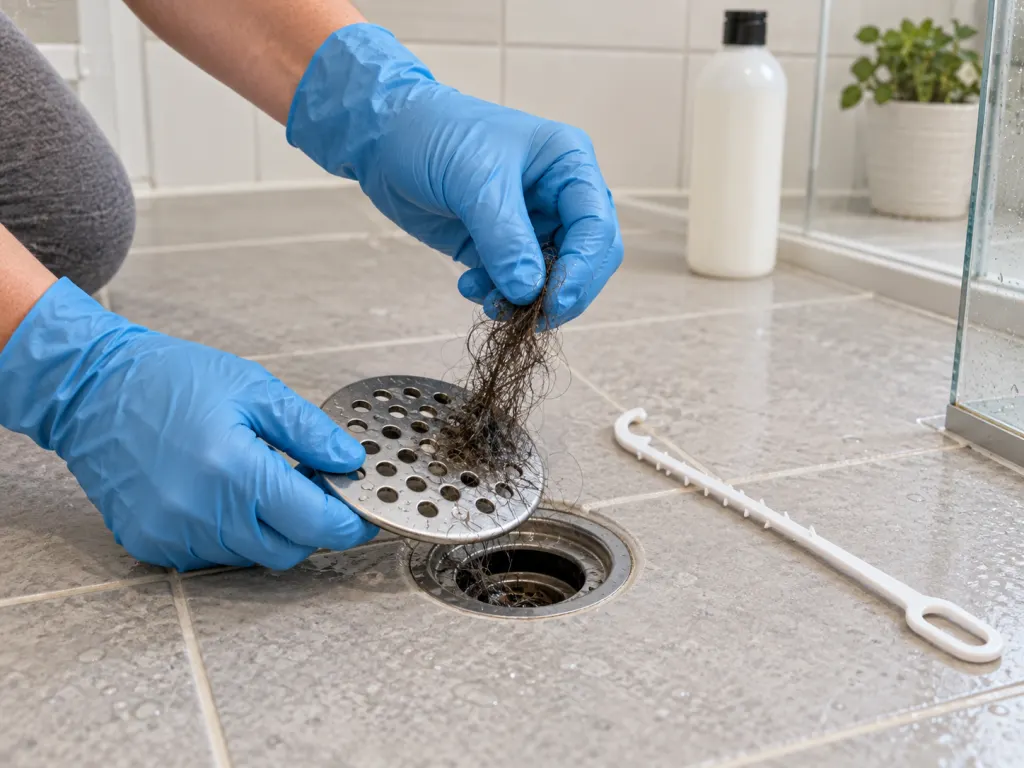
If you choose to use ordinary 3% hydrogen peroxide in a shower drain, keep the process simple and controlled. Start by removing visible hair from the drain cover with a disposable towel or drain tool. Open the bathroom door or window if possible. Pour a small amount slowly into the drain, let it sit briefly, then rinse with warm water. Do not follow it with bleach, ammonia, toilet cleaner, acidic descaler, or another drain product. CDC bleach guidance warns against mixing household bleach or disinfectants with other cleaners or disinfectants because dangerous vapors may result https://www.cdc.gov/hygiene/about/cleaning-and-disinfecting-with-bleach.html.
- Use only the household-strength product you can identify clearly on the label.
- Work with ventilation and keep the bottle away from children and pets.
- Remove hair mechanically before relying on any liquid.
- Rinse the drain well with water after the fizzing settles.
- Stop using chemical products if the drain backs up, smells like sewage, or repeatedly slows.
When Fizzing Is Not the Same as Cleaning
Fizzing is visually satisfying, but it can be misleading. A dramatic reaction at the drain opening may happen because peroxide is meeting fresh soap film, shed skin cells, or hair caught on the grate. The main obstruction, however, may be several inches lower in the trap. If standing water remains after the reaction, the drain needs a different approach: remove the cover, pull out hair, use a simple drain snake, or ask a plumber to inspect the line.
There is also a difference between odor from surface film and odor from plumbing. A musty smell that improves after scrubbing the cover is usually a cleaning issue. A rotten or sewer-like odor can point to a dry trap, poor venting, a cracked fitting, or a backup farther down the system. Those problems are not solved by pouring more product into the opening. Running water into a rarely used drain may refill a dry trap, but persistent sewer odors deserve professional attention.
What About Septic Systems?
If your home uses a septic system, be especially conservative with drain additives. The EPA advises homeowners not to use septic system additives, noting that there is no scientific evidence that biological or chemical additives speed decomposition in septic tanks and that some can be detrimental or contaminate groundwater https://www.epa.gov/nutrientpollution/what-you-can-do-your-home. A small incidental rinse from household cleaning is different from routine chemical dosing, but the larger point is useful: septic systems work best with regular inspection, pumping, water efficiency, and fewer unnecessary chemicals.
For a septic household, the better shower-drain routine is mechanical first. Catch hair before it enters the drain, clean the grate weekly, and avoid sending large amounts of cleaners into the system. If the same shower repeatedly drains slowly, the issue may be a hair blockage in the trap or a line problem that needs removal, not chemical repetition. Regular septic maintenance matters more than any bottle kept under the sink.
Safety Boundaries for Skin, Eyes, and Breathing
Household-strength hydrogen peroxide is much weaker than industrial products, but contact still deserves respect. ATSDR describes 3% to 5% household disinfectant solutions as mildly irritating to skin and mucous membranes, while stronger products can be corrosive https://wwwn.cdc.gov/TSP/ToxFAQs/ToxFAQsDetails.aspx?faqid=304&toxid=55. If liquid splashes on skin, wash it off with water. If it gets into an eye, rinse with running water; NIOSH first-aid guidance for chemical eye contact describes prompt irrigation with large amounts of water and getting medical attention if discomfort continues https://www.cdc.gov/niosh/npg/firstaid.html.
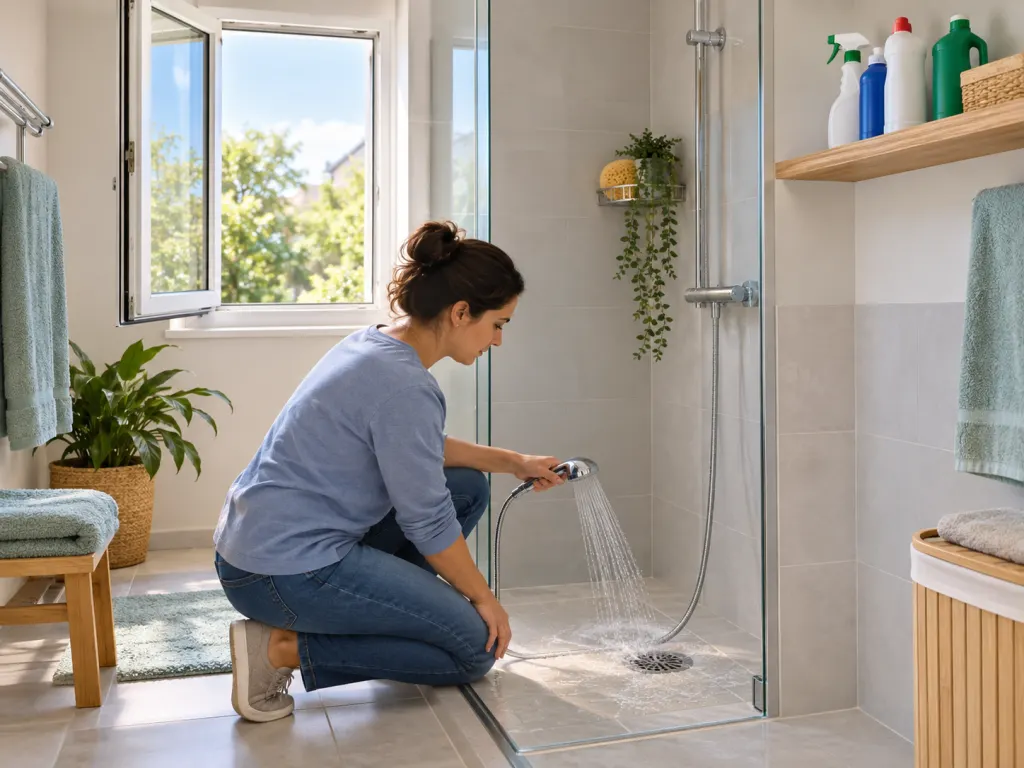
Ventilation is a practical safeguard because bathrooms are small spaces. Avoid leaning over the drain while liquid is reacting, and do not close yourself into a steamy room with multiple cleaning products open. If someone has coughing, chest tightness, eye pain, trouble breathing, a significant splash, or accidental swallowing, move away from the area and seek urgent help from local emergency services or a poison center. Keep the container so helpers can identify the exact product strength.
Better Fixes for a Slow Shower Drain
The most effective first step for a slow shower drain is usually removal, not pouring. Unscrew or lift the drain cover if it is designed for homeowner access, pull out visible hair, and clean the underside of the cover. A flexible plastic drain tool can reach the upper part of the trap in many showers. After removing debris, flush with warm water. This approach addresses the material that most often causes the slowdown and avoids piling one chemical on top of another.
Call a plumber when water backs up in more than one fixture, when the drain gurgles after nearby toilets or sinks run, when sewer odor persists, or when clogs return quickly after hair removal. Those signs can point beyond the shower drain itself. Chemical drain openers may promise speed, but strong acids and alkalis can create splash hazards and may be hard on plumbing when misused. A professional auger or camera inspection is often clearer and less guesswork-heavy than repeated chemical trials.
The Bottom Line
Hydrogen peroxide in a shower drain can fizz, freshen the area briefly, and help with light residue near the opening. It is not a dependable solution for a real clog, and it should never be mixed with other cleaners. For routine care, remove hair, scrub the drain cover, rinse with water, and reserve peroxide for modest surface-level maintenance. For repeated slow drains, strong odors, backups, or septic concerns, the safer answer is inspection and mechanical clearing rather than more chemistry.
Wrap-Up
The practical lesson is simple: the fizz is chemistry, not proof of a clean pipe. Household 3% hydrogen peroxide may be useful around the drain opening, but shower drainage problems are usually caused by hair, soap residue, mineral buildup, or plumbing conditions that need physical removal or professional diagnosis. Use ventilation, avoid mixing products, rinse well, and treat recurring drainage trouble as a maintenance issue rather than a reason to keep pouring more liquid down the drain.
Frequently Asked Questions
- → Can hydrogen peroxide unclog a shower drain?
It may loosen a small amount of soft residue near the drain opening, but it is not a reliable way to remove a hair clog. If water still drains slowly, remove visible hair, use a simple drain tool, or have the line inspected.
- → Is the fizzing a sign that the drain is clean?
No. Fizzing mainly shows that hydrogen peroxide is breaking down and releasing oxygen. The reaction can happen at the surface even when the main blockage remains lower in the trap.
- → Can I use hydrogen peroxide after bleach or another drain cleaner?
Avoid mixing cleaners or disinfectants in the same drain. Rinse thoroughly with water and do not layer products. If a drain product has already been used and the drain is still blocked, stop and seek plumbing help.
- → Is hydrogen peroxide safe for septic systems?
For septic homes, use unnecessary drain chemicals sparingly. EPA homeowner guidance advises against septic additives because they have not been shown to improve decomposition and some may harm the system or groundwater.
- → What should I do if hydrogen peroxide splashes in my eye?
Rinse the eye with running water. If discomfort, blurred vision, pain, or irritation continues, seek help from a qualified health professional or local urgent service.
References
This content was developed and refined using reliable sources.
- https://wwwn.cdc.gov/TSP/ToxFAQs/ToxFAQsDetails.aspx?faqid=304&toxid=55
- https://www.cdc.gov/infection-control/hcp/disinfection-sterilization/chemical-disinfectants.html
- https://www.cdc.gov/hygiene/about/cleaning-and-disinfecting-with-bleach.html
- https://www.epa.gov/nutrientpollution/what-you-can-do-your-home
- https://www.cdc.gov/niosh/npg/firstaid.html