 Save
Distilled white vinegar can have a modest place in laundry, mainly as a rinse-cycle helper for residue, odor, and some towel stiffness. It should not replace detergent, chlorine bleach, oxygen bleach, or a labeled laundry sanitizer. The reason is simple: vinegar is acidic, while many laundry residues and hard-water films are alkaline or mineral-based, so a small rinse-stage amount may help loosen what plain rinsing leaves behind. The FDA describes vinegars as containing acetic acid, with many natural vinegars containing at least 4 grams per 100 mL for labeling purposes, which explains why vinegar behaves differently from detergent in the wash FDA. The big safety rule is just as important: keep vinegar completely separate from chlorine bleach and other cleaners. CDC guidance warns that household bleach should not be mixed with cleaners or disinfectants because dangerous vapors can be released CDC.
What Vinegar Can Realistically Do
In laundry, vinegar is best understood as a rinse aid, not a soap. Detergents contain surfactants and builders designed to lift soil, suspend it in water, and carry it away. Vinegar does not do that job well enough on its own. What it can sometimes do is help with the last part of laundering: rinsing away alkaline traces, mineral film, and detergent buildup that can leave cotton towels or everyday washable fabrics feeling rough. The University of Georgia Extension identifies acetic acid as a textile-care product used to neutralize alkalies and notes that white vinegar may be substituted in that role, with a colorfastness caution University of Georgia Extension. That is the practical lane for vinegar: use it when the fabric is already washable, the washer manual allows it, and the issue seems related to residue rather than deep soil or a stubborn stain.
Use Distilled White Vinegar, Not Specialty Vinegar
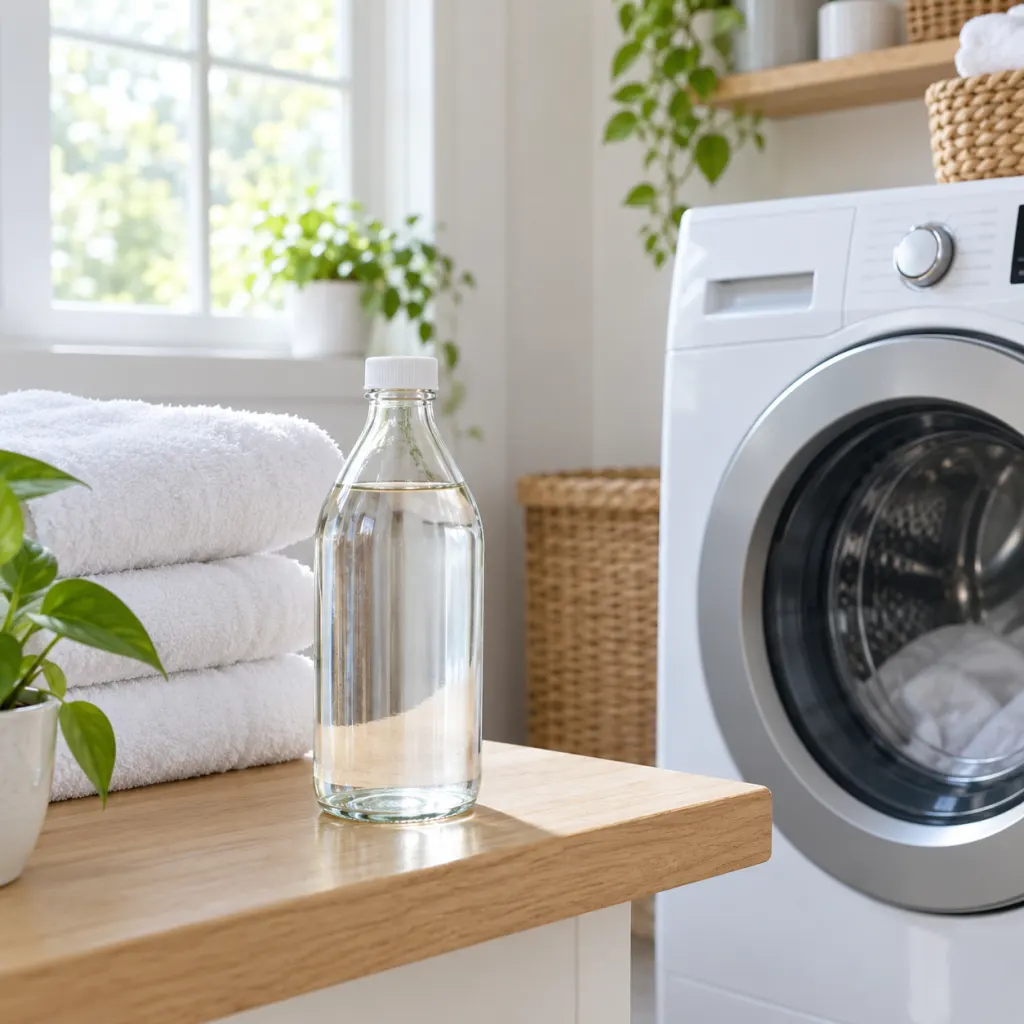
For laundry, plain distilled white vinegar is the most sensible choice because it is clear, inexpensive, and less likely to bring color or aroma into the load. Cider, wine, balsamic, and flavored vinegars belong in the kitchen, not in the washer, because their color and plant compounds may work against the goal of a clean rinse. Vinegar sold for cleaning, gardening, or weed control may be much stronger than ordinary household vinegar; avoid those products for clothing and linens unless a garment-care or washer manufacturer specifically allows them. Food vinegar definitions are useful here because they remind us that vinegar is not one single strength or use category. FDA policy describes several vinegar types and focuses on acetic-acid strength for labeling, while extension guidance on vinegar cautions readers to read labels because acidity levels can vary by product FDA.
A Simple Rinse-Cycle Routine
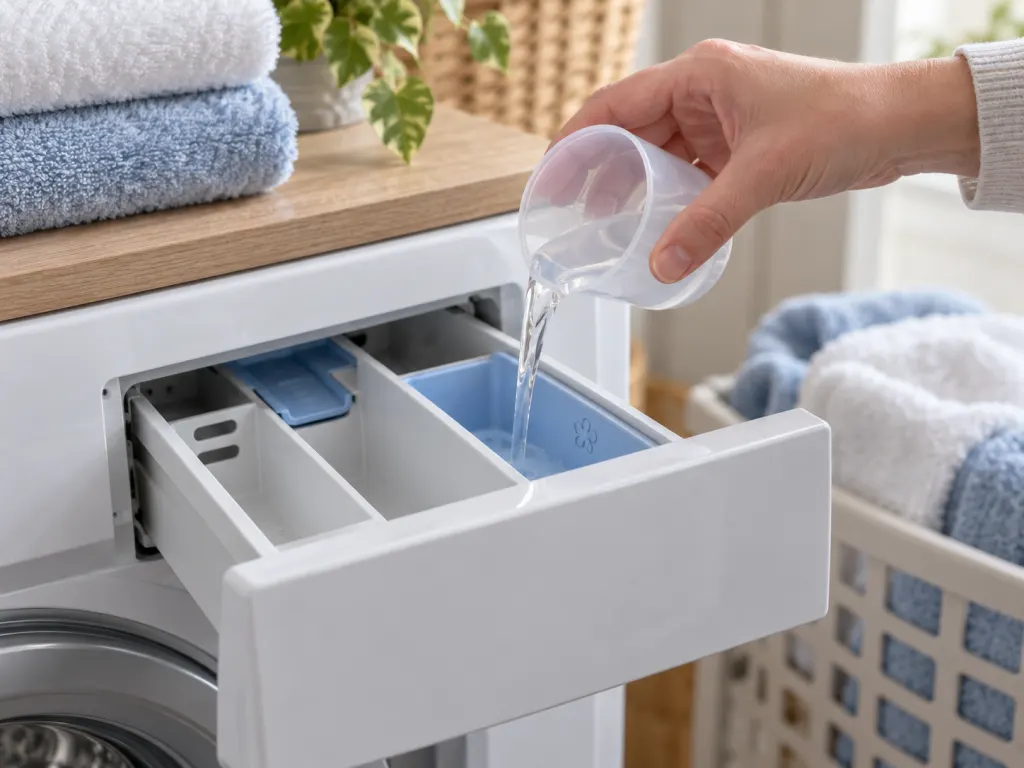
If you decide to try vinegar, keep the routine restrained. Add a small amount of distilled white vinegar to the fabric-softener dispenser or the rinse stage so it is diluted by rinse water rather than poured directly onto fabric. A practical starting point is about 1/4 cup for a small load and up to 1/2 cup for a large load, used occasionally rather than every time you wash. Do not pour vinegar into the detergent compartment for the main wash, because the wash stage is where detergent needs to work without being neutralized by an acid. A cautious routine looks like this:
- Read the garment care label before adding anything beyond detergent.
- Use plain distilled white vinegar only, and keep it away from bleach and other additives.
- Add it during the rinse stage, not directly onto dry clothes.
- Skip vinegar on delicate, dry-clean-only, or specialty-finished fabrics unless the label clearly allows washing.
- Run an extra rinse if the load still smells like vinegar after washing.
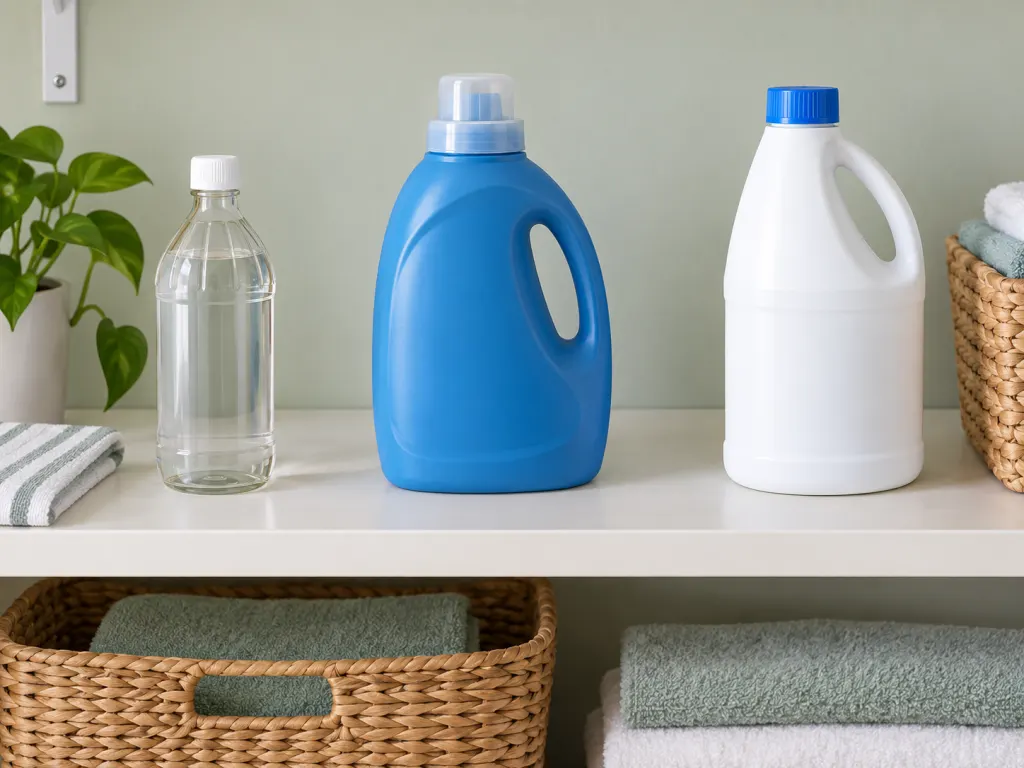
Why Hard Water Changes the Results
Hard water is one reason vinegar advice feels different from household to household. USGS explains that hard water contains higher levels of calcium and magnesium, and that these minerals can make soap harder to rinse and can leave film or scale on household surfaces USGS. In laundry, hard water can make fabrics feel less clean even when they have been washed, especially if the detergent amount, washer water level, or rinse pattern is not well matched to local water conditions. Vinegar may help with some surface-level mineral or alkaline residue, but it is not a full water-softening system. If every load comes out stiff, gray, or filmy, the better answer may be adjusting detergent, using a detergent made for hard water, cleaning the washer, or asking the local water utility about hardness levels.
Towels Are the Best Test Load
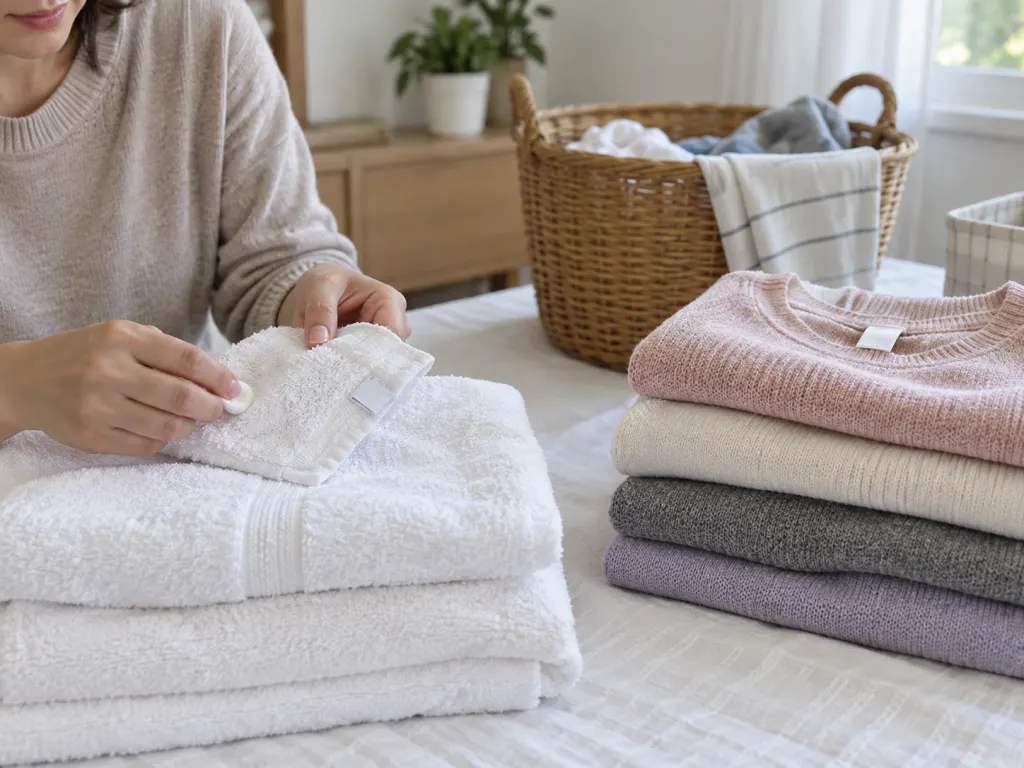
Towels are often where vinegar seems most useful because they collect detergent, body soil, minerals, and fabric-softener buildup over time. If towels feel waxy, stiff, or less absorbent, wash them with detergent first, then try vinegar in the rinse stage on a separate cycle or future load. Avoid combining vinegar with commercial fabric softener in the same load; using both can leave you guessing which product caused the result. Also avoid overloading the washer, since towels need enough water and movement to rinse well. Vinegar will not repair worn fibers, reverse damage from too much heat, or remove every odor. It is best viewed as a reset for washable cotton towels that feel coated rather than as a fix for old, thin, or heavily soiled linens.
When Vinegar Is the Wrong Laundry Tool
Do not use vinegar as a substitute for bleach when a care label allows bleaching and you need whitening from a bleach product. Do not use it as a stain remover for every stain. Some stains are oil-based, protein-based, dye-based, or mineral-based, and they need different approaches. The FTC’s care-label guidance explains that clothing labels are supposed to include washing, drying, bleaching, ironing, and warning information when those details matter for regular care FTC. That makes the care label your first authority. If it says no bleach, dry clean only, wash separately, cold water only, or another warning, do not override it because a household tip sounds convenient. Vinegar is also a poor match for silk, wool, acetate, rayon, elastics, water-repellent finishes, flame-resistant finishes, and anything with unstable dye unless the label and manufacturer guidance say the item can tolerate normal washing.
The Bleach Rule Matters Most
Never combine vinegar with chlorine bleach, and do not use vinegar in a load that also contains bleach. Vinegar is acidic, and CDC information on chlorine warns that household bleach can release chlorine gas when mixed with certain cleaning products CDC. CDC’s bleach-cleaning guidance also tells readers not to mix household bleach or disinfectants with other cleaners or disinfectants CDC. In a laundry room, this means one chemistry at a time. If you used bleach in a dispenser, rinse the dispenser thoroughly before any later vinegar use. If you are unsure whether a product contains chlorine bleach, sodium hypochlorite, ammonia, peroxide, enzymes, fragrances, or other active chemicals, read the label and keep products separate. More mixing does not make laundry cleaner; it can make the room unsafe.
Odor Problems Need a Cause, Not Just an Additive
Vinegar may reduce some mild musty or stale smells when the cause is residue, delayed drying, or a washer that needs cleaning. It is less useful when the cause is heavy soil, a damp storage area, mildew growth on surfaces, or a washing machine that stays wet between loads. Start with the basics: wash similar fabrics together, use the right detergent amount, avoid crowding the drum, move wet laundry to the dryer or line promptly, and leave the washer door or lid open when the manual allows airflow. EPA’s Safer Choice FAQ notes that homemade cleaning ingredients such as vinegar can be useful but may not perform like specially formulated products, and that household chemicals can be unsafe when used the wrong way EPA. That is a good frame for laundry odors too: vinegar can support good laundering, but it cannot compensate for poor drying, a dirty washer, or the wrong product for the job.
Washer and Septic Considerations
Occasional, diluted vinegar in the rinse cycle is different from pouring strong acid into a machine or using vinegar in every load for months. Rubber gaskets, hoses, dispensers, and sensors vary by machine, so your washer manual should settle any uncertainty. If the manual warns against vinegar or acidic cleaners, skip it. For front-load machines, wipe the gasket, clean the dispenser, and run the manufacturer’s recommended maintenance cycle instead of relying on vinegar alone. For septic systems, use laundry products according to label directions and avoid large, repeated amounts of any household chemical. The University of Minnesota Extension advises reading household product labels, buying only what you need, following storage and disposal instructions, and treating products with signal words such as caution, warning, danger, or poison with care University of Minnesota Extension.
A Decision Guide for Common Laundry Problems
Use vinegar only when it matches the problem. For towels that feel coated, try a normal wash with detergent, followed by vinegar in the rinse on the next towel load. For everyday odors, first improve sorting, drying time, and washer ventilation. For stains, choose a stain remover that matches the stain and fabric care label. For dingy whites, check whether the label permits bleach or oxygen bleach and follow that product’s label. For color bleeding, vinegar is not a reliable dye-setting step; wash unstable colors separately and use cold water if the label permits. For athletic wear, check the care label because stretch fibers and finishes may not welcome extra additives. For baby clothing or sensitive-skin households, rinse thoroughly and avoid fragrance-heavy products, but make personal skin or allergy decisions with a qualified professional if irritation is a concern.
Wrap-Up
Vinegar earns a narrow but useful place in laundry when it is treated as a rinse helper. Plain distilled white vinegar may help some washable fabrics feel less coated by reducing alkaline or mineral residue, especially in towel loads. It is not a stand-in for detergent, bleach, stain remover, or a labeled sanitizer, and it should never be mixed with chlorine bleach or other cleaners. The best approach is small, occasional, and boring in the best way: read the care label, check the washer manual, use vinegar only in the rinse stage, and stop using it if fabrics, elastics, finishes, or machine parts show any sign of trouble.
Frequently Asked Questions
- → Can I put vinegar in the detergent compartment?
It is better to use vinegar in the rinse stage, usually through the fabric-softener dispenser if your washer manual allows it. The detergent compartment is for the main wash, where detergent needs to lift soil and hold it in the water. Adding vinegar there may interfere with that job and will not give the same residue-rinsing effect.
- → Will vinegar make towels softer?
It may help some towels feel softer when stiffness comes from detergent, fabric softener, or hard-water residue. It will not rebuild worn fibers or fix damage from high heat, age, or heavy abrasion. For the best test, wash towels with detergent, avoid fabric softener, and use a small amount of distilled white vinegar only in the rinse cycle.
- → Can vinegar whiten white laundry?
Vinegar may make some whites look cleaner if dullness comes from residue or mineral film, but it is not bleach. For true bleaching, use a product that matches the garment care label, such as chlorine bleach when allowed or oxygen bleach when appropriate. Always follow the product label and never combine vinegar with chlorine bleach.
- → Is vinegar safe for every fabric?
No. Vinegar is best limited to sturdy, washable fabrics whose care labels allow normal laundering. Be cautious with wool, silk, acetate, rayon, elastic-heavy garments, water-repellent finishes, flame-resistant finishes, and unstable dyes. When in doubt, skip vinegar or test a hidden area before using it on the whole item.
- → What should I do if I accidentally mixed vinegar and bleach?
Leave the laundry area and get fresh air. Do not lean over the washer or try to smell the mixture. If the area can be ventilated without putting yourself close to fumes, open doors or windows from a safe position. If anyone has breathing trouble, chest tightness, eye pain, or severe throat irritation, contact emergency services or Poison Help at 1-800-222-1222 in the United States.
References
This content was developed and refined using reliable sources.
- https://www.fda.gov/regulatory-information/search-fda-guidance-documents/cpg-sec-525825-vinegar-definitions-adulteration-vinegar-eels
- https://site.extension.uga.edu/textiles/care/products
- https://www.ftc.gov/business-guidance/resources/clothes-captioning-complying-care-labeling-rule
- https://www.usgs.gov/water-science-school/science/water-qa-why-cant-i-rinse-soap-my-hands
- https://www.cdc.gov/hygiene/about/cleaning-and-disinfecting-with-bleach.html
- https://www.cdc.gov/chemical-emergencies/chemical-fact-sheets/chlorine.html
- https://www.epa.gov/saferchoice/frequently-asked-questions-safer-choice
- https://extension.umn.edu/garden-and-home/home-maintenance/home-maintenance-and-safety/reducing-the-use-of-hazardous-household-products