 Save
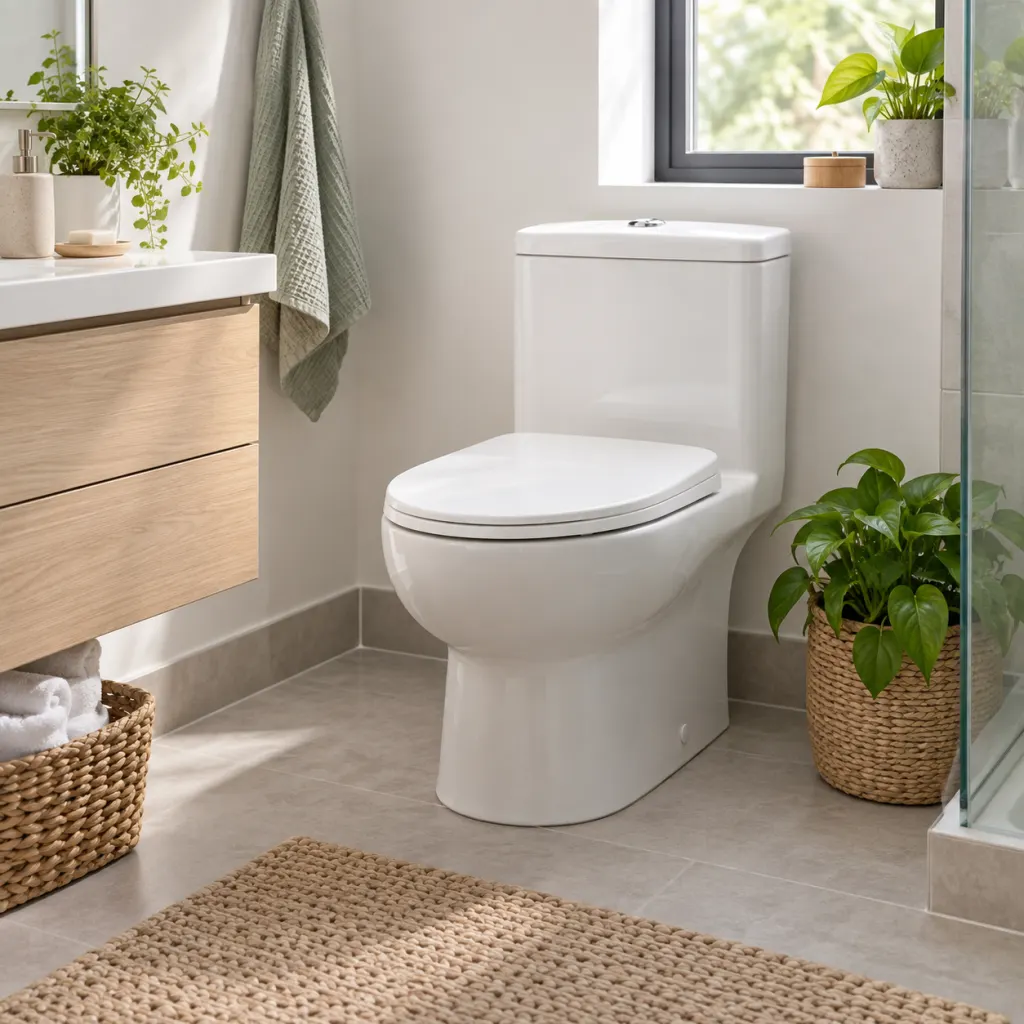
A toilet flush tank can collect mineral deposits, sediment, and residue around the parts that release and refill water. Periodic maintenance matters because EPA WaterSense notes that tank-type toilets need regular checks, especially for leaks and worn flappers. This guide shows a safe, simple way to clean the tank without damaging the flush parts.
Step 1: Ventilate the bathroom and choose one cleaner
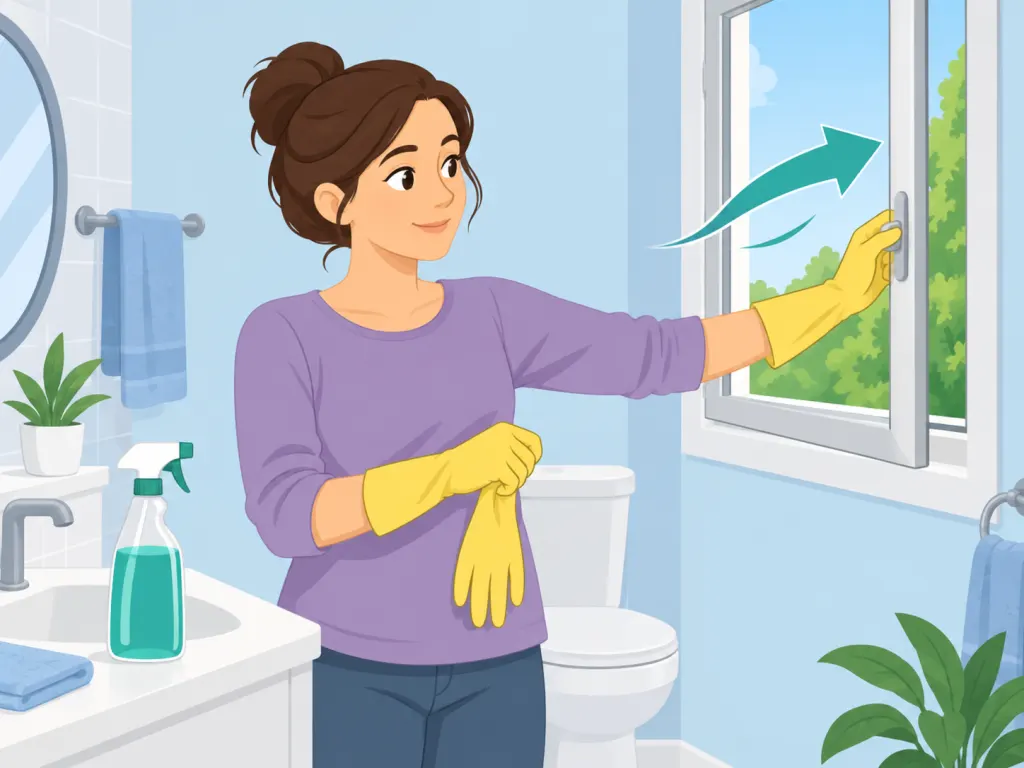
Open a window or run the exhaust fan before you start, since EPA guidance says ventilation helps reduce exposure during cleaning. Put on gloves, and use only one mild cleaner, such as white vinegar or a toilet-tank-safe descaler. If you use a commercial product, follow its label for eye protection, contact time, and rinsing.
Step 2: Turn off the water and drain the tank
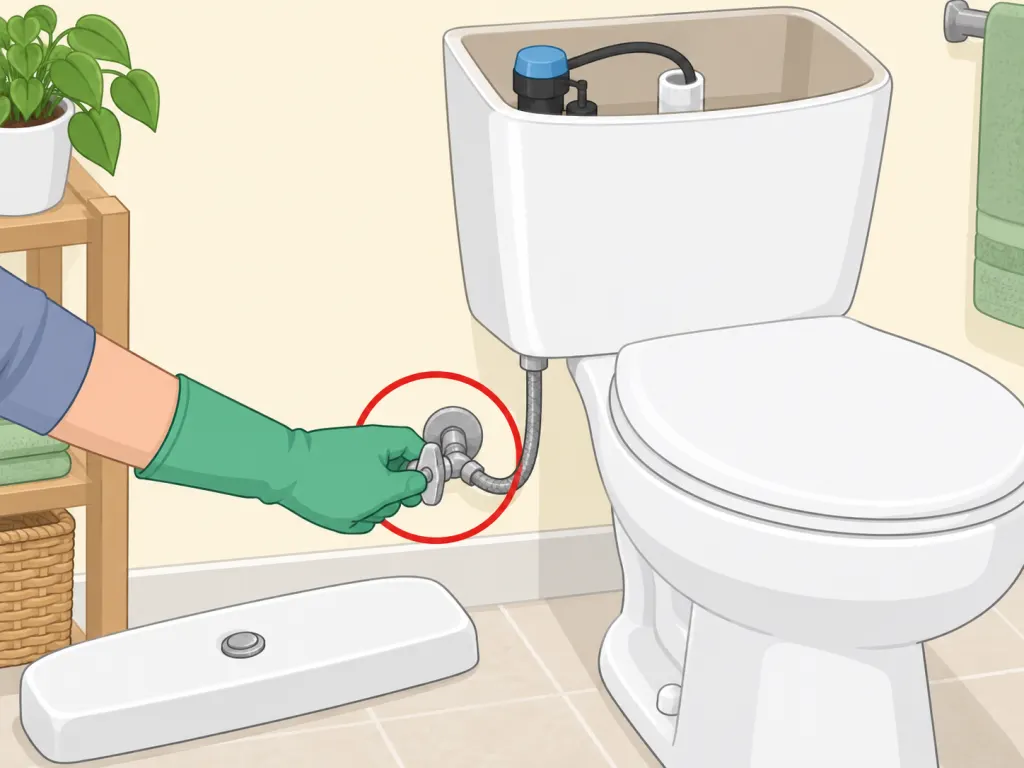
Turn the toilet’s water inlet shutoff valve clockwise, then flush to empty most of the tank. The Portland Water Bureau uses this shutoff-and-flush step before checking the flapper and valve seat. Sponge out the last inch of water so you can see the bottom clearly.
Step 3: Inspect the flush parts before scrubbing
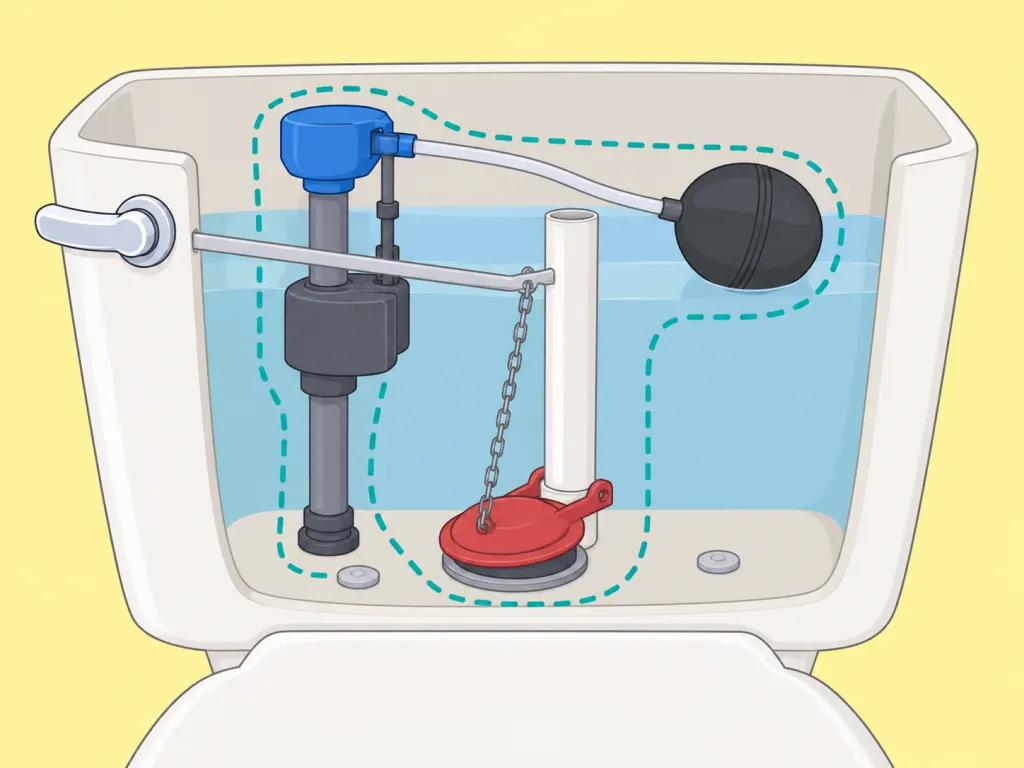
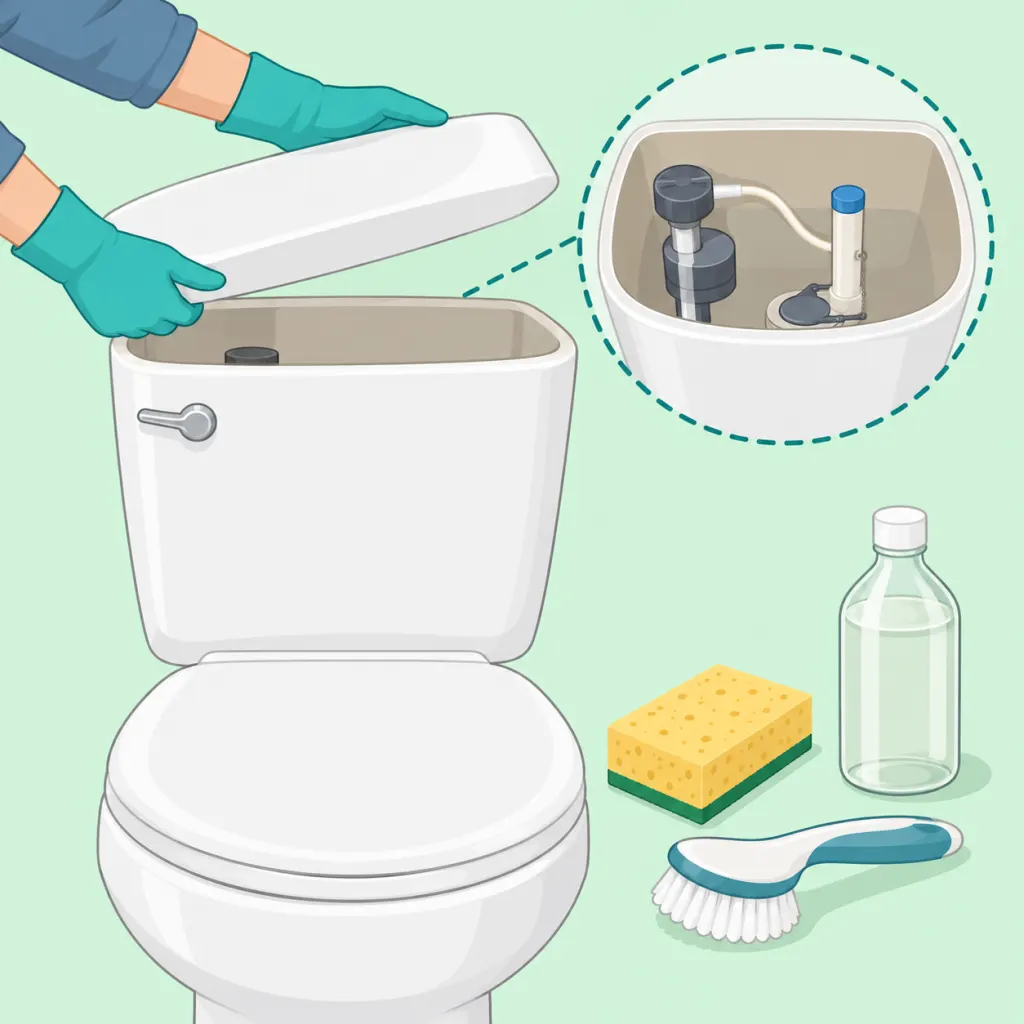
Look at the flapper, chain, flush handle, fill valve, float, and overflow tube before moving anything. A misaligned chain or flapper can leave a gap, and NYC DEP explains that flappers and fill valves are common toilet leak points. If a rubber part is cracked, warped, sticky, or leaving black streaks on your glove, plan to replace it rather than scrub it hard.
Step 4: Soften mineral buildup with vinegar or a tank-safe cleaner
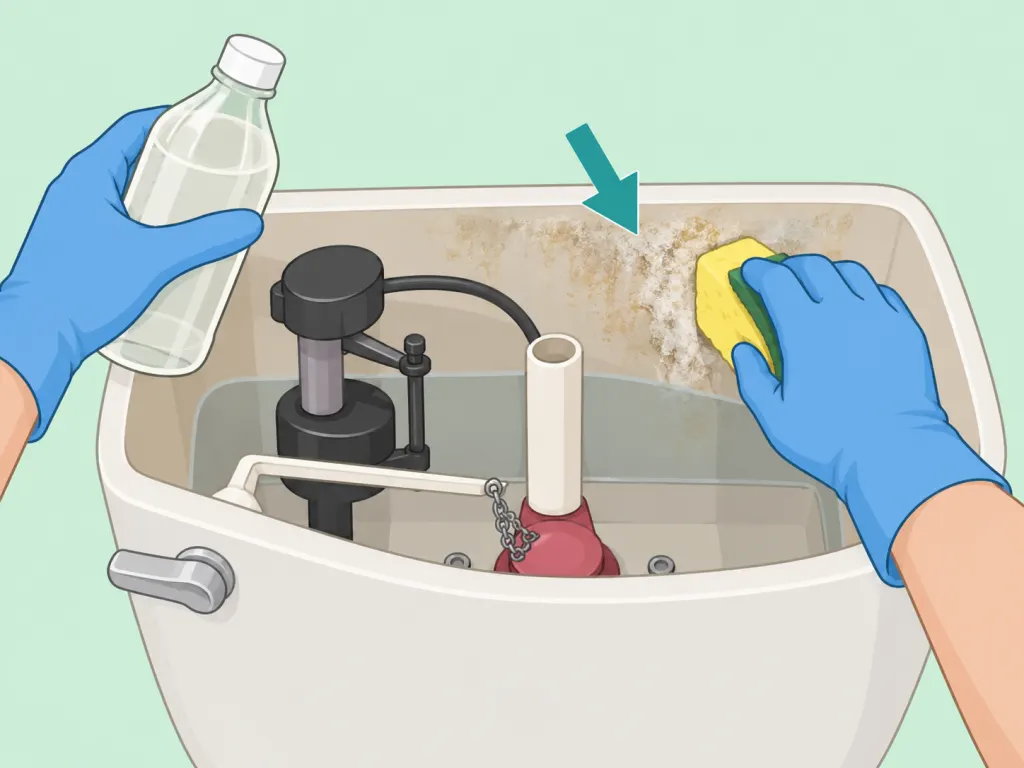
Wet the stained areas with white vinegar or a labeled cleaner made for toilet tanks, keeping the liquid mostly on the ceramic or plastic walls. University of Georgia Extension notes that mild acids such as white vinegar can be used on hard-water deposits. Let it sit briefly, then re-wet stubborn spots instead of soaking the tank parts for hours.
Use a sponge, microfiber cloth, or soft nylon brush to clean the tank walls, bottom, and corners. Avoid steel wool or harsh abrasive pads, since coarse abrasives can scratch surfaces. Work around the flapper, fill valve, and seals carefully so you do not bend or loosen them.
Step 6: Clean around the flapper seat and handle area
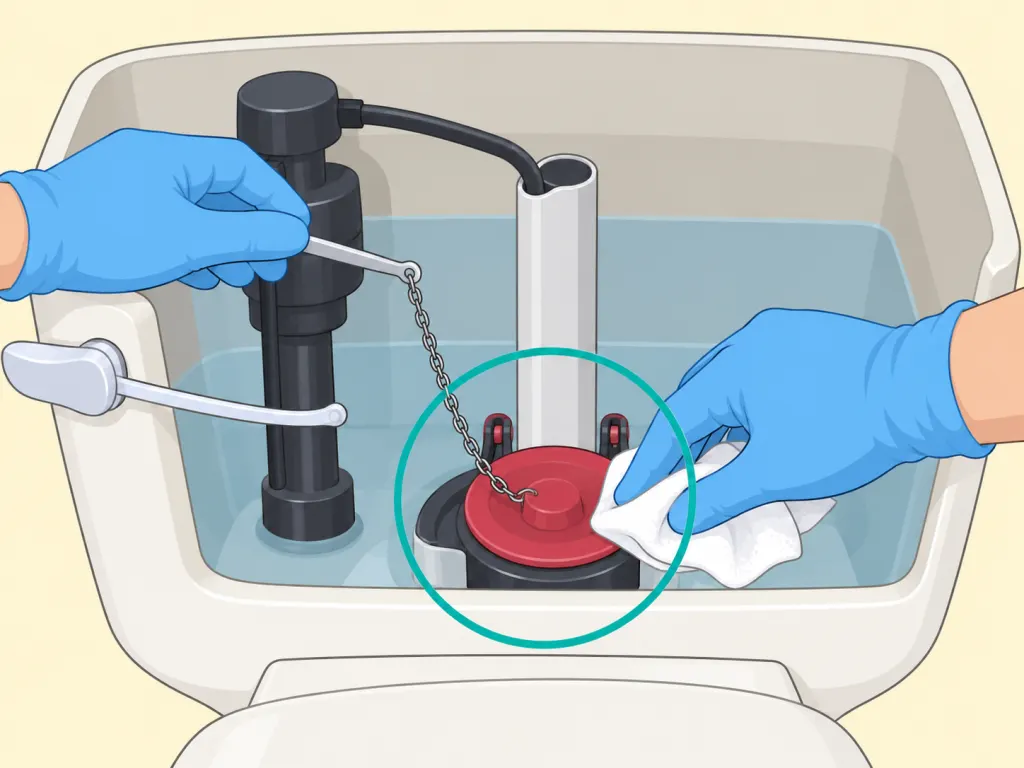
Wipe the rim where the flapper seals against the flush valve, because grit there can stop the flapper from closing cleanly. Clean the underside of the handle and the chain connection with a damp cloth, then make sure the chain has a little slack when the flapper is closed. Do not force stiff parts; if something does not move normally, replace the worn part or ask a plumber.
Step 7: Rinse the tank and refill it
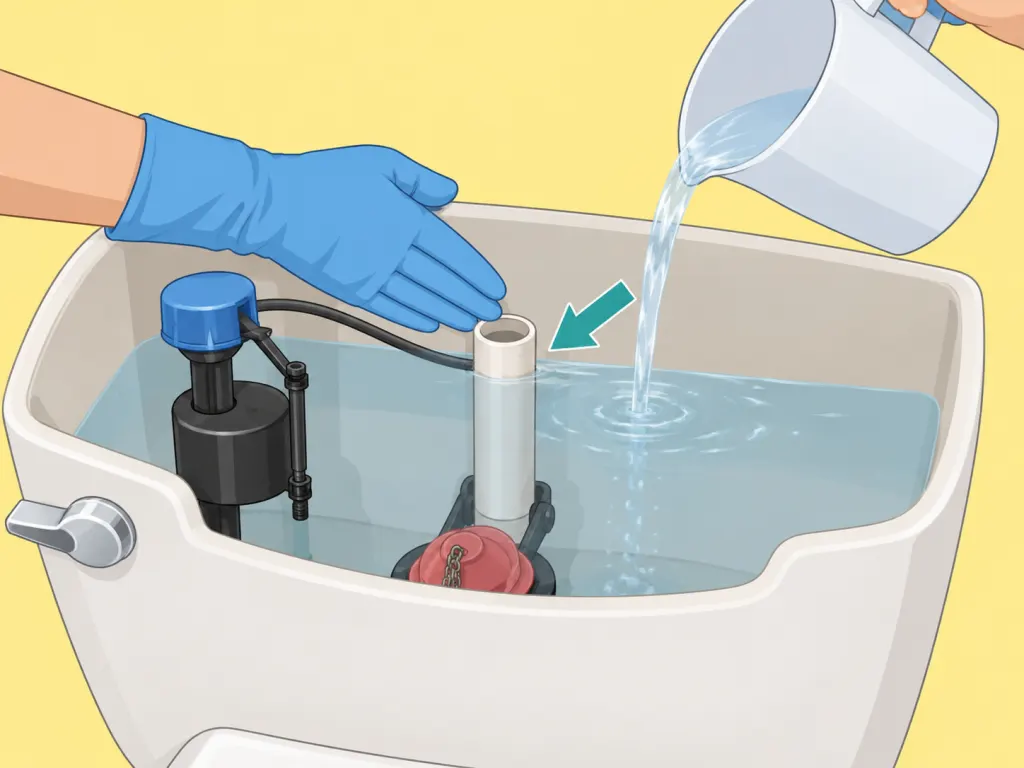
Pour clean water over the scrubbed areas or wipe them with a fresh damp cloth until cleaner residue is gone. Turn the shutoff valve counterclockwise and let the tank refill, watching that water stops below the top of the overflow tube. EPA WaterSense advises checking the tank water level and overflow tube as part of routine toilet maintenance.
Step 8: Test the flush and check for leaks
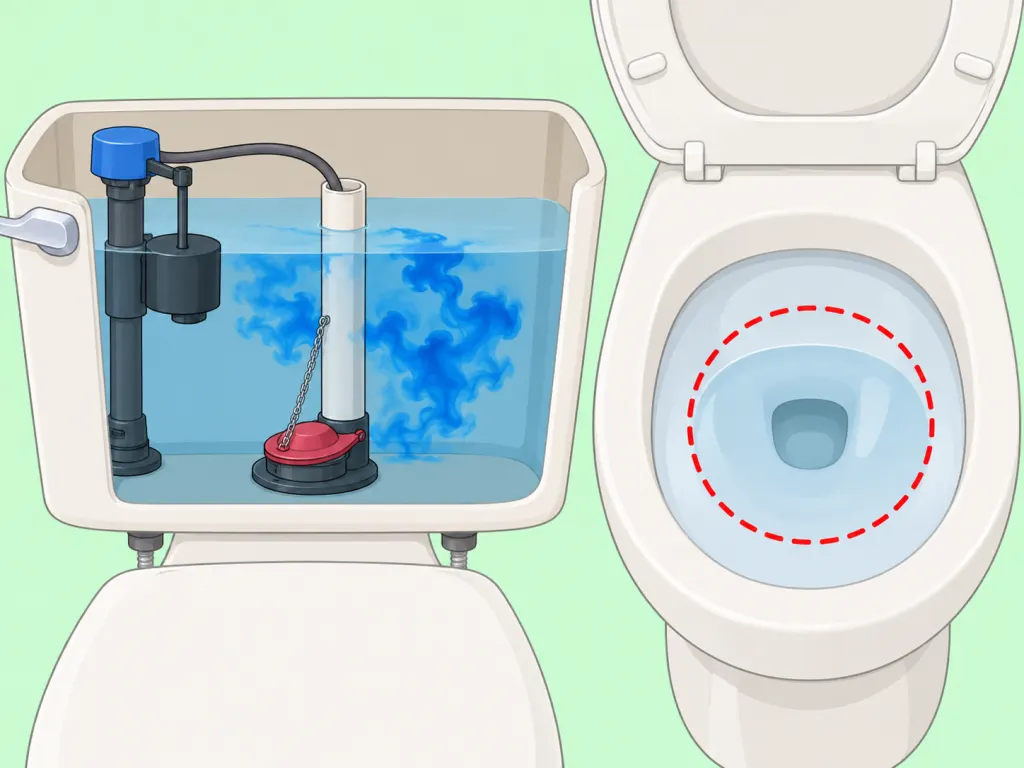
Flush once and watch the flapper lift, fall, and seal. For a leak check, add a few drops of food coloring to the tank and wait 10 to 15 minutes without flushing; if color appears in the bowl, water is leaking from the tank into the bowl, as NYC DEP describes in its toilet leak test. Flush right after the test so the dye does not stain.
Step 9: Seek help if fumes or splashes cause symptoms
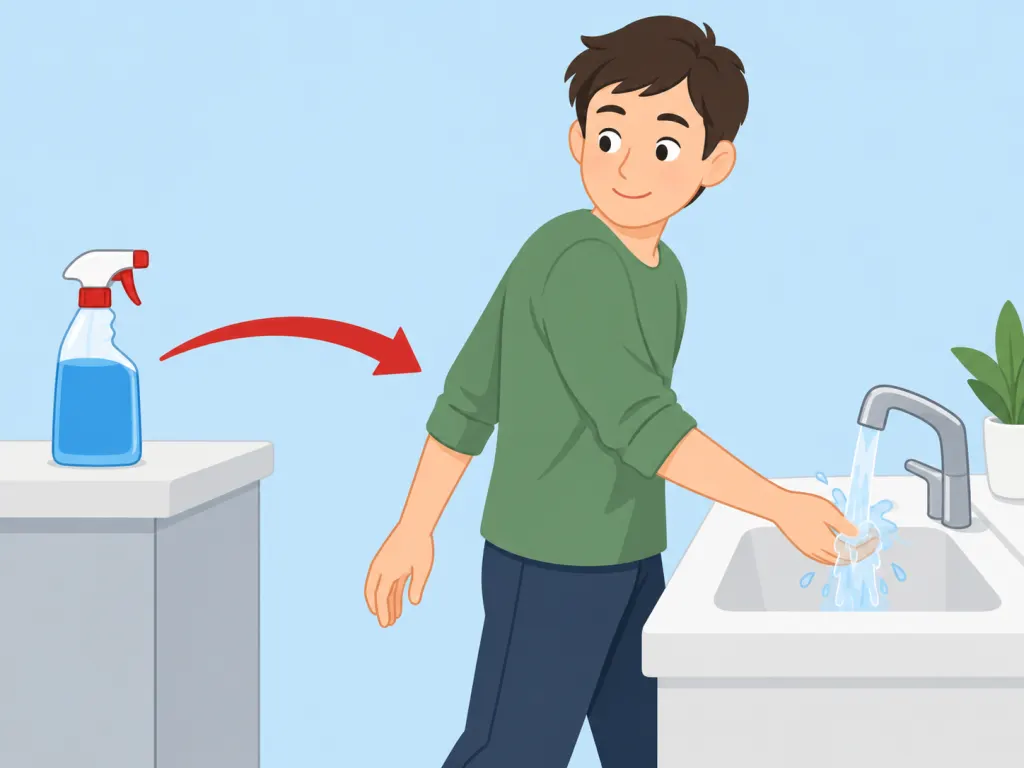
Stop cleaning and leave the area if fumes, splashes, or skin contact cause trouble breathing, eye pain, dizziness, or a strong reaction. If a chemical touches skin or eyes, MedlinePlus advises flushing the area with running water and getting medical help for serious symptoms. Call Poison Control at 1-800-222-1222 or emergency services if a cleaner is swallowed, inhaled heavily, or causes severe symptoms.
Wrap-Up
The bottom line: clean the flush tank with ventilation, one mild cleaner, gentle scrubbing, and a full rinse. Afterward, make sure the flapper, chain, fill valve, and water level are working normally so the toilet does not keep running.
Frequently Asked Questions
- → How often should I clean a toilet flush tank?
Check the tank a few times a year and clean it when you see mineral scale, sediment, slime, or slow-moving parts. EPA WaterSense also recommends checking toilets for silent leaks at least once a year.
- → Can I pour vinegar into the toilet tank?
White vinegar can help loosen hard-water deposits because mild acids are used for mineral buildup, according to University of Georgia Extension cleaning guidance. Use it during cleaning, then rinse the tank instead of leaving any cleaner sitting around rubber parts indefinitely.
- → Should I use bleach inside the flush tank?
Routine tank cleaning usually does not require bleach. If you use any disinfecting product elsewhere in the bathroom, follow the label, ventilate the room, and remember that the CDC says never to mix bleach with other cleaners or disinfectants.
- → Why does my toilet keep running after I clean the tank?
A running toilet often points to a flapper, chain, water-level, or fill-valve problem rather than dirt alone. The NYC Department of Environmental Protection lists the flapper and fill valve as common toilet leak causes.
- → Are drop-in toilet tank tablets a good idea?
It is better to skip them. NYC DEP warns that in-tank cleaners can wear away rubber parts inside the tank, which may lead to leaks.
- → What if the flush is still weak after cleaning?
Check that the tank refills to the marked water line, the chain lifts the flapper fully, and the flapper drops back into place. If parts are cracked, misaligned, or still leaking after basic cleaning, call a plumber.
References
This content was developed and refined using reliable sources.
- https://fieldreport.caes.uga.edu/publications/C1114/cleaning-healthy-cleaning-green
- https://www.epa.gov/watersense/home-maintenance
- https://www.cdc.gov/hygiene/about/cleaning-and-disinfecting-with-bleach.html
- https://www.epa.gov/indoor-air-quality-iaq/ventilation-important-indoor-air-quality-when-cleaning-andor-sanitizing
- https://home4.nyc.gov/site/dep/water/detecting-toilet-leaks.page
- https://www.portland.gov/water/water-efficiency-programs/fixatoiletleak
- https://www.medlineplus.gov/ency/article/000059.htm