 Save
Tile floors can look dull when soil settles into the grout lines, even after a quick mop. This guide shows a practical one-pass method: clean each small section, brush the grout while the solution is still wet, then rinse and dry before moving on. It is intended for ceramic or porcelain tile, not natural stone or specialty flooring unless the product label or manufacturer says it is safe.
Step 1: Check that the floor is safe for a vinegar-water clean
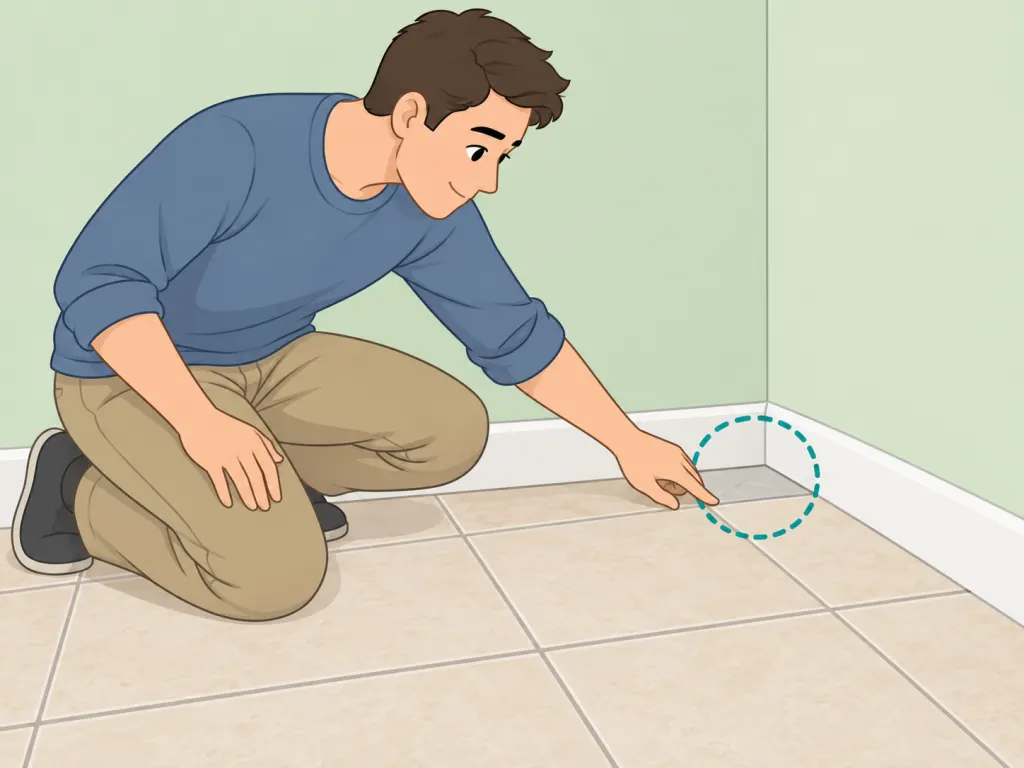
Use this method on ceramic or porcelain tile, and skip it on marble, limestone, travertine, wood, laminate, or any floor with a damaged finish. The GSA recommends choosing the gentlest cleaning method and testing stone surfaces first because some cleaners can affect marble, grout, mortar, and nearby surfaces.
Step 2: Ventilate the room and keep products separate

Open a window or run an exhaust fan before wet cleaning, especially in a small bathroom or kitchen. The EPA says to read labels, increase ventilation, and never mix cleaning products, and the CDC gives similar advice for using cleaners and disinfectants safely.
Step 3: Remove loose grit before wet cleaning
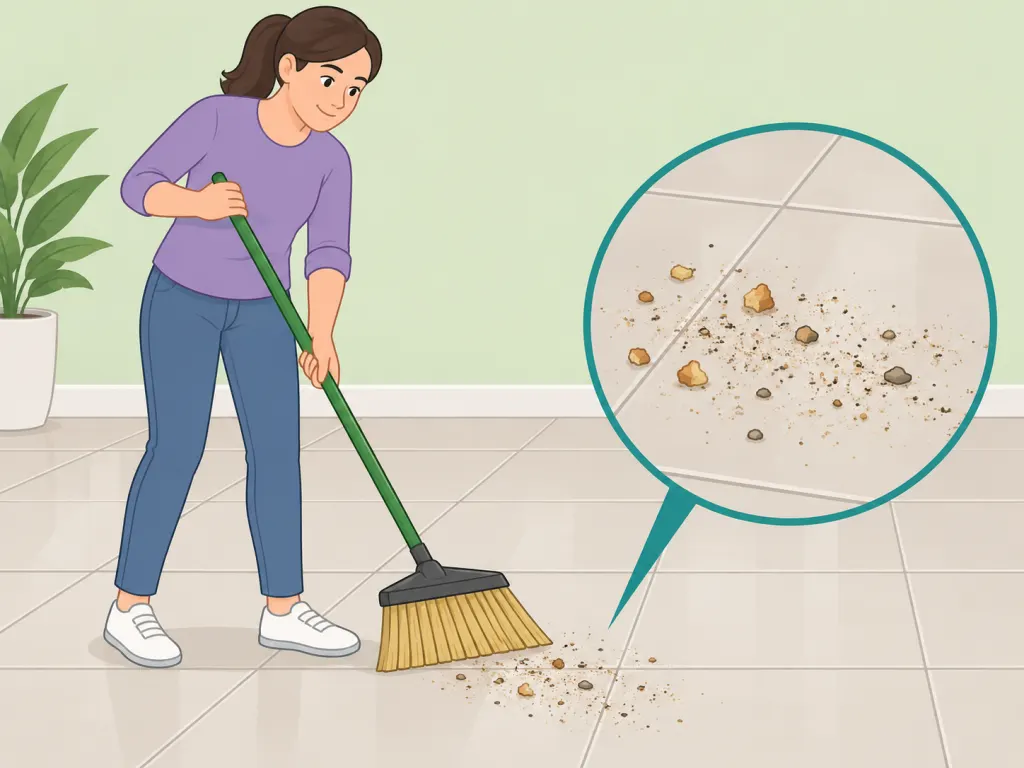
Sweep, vacuum on a hard-floor setting, or dust-mop the area so sand and crumbs do not drag across the tile while you scrub. The EPA includes routine damp mopping and regular cleaning among basic ways to keep hard surfaces from building up dust and dirt.
Step 4: Mix a mild tile-cleaning solution
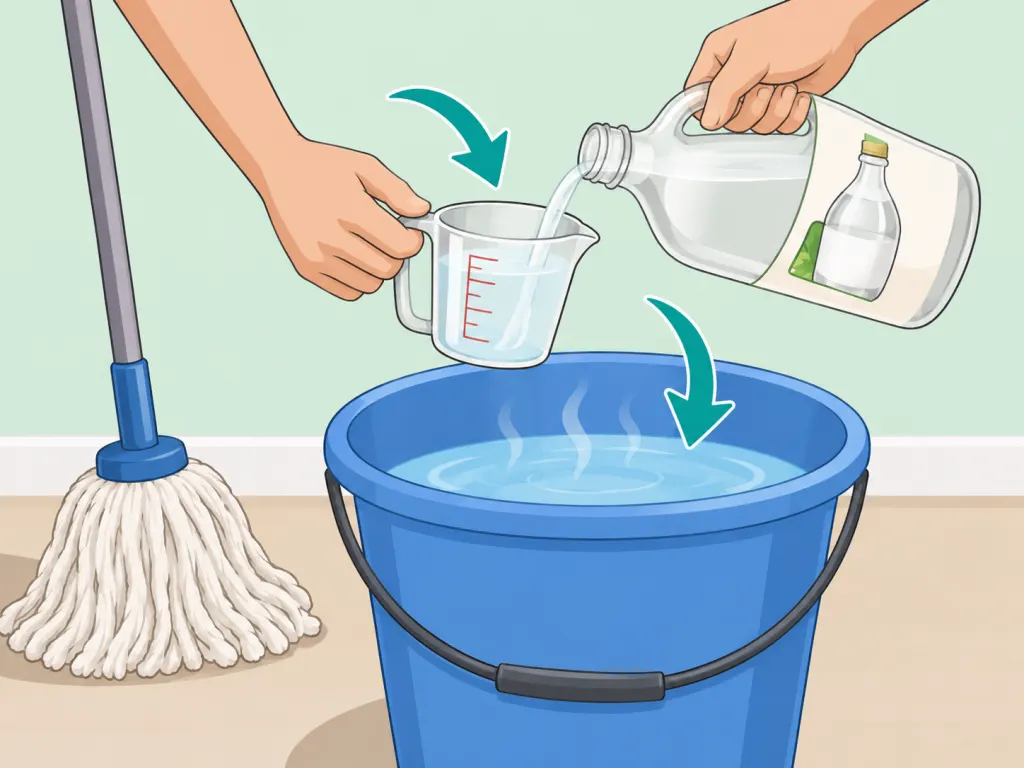
For ceramic tile, mix 1 gallon of warm water with 1/4 cup white vinegar in a bucket, then add only 1 or 2 drops of mild dish detergent if the floor is greasy. University of Florida IFAS lists white vinegar and water for ceramic tile floors, while University of Georgia Extension explains that surfactants in soaps and detergents help lift oily soil.
Dip a white cloth in the solution and wipe an inconspicuous spot, such as behind a door or under an appliance edge. Wait a few minutes, then check for dulling, color transfer, sticky residue, or grout softening; the EPA advises checking labels for compatible and incompatible surfaces before using cleaning products.
Step 6: Mop and brush one small section at a time
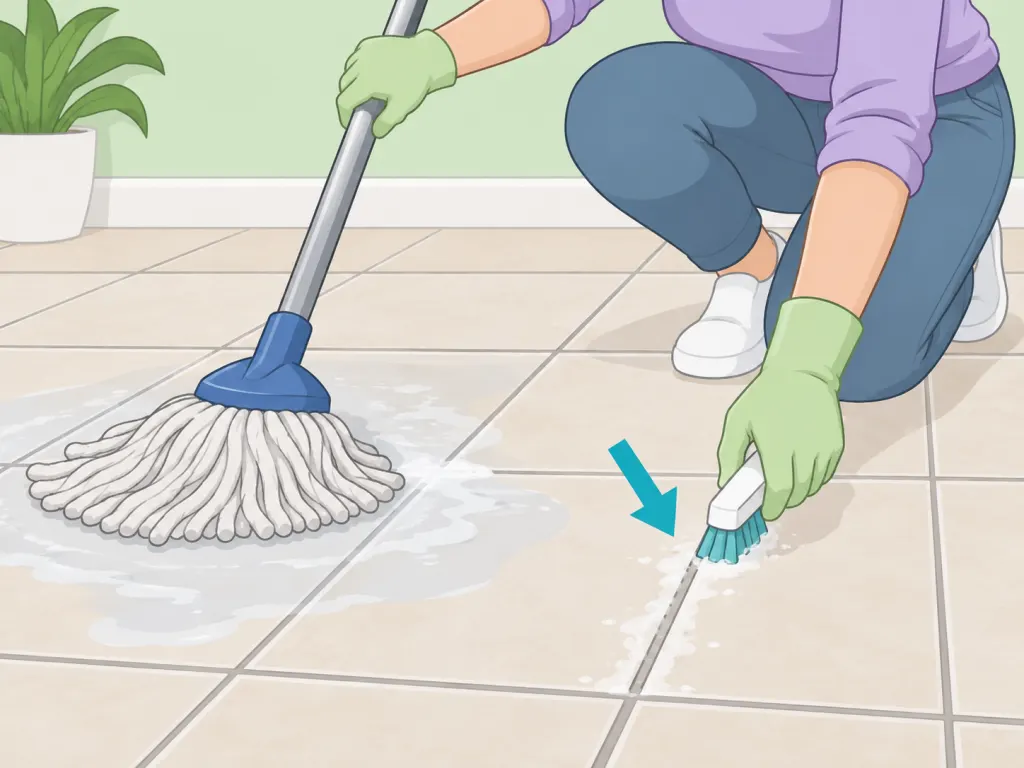
Wet a small area with a wrung-out mop, then run a nylon grout brush along the lines while the solution is still damp. Use light pressure and steady strokes; University of Georgia Extension notes that abrasives lift dirt by rubbing, but coarse scrubbers can scratch surfaces.
Step 7: Rinse with clean water and dry the floor
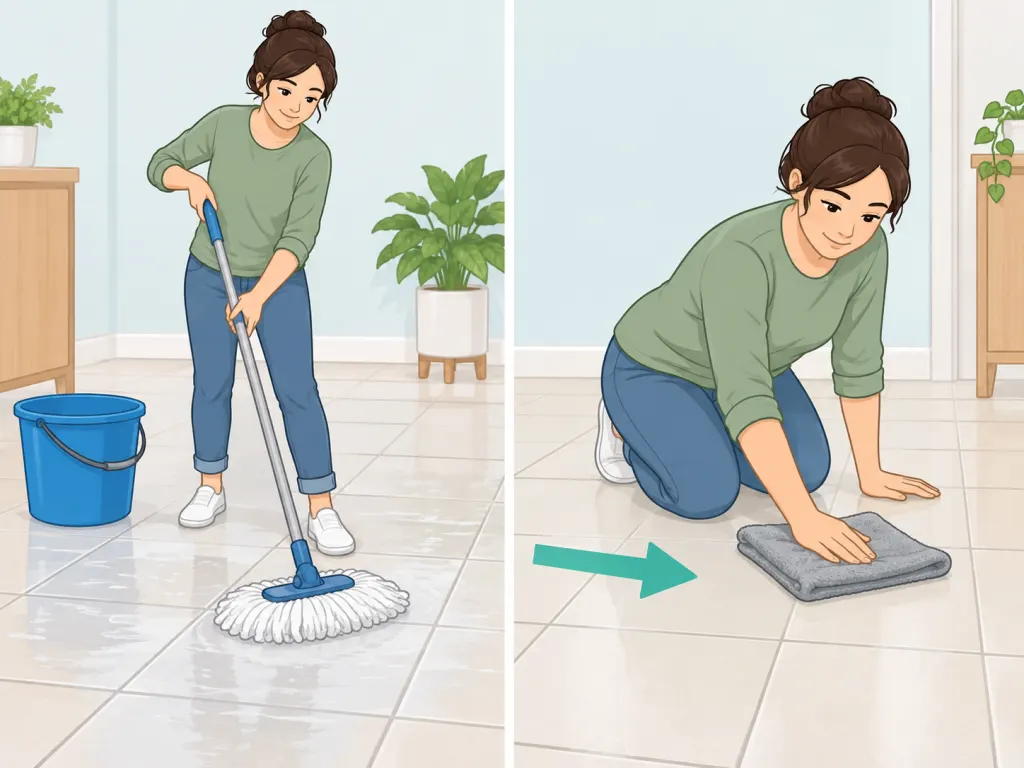
Mop the same section again with clean water to remove loosened soil and any cleaner residue, then wipe the floor with a dry towel or microfiber pad. Drying matters because the EPA advises keeping indoor areas clean and dry, and notes that excess moisture can support unwanted biological growth.
Step 8: Get medical help after a serious cleaning-product exposure
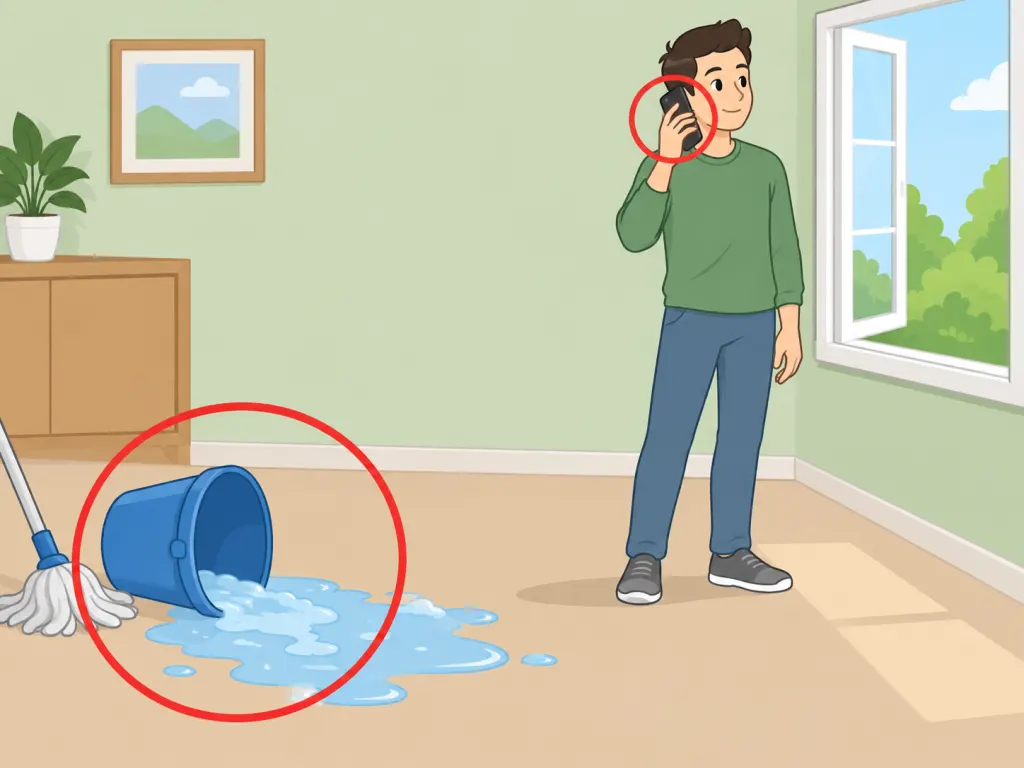
Call emergency services or Poison Help at 1-800-222-1222 in the United States if a cleaner is swallowed, splashed into the eyes, inhaled in a concerning way, or causes severe throat, breathing, skin, or eye symptoms. MedlinePlus advises getting help right away after a detergent exposure and provides Poison Help guidance for household cleaner exposures.
Wrap-Up
The bottom line: one-pass floor and grout cleaning works best when you keep the solution mild, clean in small sections, scrub the grout before the floor dries, and finish with a clear-water rinse and dry towel.
Frequently Asked Questions
- → Is this method safe for every floor?
- No. Use it only on ceramic or porcelain tile if the floor is in good condition. For marble, limestone, travertine, wood, laminate, or specialty finishes, follow the manufacturer’s cleaner instructions instead.
- → Can I add baking soda to the vinegar-water bucket?
- It is better to use baking soda separately as a mild paste on stubborn ceramic grout, then rinse before mopping. The University of Georgia Extension notes that baking soda is a mild alkali, while vinegar is a mild acid, so keeping them separate makes the job more controlled.
- → Does vinegar disinfect grout?
- Treat this as a cleaning method, not a disinfecting routine. The CDC explains that cleaning comes before sanitizing or disinfecting, and disinfecting should use a suitable product according to its label.
- → Why does grout stay darker than the tile?
- Grout lines are slightly recessed and can hold dirty mop water, grease, and dust. Brushing the lines while the cleaning solution is wet helps lift that buildup before the final rinse.
- → How often should I clean tile floors this way?
- Use this deeper pass when the grout looks dull or the floor still looks dirty after routine mopping. For everyday care, the EPA recommends regular damp mopping of hard floors as part of basic home cleaning.
- → What should I do if cleaning products bother my breathing?
- Stop using the product, get fresh air, and switch to a milder or label-approved option later. The CDC lists some chemicals and fragrances as asthma triggers, so extra ventilation and fragrance-free products may be helpful for sensitive households.
References
This content was developed and refined using reliable sources.
- https://ask.ifas.ufl.edu/publication/FY1449
- https://fieldreport.caes.uga.edu/publications/C1114/cleaning-healthy-cleaning-green
- https://www.epa.gov/indoor-air-quality-iaq/biological-contaminants-and-indoor-air-quality
- https://www.cdc.gov/hygiene/about/when-and-how-to-clean-and-disinfect-your-home.html
- https://www.medlineplus.gov/ency/article/002777.htm
- https://www.gsa.gov/real-estate/historic-preservation/historic-preservation-policy-tools/preservation-tools-resources/technical-procedures/cleaning-and-repolishing-of-interior-historic-marble-1
- https://www.cdc.gov/asthma/control/index.html