 Save
You do not need to flush after every urine-only bathroom visit in every private-home situation. The practical reason is water: the U.S. Environmental Protection Agency says toilets account for nearly 30 percent of an average home’s indoor water use, and older toilets can use much more water per flush than newer efficient models EPA WaterSense. But the answer is not a blanket rule. Skipping a flush can make sense in a private bathroom with clear household agreement, good ventilation, regular cleaning, and no odor problem. In shared or public bathrooms, when toilet paper or residue is visible, or when someone in the home is uncomfortable with the practice, flushing is the better choice.
The Real Reason Is Water, Not Shock Value
The strongest case for skipping a urine-only flush is simple conservation. A toilet uses treated drinking-quality water to move waste away from the home. EPA WaterSense notes that efficient labeled toilets use 1.28 gallons per flush or less, while the current federal standard is 1.6 gallons per flush and some older toilets use far more EPA WaterSense. That means the size of the savings depends heavily on the toilet in front of you. Avoiding two flushes a day on a 1.6-gallon toilet saves about 3.2 gallons daily for one person. On an older 3.5-gallon toilet, the same habit saves about 7 gallons daily. The math is not dramatic for one visit, but repeated habits add up across a household.
EPA’s WaterSense calculator explains that estimated toilet savings are based on flush volume, household size, time period, and an assumed average of 5.05 flushes per person per day EPA WaterSense calculator. That does not mean every person should skip a fixed number of flushes. It means toilets are frequent enough that small changes can matter. The most useful household approach is to know your toilet: a dual-flush model may already have a reduced mode for liquid waste, while an older single-flush toilet makes each skipped flush more consequential.
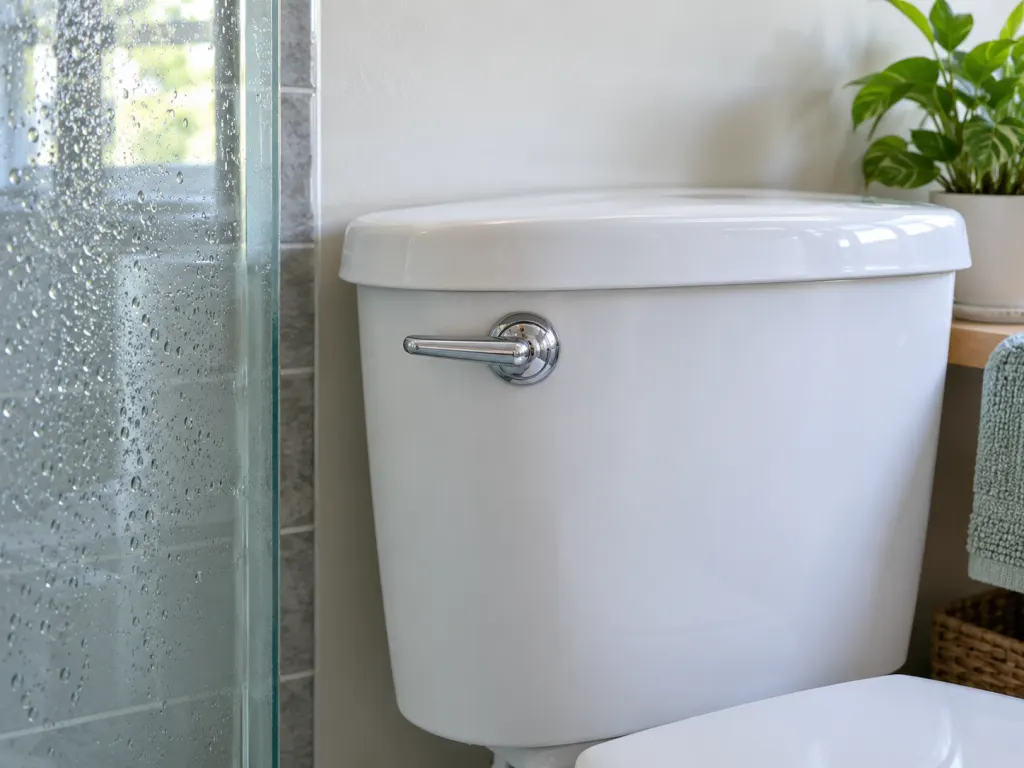
Skipping a Flush Is a Household Rule, Not a Public Rule
The phrase people often use for this habit is catchy, but real bathrooms are more complicated. In a private home, a household can agree that urine-only visits may wait until the next flush. In a workplace, restaurant, school, shared apartment bathroom, guest bathroom, or any public restroom, the considerate default is to flush. Shared spaces have different expectations, different cleaning schedules, and more people who did not consent to the tradeoff. Water conservation is valuable, but so are comfort, accessibility, and ordinary courtesy.
A practical private-home version is: do not flush every single urine-only visit if the bathroom remains clean, odor is not building, and the next user is comfortable with it. Flush before guests use the bathroom, before leaving the house for a long stretch, overnight if odor is noticeable, and any time there is toilet paper, residue, menstrual products, stool, or cleaning product in the bowl. This keeps the habit from becoming a rigid rule that ignores the room, the people using it, or the plumbing.
What About Germs and Toilet Plume?
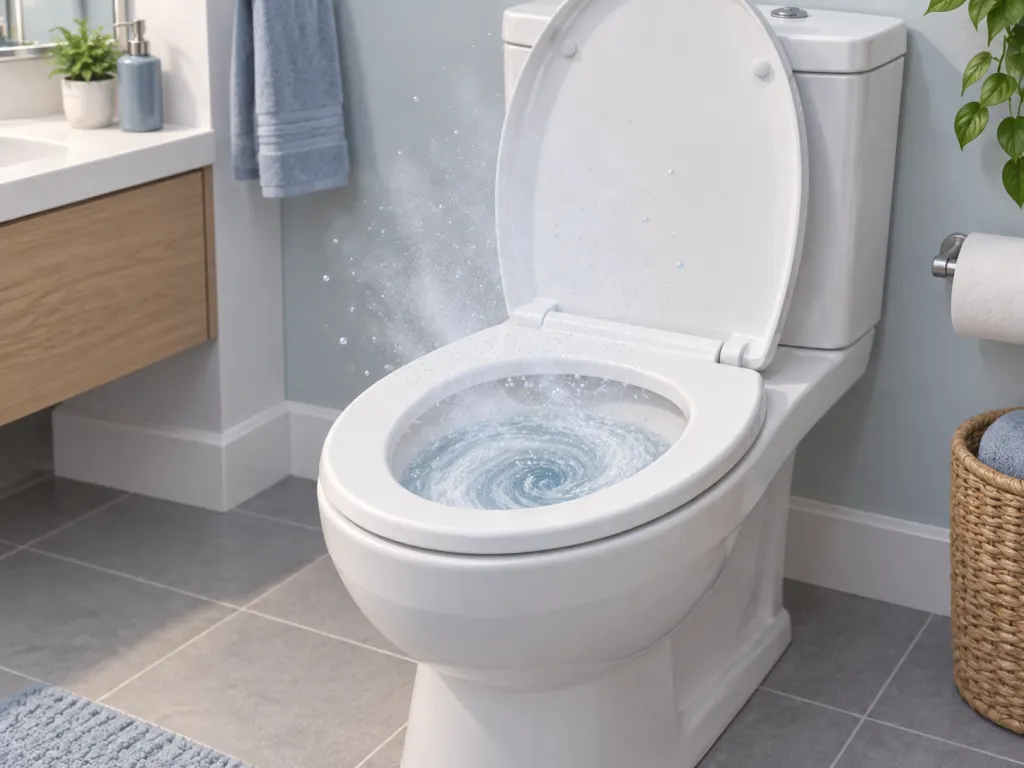
Flushing is not just a disappearing act. Research has shown that toilets can generate aerosols during flushing, especially when bowl water contains microbes. A PubMed-indexed study on modern flush toilets found that a microbe-contaminated toilet can produce bioaerosols when flushed, with production affected by toilet design and flush energy PubMed. A later PubMed-indexed restroom study using a viral surrogate also found contamination on restroom surfaces after flushing and reported that lid position did not remove the issue in that experiment PubMed. These findings do not prove that a home toilet is dangerous after every flush, and they do not mean skipping a flush is a hygiene solution. They do show why fewer unnecessary flushes can be a reasonable part of a broader bathroom routine.
The important distinction is that skipping a urine-only flush reduces the number of flush events, but the next flush can still move droplets and aerosols. Closing the lid where one exists is a sensible courtesy step, but research does not support treating the lid as a complete barrier in every toilet design. The more dependable habits are regular cleaning, keeping toothbrushes and personal items away from splash zones, washing hands after using the toilet, and flushing promptly when the bowl contains stool, visible soil, or paper.
Handwashing Matters More Than the Flush Debate
If there is one bathroom habit not to bargain away, it is handwashing. The CDC recommends washing hands after using the toilet at home or elsewhere because germs can get on hands during bathroom use and then move from person to person or onto surfaces CDC Clean Hands FAQ. That recommendation does not depend on whether you flushed immediately, waited until the next visit, or used a dual-flush button. The sink routine is its own line of defense.
Good bathroom hygiene is ordinary and repeatable: use soap and running water, dry hands fully, keep towels clean, and clean high-touch surfaces on a reasonable schedule. CDC’s hygiene overview describes everyday cleaning as part of keeping home environments fresh and clean CDC hygiene basics. In other words, skipping a urine-only flush is not a replacement for cleaning. It is a narrow water-saving choice that only works well when the rest of the bathroom routine is solid.
When You Should Flush Right Away
There are many times when flushing after urinating is the better choice. The point is not to win an argument against flushing; it is to stop treating every small urine-only visit in a private home as automatically requiring the same water use. Use this checklist as a practical decision aid:
- Flush immediately after bowel movements, visible residue, or any toilet paper that should not sit in the bowl.
- Flush in shared or public bathrooms, including offices, restaurants, schools, guest bathrooms, and homes where the practice has not been agreed on.
- Flush when odor appears, when urine is concentrated, or when the bathroom is warm and poorly ventilated.
- Flush before guests arrive or before someone else uses the bathroom if you are unsure of their preference.
- Flush before cleaning the toilet so cleaning products are used on a clear bowl and according to their labels.
- Use the reduced-flush option if your toilet has one, because EPA notes that dual-flush WaterSense models can use a smaller mode for liquid waste EPA WaterSense.
How to Try It Without Making the Bathroom Unpleasant
The best version of this habit is modest. Start with a private bathroom, daylight hours, and a clear household agreement. If anyone dislikes it, stop. If odor appears, flush more often. If the bowl stains quickly, flush more often and clean more regularly. If you rent, live with roommates, host guests often, or share a bathroom with people who have different comfort levels, a reduced-flush toilet or leak repair may be a better water-saving strategy than changing flushing etiquette.
Also pay attention to your toilet model. If your toilet is old and uses several gallons per flush, the water-saving incentive is larger, but replacement may save water without asking everyone to change behavior. EPA says replacing old, inefficient toilets with WaterSense-labeled models can reduce toilet water use by 20 to 60 percent and save nearly 13,000 gallons for an average family each year EPA WaterSense. That is a different kind of solution: it keeps the habit familiar while reducing water use at the fixture level.
A Simple Formula for Estimating Your Savings
To estimate the value of skipping occasional urine-only flushes, use this plain formula: toilet gallons per flush multiplied by the number of flushes skipped. If your toilet is 1.6 gallons per flush and the household skips four flushes in a day, the daily water savings is about 6.4 gallons. Over 30 days, that is about 192 gallons. EPA’s calculator assumptions list 1.28 gallons for WaterSense toilets, about 1.6 gallons for many post-1994 toilets, about 3.5 gallons for many toilets installed between 1980 and 1994, and about 5 gallons for many pre-1980 toilets EPA WaterSense calculator. Your exact toilet may vary, but the formula helps you avoid exaggerated claims.
This math also explains why there is no single universal answer. For a household with efficient toilets, strong cleaning habits, and low water stress, the savings may feel small. For a household with an older toilet, high water bills, or a local push to reduce water demand, it may feel worthwhile. The habit is most defensible when it is quiet, agreed on, and reversible. If it creates conflict, embarrassment, staining, or odor, the water savings are probably not worth the social cost.
Bathroom Odor, Stains, and Cleaning Tradeoffs
Urine that sits can become more noticeable, especially in warm bathrooms or bowls that already have mineral buildup. That does not mean every urine-only visit creates a crisis. It means the habit has limits. A cleaner bowl, better ventilation, and more frequent flushing at the end of the day can keep the practice from becoming unpleasant. If skipping a flush leads to extra scrubbing, stronger cleaning products, or arguments in the household, it may be a poor tradeoff even if it saves some water.
Do not compensate by pouring random chemicals into the bowl between flushes. Use toilet cleaners according to their labels, never mix cleaning products, and keep the room ventilated while cleaning. The water-saving habit should make the home simpler, not turn the bathroom into a chemistry experiment. For most households, the gentlest routine is: skip only urine-only flushes when appropriate, flush fully when needed, clean regularly, and fix leaks quickly.
The Balanced Takeaway
You should not treat flushing after urinating as an automatic requirement in every private-home situation, but you also should not treat skipped flushing as a badge of virtue. The balanced answer is conditional. Skip some urine-only flushes in a private bathroom when everyone agrees, the bowl stays clean, odor is controlled, and you keep washing your hands. Flush right away in shared spaces, for bowel movements, for visible paper or residue, before guests, and whenever comfort or cleanliness calls for it. Water conservation works best when it fits real life well enough to last.
Wrap-Up
Skipping a flush after urinating can be a reasonable water-saving habit, especially with older toilets that use more water per flush. The best approach is selective rather than absolute: keep it to private bathrooms, make sure everyone in the home agrees, flush whenever odor or residue appears, and keep handwashing and cleaning routines consistent. For many households, a WaterSense toilet, dual-flush button, or leak repair may save water with fewer etiquette concerns.
Frequently Asked Questions
- → Is it really okay not to flush after every time you urinate?
In a private home, it can be okay when the visit is urine-only, everyone in the household agrees, and the bathroom stays clean and odor-free. It is not a good rule for public or shared bathrooms, guest bathrooms, or any situation with visible paper, residue, or discomfort.
- → How much water can skipping a urine-only flush save?
It depends on the toilet. A 1.6-gallon toilet saves about 1.6 gallons for each skipped flush, while older toilets may use more. EPA’s WaterSense calculator explains that savings depend on flush volume, household size, and time period.
- → Should I close the toilet lid before flushing?
Close it if the toilet has a lid, because it is a sensible splash-control habit. Still, research has found that lid position may not fully stop surface contamination in every setup, so lid closing should sit alongside regular cleaning and handwashing.
- → Does skipping a flush replace bathroom cleaning?
No. Skipping a urine-only flush is only a water-saving choice. The toilet, handle, sink area, and other high-touch surfaces still need regular cleaning, and hands should be washed after bathroom use.
- → What is the best alternative if my household dislikes skipped flushing?
Use the reduced-flush button if your toilet has one, repair toilet leaks, or consider a WaterSense-labeled toilet when replacement makes sense. These options can reduce water use without changing bathroom etiquette as much.