 Save
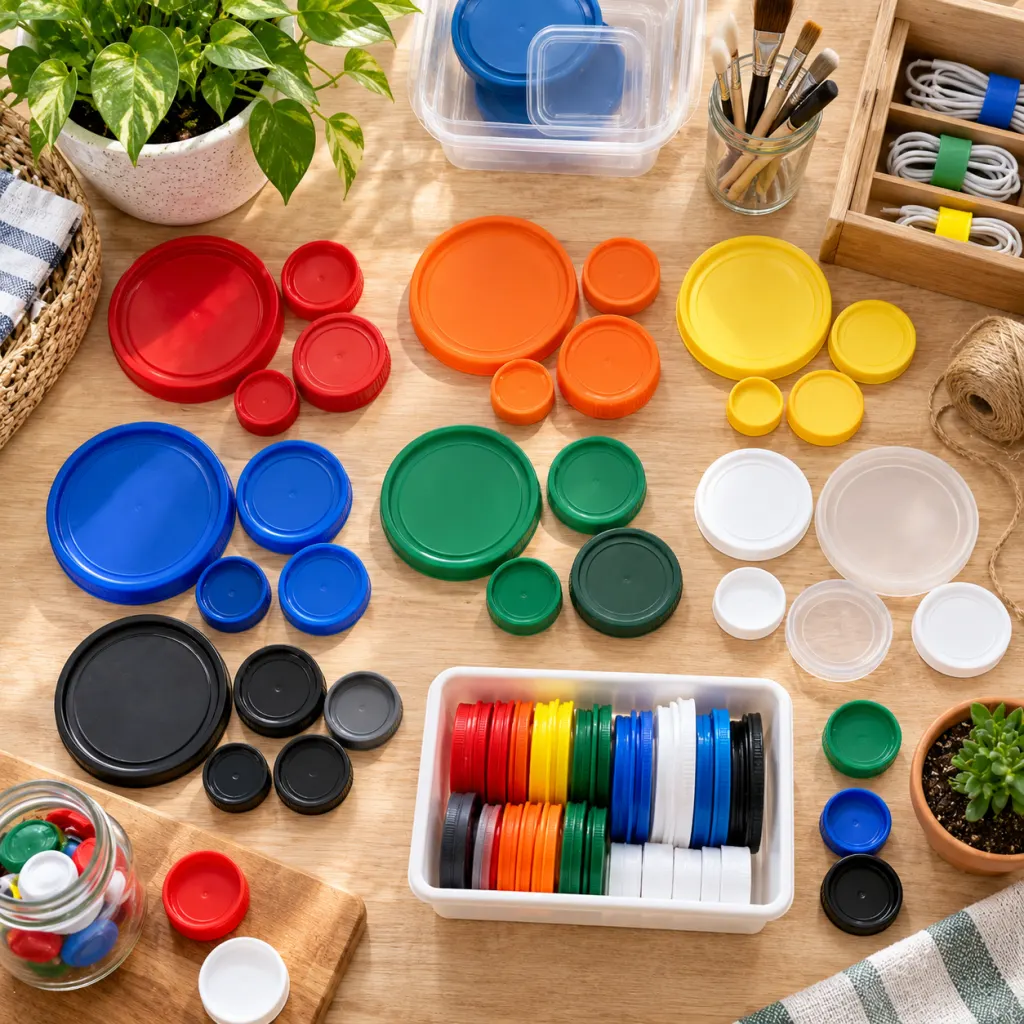
The smartest way to reuse plastic lids is to match each lid to a low-stress job: organizing, catching drips, separating items, labeling, crafting, or protecting surfaces. Clean, flat lids from tubs, coffee cans, yogurt containers, and takeout containers can be surprisingly useful, especially when the matching container is long gone. The key is to be selective. Keep lids that are sturdy, washable, and smooth at the edge; recycle or discard lids that are cracked, sticky, warped, heavily stained, or hard to clean. That practical sorting step matters because plastic lids vary by material, shape, and original purpose, and recycling rules vary by local program. The U.S. EPA notes that plastic containers and caps are often handled differently depending on the item and community program, and that the resin number alone does not guarantee local recycling acceptance: https://www.epa.gov/recycle/how-do-i-recycle-common-recyclables.
Start with a quick lid audit
Before you turn a drawer of loose lids into projects, give them a practical audit. Wash each lid, let it dry completely, and divide the pile into three groups: sturdy flat lids, flexible snap-on lids, and lids that are misshapen or damaged. Flat lids are best for trays, labels, coasters, and craft templates. Flexible lids can work as grips, jar openers, sink-side drip catchers, or temporary dust covers for non-food household items. Damaged lids should not be forced into service just because they feel reusable. If a lid has a sharp crack, a rough melted spot, a persistent odor, or residue in the rim, it is more likely to be annoying than useful.
It also helps to sort by size. Tiny lids are easy to lose and may be unsuitable around young children. Medium lids from yogurt tubs, sour cream containers, or coffee canisters are the most versatile because they are large enough to label, stack, and wipe clean. Oversized lids can become drawer liners, boot trays for a small entry shelf, or protective barriers under messy craft supplies. Think of lids as lightweight household shims: they are not meant to replace real tools, but they can solve small everyday problems with almost no cost.
Ten useful ways to put plastic lids back to work
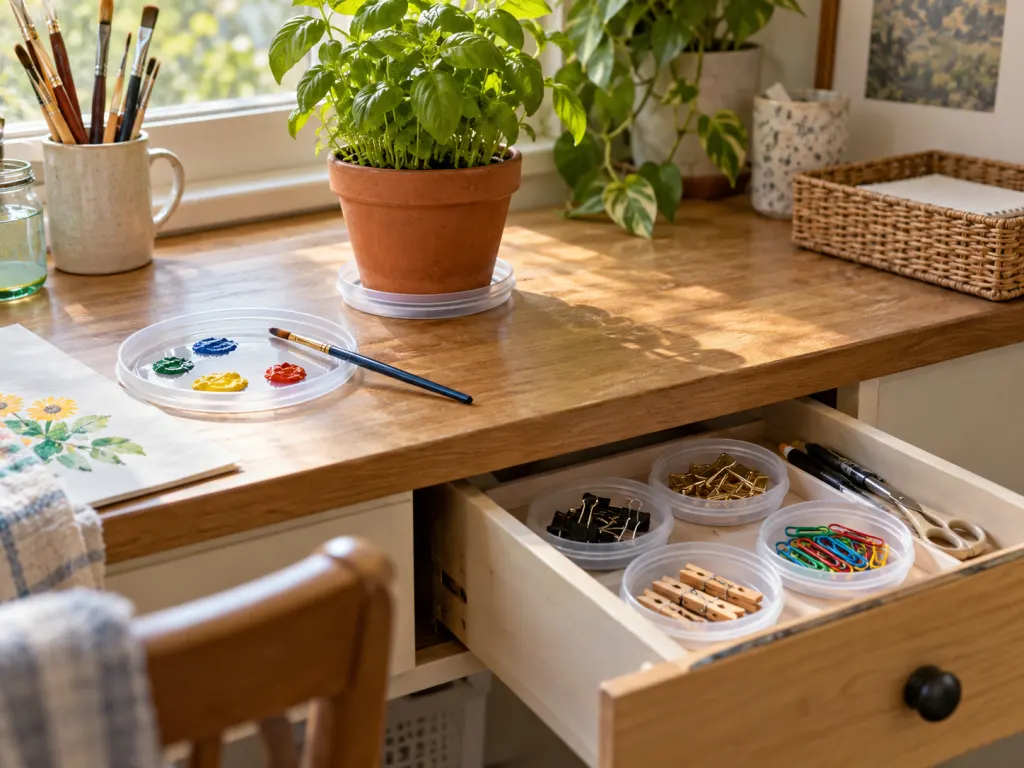
1. Plant saucers for small pots. A clean, flat lid can catch water under a small herb pot, seedling cup, or windowsill planter. Choose a lid wider than the pot base and empty standing water after watering so the setup stays tidy. 2. Paint palettes for small projects. Lids make easy palettes for acrylic paint, glue, decoupage medium, or school craft supplies. Use one color per lid, then wash promptly if the material allows or discard responsibly if the paint has dried permanently. 3. Drawer dividers for tiny items. Shallow lids can corral paper clips, hair ties, rubber bands, twist ties, spare buttons, batteries waiting for proper drop-off, or sewing notions. A few matching lids inside a drawer can create order without buying a tray. 4. Coasters and surface protectors. Larger lids can sit under cold drinks, soap pumps, oil bottles, honey jars, or small containers that tend to leave rings. For a nicer look, cover the top with washable contact paper or a scrap of cork, leaving the underside plain so it can be cleaned. 5. Jar-opening grips. Flexible lids can help your hand grip a stubborn jar lid. Place the plastic lid over the metal top and twist with steady pressure. It is a simple use, but it earns its keep because the lid stays in the kitchen instead of vanishing into a junk drawer.
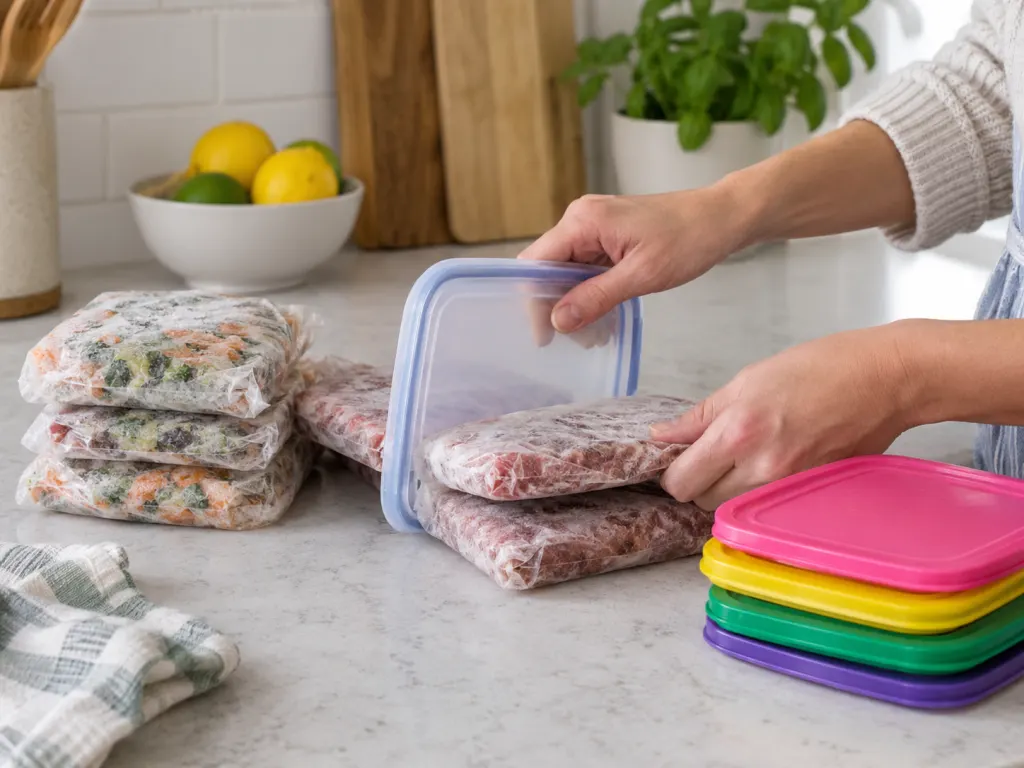
6. Cord and cable labels. Cut a larger lid into smooth rectangles, punch a hole near one end, and write the device name with a permanent marker. Tie the label to a cable with string or a reusable tie. Keep the cut edges smooth and avoid brittle plastic that splinters. 7. Drip catchers for bottles. A lid under cooking oil, dish soap, laundry detergent, or plant fertilizer can catch small drips and make shelves easier to wipe. Use this only as a surface protector, not as a storage method for hazardous products. 8. Craft circles and templates. Lids are ready-made circles for tracing ornaments, bunting, gift tags, felt flowers, paper wheels, and quilting practice pieces. Keep several diameters in a craft bin and label the size if you use them often. 9. Game counters and sorting tokens. Matching lids can become math counters, bingo markers, color-sorting pieces, or homemade board-game tokens for older children and adults. For young children, follow small-parts caution and supervise closely. 10. Freezer separators for flat items. A clean, food-container lid can separate wrapped portions, freezer bags, or flat packs so they do not freeze into one block. Use only lids that originally belonged to food packaging, keep them clean, and do not heat them.
Where lids work best and where they do not
Plastic lids shine in jobs that are dry, cool, washable, and low pressure. They are good at separating, catching, covering, labeling, tracing, and protecting. They are less reliable for heat, weight, sharp tools, or long-term food storage unless the lid still fits its intended container and the manufacturer’s use directions are clear. The FDA describes food contact substances as materials that touch food, including packaging and cookware, and explains that intended use matters in safety review: https://www.fda.gov/food/food-ingredients-packaging/food-packaging-other-substances-come-contact-food-information-consumers. In everyday terms, that means a lid made for a cold yogurt tub should not automatically be treated like a microwave cover, a cutting surface, or a hot pan protector.
If a reuse idea involves food, keep it conservative. Use clean lids from food packaging only for cool, dry, short-term tasks such as separating wrapped freezer items or covering a bowl briefly in the refrigerator when the fit is secure. Do not use an unknown lid in the oven, under a hot pan, or as a cutting board. The FDA’s microwave guidance says to use microwave-safe cookware made for microwave use and to follow the manufacturer’s instructions: https://www.fda.gov/radiation-emitting-products/resources-you-radiation-emitting-products/microwave-ovens. That is a helpful boundary for lids too: unless the lid is clearly meant for the job, choose glass, ceramic, paper, or a labeled microwave-safe cover instead.
A simple materials checklist
Use this quick checklist before saving a lid for a project:
- Cleanability: Can you wash the surface and rim completely?
- Shape: Is it flat enough for the job, or does it wobble?
- Edge quality: Are the edges smooth, with no cracks or sharp points?
- Flexibility: Does it bend without splitting?
- Original use: Was it made for food packaging, household packaging, or something else?
- Destination: Will it be used away from heat, flames, sharp blades, and small children?
If the answer is no on several points, skip the project. Reuse should make the house easier to manage, not add mystery objects that need constant second-guessing.
Child and craft safety deserve a separate pause
Plastic lids are tempting for children’s crafts because they are colorful, light, and easy to collect. Use judgment here. The U.S. Consumer Product Safety Commission explains that small parts can present a hazard for children under 3 when they fit within the small-parts test cylinder: https://www.cpsc.gov/Business--Manufacturing/Business-Education/Business-Guidance/Small-Parts-for-Toys-and-Childrens-Products. The CPSC also advises families to follow age guidance for toys and keep small parts away from children younger than 3: https://www.cpsc.gov/Safety-Education/Safety-Education-Centers/Toys. For lid projects, that means larger pieces, smooth edges, close supervision, and no loose cut scraps on the table or floor.
For adult craft projects, the biggest issue is usually edge quality. Thin plastic can crack unpredictably when cut with scissors or a craft knife. If you need tags or labels, choose a lid that cuts cleanly, round the corners, and sand any scratchy edge lightly with an emery board. Do not drill or melt plastic indoors for a casual project. If a project requires fumes, power tools, or heat shaping, it has moved beyond a simple household reuse idea and should be treated as a workshop project with proper materials, ventilation, and protective equipment.
When recycling makes more sense than saving
Not every lid deserves a second life. Some lids multiply because they are easy to save, not because they are truly useful. Set a limit: one small box, one drawer section, or ten good lids at a time. When that space is full, recycle or discard the rest according to your local rules. EPA data show why this matters at a larger scale: plastic containers and packaging accounted for an estimated 14.5 million tons of municipal solid waste generation in 2018, and about 13.6 percent of plastic containers and packaging was recycled that year: https://www.epa.gov/facts-and-figures-about-materials-waste-and-recycling/containers-and-packaging-product-specific. Reuse is useful, but it works best when it replaces something you would otherwise buy or when it solves a real household problem.
Before placing lids in curbside recycling, check your local program’s instructions. Some programs want caps attached to bottles; others do not accept loose lids because small flat items can be difficult to sort. The EPA’s general recycling guidance says plastic bottles and caps can typically be recycled together, but it also stresses that local rules vary and that food residue should be rinsed or scraped off when plastic containers are accepted: https://www.epa.gov/recycle/how-do-i-recycle-common-recyclables. That local check prevents wish-cycling, where an item goes into the bin with good intentions but creates sorting problems later.
A practical decision test for any plastic lid
When you are unsure whether to keep a lid, ask three questions. First, will I use it within the next month for a specific purpose? Second, is it cleaner, sturdier, or better shaped than the lids I already saved? Third, does keeping it prevent a purchase or reduce a recurring mess? If the answer is yes, keep it. If the answer is vague, let it go. The best reuse system is not a museum of potential; it is a small set of objects that regularly help. A yogurt lid under a basil pot, a coffee-can lid under a leaky soap bottle, or a row of labeled cord tags can earn its place every day.
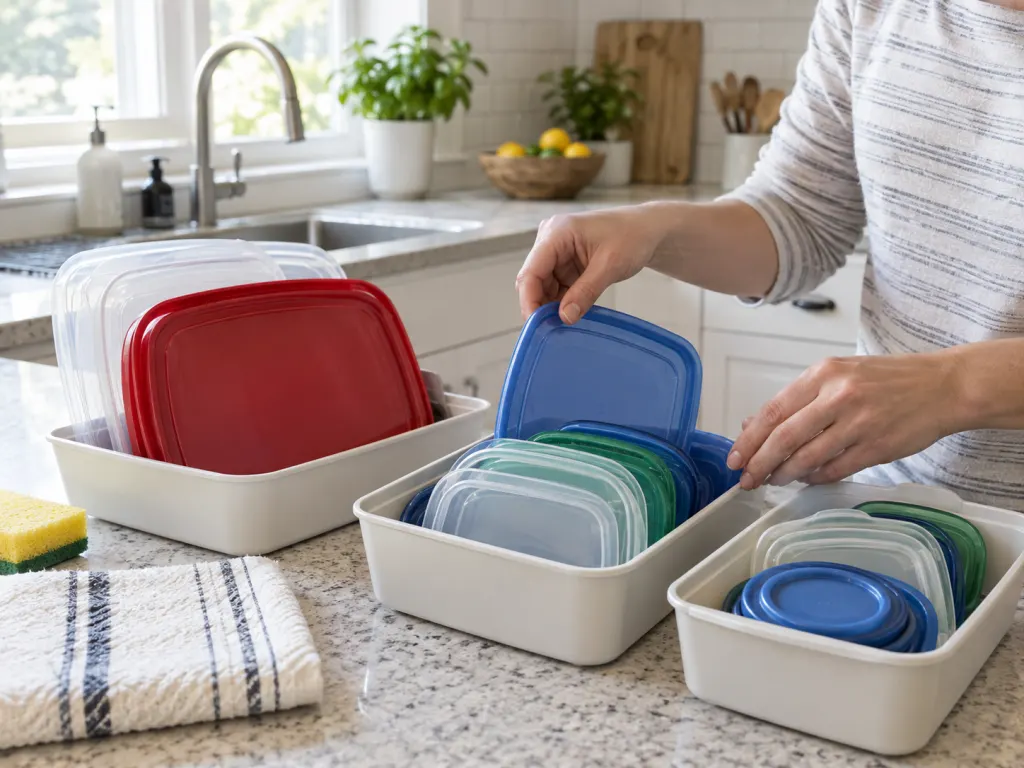
For a tidy setup, store lids vertically in a narrow bin by size. Keep craft lids away from kitchen-use lids, and mark any non-food craft lids with a permanent X so they do not drift back into food storage. If you decorate lids, use them for dry household tasks rather than food contact. Paint, glue, glitter, stickers, and marker ink can make a lid more attractive, but they also change what the surface is suitable for. A plain washed lid is often the most versatile version.
Wrap-Up
Plastic lids are worth saving when they are clean, sturdy, and assigned to a real job. Use them as plant saucers, paint palettes, drawer organizers, coasters, jar grips, labels, drip catchers, templates, game counters, and freezer separators. Keep heat and food-contact uses conservative, watch small parts around young children, and avoid cracked or hard-to-clean lids. When reuse no longer makes sense, check local recycling guidance instead of assuming every resin code belongs in the curbside bin.
Frequently Asked Questions
- → Can I use plastic lids as food covers?
Only use a lid for food when it is clean, fits securely, and is appropriate for that kind of contact. A lid that originally covered a cold food tub should not automatically be used with hot food or in a microwave. When in doubt, use a labeled food-storage cover instead.
- → Are plastic lids recyclable?
Sometimes, but local rules vary. Some programs accept caps attached to bottles, while loose lids may be handled differently. Check your city or hauler guidance, and rinse or scrape off residue when the item is accepted.
- → What kinds of lids are best for crafts?
Choose lids that are flat, clean, flexible enough to cut without cracking, and large enough for the project. Avoid brittle lids, sharp edges, and tiny pieces around young children.
- → How many lids should I save?
Save only what fits in one small container or drawer section. A useful reuse habit should reduce clutter, not create a second storage problem.
- → Can I decorate reused plastic lids?
Yes, for dry household or craft uses. Once a lid has paint, glue, glitter, stickers, or marker on it, keep it out of food-contact jobs and use it for labels, ornaments, sorting trays, or surface protection.
References
This content was developed and refined using reliable sources.
- https://www.epa.gov/recycle/how-do-i-recycle-common-recyclables
- https://www.epa.gov/facts-and-figures-about-materials-waste-and-recycling/containers-and-packaging-product-specific
- https://www.fda.gov/food/food-ingredients-packaging/food-packaging-other-substances-come-contact-food-information-consumers
- https://www.fda.gov/radiation-emitting-products/resources-you-radiation-emitting-products/microwave-ovens
- https://www.cpsc.gov/Business--Manufacturing/Business-Education/Business-Guidance/Small-Parts-for-Toys-and-Childrens-Products
- https://www.cpsc.gov/Safety-Education/Safety-Education-Centers/Toys