 Save
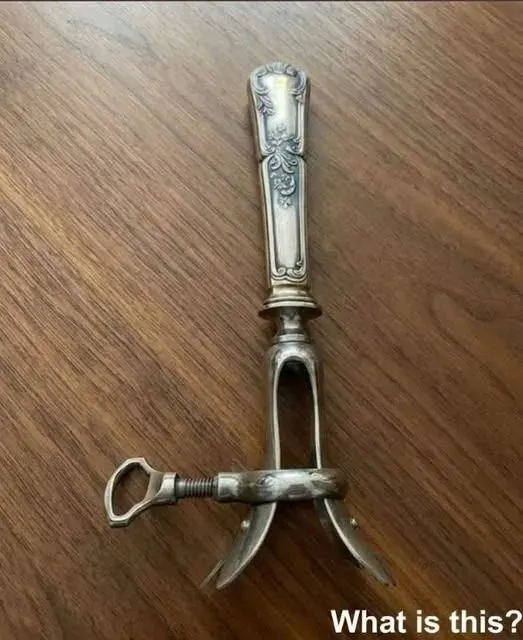
The photo shows an ornate handle ending in two curved jaws and a tightening screw. It closely matches a leg-of-mutton or ham-bone holder, also called a manche à gigot: a table utensil that grips the exposed bone while someone carves the meat.
How the parts fit together
The screw closes the clamp around the end of the bone. The handle provides a grip while a separate carving knife cuts the roast. The combination of a decorated dining handle and an adjustable clamp is the useful clue; the drawer where it was found is not the tool’s function.
A collection comparison
The Musée Condé records a manche à gigot. That gives a documented object category to compare with this photograph. The match supports the likely function, but it does not establish the photographed item’s maker, date, metal content or value.
What to check next
Photograph any marks on the handle and near the screw, measure the tool, and check that the jaws move without force. Do not aggressively polish an old finish before identification. If it is an heirloom, preserve its condition and ask a qualified specialist about age or value.
Before using an old example
A historic serving tool is not automatically suitable for present-day food use. Corrosion, loose joints, unknown plating and old repairs need assessment. It can remain an interesting family object even if you choose to display it rather than carve with it.
Frequently Asked Questions
- → What does the original image establish?
The photo shows an ornate handle ending in two curved jaws and a tightening screw. It closely matches a leg-of-mutton or ham-bone holder, also called a manche à gigot: a table utensil that grips the exposed bone while someone carves the meat.