 Save
The colored line, square, or rectangle near the sealed end of a toothpaste tube does not tell you whether the toothpaste is “natural,” “chemical,” or “medicinal.” It is a production aid used around printing, filling, alignment, cutting, and sealing. If you want to know what is inside the tube, use the ingredient list and the active ingredient section when one appears. The FDA’s cosmetic labeling summary says retail cosmetics, including toothpastes, must carry ingredient information, and it also notes that anticaries fluoride toothpastes can be regulated as both cosmetics and over-the-counter products (FDA labeling summary).
Why the Mark Looks Like a Code
The rumor works because the mark looks intentional. It is usually a neat block of ink at the crimped end of the tube, placed away from the main brand design. On a white tube it may be black, blue, green, red, or another strong color. On a busier tube it may appear where the rest of the design feels finished, which can make it look like a hidden rating. But packaging can contain both consumer-facing information and production-facing information. A barcode, tamper feature, lot number, ingredient panel, seal, recycling statement, and tiny alignment mark can all live on the same package while serving different audiences.
A useful way to think about the toothpaste mark is as a target for equipment, not a message for shoppers. Automated packaging lines need repeatable reference points so the printed design lands in the right place and the package is closed consistently. NIST’s glossary describes a registration or reference mark as a preprinted indicator used as a base location point by a reading device, which is the same general idea behind many machine-readable marks used in production and document processing (NIST glossary). The mark is there because machines need certainty at speed.
- A strong contrast helps a sensor distinguish the mark from the surrounding design.
- The color may be chosen for visibility on that specific package artwork.
- The location near the crimp can help equipment orient the tube during later handling.
- The mark is not a standardized public label for ingredients, quality, or safety.

What the Viral Color Chart Gets Wrong
The popular chart usually claims that green means natural, blue means natural plus medicine, red means mixed ingredients, and black means all chemical. That tidy explanation has two problems. First, it treats “natural” and “chemical” as if they were clear technical categories printed into a universal code. They are not. Water is a chemical substance, plant-derived materials can be processed, and synthetic materials can be carefully evaluated for a specific use. Second, it ignores the real label, where ingredients and claims are supposed to be disclosed in ordinary language.
The FDA’s labeling guide explains that cosmetic ingredients are generally listed in descending order of predominance, with specific exceptions for small amounts, color additives, and active ingredients when the product is also regulated as an over-the-counter product (FDA Cosmetics Labeling Guide). That is the kind of information shoppers should use. A green rectangle at the end of a tube is not a replacement for an ingredient declaration, just as a colored dot on a phone screen has a specific operating-system meaning only because the system defines it. For another example of a real symbol with a defined purpose, see what the green dot on an Android phone means.
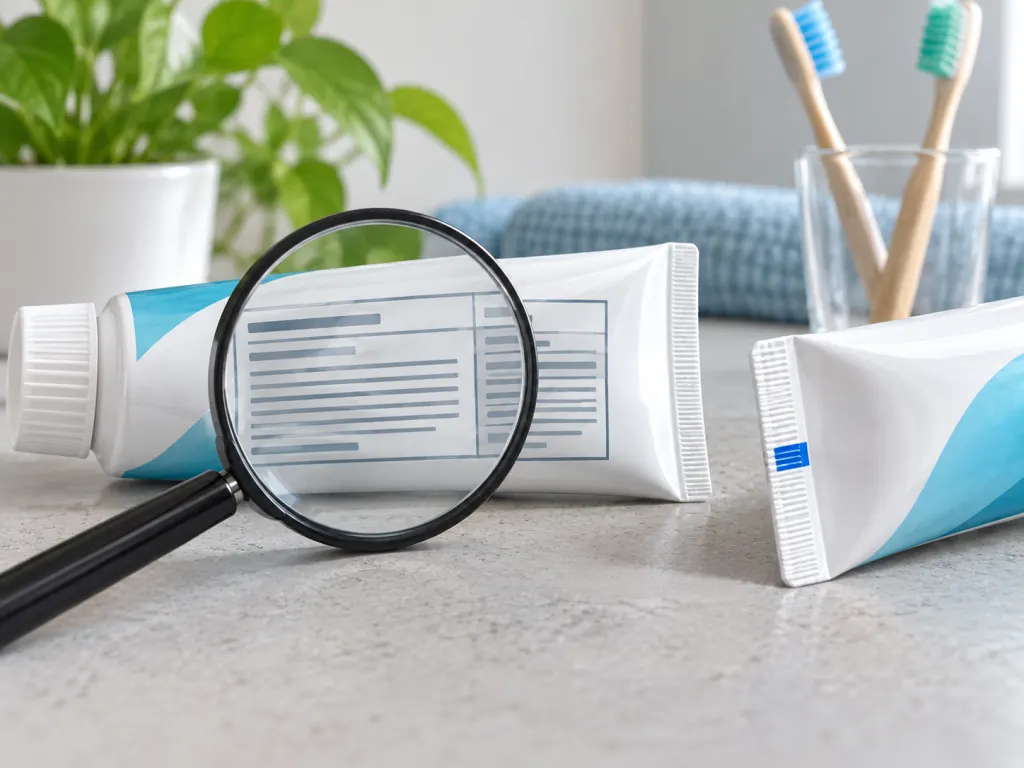
What the Label Can Actually Tell You
To compare two toothpastes, start with the parts of the package written for consumers. The ingredient list identifies the formula components. The active ingredient line, when present, identifies the ingredient tied to the product’s regulated purpose. Directions tell you how the maker expects the product to be used. Warnings and age-related instructions matter, especially for children’s products. The name and business information can help if you need to contact the company. The lot number or expiration date can matter for product questions, although those details are not the same thing as the colored production mark.
The FDA explains that whether a product is considered a cosmetic, a drug, or both depends on intended use. It gives toothpastes that freshen breath and cleanse the teeth while containing fluoride as an example of a product that can fit both categories (FDA cosmetic-or-drug explanation). MedlinePlus, from the National Library of Medicine, also frames oral care around habits such as brushing with fluoride toothpaste, cleaning between teeth, limiting sugary snacks, and regular dental visits (MedlinePlus dental health). Those are label-and-use questions, not crimp-mark questions.
- For ingredients: read the ingredient declaration, not the colored block.
- For fluoride: look for the active ingredient section and directions.
- For age guidance: follow the product label and ask a qualified professional when unsure.
- For environmental claims: look for clear, specific wording about the product or package.
- For manufacturing details: lot codes and company contacts are more useful than the eye mark.
Why Green Packaging Claims Need More Than Green Ink
One reason the myth keeps spreading is that shoppers often want quick signals. A green mark feels reassuring because green is widely associated with plants, recycling, freshness, and “clean” branding. But color alone is a weak guide. The FTC tells consumers that green or eco-friendly claims should be truthful and, when they appear on products or packages, should be specific enough for shoppers to understand what is being claimed (FTC consumer guidance). The agency’s Green Guides summary also warns marketers against broad, unqualified general environmental benefit claims such as “green” or “eco-friendly” because they can be difficult to substantiate (FTC Green Guides summary).
That matters here because the tube mark is not even a claim. It is not a seal, certificate, ingredient panel, recycling statement, or environmental disclosure. If a toothpaste brand wants to say something meaningful about recycled content, renewable materials, cruelty-free standards, flavoring, fluoride, sensitivity, whitening, or packaging disposal, it needs to say so in words or through a recognizable program that explains its standards. A small colored bar at the end of the tube does not carry that burden. For a similar habit of separating useful signals from online folklore, you may like what the arrow next to the fuel gauge means.

How to Shop Without Overreading the Tube
A practical toothpaste check takes less than a minute. First, decide what you are shopping for: everyday oral hygiene, a flavor your household will use consistently, a fluoride product, a non-mint option, a children’s product, or a formula with a particular texture. Second, read the visible label and compare products by the same parts of the label. Third, be careful with vague phrases. “Clean,” “green,” “natural,” and “free of” can mean different things unless the label explains the specific standard. Fourth, keep the package until you know the product works for your household, because it may contain lot information and company contact details.
It also helps to separate three things that often get mixed together: the color of the production mark, the color of the toothpaste itself, and the color of any design elements on the package. Stripes inside the paste are part of the product’s appearance. Colored panels on the front may be branding. The small block near the sealed end is a manufacturing reference. None of those visual cues is as informative as the ingredient declaration and directions. If you see a dramatic social post claiming that one color is secretly better or worse, ask one boring but powerful question: where does that color meaning appear on the label or in a regulator’s explanation?
The Bottom Line
The colored line on a toothpaste tube means far less than the rumor says. It is a packaging-production mark, often used so equipment can recognize position, contrast, and alignment. The color does not classify the toothpaste as natural, synthetic, strong, weak, safe, unsafe, or anything else. The real consumer information is printed where shoppers are meant to read it. For oral-care habits, MedlinePlus notes that brushing with fluoride toothpaste and regular dental care are part of basic dental health, and its tooth decay page explains how plaque, sugars, starches, and enamel minerals are connected in everyday mouth care (MedlinePlus tooth decay). For online household claims that pair toothpaste with unrelated products, a separate safety-minded example is WD-40 and toothpaste claims.
Wrap-Up
The colored mark on a toothpaste tube is not a secret ingredient chart. It is best read as a manufacturing reference mark that helps packaging equipment handle the tube consistently. To understand a toothpaste, read the label: ingredient declaration, active ingredient section when present, directions, warnings, age guidance, company details, and any specific claims. Treat viral color charts as unsupported unless the meaning appears in a reliable source or on the product’s own label.
Frequently Asked Questions
- → Does a green mark on toothpaste mean the toothpaste is natural?
No. The color of the small mark near the sealed end of the tube is not a universal consumer code. If a product makes a natural, environmental, ingredient, or packaging claim, look for clear wording on the label that explains the claim.
- → Why do different toothpaste tubes have different colored marks?
The color can vary because the mark needs to stand out from the package design for manufacturing equipment. A dark tube may need a lighter or higher-contrast mark, while a pale tube may use black, blue, green, red, or another readable color.
- → Where should I look to know what is in my toothpaste?
Use the ingredient declaration and, when present, the active ingredient section. The FDA explains that cosmetic ingredients are declared on labels, and products with certain intended uses may have additional labeling requirements.
- → Is the colored mark the same as a recycling symbol?
No. Recycling symbols, material codes, and disposal instructions are separate package information. The small colored mark near the crimp is not a disposal instruction and does not tell you whether the tube is recyclable in your area.
- → Can the colored mark identify the brand or batch?
Do not rely on it for that. Product questions are better handled with the lot number, expiration date, company contact information, and the exact product name printed on the package.
References
This content was developed and refined using reliable sources.
- https://www.fda.gov/cosmetics/cosmetics-labeling-regulations/summary-cosmetics-labeling-requirements
- https://www.fda.gov/cosmetics/cosmetics-labeling-regulations/cosmetics-labeling-guide
- https://www.fda.gov/cosmetics/cosmetics-laws-regulations/it-cosmetic-drug-or-both-or-it-soap
- https://medlineplus.gov/dentalhealth.html
- https://medlineplus.gov/toothdecay.html
- https://pages.nist.gov/ElectionModeling/SemanticModel/glossary.html
- https://consumer.ftc.gov/articles/eco-friendly-and-green-marketing-claims
- https://www.ftc.gov/business-guidance/resources/environmental-claims-summary-green-guides