 Save
The most practical answer is this: keep items that preserve memory or are needed for the estate, but do not keep belongings that create safety, privacy, legal, or emotional burdens. Unused medicines should usually go to a take-back option, private documents should be secured or shredded when no longer needed, and phones or computers should not be sold, donated, or handed around until their data is handled properly. Grief can make every object feel charged, so the goal is not to rush. It is to sort belongings in a way that protects the living while still honoring the person who died.
Start With Three Piles, Not One Big Decision
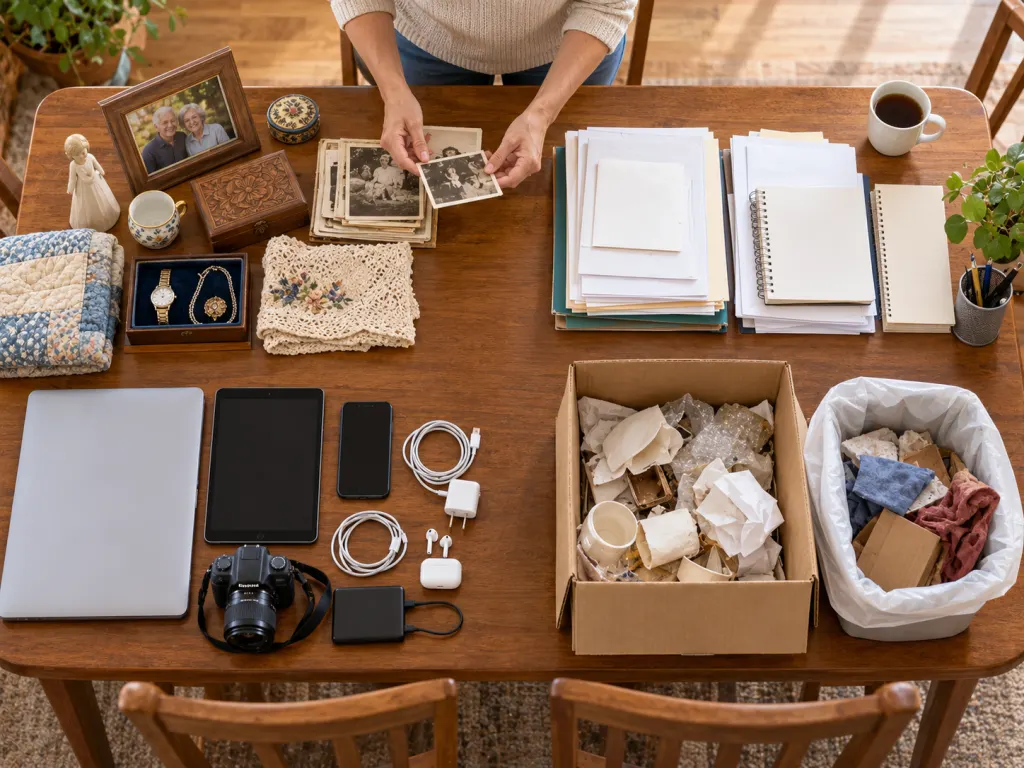
Sorting a loved one's belongings is not the same as ordinary decluttering. The National Institute on Aging notes that grief can affect concentration and decision-making, which is one reason a simple system helps when the house feels overwhelming https://www.nia.nih.gov/health/grief-and-mourning/coping-grief-and-loss. Instead of asking, "Should I keep everything or clear it all out?" make three working piles: items needed for estate or household administration, items with personal meaning, and items that should be disposed of, transferred, or professionally reviewed. That structure gives you permission to move slowly without leaving unsafe or sensitive items exposed.
A useful first pass is practical, not sentimental. Look for wallets, purses, phones, medication cabinets, desk drawers, file boxes, mail stacks, vehicle glove compartments, safes, and bedside tables. These are the places where families often find identification, bills, passwords, insurance cards, prescription bottles, keys, checkbooks, and devices. Keep a written inventory of important items you move, especially if several relatives are involved. The inventory does not need to be fancy. A notebook entry such as "passport found in bedroom drawer, placed in estate folder" can prevent confusion later.
Unused Medicines Should Not Become Keepsakes
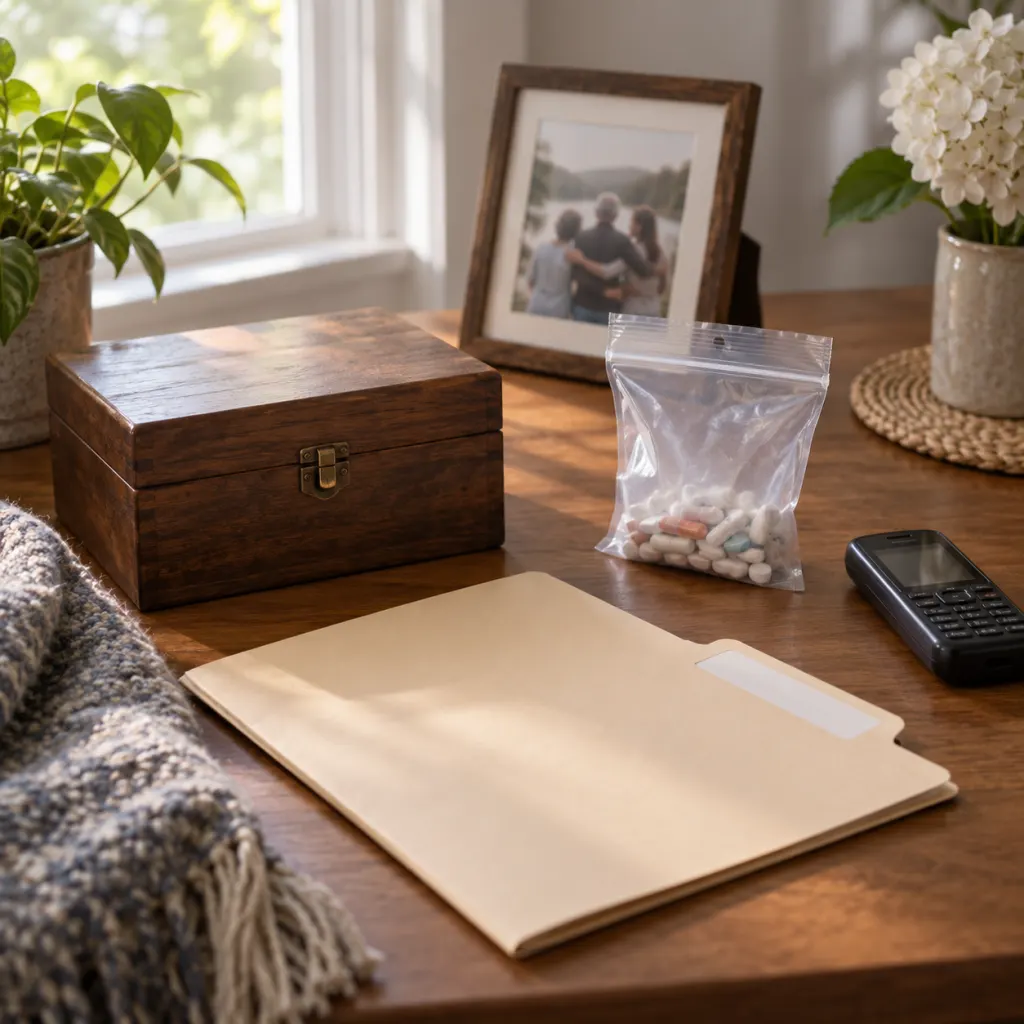
Prescription and over-the-counter medicines are among the clearest examples of things not to keep after someone dies. They were intended for a particular person and situation, and storing them indefinitely can create risks for visitors, children, pets, or anyone who mistakes them for something current. The U.S. Food and Drug Administration says the best way to dispose of most unused or expired medicines is to use a drug take-back option, such as a collection location or mail-back program, when available https://www.fda.gov/drugs/safe-disposal-medicines/disposal-unused-medicines-what-you-should-know.
Do not pour every medicine down a sink or toilet by habit. The FDA advises checking whether a medicine is on its flush list when take-back is not available, and it gives separate instructions for medicines that can go in household trash. Empty containers can still show personal information, so labels should be scratched out or removed before disposal. If you are unsure how to handle inhalers, patches, syringes, or other special items, ask a pharmacist or local waste authority. The keepsake is the memory, not the bottle.
Private Documents Need Sorting Before Shredding
Do not keep boxes of sensitive papers in a basement or garage simply because you are not ready to decide. Bank statements, tax records, Social Security information, Medicare or insurance cards, credit cards, checkbooks, loan papers, property documents, passports, birth certificates, marriage records, military records, and vehicle titles may contain information needed by an executor, attorney, tax preparer, insurer, or financial institution. They may also contain details that should not be left where visitors, contractors, or distant relatives can browse them.
The IRS explains that a final individual income tax return is generally prepared for a deceased person in the same way it would be if the person were alive, reporting income up to the date of death; prior-year returns may also matter in some situations https://www.irs.gov/individuals/file-the-final-income-tax-returns-of-a-deceased-person. That does not mean every scrap of paper must be saved forever. It means you should separate possible estate, tax, property, and account records before discarding anything. When a document is no longer needed, secure destruction is better than tossing it whole into the trash.
- Keep for review: wills, trusts, deeds, titles, tax records, insurance policies, account statements, pension information, unpaid bills, and correspondence from government agencies.
- Secure immediately: passports, driver's licenses, Social Security cards, Medicare cards, checkbooks, credit cards, passwords, and account numbers.
- Destroy when cleared: duplicates, expired cards, old envelopes, routine junk mail, and papers with personal information that the estate no longer needs.
- Ask before discarding: anything connected to property, taxes, debts, benefits, lawsuits, business ownership, or family agreements.
Digital Devices Are Containers, Not Just Objects
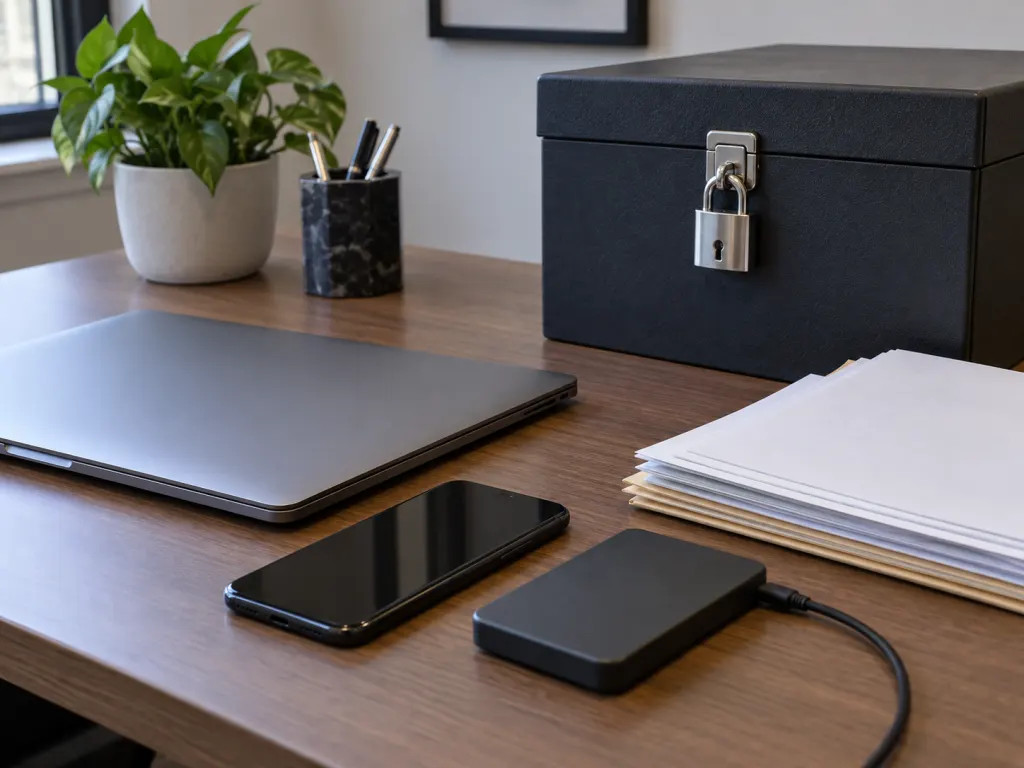
A phone, laptop, tablet, hard drive, camera card, or USB drive may look like a thing you can simply pass to a grandchild or donate. In reality, it may hold photos, messages, saved passwords, financial records, tax files, location histories, business documents, and private conversations. If you do not have authority to access the contents, avoid guessing passwords or inviting everyone to explore the device. Treat it like a locked filing cabinet: preserve it, document where it is, and ask the executor or legally responsible person how it should be handled.
If a device will be reused, sold, donated, recycled, or thrown away, the data question comes first. NIST's current media sanitization guidance describes sanitization as a process that makes access to data infeasible for an appropriate level of effort and helps owners choose techniques based on the sensitivity of information https://csrc.nist.gov/pubs/sp/800/88/r2/final. For an ordinary household, the practical lesson is simple: deleting a few files is not the same as preparing a device for transfer. Back up what the estate is allowed to preserve, sign out of accounts when authorized, then use reliable erase or reset procedures before the device leaves the family's control.
Identification, Cards, and Keys Should Not Float Around
Old identification can feel harmless, especially when it is tucked into a wallet that still smells like a loved one's purse or jacket. But IDs, benefit cards, credit cards, membership cards, access badges, and keys can create confusion or misuse if they drift through the family. Keep them together until the responsible person has contacted the relevant agencies, banks, insurers, employer, landlord, care facility, club, or property manager. Once accounts are closed or transferred, many cards can be cut up or securely destroyed. Some documents, such as passports or military papers, may have specific return or retention procedures, so check before discarding.
Identity theft is not limited to the living. The Federal Trade Commission describes identity theft as the use of personal or financial information without permission and recommends protecting documents that contain personal or financial information, including shredding them when you decide to dispose of them https://consumer.ftc.gov/articles/what-know-about-identity-theft. That advice applies naturally during an estate cleanout: a shoebox of cards and statements is not a harmless relic if it gives someone account numbers, addresses, or government identifiers.
Bills and Debt Letters Need Review, Not Panic
Do not keep unpaid bills in a drawer forever, but do not pay every demand from your own money just because it arrived after the death. Some debts may be paid from the estate; some may go unpaid if the estate has no money; and some may involve a co-signer, joint account holder, spouse, or other exception. The Consumer Financial Protection Bureau says survivors are generally not responsible for a deceased person's debts unless they shared legal responsibility or fit another specific exception, and debt collectors may not imply personal responsibility when it does not exist https://www.consumerfinance.gov/ask-cfpb/does-a-persons-debt-go-away-when-they-die-en-1463/.
The practical rule is to preserve debt-related mail, record dates, and route it to the executor or estate representative. If you are not that person, avoid making promises to collectors, sharing extra personal information, or using your own funds before you understand the obligation. If you are the responsible person, ask for details in writing and keep copies. A bill may be real, disputed, already paid, outside the estate, or part of a larger financial picture. The paper itself is not necessarily something to keep long term, but the information may matter until the estate is settled.
Unsafe or Unsanitary Supplies Should Leave the Home
Some belongings should be photographed, documented, and removed rather than preserved. This can include used personal care supplies, soiled bedding that cannot be cleaned, expired medical supplies, broken mobility equipment, damaged electrical items, leaking batteries, pest-damaged boxes, moldy papers, and anything with a strong odor that spreads through the home. The decision can feel harsh, but keeping unsafe or unsanitary items rarely honors the person. It usually creates work and distress for the people left behind.
When an item has possible financial or legal value, document it before disposal. Take clear photos, note where it was found, and ask the estate representative whether it should be inspected. For ordinary household goods, use local disposal, recycling, hazardous waste, or donation rules. Do not donate items that are contaminated, recalled, structurally unsafe, or impossible to clean. Donation is generous only when the item is truly usable by someone else.
Do Not Keep Everything Because You Are Afraid to Choose
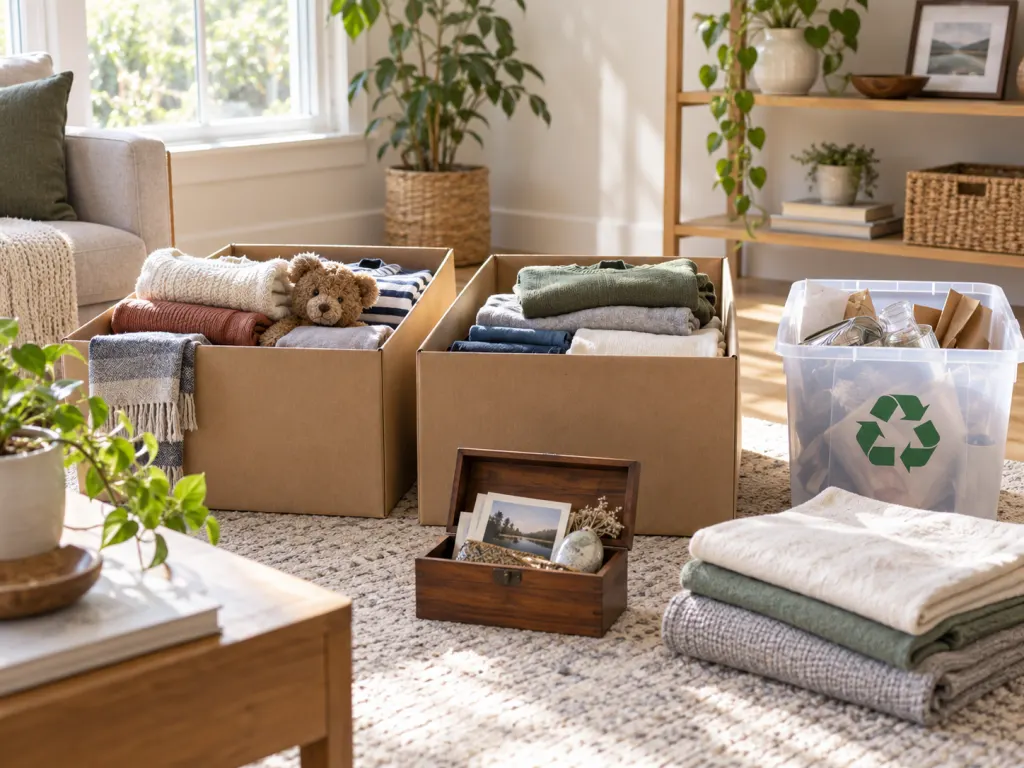
Grief often turns ordinary objects into witnesses: a coffee mug, a sweater, a grocery list, a toolbox, a half-used notebook. It is understandable to hesitate. The problem begins when the home becomes a storage site for decisions no one can bear to make. Keeping every item can delay repairs, block estate work, create family conflict, or leave one person carrying the emotional labor alone. A kinder approach is to choose representative keepsakes. One cardigan may hold the memory better than six bags of clothing. One recipe card may mean more than every expired pantry item. One carefully labeled box may serve the family better than a room no one can enter.
If family members disagree, slow down before discarding sentimental items, but separate emotion from administration. Invite close relatives to name a small number of belongings they hope to keep. Set a date for reviewing photographs, letters, and heirlooms. For ordinary duplicates, use a fair method: rotate choices, draw lots, or let the executor follow the will and local process. Stories can help, too. If you are drawn to the emotional side of what people leave behind, you may also enjoy The Sealed Envelope After My Neighbor's Funeral, while families thinking about later-life transitions may find Why Some Seniors Decline After Moving to Nursing Homes relevant.
A Respectful Order for Letting Things Go
The safest order is usually: secure the home, gather documents and devices, remove medicines and unsafe supplies, identify estate property, invite family input on keepsakes, then donate, sell, recycle, or discard ordinary goods. This order protects information and reduces regret. It also helps you avoid the most common mistake: clearing visible closets while overlooking the desk drawer, phone, medicine cabinet, and file box that actually carry the greatest practical consequences.
For clothing, books, kitchen items, hobby supplies, and furniture, ask two questions. First, does this item have legal, financial, or identifying information attached to it? Second, does it carry a memory that someone in the family genuinely wants to live with? If the answer to both is no, keeping it may simply move grief into storage. A photo, written note, or shared story can preserve the meaning without preserving the object. Respect is not measured by the number of boxes you keep.
What to Keep Instead
After the practical sorting is done, make room for the belongings that deserve attention. Good keepsakes are specific, manageable, and connected to real memory: a wedding ring, a watch, a handwritten letter, a favorite cookbook, a tool with a story, a military medal, a family Bible, a small group of photographs, or a piece of clothing that can be stored cleanly. Label items while memories are fresh. A note that says "Dad wore this watch to work for 30 years" gives the next generation more than an unidentified object in a drawer.
Consider creating one memory box per household rather than dividing every item immediately. Put in photos, letters, small heirlooms, and a written list of larger items that went to relatives. For digital photos, make copies for the people who want them and store them in more than one place. For paper photos, avoid writing directly on the front; label envelopes or use archival-safe methods. The point is not to erase the person from the home. It is to keep the belongings that still speak clearly and release the ones that only create risk, clutter, or confusion.
Wrap-Up
The items not to keep after someone dies are usually not the meaningful keepsakes. They are the unsecured medicines, exposed documents, unhandled digital devices, expired cards, unsafe supplies, unresolved bills, and endless duplicates that make grief harder to manage. Work slowly, document important finds, involve the right person for estate decisions, and protect private information. Then choose a small number of objects that carry real memory and let the rest go with care.
Frequently Asked Questions
- → Should I throw away everything that belonged to someone who died?
No. The better approach is to sort belongings by purpose. Keep meaningful items, documents needed for the estate, and property that has clear value. Dispose of or transfer items that create safety risks, expose private information, or add storage burden without real meaning.
- → What should I do with prescription medicines after a death?
Do not keep them as souvenirs or share them with anyone. Use a drug take-back option when available, and follow FDA or local instructions for medicines that cannot be taken back. Remove or obscure personal information on empty containers before disposal.
- → Can I donate a phone or computer that belonged to the person?
Only after the data has been handled properly by someone with authority to do so. A device may contain private photos, account access, financial records, and saved passwords. Back up what should be preserved, then use reliable erase or reset procedures before donation, resale, or recycling.
- → How long should I keep financial papers?
Keep potentially relevant tax, estate, property, insurance, account, and debt records until the executor, attorney, tax preparer, or responsible person confirms what is no longer needed. Once cleared, destroy papers with personal information securely instead of placing them whole in the trash.
- → What if family members disagree about what to keep?
Pause on sentimental items when possible. Make an inventory, invite close relatives to request specific objects, and use a fair process for dividing keepsakes. Practical items with estate, tax, or ownership issues should be handled by the legally responsible person, not by informal family voting.
References
This content was developed and refined using reliable sources.
- https://www.fda.gov/drugs/safe-disposal-medicines/disposal-unused-medicines-what-you-should-know
- https://www.nia.nih.gov/health/grief-and-mourning/coping-grief-and-loss
- https://www.irs.gov/individuals/file-the-final-income-tax-returns-of-a-deceased-person
- https://csrc.nist.gov/pubs/sp/800/88/r2/final
- https://consumer.ftc.gov/articles/what-know-about-identity-theft
- https://www.consumerfinance.gov/ask-cfpb/does-a-persons-debt-go-away-when-they-die-en-1463