 Save
Persistent dark circles, acne, and hair thinning can have many causes, and seeing them together does not identify a single disease. Your skin and hair provide observations to discuss, rather than a diagnosis to read from a photograph. The useful questions are what has changed, how quickly it happened, and whether other symptoms accompany it.
These changes also deserve attention without alarm. You do not need to prove that something serious is happening before asking for help. This guide explains common possibilities and how to prepare for an informed conversation about changes that persist or concern you.
Start by separating the three observations
A practical starting point is to describe each concern separately. Is the under-eye darkness longstanding or new? Are the spots occasional or consistently painful? Does the hair look less dense, or are you mainly noticing more loose strands? This approach keeps the description useful without deciding the cause in advance.
For example, someone might have had under-eye shadows since adolescence, developed acne recently, and noticed increased shedding only this month. Calling all three a single problem would erase that timeline. Write down their different starting points before searching for a shared explanation. The possibility of a connection can remain open without becoming an assumption.
Dark circles can reflect pigment, thin skin, and shadows
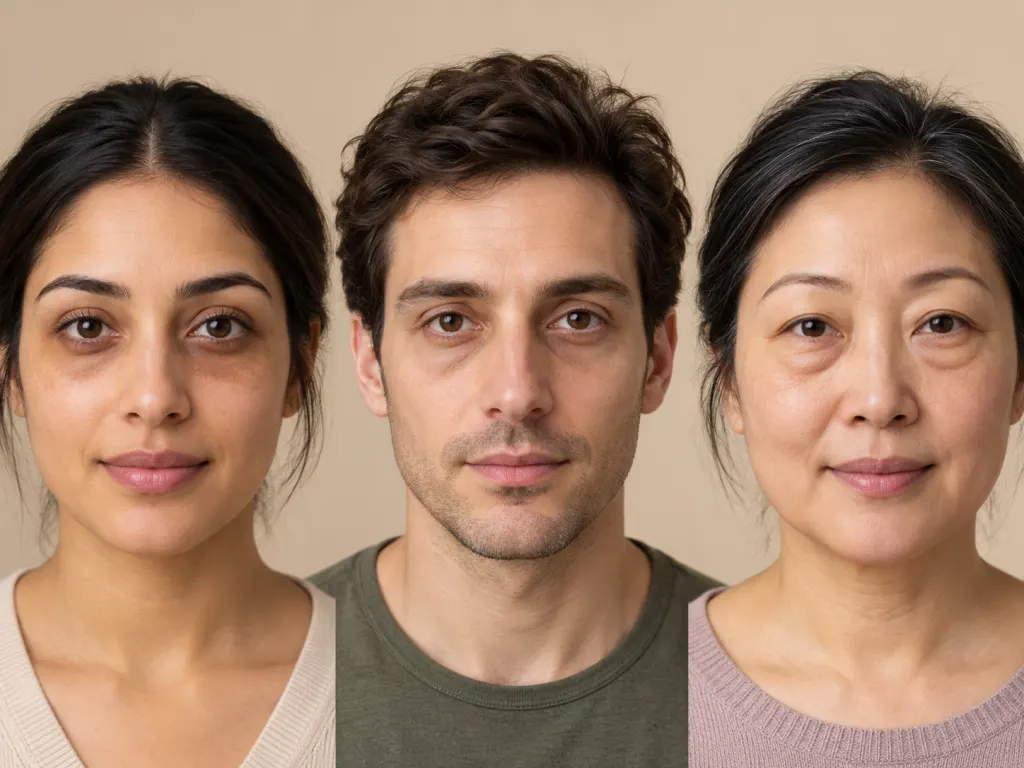
The appearance described as dark circles is not always produced in the same way. Family traits, aging, thinner skin, and hollows beneath the eyes can contribute. More visible underlying blood vessels and shadows can make the area look darker. Sun-related pigmentation, allergies, dermatitis, eye rubbing, and insufficient sleep are other possibilities.
According to Cleveland Clinic's overview of dark circles, these changes are usually associated with common causes rather than a medical problem. That makes a direct leap from under-eye color to a conclusion about heart health unjustified. Appearance alone provides too little information.
Acne begins in skin follicles
Acne involves follicles becoming blocked with oil and dead skin cells, alongside bacterial activity and inflammation. Hormones and family history can influence its development. It can continue beyond the teenage years, so adult acne does not by itself establish that an internal organ is malfunctioning.
The National Institute of Arthritis and Musculoskeletal and Skin Diseases explains these local skin processes. They provide a more useful starting point than assigning spots to the liver based on where they appear. The same source distinguishes factors involved in acne from things that can aggravate it, including stress, pressure from equipment or clothing, picking, and vigorous scrubbing.
Describe acne by its behavior and impact
For an appointment, note where spots appear, whether they are superficial or deep, whether they hurt, and whether they leave marks or scars. Those observations communicate more than saying that your skin is simply bad. Also explain whether the concern affects confidence, social activities, or comfort.
The NHS acne guidance recommends gentle cleansing, removing makeup, and choosing products described as non-comedogenic, meaning they do not clog pores. It advises against squeezing spots and harsh scrubbing. A complicated routine is not required to make your concern legitimate, and persistent acne is not a reason to blame yourself for inadequate cleanliness.
Hair thinning has different patterns
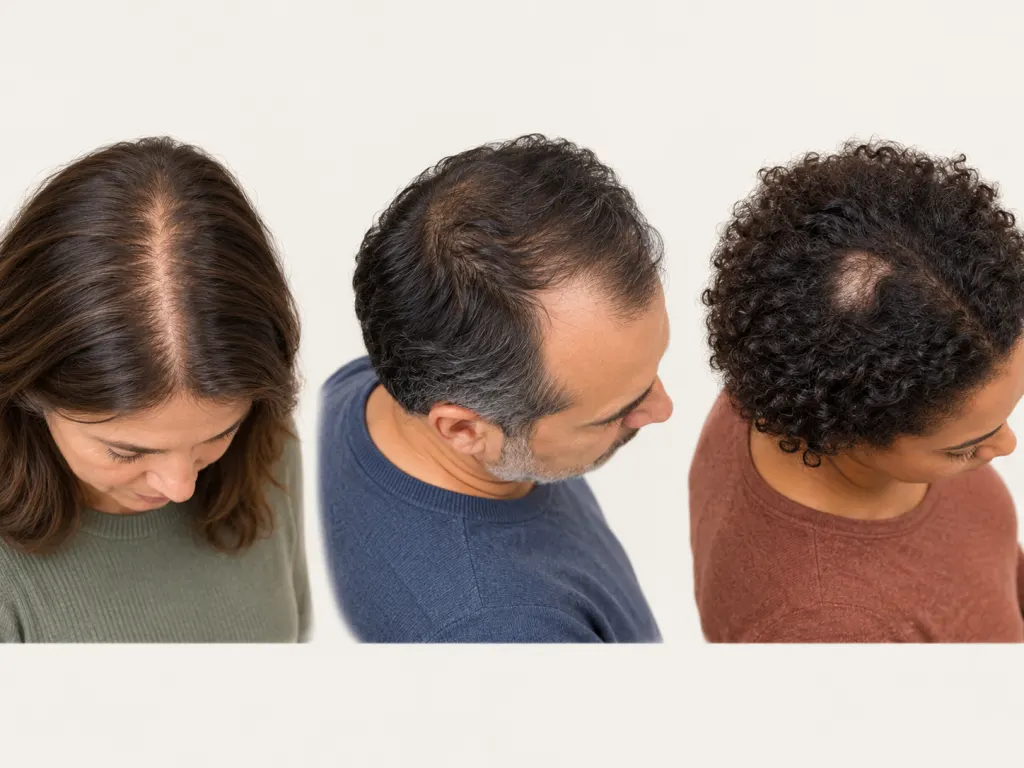
Hair loss may develop gradually, appear in patches, or present as increased shedding. A widening part, receding hairline, and a new bare patch are different observations, even though people may describe all of them as thinning. Mayo Clinic describes these different patterns and emphasizes that hair loss can have several explanations.
Inherited pattern hair loss is common. Repeated tension from tightly pulled hairstyles and damage associated with some hair practices are other possibilities discussed by the American Academy of Dermatology. Neither the pattern nor a photograph is enough for a reader to determine the cause independently.
Increased shedding can follow an earlier event
A useful detail about hair shedding is that its timing may lag behind an earlier event. The American Academy of Dermatology notes that increased shedding can become noticeable a few months after an illness, an operation, or a major stressful period. This helps explain why looking only at what happened this week may miss relevant context.
Include earlier events in your notes, but describe them as possibilities rather than conclusions. A stressful month followed by shedding is information worth sharing; it does not establish that stress explains every change. Gradual thinning and increased shedding also need not be treated as interchangeable descriptions.
Thyroid disease is one possibility, not a conclusion
An underactive thyroid can be associated with dry, thinning hair. Other possible features include fatigue, difficulty tolerating cold, dry skin, and weight changes. However, these features are not specific to thyroid disease.
The National Institute of Diabetes and Digestive and Kidney Diseases explains that hypothyroidism can develop slowly and that common symptoms do not necessarily mean someone has a thyroid problem. Hair thinning therefore belongs in a broader assessment rather than serving as a thyroid test on its own.
If several changes concern you, report them together and explain when each began. Let the clinician decide whether thyroid assessment is appropriate. Avoid using a checklist to declare either that you have thyroid disease or that it has been ruled out. The important distinction is between recognizing a possible explanation and establishing it.
Several changes can coexist without one shared cause
It is reasonable to ask whether the concerns are connected. It is equally reasonable for an assessment to consider separate explanations. The information needed to explore that question includes the timeline, examination findings, family history, and any accompanying symptoms.
Consider the difference between saying, “These all prove the same condition,” and asking, “Could any of these changes be related?” The second wording leaves room for evidence. It also makes space to address the concern that matters most to you, rather than forcing every observation into one theory.

Keep a short, practical record
A record can make an appointment easier to use. Its purpose is to preserve information you might otherwise forget, not to turn daily life into continuous monitoring. Choose a format you already use, such as a phone note or a single sheet of paper.
- Starting point: Write when you first noticed each concern, even if the date is approximate.
- Course: Describe whether it seems stable, intermittent, gradually changing, or sudden.
- Location: Record one or both under-eye areas, the areas affected by spots, and where hair density appears different.
- Associated observations: Include discomfort, itching, swelling, scalp changes, or other symptoms you want to discuss.
- Context: List recent illnesses, major stressful events, new products, and changes in hair practices without assuming they caused the problem.
- Personal impact: Note effects on comfort, confidence, sleep, work, or social activities.
If you choose to take photographs, use similar lighting, distance, and positioning. Avoid filters and keep the images private. Label the date rather than attaching a suspected diagnosis. An occasional comparable photograph is more useful for a conversation than a large collection taken under different conditions.
Prepare questions that leave room for an assessment
Bring a concise summary rather than every explanation you have encountered online. You might say, “My acne has become painful, my hair part seems wider, and I would like to understand whether these concerns need separate assessments.” Add which change started first and what worries you most.
Useful questions include: What possibilities fit this pattern? Is anything in the examination particularly informative? Would any further assessment help, and what question would it answer? What changes should prompt an earlier follow-up? You can also ask the clinician to explain unfamiliar terms in ordinary language.
Before leaving, clarify the next step and how to arrange follow-up if the concern continues. If several issues cannot be covered fully in one visit, ask how best to organize another conversation. A clear plan is more useful than leaving with an unexplained list of possible conditions.
When persistent changes deserve an appointment
Seek advice about acne that remains troublesome, involves deep or painful spots, leaves scars, or affects your wellbeing. These are among the reasons for assessment listed by the NHS. You do not need to wait until every area of your skin is affected.
Arrange an assessment for sudden or patchy hair loss, a clear increase in shedding, or persistent loss that distresses you, consistent with Mayo Clinic's guidance. For under-eye changes, new darkness or swelling affecting only one side merits medical advice, according to Cleveland Clinic. Describe the change rather than trying to identify its cause beforehand.
Eye pain and visual changes need different attention
Under-eye appearance should not distract from symptoms involving the eye itself. Seek urgent assessment for new blurred or double vision, a painful red eye, or other new visual changes. Sudden inability to see or sudden severe eye pain requires emergency care. The NHS vision-loss guidance distinguishes these urgent and emergency situations. Use the appropriate local service where you live.
Evaluate online explanations by what they leave out
Before accepting a post that connects an appearance change to a particular organ, ask what evidence supports that connection and what other explanations it considers. A caption and a striking portrait cannot provide a medical history or an examination. A source may accurately name a possible association while overstating what it means for an individual.
Be especially cautious when the explanation leads immediately to a product purchase or an expensive package of tests. Save the specific question for a qualified clinician. You can take your concern seriously while remaining uncertain about an online explanation; uncertainty is an appropriate starting point for assessment.
Wrap-Up
The most useful response to persistent dark circles, acne, or hair thinning is a clear description and an appropriate assessment. Record each concern's timing, pattern, accompanying symptoms, and personal impact. Keep possible explanations open, including separate causes for changes that occur together. Bring questions to a clinician and agree on follow-up, while seeking urgent attention for eye pain or visual changes as described above.
Frequently Asked Questions
- → Do I need to wait until all three concerns appear before seeking advice?
No. You can seek advice about one persistent or troubling concern. Describe what you have actually noticed rather than waiting for a particular combination. Prioritize a change that is painful, progressing, or affecting everyday life.
- → Should I bring older photographs to an appointment?
If you have a few photographs that clearly show the change, they can help you explain its timeline. Choose dated, unfiltered images where possible. Explain any differences in lighting or hairstyle, and let the clinician decide how much the comparison contributes.
- → Does hair thinning mean I should assume a thyroid problem?
No. Thyroid disease is one possible explanation among several. The NIDDK notes that its symptoms overlap with other common experiences. Discuss the full pattern of changes rather than using hair appearance to reach a conclusion.
- → Is it relevant that a parent has similar under-eye circles or hair thinning?
Yes, mention family patterns during the appointment. Family history is relevant to both concerns, as discussed by Cleveland Clinic and the American Academy of Dermatology. It provides context without establishing the explanation for your own change.
- → What if I cannot remember exactly when a change began?
An approximate timeline is still worth sharing. Use a remembered event or an older photograph as a reference, and say clearly that the date is uncertain. Start recording current observations without trying to reconstruct every detail of the past.
References
This content was developed and refined using reliable sources.
- https://my.clevelandclinic.org/health/symptoms/23128-dark-circles-under-eyes
- https://www.aad.org/public/diseases/hair-loss/causes/18-causes
- https://www.niddk.nih.gov/health-information/endocrine-diseases/hypothyroidism
- https://www.nhs.uk/conditions/acne
- https://www.niams.nih.gov/health-topics/acne
- https://www.mayoclinic.org/diseases-conditions/hair-loss/symptoms-causes/syc-20372926
- https://www.nhs.uk/conditions/vision-loss