 Save
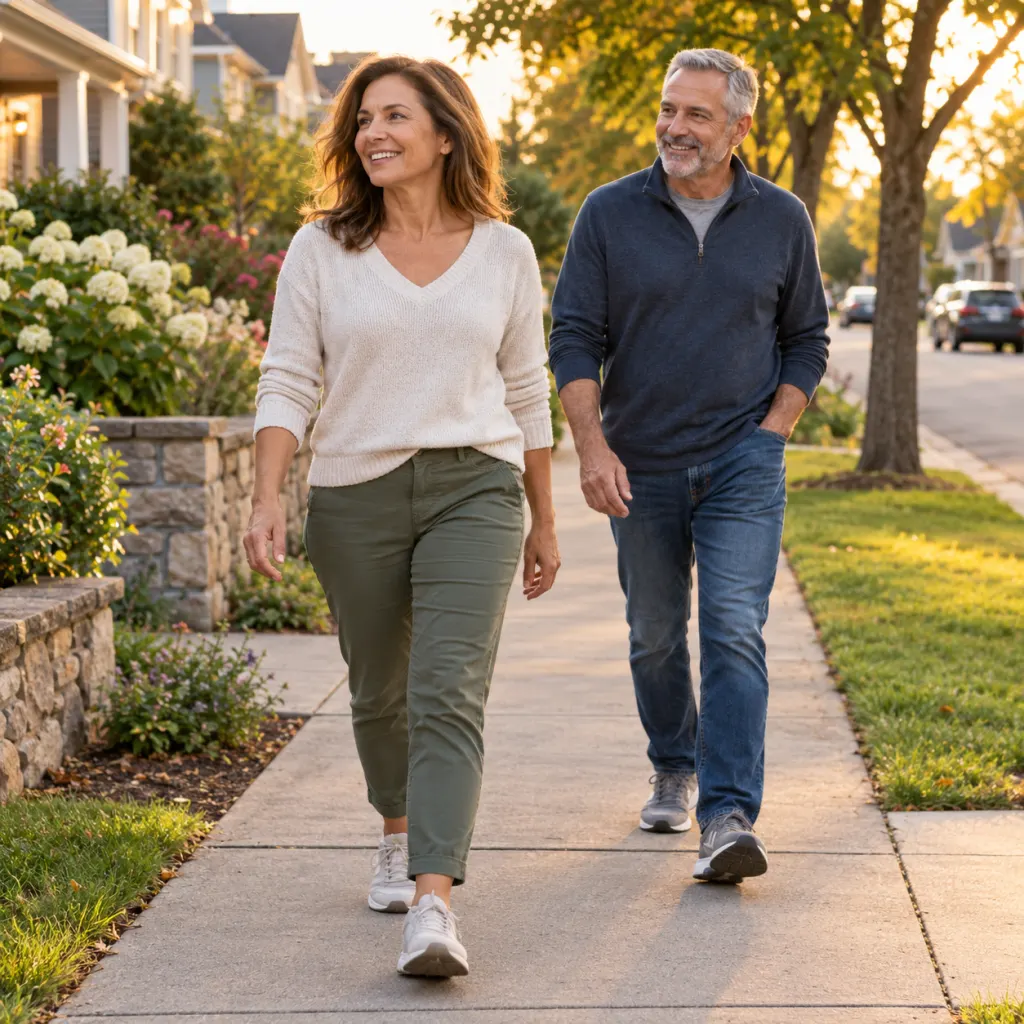
A short walk after a meal may help reduce the rise in blood glucose that follows eating. Research supports this as a possible short-term benefit, rather than a predictable result for every person or meal. A systematic review published in 2023 found that activity after eating generally produced a smaller glucose rise than activity before eating or remaining inactive.
The useful question is how that evidence fits into ordinary life. Does a walk need to begin immediately? What did the ten-minute studies actually measure? How should mobility and individual safety considerations affect the discussion? Understanding those details makes the research more useful than treating a particular number of minutes as a universal rule.
Why movement can influence the response to a meal
Carbohydrates include sugars and starches that the digestive system breaks down into glucose, which enters the bloodstream. This helps explain why researchers examine the period after eating. The National Institute of Diabetes and Digestive and Kidney Diseases explains this process in its blood glucose information.
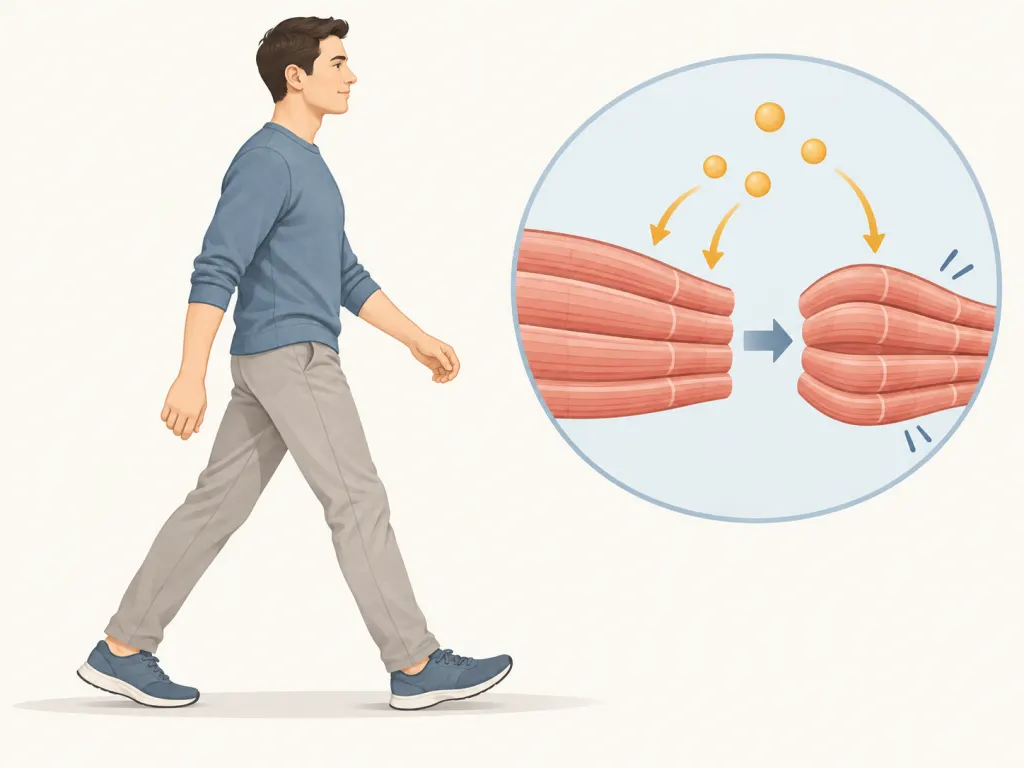
Walking adds muscular activity during that period. According to the American Diabetes Association, contracting muscles can take up glucose for energy through mechanisms that also operate independently of insulin. Activity can increase insulin sensitivity as well. These mechanisms explain why movement can influence the glucose response; they do not establish the size of an individual response. Glucose regulation also continues during rest. The comparison in walking studies concerns differences between activity patterns.
What the ten-minute walking trial actually found
A 2016 University of Otago randomized crossover trial enrolled 41 adults with type 2 diabetes. Participants received advice to walk for 30 minutes daily during one two-week period and for ten minutes after each main meal during another. A crossover design allows participants to experience both approaches.
The researchers measured the glucose response during the three hours after meals. Their measure of the rise above baseline was about 12% lower during the post-meal walking period. The difference was greater after the evening meal, when participants consumed the most carbohydrate and were most sedentary.
That percentage describes a group comparison using a particular research measure. It is not a prediction that a person's next glucose reading will fall by 12%. The study was small and each walking period lasted two weeks. It supports further interest in meal timing, while leaving uncertainty about individual responses and sustained outcomes.
The wider evidence is promising, with important limits
The 2023 systematic review included eight randomized crossover trials involving 116 participants, some with type 2 diabetes and some without it. Post-meal activity generally performed better for the immediate glucose response than pre-meal activity or an inactive comparison. However, the reviewers rated the included trials as having a high risk of bias.
Combining several studies helps reveal a pattern, but it does not remove weaknesses in the underlying research. These were acute experiments with differing protocols, rather than evidence for one universal walking schedule. Their findings concern short-term glucose responses; they do not establish long-term clinical outcomes from a particular post-meal routine.
Timing matters, but the evidence does not provide a countdown
The same review found that a shorter interval between eating and activity was associated with a larger short-term effect. That supports studying movement relatively soon after meals, but the evidence does not identify one exact starting minute for everyone. Different study protocols should not be compressed into a rigid deadline.
For everyday planning, a meal can serve as a convenient reminder. “After lunch, once the table is cleared” is a clearer cue than “sometime today.” This is a scheduling example, not a clinical prescription. A routine should fit personal comfort, ability, and any activity guidance already agreed with a health professional.
Build a routine around a real opening in the day
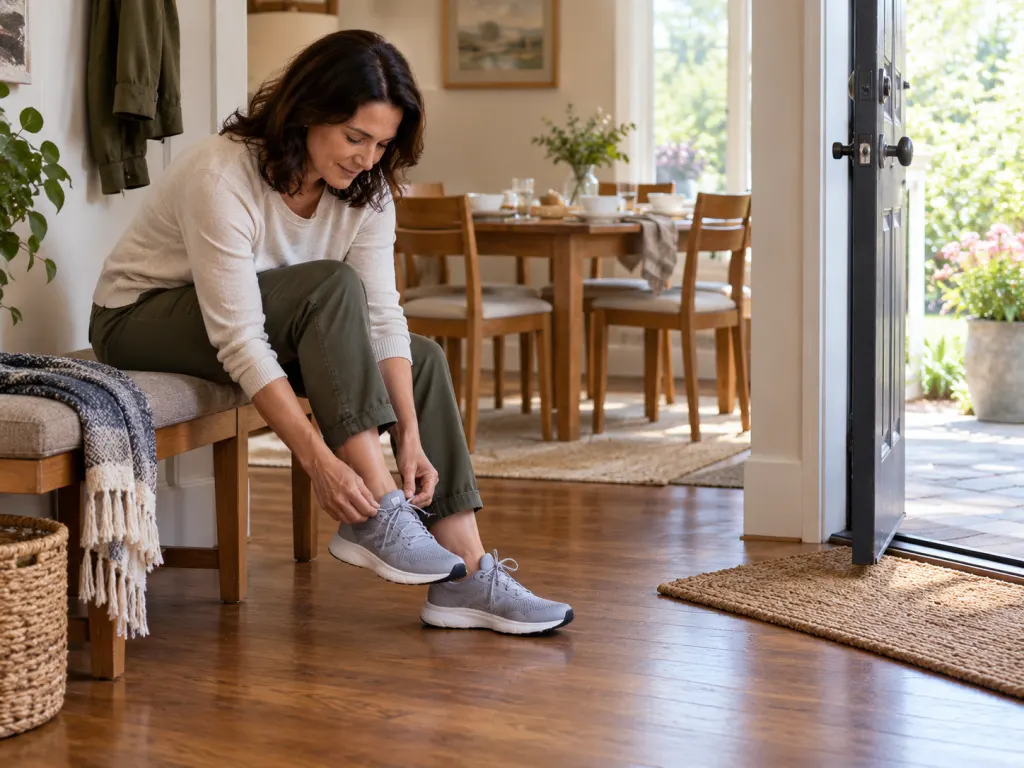
The CDC's physical activity guidance uses a ten-minute walk after dinner as an example of a small, specific starting goal. It also emphasizes enjoyable activities, realistic planning, and discussing suitable activity with a doctor. Ten minutes is therefore useful as an example of a manageable commitment, rather than a biological switch.
A practical plan can answer a few ordinary questions before the meal ends:
- Which meal has a reliable opening afterward? A quiet lunch break may be easier to organize than a busy evening.
- Where would the walk happen? Choose a familiar route with an easy return point.
- What is the backup? A suitable indoor route may be more practical when weather or daylight changes.
- What would make the habit pleasant? Company or a familiar destination can give the outing a purpose.
- How will the plan stay realistic? Record what fitted the day and revise the schedule when necessary.
These questions turn a broad intention into something concrete. They also make obstacles visible: a meeting, a school pickup, or an unsuitable route may matter more to consistency than finding an ideal minute on the clock.
Keep the route and the commitment manageable
Consider two examples. An office worker might use part of an existing lunch break for a loop around the building. Someone eating at home might arrange a short outing with a partner after the dishes are cleared. Neither example requires a new destination, a special device, or a complicated performance target.
A backup plan deserves the same attention as the preferred route. Is the indoor space open at that time? Does the route require crossing a busy road? Would darkness make the return inconvenient? Answering these questions beforehand makes the plan easier to judge.
It can also help to separate scheduling from performance. “Did this fit after lunch?” is a useful first question. Trying to optimize duration, pace, route, and meal timing simultaneously can make a modest routine unnecessarily complicated. Practical adjustments can begin with the part of the plan that caused difficulty.
Ability and comfort belong in the discussion
Walking is only one form of activity, and a walking study does not establish an identical glucose effect for every alternative. Standing, seated movement, wheelchair activity, and walking involve different movements and should not be assigned interchangeable research results.
Questions about balance, limited walking tolerance, foot problems, or an existing activity restriction belong with a qualified health professional. A clinician or physiotherapist can help identify an appropriate option and explain relevant limits. The CDC likewise recommends discussing suitable activities and activities to avoid with a doctor.
When preparing for that conversation, describe the actual setting: the distance to the nearest rest point, the available surfaces, any usual mobility aid, and the time available after meals. “What movement would suit this situation?” gives the professional more useful context than asking whether everyone should complete the same walk.
Individual safety planning matters alongside the research
The NIDDK identifies insulin and sulfonylureas among medicines associated with low blood glucose, also called hypoglycemia. It explains that physical activity can lower glucose during activity and for hours afterward. These considerations make individualized professional guidance essential when discussing a new routine.
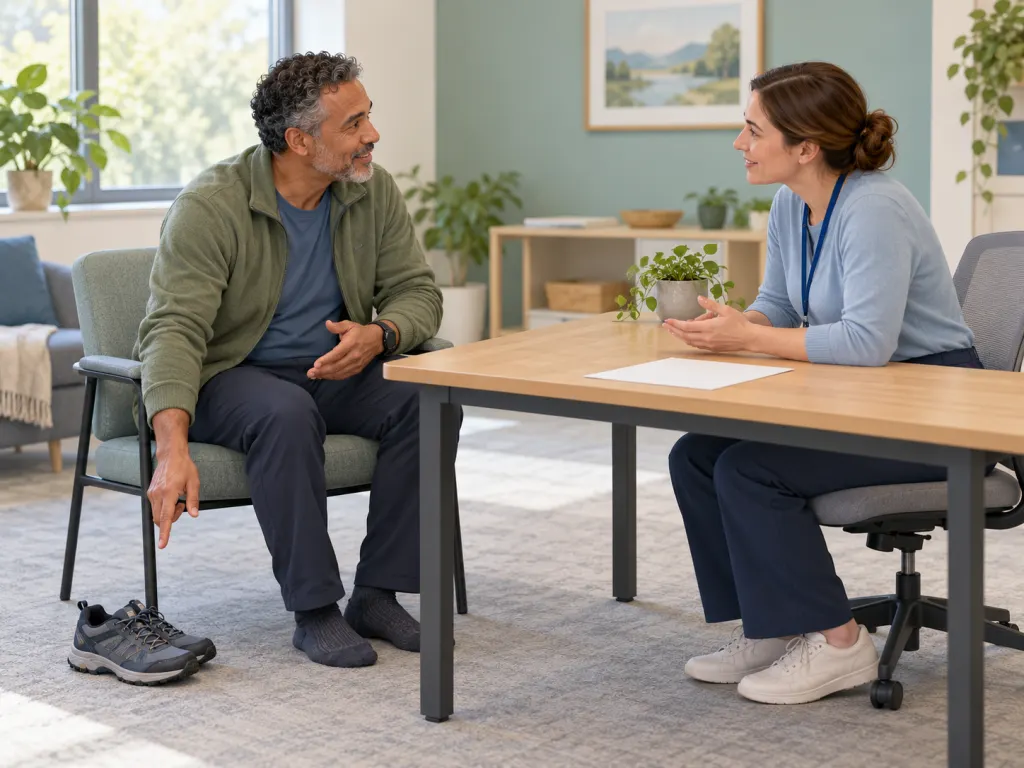
A doctor or diabetes care professional is the appropriate source for decisions about monitoring, activity timing, food arrangements, and medicine-related questions. Useful questions include: “Is this routine suitable for my situation?”, “When would monitoring be useful?”, and “What should my written response plan cover?” A general article cannot resolve those personal decisions.
The goal of that conversation is clarity before a routine becomes automatic. Bring a description of the proposed activity and the current care plan, rather than using someone else's walking results as a personal target.
Recognize the boundary between a routine and a medical concern
Mayo Clinic lists shakiness, sweating, dizziness, weakness, and difficulty thinking among possible low-glucose symptoms. Such symptoms need appropriate attention rather than an assumption that completing a walk is the priority. Personal response instructions should come from a qualified health professional.
Seizures, loss of consciousness, or inability to respond require emergency assistance. Contact local emergency services. Mayo Clinic also advises prompt medical help for possible hypoglycemia symptoms without an established explanation, or episodes that persist or recur despite the person's established response measures.
A single reading cannot settle whether a routine works
The American Diabetes Association notes that activity responses vary with duration and other factors. Monitoring can help reveal patterns when it is part of an individual care plan. Interpretation and personal targets belong with the care professional responsible for that plan.
Research comparisons are more structured than an everyday before-and-after observation. In the Otago trial, researchers used repeated measurements and a defined three-hour assessment period. A lone reading taken at a different point after a different meal cannot reproduce that comparison.
For a care conversation, context can be more useful than an isolated number. A brief record might note the meal time, when activity began, its approximate duration, and anything unusual about the day. The purpose is to make the circumstances understandable, rather than to produce a verdict after every outing. A reading should not become a score for effort or character.
Place post-meal walking within the broader week
The CDC discusses a broader goal of at least 150 minutes of moderate-intensity activity per week, with individual suitability addressed by a doctor. An easy stroll and a moderate-intensity walk are not automatically equivalent, so duration alone does not describe an entire activity plan.
The post-meal idea is most useful as one scheduling option. Review whether it fits alongside existing commitments and professional guidance. A convenient routine can remain flexible: missing one opportunity does not require turning the next meal into a longer or harder outing. The planning question is what can be repeated comfortably and appropriately across ordinary weeks.
Wrap-Up
Post-meal walking has a reasonable evidence base for a possible short-term reduction in the glucose rise after eating. The studies support a flexible conversation about activity timing, with meaningful limits around sample size, study duration, and individual variation. A useful everyday approach begins with a realistic opening in the schedule and an appropriate route. Personal monitoring and safety decisions belong with a qualified health professional.
Frequently Asked Questions
- → Is ten minutes a proven minimum?
No universal minimum follows from the evidence discussed here. Ten minutes was the duration assigned after each main meal in the 2016 trial. That study did not establish a threshold below which walking has no effect, or a guaranteed response once ten minutes have passed.
- → Does walking before a meal still have a place?
Yes. The 2023 review addressed the immediate glucose response around meals. It does not determine the overall value of every possible activity schedule. Convenience, enjoyment, and an existing professional activity plan remain relevant when deciding where movement fits.
- → Is dinner always the best meal to follow with a walk?
The evening meal showed the largest difference in the Otago trial, but that finding reflects those participants and their circumstances. It does not establish dinner as the best choice for everyone. A routine also needs a practical place in the day.
- → Does the walk need to happen outdoors?
Outdoor walking is not a requirement for making a practical routine. An available indoor route may solve weather or daylight problems. The setting still needs to suit the person and the activity. The evidence described here does not establish a separate glucose advantage for an outdoor setting.
- → What information is useful at a professional appointment?
Bring the proposed meal and activity times, the likely duration, a description of the route, and any existing monitoring or activity instructions. Explain what makes the plan easy or difficult. These details help a qualified professional address the real situation instead of an abstract ten-minute rule.
References
This content was developed and refined using reliable sources.
- https://pubmed.ncbi.nlm.nih.gov/36715875
- https://pubmed.ncbi.nlm.nih.gov/27747394
- https://diabetes.org/health-wellness/fitness/blood-glucose-and-exercise
- https://www.cdc.gov/diabetes/living-with/physical-activity.html
- https://www.niddk.nih.gov/health-information/diabetes/overview/preventing-problems/low-blood-glucose-hypoglycemia
- https://www.mayoclinic.org/diseases-conditions/hypoglycemia/symptoms-causes/syc-20373685