 Save
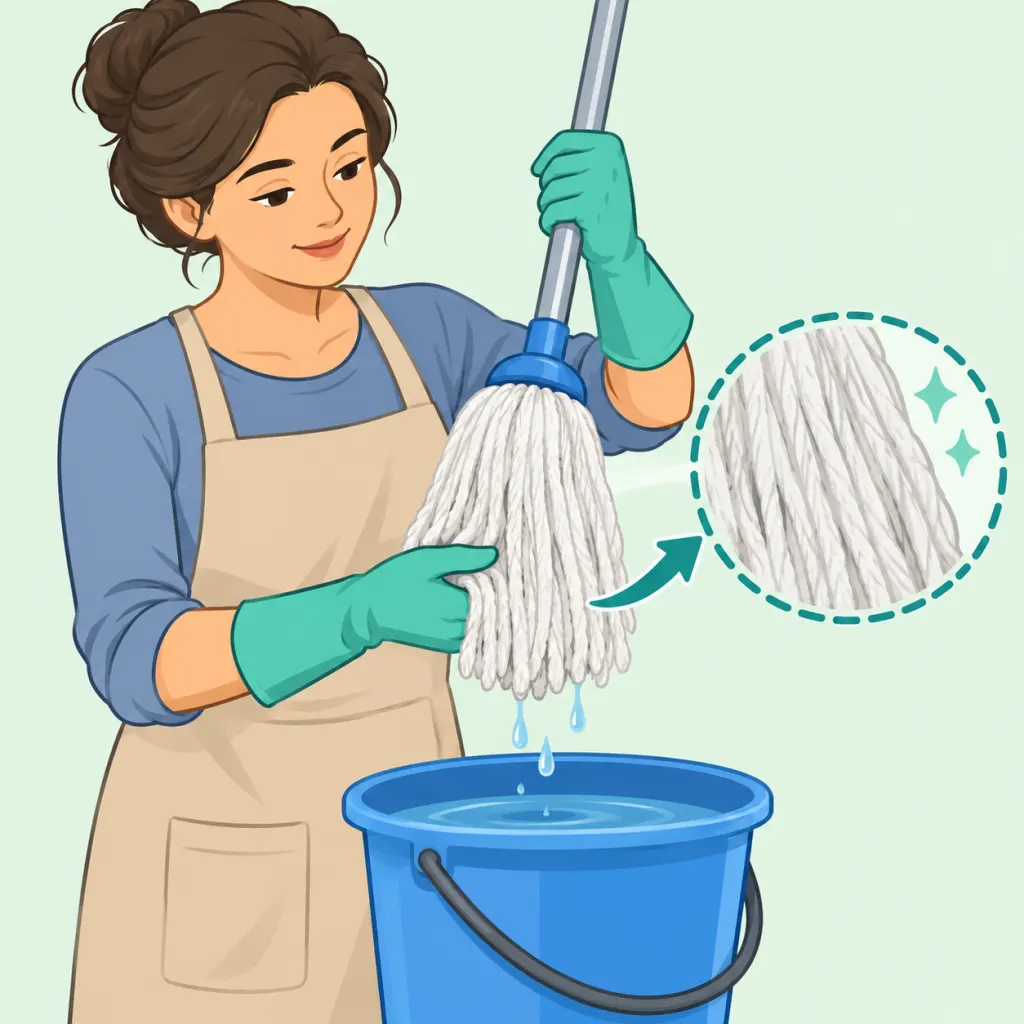
A very dirty mop can leave residue behind instead of helping your floors look clean. The safest fix is to remove visible soil first, wash the mop head thoroughly, and dry it completely before storing it. If you choose to disinfect, use only products that fit the mop material and follow the label closely.
Step 1: Put on gloves and choose a ventilated cleaning spot
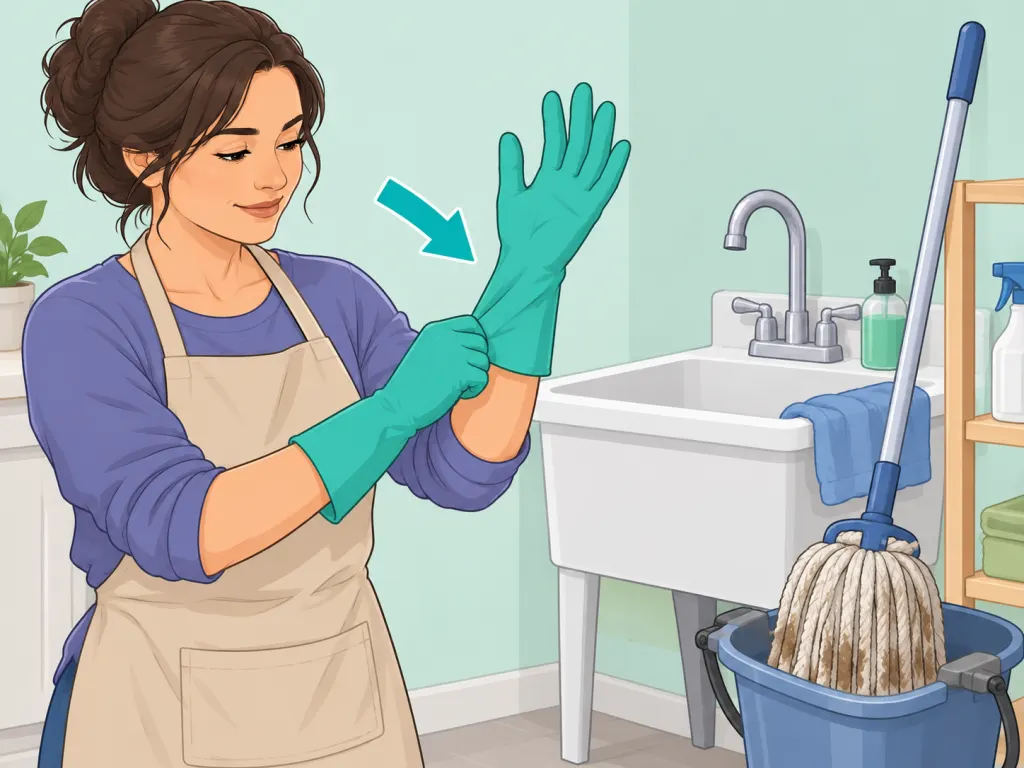
Before you handle a filthy mop, put on reusable cleaning gloves and work at a utility sink, laundry sink, bathtub, or outdoor drain where splashes are easy to rinse away. The CDC advises following product labels, using protective gear when directed, and keeping good airflow when using cleaning or disinfecting products indoors; start with its household cleaning guidance if you are unsure.
Step 2: Remove the mop head if it detaches
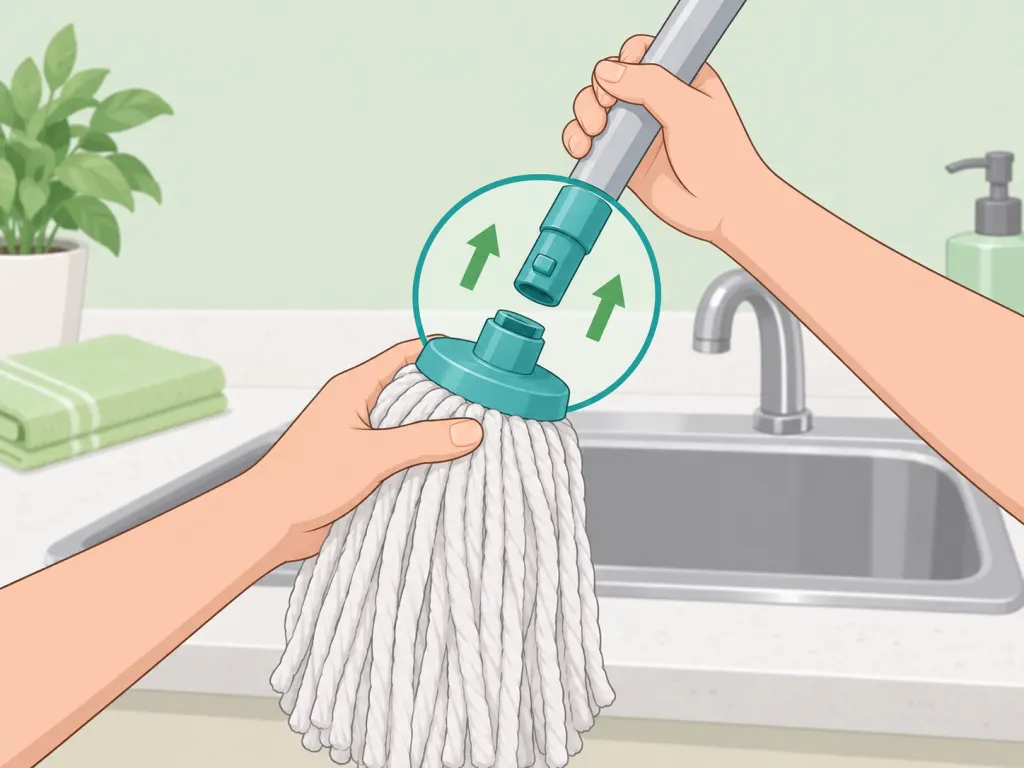
Take the head off the handle if your mop is designed for it, then check the care label or maker instructions. Cotton and microfiber mop heads are common, but they do not tolerate every cleaner the same way; CDC environmental cleaning guidance notes that mop heads are commonly cotton or microfiber and should be reprocessed according to manufacturer instructions.
Step 3: Rinse out loose dirt first
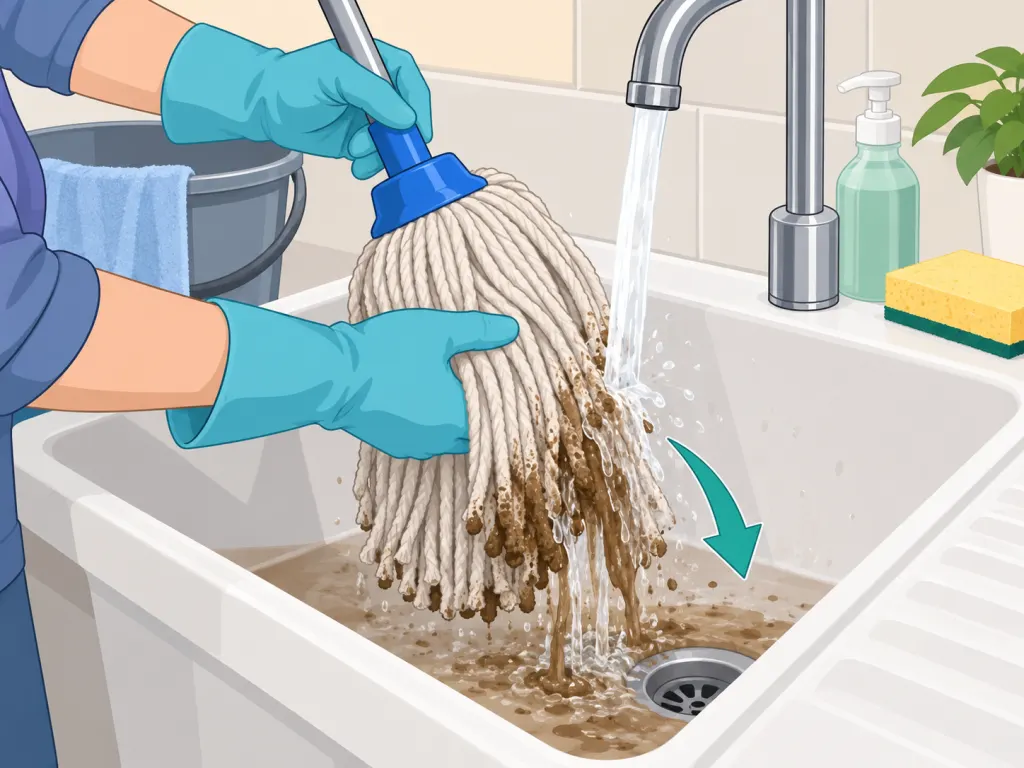
Hold the mop head under warm running water and squeeze or wring it until the water starts to run clearer. This removes grit, hair, and muddy residue before detergent work begins; the CDC describes cleaning as using water, soap, and scrubbing to remove dirt and impurities.
Step 4: Wash the mop head with detergent
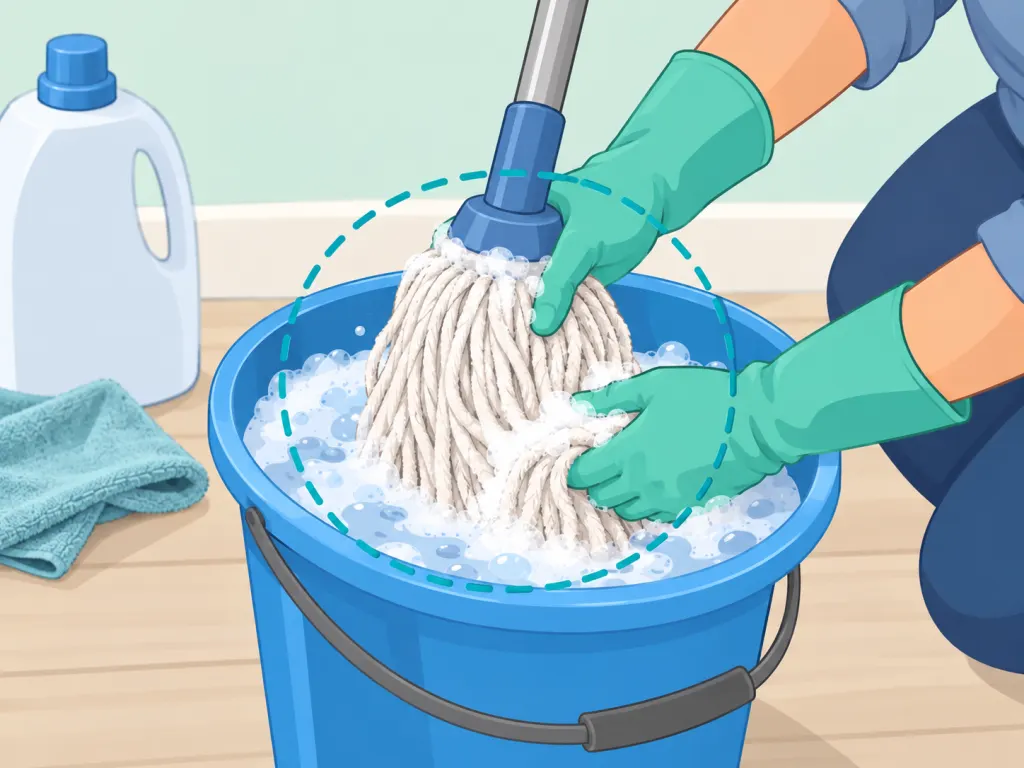
If the head is machine washable, launder it with detergent on the warmest setting the care label allows. If it is not machine washable, soak it in a bucket of warm water and laundry detergent for 10 to 15 minutes, then knead and scrub the fibers by hand. CDC guidance for washable items says to use detergent, the recommended water temperature, and dry items completely.
Drain the dirty wash water, then rinse the mop head under clean water while squeezing it repeatedly. Keep rinsing until the water is clear and the fibers no longer feel slippery. This step matters because leftover detergent can leave streaks on floors and can interfere with any disinfecting product used afterward.
Step 6: Disinfect only when needed and label-safe
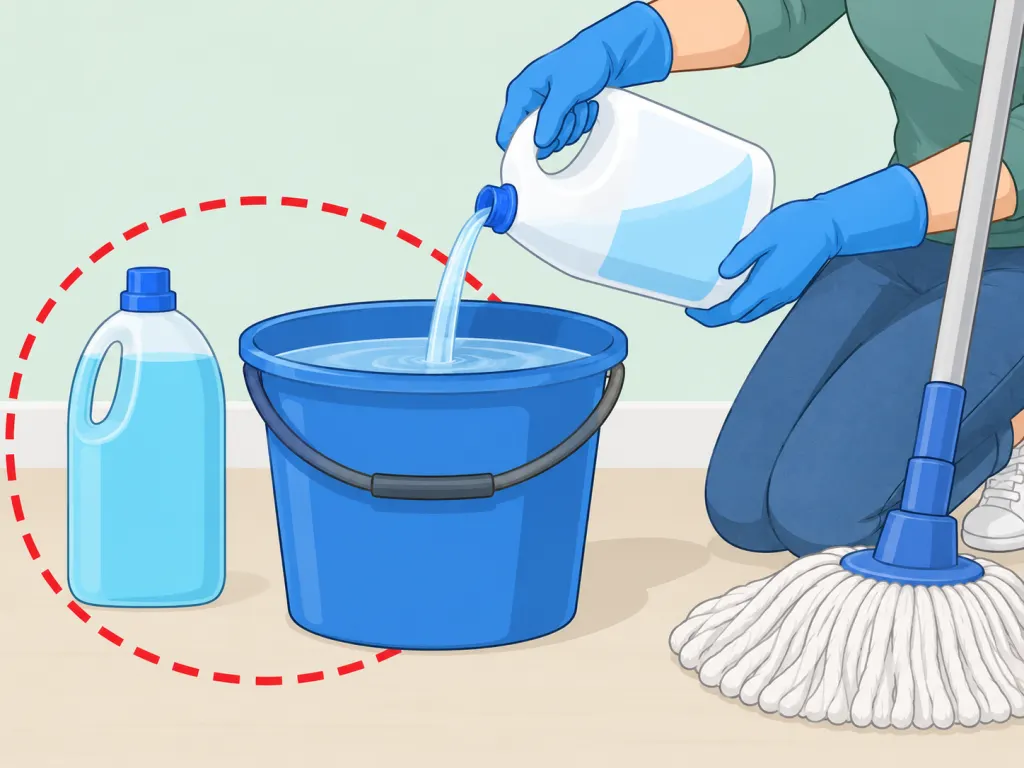
If the mop was used for a high-soil job, bathroom mess, or cleanup after someone in the home was sick, disinfect after washing only if the product label allows use on that mop material. EPA says disinfectant labels explain where a product can be used, how to apply it, and the required contact time; the mop head should stay wet for that full time. If using bleach on a bleach-safe cotton mop, follow the CDC's bleach dilution and ventilation guidance, then rinse the mop thoroughly.
Step 7: Dry the mop head completely
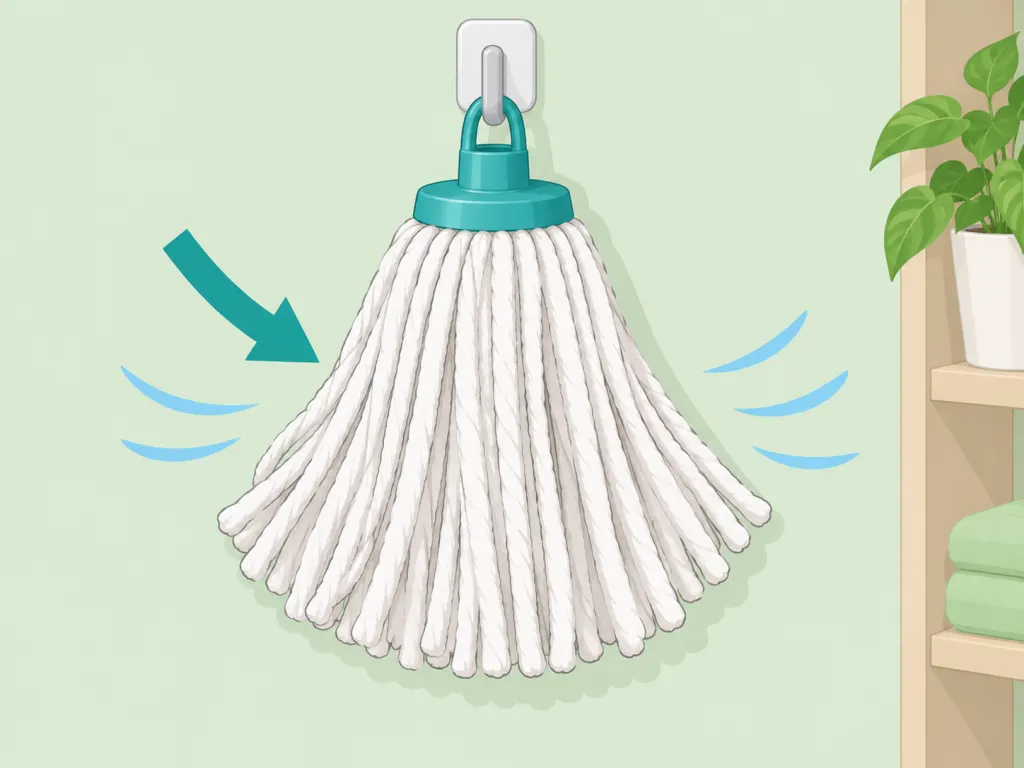
Wring out as much water as possible, then hang the mop head or place it fibers-up in a clean, airy spot until fully dry. CDC guidance for reusable cleaning supplies says mop heads should be allowed to fully dry before storage and reuse, and mops can be positioned with the head up to help them dry.
Step 8: Clean the bucket, handle, and storage area
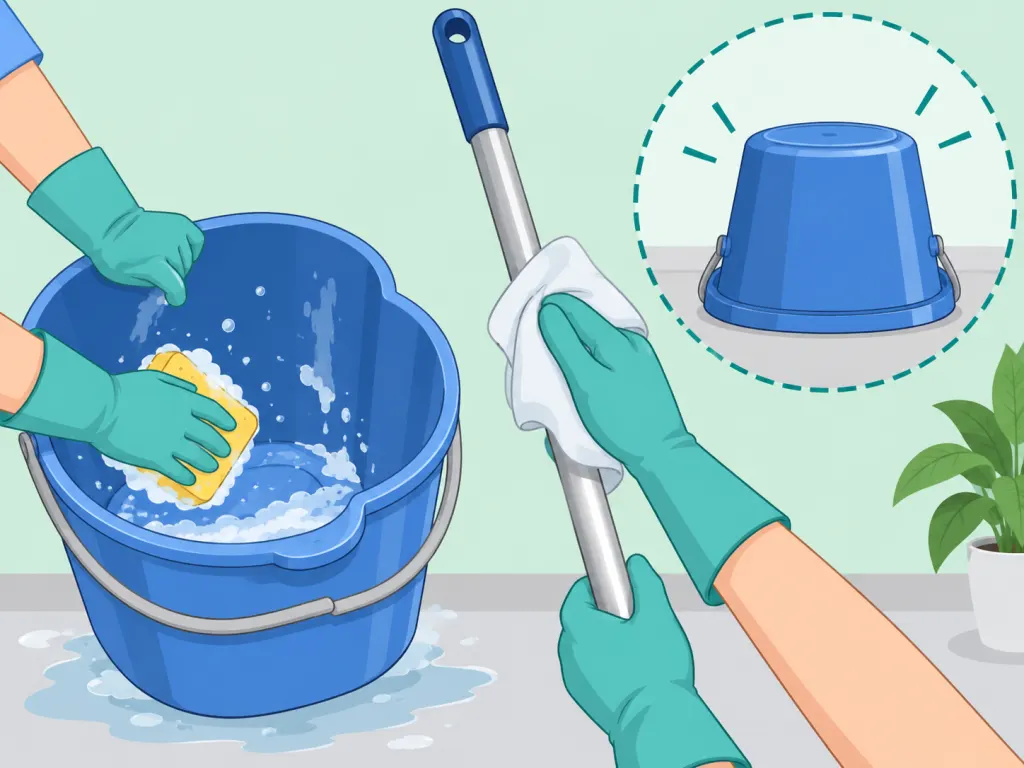
Empty the bucket, wash it with detergent and water, rinse it, and let it dry upside down. Wipe the handle and wringer with a damp cloth and detergent, especially where dirty water collects. CDC guidance for reusable cleaning equipment recommends thoroughly cleaning, disinfecting, rinsing, and drying buckets and containers when solutions are replaced and storing them upside down for drying.
Step 9: Get help after chemical exposure
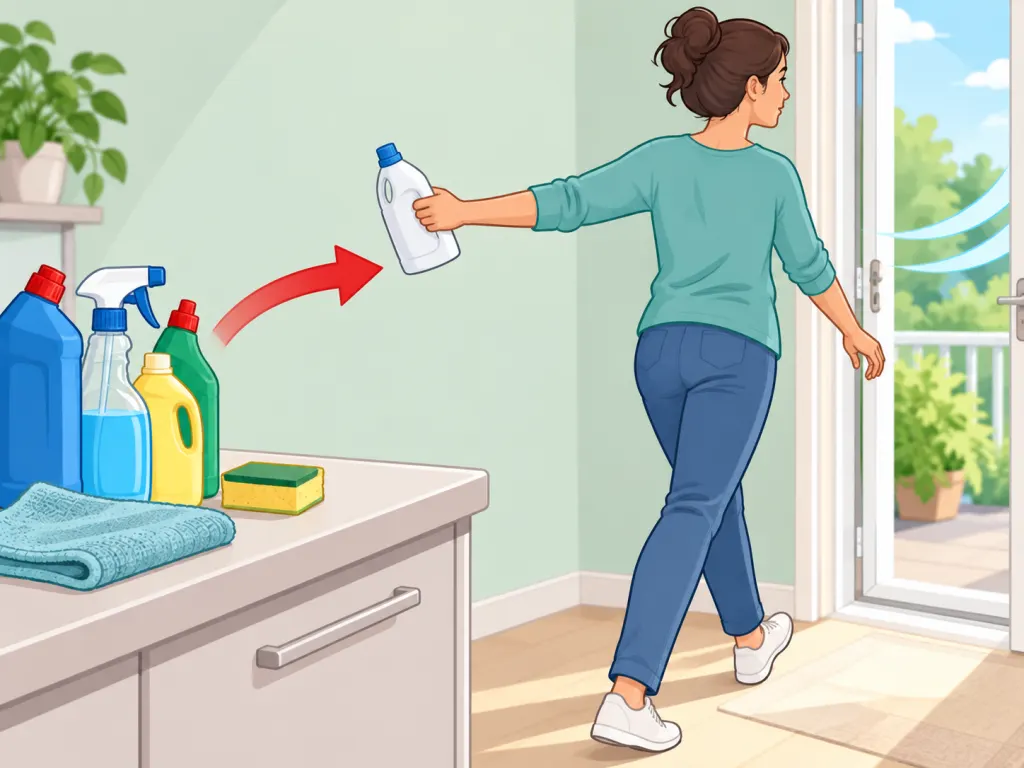
If cleaning fumes, splashes, or accidental product mixing cause coughing, wheezing, burning eyes, throat irritation, dizziness, or other concerning symptoms, stop cleaning and move to fresh air. MedlinePlus says to seek immediate medical help after a poison exposure and notes that the U.S. Poison Help line is 1-800-222-1222; call emergency services right away if breathing is difficult or symptoms are severe. Keep the product container or label nearby so a doctor or qualified health professional can see what was used.
Wrap-Up
The bottom line: clean the mop head with detergent first, disinfect only when it is appropriate for the material, rinse away residue, and dry the mop completely before storage. If the fibers are worn, frayed, or still smell after cleaning, replace the mop head.
Frequently Asked Questions
- → How often should I deep-clean a mop?
Wash a reusable mop head whenever it is visibly dirty, after messy bathroom or pet cleanup, and before storing it for more than a short time. CDC guidance for reusable cleaning supplies also emphasizes laundering mop heads and letting them dry fully before reuse.
- → Can I put a mop head in the washing machine?
Yes, if the care label says it is machine washable. Use detergent, the warmest water setting the label allows, and dry it completely, which matches CDC advice for washable laundry items.
- → Can I use bleach on a microfiber mop?
Usually, avoid it unless the mop maker specifically says bleach is safe. CDC environmental cleaning guidance notes that chlorine-based disinfectants should not be used to disinfect microfiber cloths.
- → Why does my mop still smell after washing?
A lingering smell usually means soil or moisture is still trapped in the fibers. Wash again with detergent, rinse thoroughly, and dry in open air; if the odor remains, replace the mop head.
- → Should I soak a dirty mop overnight?
No. A long soak is usually unnecessary and can leave the head sitting in dirty water. Scrub or launder it, follow any disinfectant contact time on the label, rinse well, and dry it instead.
- → When should I throw away a mop head?
Replace it when the fibers are frayed, flattened, shedding, stained in a way that will not wash out, or still smell after a proper wash and dry. Worn mop heads do not clean evenly and are harder to rinse clean.
References
This content was developed and refined using reliable sources.
- https://www.cdc.gov/hygiene/about/when-and-how-to-clean-and-disinfect-your-home.html?CDC_AAref_Val=https://www.cdc.gov/hygiene/cleaning/cleaning-your-home.html
- https://www.cdc.gov/hygiene/about/cleaning-and-disinfecting-with-bleach.html
- https://www.epa.gov/pesticide-registration/selected-epa-registered-disinfectants
- https://www.cdc.gov/healthcare-associated-infections/hcp/cleaning-global/supplies-and-equipment.html
- https://medlineplus.gov/ency/article/002759.htm