 Save
Dryer sheets can be surprisingly useful around the home, but the best uses are modest ones: picking up dust, grabbing loose hair, adding a light scent to closed spaces, and reducing static on fabric. Their value comes from three simple features: a nonwoven sheet, a softening coating, and, often, fragrance. That same coating is also why they should be used thoughtfully. They can leave a film, they should not go into vents or appliance parts, and unused sheets should be kept away from pets and children. This guide explains where dryer sheets make sense, where they do not, and how to use them without turning a small shortcut into a bigger cleaning job.
Why a Dryer Sheet Works Outside the Laundry Room
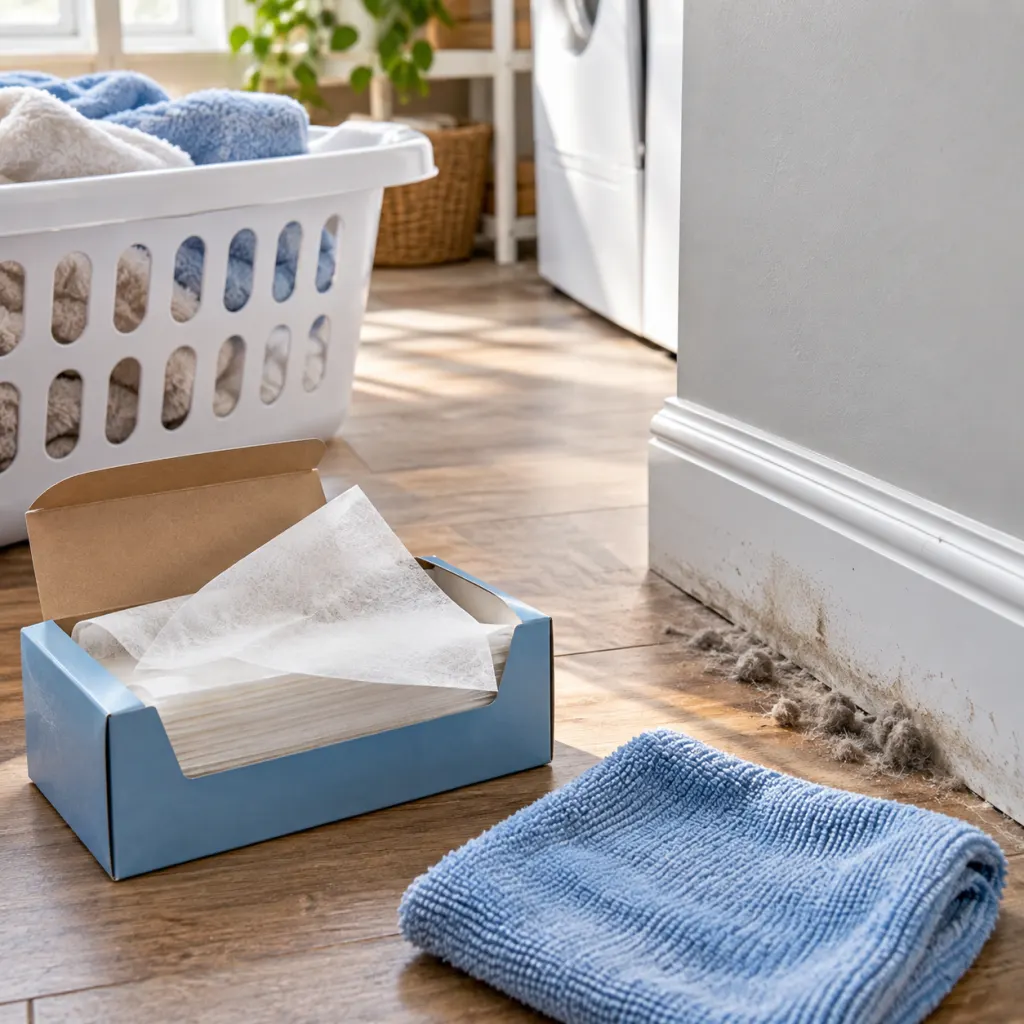
Most dryer sheets are built for one job: transferring a small amount of softening material onto fabrics during a heated tumble cycle. Chemical & Engineering News, published by the American Chemical Society, describes common dryer sheets as nonwoven polyester material coated with softening agents; heat helps that coating move from the sheet to fabric, where it changes the feel of the fibers and helps dissipate static charge https://cen.acs.org/articles/86/i15/Dryer-Sheets.html. Outside the dryer, those same qualities explain many of the better household uses. The sheet has enough texture to wipe loose dust. The coating can make some dry debris cling to the sheet. Fragrance can lightly scent small enclosed spaces. But the coating can also transfer where you do not want it, especially on glass, screens, unfinished wood, stone, or anything that must stay residue-free.
Use Them for Dry Dusting, Not Deep Cleaning
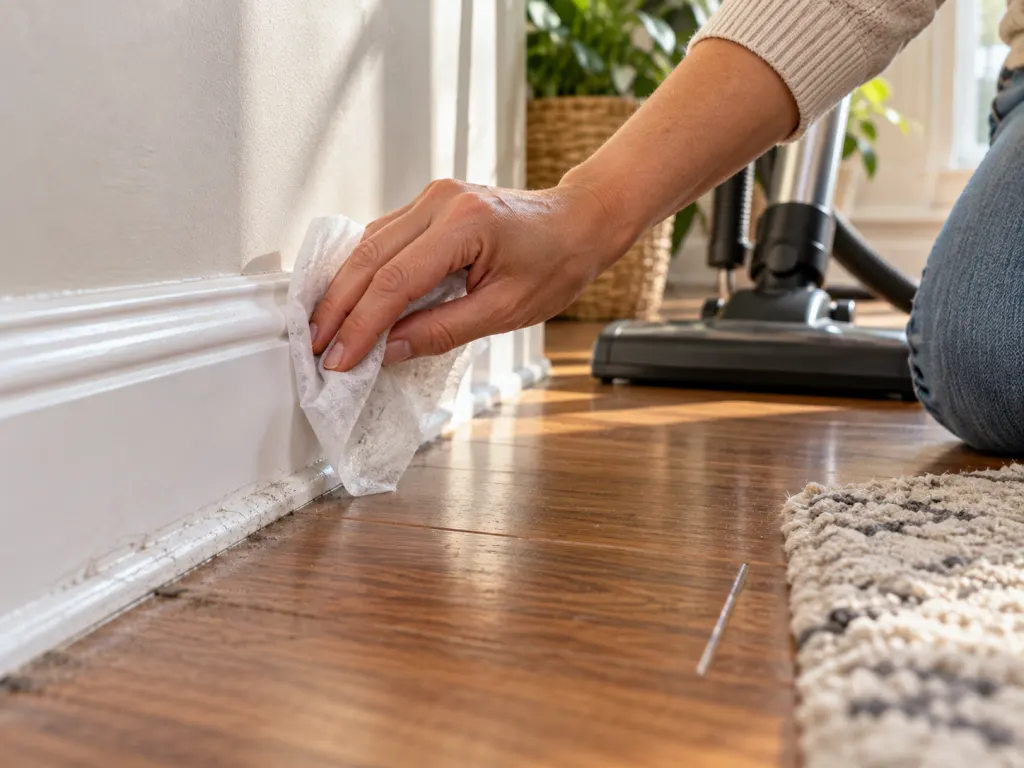
A spent dryer sheet can be a handy dry duster for places where lint, hair, and powdery dust collect. Think baseboards, the tops of door frames, lampshades, empty drawers, ceiling-fan blades while the fan is off, and the slats of blinds. Used sheets are often better than fresh ones for this because they are less heavily coated and less likely to smear. Fold the sheet into a small pad, wipe in one direction, then discard it when it looks loaded. This is a maintenance habit, not a full cleaning method. If a surface is sticky, greasy, gritty, or visibly soiled, use the cleaner recommended for that surface instead.
The main advantage is control. A dry sheet can collect loose material without spraying product into the air or wetting trim, paper lampshades, or unfinished edges. The main limitation is residue. Before wiping a visible surface, test a hidden spot and check it in good light. If the area looks dull, slippery, streaked, or darker than before, stop using dryer sheets there. Avoid television screens, computer monitors, eyeglasses, camera lenses, polished stone counters, unfinished wood, waxed antiques, and food-contact surfaces. Dryer sheets were not designed as surface-care products, so the safest rule is to reserve them for durable, washable, nonporous areas where a faint film would not matter.
A Practical List of Low-Risk Uses
For everyday housekeeping, dryer sheets are most useful when the task is dry, small, and noncritical. Good candidates include:
- Wiping dusty baseboards before vacuuming a room.
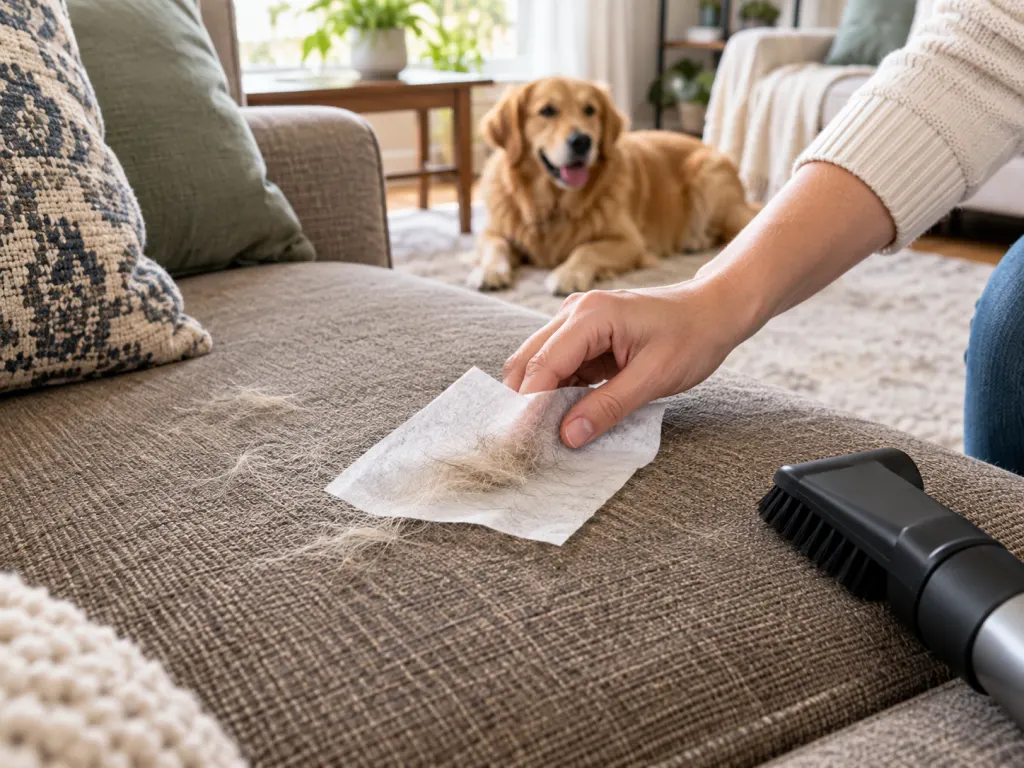
- Picking up loose pet hair from sturdy upholstery or car fabric, then vacuuming afterward.
- Freshening a suitcase, gym bag, linen closet, or empty trash can between deeper cleanings.
- Reducing static cling on clothing by lightly rubbing the inside of a garment.
- Dusting blinds, lampshades, and fan blades with the power off.
- Wiping dry lint from a laundry shelf or the outside of a hamper.
- Placing one sheet under a trash bag liner for a mild scent, away from pets and children.
The phrase low-risk matters. These ideas work best when the dryer sheet is not being asked to sanitize, polish, degrease, repair, repel pests, or replace a product with label directions. If a task involves food preparation, mold, strong odors from an unknown source, heavy soil, animal messes, or a valuable surface, choose a purpose-made cleaner or a plain cloth first. A dryer sheet is a convenience wipe, not a universal tool.

Where Fragrance Helps and Where It Can Be Too Much
One of the easiest off-label uses is scenting enclosed spaces. A single sheet in an empty suitcase, seasonal storage bin, closet shelf, laundry basket, or shoe cubby can make a space smell fresher for a short time. Keep the sheet loose and visible so it can be removed, and avoid direct contact with delicate fabrics, leather, unfinished wood, or paper keepsakes. For drawers that hold clothing, tuck the sheet into a small breathable pouch or place it on top of a liner rather than pressing it directly against a favorite garment.
Fragrance is also the reason to be cautious. The U.S. Environmental Protection Agency explains that many household products can emit volatile organic compounds, and it advises following label precautions, increasing ventilation when needed, and keeping products out of reach of children and pets https://www.epa.gov/indoor-air-quality-iaq/volatile-organic-compounds-impact-indoor-air-quality. A dryer sheet in a closed linen closet is different from placing many scented sheets around a small room. If a scent feels heavy, remove the sheet and air out the space. Fragrance-free laundry products or plain washable cloths are better choices for households that prefer fewer scented products.
Use Extra Care Around Appliances and Heat
Do not put dryer sheets in places that could block airflow, collect lint, or touch heating elements. That means no sheets in dryer vents, behind vent covers, inside HVAC returns, under appliance motors, or tucked into anything that warms up during use. It is also wise to wipe the lint screen according to the appliance manual rather than coating it with household products. The U.S. Fire Administration reports that failure to clean was the leading factor contributing to ignition in home clothes-dryer fires from 2018 to 2020, and its appliance guidance emphasizes safer electrical habits around major appliances https://www.usfa.fema.gov/prevention/home-fires/prevent-fires/appliance-and-electrical/.
That does not mean a dryer sheet used normally in a dryer is automatically a problem; it means off-label use should stay away from airflow and heat. Keep the sheet on the outside of a hamper, inside a closet, or in your hand as a wipe. Once a sheet has done its job, throw it away. Reusing the same dusty sheet again and again just moves lint and residue from one surface to another.
Pet Hair Pickup Is Useful, But Pet Access Is Not
Dryer sheets can help collect loose pet hair from sturdy fabric because the sheet drags lightly across fibers and gathers stray hairs into clumps. Use a spent sheet, wipe the upholstery, then vacuum. Do not rub dryer sheets on an animal, do not leave sheets in pet beds, and do not let pets chew or carry them. The ASPCA lists dryer sheets under laundry products and says many unused sheets contain cationic detergents that can cause serious problems if pets chew or swallow them; the sheet itself can also create a foreign-body risk https://www.aspca.org/pet-care/aspca-poison-control/poisonous-household-products.
For pet households, the simplest rule is this: use the sheet only while you are holding it, then dispose of it in a covered bin. If you want a reusable option, a damp rubber glove, lint brush, upholstery attachment, or washable microfiber cloth is usually better. Dryer sheets are a quick pickup tool, not a pet-care product.
Surfaces to Avoid
Some dryer-sheet ideas travel quickly online, but many skip the surface-care part. Avoid using dryer sheets on anything that would be damaged by a waxy or scented film. Glass cooktops, mirrors, clear shower doors, stainless steel appliance fronts, glossy cabinets, leather, stone, natural wood, nonstick cookware, and electronics can all show streaks or collect residue. A lightly dampened used sheet may remove a tiny mark from a durable washable surface, but follow it with a clean damp cloth and dry the area. If the surface manufacturer gives a cleaning method, follow that method instead.
Also avoid using dryer sheets as a substitute for pest control. A fresh-smelling sheet in a drawer may make the drawer smell better, but that is not the same as managing moths, ants, rodents, or mosquitoes. For pests, start with food storage, sealing gaps, removing standing water where relevant, and using products according to their labels. Dryer sheets belong in the category of small household conveniences, not control measures.
A Simple Decision Rule
Before using a dryer sheet outside the laundry room, ask four questions. First, is the job dry and light-duty? Second, is the surface durable and washable? Third, would a faint fragrance or residue be acceptable? Fourth, can the sheet be kept away from pets, children, vents, heat, and food-contact areas? If the answer to any of those questions is no, reach for a microfiber cloth, vacuum attachment, plain water, or a product made for the job.
This decision rule keeps the useful ideas useful. A dryer sheet can make a quick pass over baseboards before guests arrive, freshen a suitcase before a trip, or lift hair from a sofa cushion before vacuuming. It should not be part of anything that needs true cleaning performance, verified safety, or surface protection. The smaller the promise, the better the result.
Storage, Disposal, and Exposure Basics
Store unused sheets in their package, closed, and away from children and animals. Do not treat them as toys, craft supplies for young children, or drawer liners in places where a pet can reach. After wiping dust or hair, place used sheets in the trash rather than leaving them on counters, sofas, or laundry-room floors. If a person swallows a household product or there is concern about a possible poisoning exposure in the United States, MedlinePlus lists Poison Control at 1-800-222-1222 for expert help at any time https://www.medlineplus.gov/ency/article/002724.htm. For animals, contact a veterinarian or an animal poison-control service promptly.
The Bottom Line
Dryer sheets earn their place as a home-care shortcut when they are used narrowly. They are good for light dust, loose hair, mild static, and small enclosed-space freshness. Used sheets are usually the better choice for wiping because they carry less coating. Fresh sheets are better reserved for laundry or for scenting a closed space where they cannot be chewed, heated, or pressed against delicate materials. Keep the experiment small, test first, and stop if you see residue. That is the difference between a useful household trick and one more thing to clean up.
Wrap-Up
Dryer sheets can do more than soften laundry, but their best uses are simple and limited. Use spent sheets for dry dusting, pet-hair pickup on sturdy fabric, and quick static control. Use fresh sheets sparingly for mild scent in enclosed spaces. Keep them away from vents, heat, pets, children, delicate surfaces, electronics, food-contact areas, and any job that needs a real cleaner.
Frequently Asked Questions
- → Is it better to use new or used dryer sheets for household wiping?
Used dryer sheets are usually better for wiping because they have less coating left on them. They can pick up loose dust and hair with less risk of leaving a visible film. Save new sheets for laundry or for lightly scenting an enclosed space where they stay out of reach.
- → Can dryer sheets clean a bathroom mirror or glass shower door?
They are not the best choice for glass. A dryer sheet may smear or leave a dull film, especially if it is fresh. For mirrors and shower glass, use a cleaner made for glass or a damp microfiber cloth, then dry the surface with a clean towel.
- → Can I put dryer sheets in air vents to freshen a room?
No. Do not place dryer sheets in vents, returns, filters, fans, or appliance openings. They can restrict airflow, collect dust, or end up near heat. For room freshness, remove odor sources, clean surfaces, ventilate when appropriate, and use products according to their labels.
- → Are dryer sheets safe around pets?
Use caution. Do not leave dryer sheets where pets can chew, lick, or swallow them, and do not rub them on an animal. If you use one to pick up hair from upholstery, hold it while you work and discard it in a covered bin afterward.
- → Do dryer sheets repel pests?
Do not rely on them for pest control. A scented sheet may make a drawer or closet smell different, but that is not the same as controlling insects or rodents. Use practical prevention steps and labeled pest products when needed.
References
This content was developed and refined using reliable sources.
- https://cen.acs.org/articles/86/i15/Dryer-Sheets.html
- https://www.epa.gov/indoor-air-quality-iaq/volatile-organic-compounds-impact-indoor-air-quality
- https://www.usfa.fema.gov/prevention/home-fires/prevent-fires/appliance-and-electrical
- https://www.aspca.org/pet-care/aspca-poison-control/poisonous-household-products
- https://www.medlineplus.gov/ency/article/002724.htm