 Save
A slow drain is usually caused by buildup near the opening, in the trap, or farther down the line. You can often clear it with simple tools and mild household ingredients before trying stronger products or calling for help. This guide walks through the least invasive natural methods first.
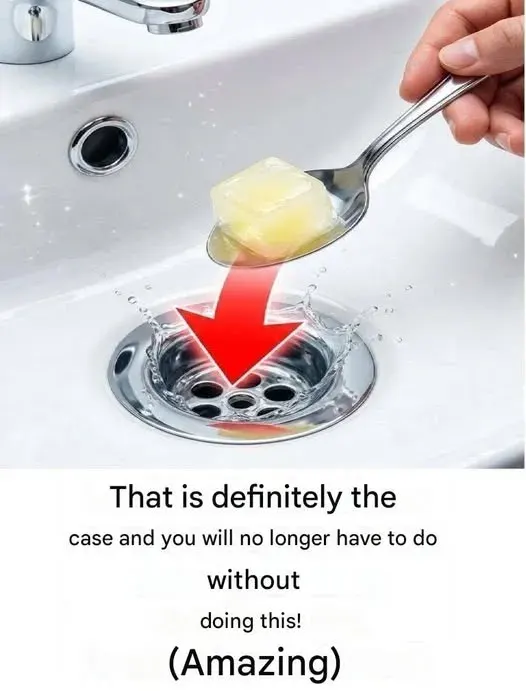
Step 1: Do not copy the spoonful in the picture
The yellow material on the spoon cannot be identified from the photo. It is not evidence of a permanent drain treatment. If it is butter, grease or another fat, putting it down a sink can contribute to blockage. Keep fats and unknown mixtures out of drains. For a slow drain, begin with the stopper and accessible debris, then use an appropriate mechanical method. No spoonful guarantees that a drain will never clog again.
Step 2: Check whether the problem is local
Run water in the affected sink, tub, or shower and check nearby fixtures. If only one drain is slow, you can usually work on that fixture; if several drains are slow or gurgling, stop and get professional help because the issue may be deeper in the plumbing or septic system, as the EPA notes for slow drains and gurgling sounds.
Step 3: Remove the stopper and visible debris
Take out the sink stopper, tub cover, or drain screen and pull away any visible buildup with a disposable towel or a simple plastic drain tool. The University of Georgia Extension recommends drain screens to reduce debris clogs, so clean or replace the screen before you put it back.
Step 4: Flush the drain with hot water
Run hot tap water for a minute or two to soften light soap residue and move loose material along. University of Georgia Extension includes regular hot-water flushing among preventive drain-cleaning habits, but hot tap water is the safer everyday choice when you do not know the pipe material.
Pour 1/2 cup baking soda into the drain, then slowly add 1/2 cup white vinegar. Let the fizzing settle for 10 to 15 minutes, then flush with hot tap water; baking soda is a mild alkali and vinegar is a mild acid, both described by University of Georgia Extension as basic household cleaning ingredients.
Step 6: Plunge with a tight seal
Add enough water to cover the cup of a sink plunger, place it squarely over the drain, and pump firmly for 15 to 20 seconds. Cover a second basin or overflow opening with a wet cloth so pressure goes toward the clog; University of Illinois Springfield lists a plunger as the basic tool for clogged fixtures.
Step 7: Snake the drain gently
If plunging does not work, feed a hand drain snake into the opening until you feel resistance. Turn the handle slowly, pull the cable back, remove the debris, and flush with hot tap water; do not force the cable if it catches or if the pipe feels fragile.
Step 8: Check odors and repeated slow draining
If the drain clears but a smell remains, test whether the odor is from the drain or from the water by filling a glass and smelling it away from the sink. University of Georgia Extension explains that odors can come from drains, plumbing, or the water source, so call the water provider or a plumber if the smell is not limited to one drain.
Step 9: Prevent the next clog
Use strainers in sink and tub drains, empty them often, and wipe greasy pans before washing. Miami-Dade County advises residents to keep fats, oils, and grease out of drains because they can harden in pipes and block flow over time.
Wrap-Up
The bottom line: clear what you can see, loosen light buildup with hot water and mild household ingredients, then use pressure or a hand snake for a deeper clog. Prevent the next blockage by catching debris and keeping grease out of the drain.
Frequently Asked Questions
- → Can baking soda and vinegar clear every clog?
No. They are best for light residue near the drain opening. A packed clog, solid object, or deep blockage usually needs plunging, a hand snake, or a plumber.
- → Is boiling water always safe for a drain?
Not always. Use hot tap water if you are unsure what your drain pipes are made of, and avoid sudden temperature changes on delicate fixtures.
- → How many times should I plunge before trying another method?
Try several short rounds while keeping a tight seal. If the water level does not change at all, move to a hand snake or call a plumber.
- → What should I do if the clog keeps coming back?
Recurring slow drains usually mean buildup is still present or the issue is farther down the line. Clean the stopper and trap area, use a strainer, and get professional help if several fixtures are slow at once.
- → Can I use this on a septic system?
Mechanical methods such as removing debris, plunging, and snaking are the best first steps. The EPA advises care with what goes down drains connected to septic systems, especially grease, oils, coffee grounds, and unnecessary additives.
- → What should never go down a kitchen drain?
Keep grease, fats, oils, coffee grounds, and large food scraps out of the sink. Put them in the trash or compost when appropriate instead of relying on the drain to carry them away.
References
This content was developed and refined using reliable sources.
- https://extension.uga.edu/publications/detail.html?number=C1114&title=cleaning-healthy-cleaning-green
- https://extension.uga.edu/publications/detail.html?number=C1016&title=your-household-water-quality-odors-in-your-water
- https://www.epa.gov/septic/frequent-questions-septic-systems
- https://www.miamidade.gov/global/economy/neighborhood-compliance/fats-oils-grease.page
- https://www.uis.edu/residencelife/facilities-operations/safety-security/plumbing