 Save
A painted purple fence, post, or tree usually means the landowner is warning people not to enter. In many U.S. states, purple paint is a legally recognized substitute for a no-trespassing sign when it is applied in the required size, height, spacing, and location. The safest practical response is simple: treat purple paint on a rural boundary as a private-property notice unless you know local law says otherwise. The color is not just a quirky country custom. In states such as Texas, official guidance says purple paint marks can provide notice that entry is forbidden when they follow the rules in the trespass statute Texas Parks and Wildlife Department.
What the Purple Fence Is Telling You
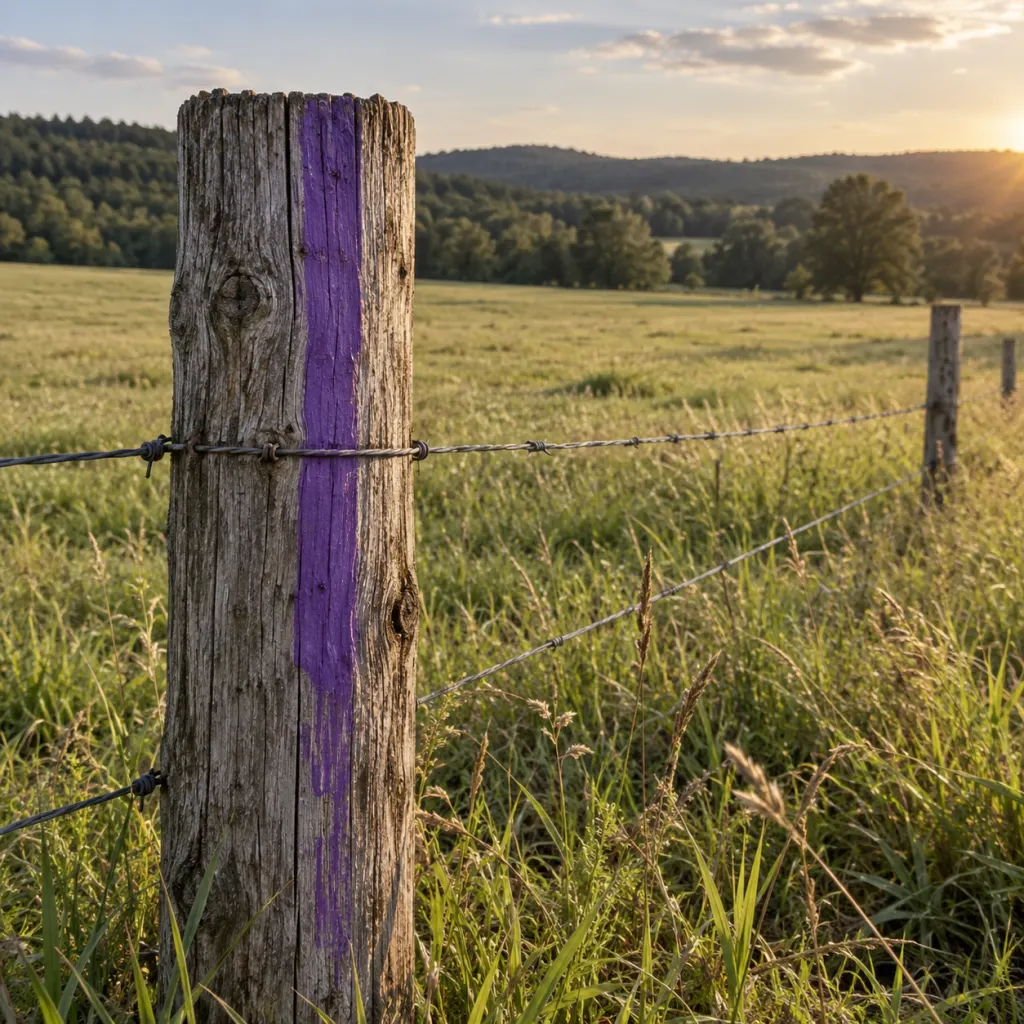
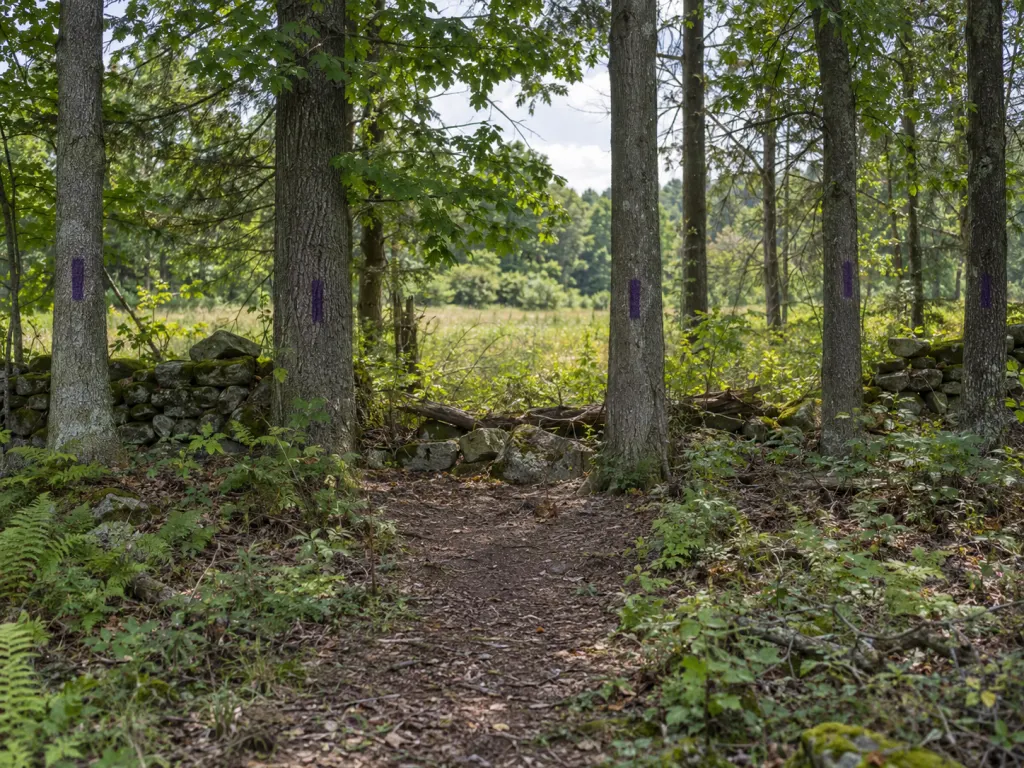
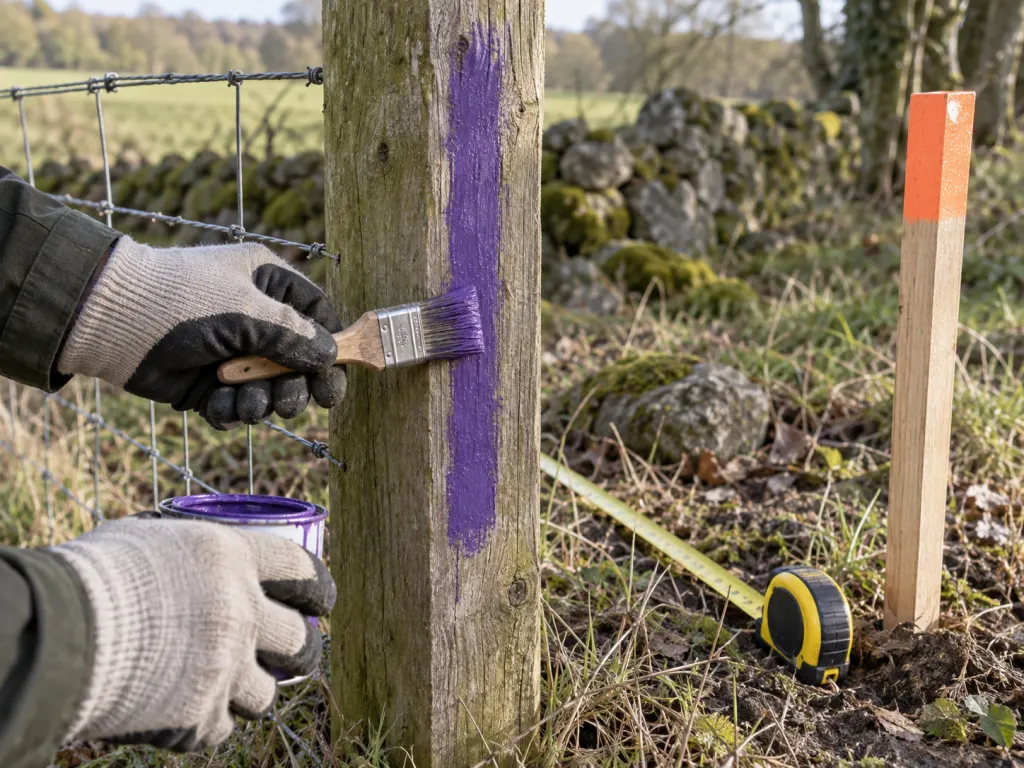
When purple paint appears in vertical marks on fence posts, trees, or boundary posts, it is commonly meant to say: do not enter this property without permission. A Texas State Law Library FAQ explains that Texas Penal Code Section 30.05 includes purple paint marks as a way to give notice of forbidden entry, with rules for mark size, height, visibility, and spacing Texas State Law Library. Alabama Cooperative Extension describes the same basic idea in that state: purple paint can substitute for no-trespassing signs on trees or fence posts, although posted signs are still encouraged because not everyone recognizes the paint system Alabama Cooperative Extension System.
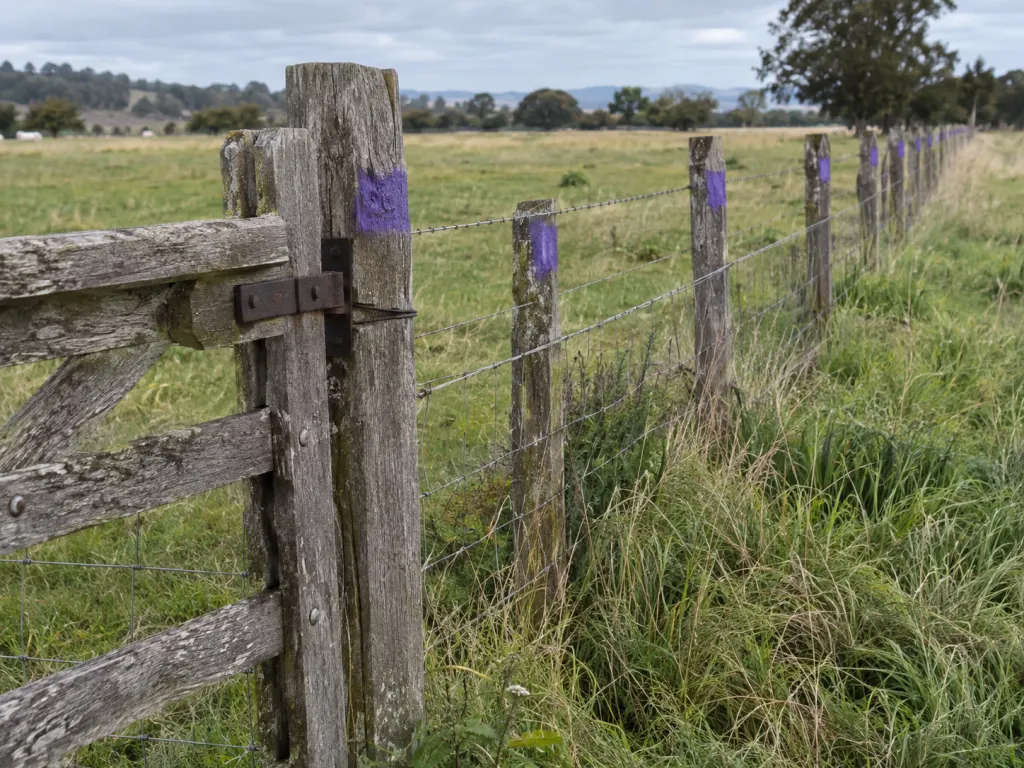
The key point is that the paint is not meant to mark a favorite color, a farm brand, or a decorative fence treatment. It is a boundary signal. A single purple board on a garden fence may be decorative, but repeated purple marks along a field edge, timber line, ranch fence, gate, or trail crossing should be read as a serious property notice. If you are walking, hunting, fishing, foraging, riding, or taking a shortcut and you see those marks, the sensible move is to turn around or find a public route.
Why Paint Became an Alternative to Signs
Paint laws exist because ordinary signs are imperfect on large rural properties. Signs fade, fall down, get hidden by brush, or disappear. A landowner with miles of fence line may have to replace many signs after storms, timber work, or vandalism. Paint is cheaper, harder to remove, and easier to repeat at intervals along a boundary. Alabama Cooperative Extension notes that purple paint is inexpensive, visible, and difficult to remove, while also cautioning that many people may not know what it means Alabama Cooperative Extension System.
How Purple Paint Marks Are Usually Applied
The exact rule depends on the state, but the pattern is consistent enough that the visual cue is recognizable. In Texas, official guidance says the marks must be vertical lines at least 8 inches long and at least 1 inch wide, with the bottom of the mark between 3 and 5 feet from the ground. Texas also says the marks must be readily visible and no more than 100 feet apart on forest land or 1,000 feet apart on other land Texas Parks and Wildlife Department. Alabama describes nearly the same dimensions for no-trespassing purple marks: vertical stripes at least 1 inch wide and 8 inches long, placed 3 to 5 feet above the ground, facing outward from the posted property, and spaced according to whether the land is forested or open Alabama Cooperative Extension System.
Look for these features when deciding whether the paint is likely a posted boundary:
- Repeated purple marks along a fence line, tree line, road edge, trail, or field border.
- Vertical stripes rather than random splashes or full decorative painting.
- Marks placed around chest height, where a person approaching the boundary can see them.
- Regular spacing, especially on posts, trees, or obvious entrance points.
- Placement that faces outward toward someone approaching the land.
What to Do When You See Purple Paint
If you see purple paint on a fence, tree, or post along what looks like a private boundary, stop before crossing. Do not step past the line to inspect it more closely, take a shortcut, retrieve an item, or follow a trail simply because there is no printed sign. In states that recognize paint posting, the paint itself may be the notice. In places where the law does not recognize purple paint, the marks can still be a strong practical signal that the landowner does not want uninvited visitors.
The best response is calm and ordinary: turn back, use a public road or marked public trail, and ask permission if you need access. If you are hunting, fishing, trapping, riding an ATV, collecting plants, cutting wood, scouting land, or crossing a farm road, written permission may be required for that activity even when casual entry rules are different. North Carolina State Extension explains that the North Carolina Landowner Protection Act includes written-permission requirements for hunting, fishing, or trapping on posted lands and that the visitor must carry that written consent while on-site NC State Extension.
Why the Meaning Can Change by State
Purple is common, but it is not universal. Some states use a different paint color, and some states do not treat paint as a substitute for a sign in the same way. University of Maryland Extension describes Maryland's blue paint law, which allows vertical blue oil-based paint strips as an alternative to signs, and notes that other states use different colors, including purple or aluminum-colored paint in some places University of Maryland Extension. That is why travelers should avoid assuming that one state's color rule applies everywhere.
For Landowners, Paint Is Not a Guessing Game
If you own rural land, purple paint works only when it matches the rule that applies where the land is located. A rough splash of paint on a few posts may communicate your intention to neighbors, but it may not satisfy a posting law. Before painting, confirm your boundary, read the state statute or agency guidance, and note any special rules for shared fences, rights-of-way, gates, leased land, easements, hunting access, and timberland. NC State Extension emphasizes that if there is any doubt about a property line, a professional survey is the better choice, because an incorrectly marked line can create conflict rather than clarity NC State Extension.
Common Mistakes Around Purple Fence Marks
The first mistake is treating purple paint as folklore. It is easy to hear about it through social media and assume the story is exaggerated, but official state and university sources do describe paint-posting systems. The second mistake is assuming purple paint works the same everywhere. The third is thinking paint replaces every other permission rule. A person may still need written consent for a specific activity, and a landowner may still choose to use signs at gates or road entrances because visitors are more likely to understand plain words.
Another mistake is confusing boundary paint with forestry, survey, or utility marks. Forest property can use different paint colors and patterns for line trees, corner trees, timber sales, or management work. Alabama Cooperative Extension notes that yellow, red, blue, orange, and other schemes are used for property-line marking in forestry, separate from the special significance of purple paint under that state's no-trespassing system Alabama Cooperative Extension System. Repetition, location, and local context matter.
How to Read the Situation in Real Life
In real life, you rarely get a perfect textbook example. The paint may be faded. A fence may be old. A trail may look inviting because other people have used it. Those details do not make private land public. If a boundary is marked, fenced, cultivated, gated, or posted in any other obvious way, pause and reroute. If you need to reach a neighboring parcel, a fishing spot, a utility line, or a public trail, look for a legal access point rather than crossing a painted boundary.
For neighbors, the best prevention is conversation before there is a dispute. If a shared fence is involved, do not paint marks that are visible from both sides without checking the applicable rule and speaking with the other owner. If you discover fresh purple paint where you believe a boundary is wrong, avoid removing or painting over it. Gather your deed, plat, survey, and photos, then work through the issue with the neighbor, a surveyor, or local counsel. Boundary disagreements become harder to resolve when either side changes physical markers in anger.
The Bottom Line
A painted purple fence or purple-marked tree line is best understood as a no-entry signal, especially in rural areas and in states with purple-paint posting laws. The marks usually have to meet specific requirements before they carry legal force, but a visitor should not wait to confirm technical details while standing at the boundary. Respect the mark, stay on public access, and ask permission before entering private land. For landowners, use purple paint only after checking the current local rule and confirming the boundary you plan to mark.
Wrap-Up
Purple paint on a fence, tree, or post is often a practical no-trespassing notice. In states that recognize purple paint laws, the marks may carry the same function as a posted sign if they meet the required size, height, visibility, and spacing rules. The details are local, so visitors should treat the paint as a boundary and landowners should verify the current rule before relying on it.
Frequently Asked Questions
- → Does a purple fence always mean no trespassing?
Not always, but it often does. In states with purple-paint posting laws, properly placed purple marks can function as a no-trespassing notice. In other places, the paint may not have the same legal effect, but it is still a strong signal to stay out unless you have permission.
- → Why do landowners use purple paint instead of signs?
Paint is cheaper to maintain across long rural boundaries, harder to remove, and less likely to disappear in bad weather. Signs are still useful at gates and entrances because more people immediately understand them.
- → What should I do if I see purple paint while walking or hunting?
Stop before crossing the boundary, turn around, and use a public route. If you want access, ask the landowner or authorized manager for permission. For hunting, fishing, trapping, or similar activities, check whether written permission is required.
- → Can I use purple paint on my own fence?
You can paint your fence any color for decoration, but using purple paint as a property notice should follow your state or local posting rule. Confirm the boundary, mark it in the required pattern, and consider using signs at main entrances too.
- → Is purple the only color used for property posting?
No. Purple is common in many states, but some places use other colors. Maryland, for example, has guidance for a blue paint system. That is why local law matters whenever you cross state lines or manage land in more than one place.
References
This content was developed and refined using reliable sources.
- https://www.sll.texas.gov/faqs/purple-paint-trespassing
- https://tpwd.texas.gov/landwater/land/habitats/faq/law_enforcement/trespass1.phtml
- https://www.aces.edu/blog/topics/forestry/forest-property-line-management
- https://content.ces.ncsu.edu/maintaining-forest-property-boundaries
- https://extension.umd.edu/resource/posting-your-property-trespass