 Save
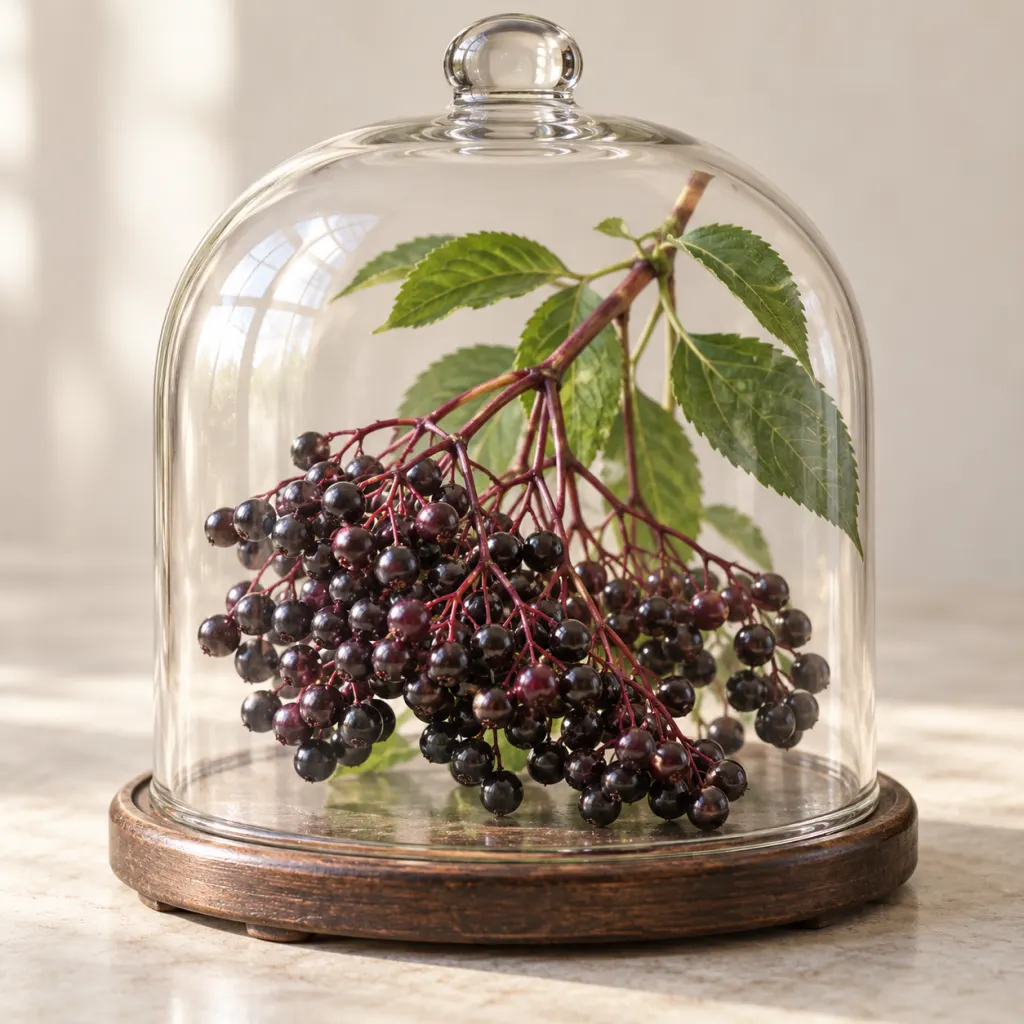
Elderberry’s clinical benefits remain uncertain. Small human studies have produced mixed findings, and laboratory results are not proof of dependable benefits in everyday use. The clearest practical boundary concerns safety: skip raw or unripe elderberries, leaves and stems, which contain toxic substances. These conclusions are supported by the National Center for Complementary and Integrative Health’s elderberry overview.
For someone comparing a jar of elderberry preserve with a bottle of gummies, the useful questions are concrete. What exactly is the product? What evidence applies to that preparation? What does its label actually establish? Answering those questions is more useful than judging a product by its purple color, traditional reputation or enthusiastic reviews.
Start by identifying the product category
Elderberry is an ingredient name, not a complete description of what is inside a package. The FDA explains that botanical supplements may be extracts or concentrates and can come as liquids, powders, tablets and other forms. Their category depends on their intended use and labeling, rather than appearance alone. See the FDA’s dietary supplement questions and answers.
Before comparing products, write down three details: the category printed on the package, the complete ingredient list and the stated serving. If one item is a conventional food and another is a supplement, keep those descriptions separate in your comparison. A shared ingredient name is only the beginning of the assessment. It does not answer whether the products serve the same purpose or whether the same research applies to both.
Laboratory findings answer a narrower question
Laboratory research can investigate how an elderberry preparation behaves under controlled experimental conditions. That work can provide reasons for further investigation, but it does not establish what will happen when someone consumes a commercial product. Cleveland Clinic specifically distinguishes findings from test tubes from effects demonstrated in people in its elderberry evidence discussion.
When reading a headline, look for the subjects of the experiment. Were they cells, animals or human participants? Then look for the outcome measured. A laboratory observation and a person’s experience of illness are different endpoints. If the headline jumps between them, return to the underlying study before accepting the conclusion. A useful article should make that distinction easy to see, without requiring the reader to interpret an impressive scientific term as a personal recommendation.

Human studies are limited and do not agree consistently
The NIH Office of Dietary Supplements reports that elderberry studies have mainly examined extracts rather than the berries themselves. Its review describes mixed clinical findings: some small studies reported favorable symptom outcomes, while a trial involving 87 participants with influenza found no difference in illness duration or severity. It also describes a systematic review whose studies were small, varied substantially and had quality limitations. See the Office of Dietary Supplements evidence summary.
This is preliminary evidence, rather than a settled answer. Ohio State likewise emphasizes that human studies have been small and that larger investigations are needed in its elderberry research overview. A cautious reading leaves room for further research while declining to turn an uncertain finding into a dependable expectation.
Read the comparison before accepting the conclusion
A controlled clinical trial compares an experimental group with a comparison group. In a double-blind study, participants and researchers do not know which group participants are in. These distinctions are explained in NCCIH’s guide to study design.
Use those details to ask more precise questions about an elderberry headline. What did the comparison group receive? Was the product elderberry alone or a mixture? What outcome was measured, and over what period? Does the report describe the exact preparation clearly enough to compare it with the product being advertised?
For example, imagine an advertisement linking to a study of one extract while selling a differently formulated gummy. Before accepting the connection, ask the seller to explain how the evidence applies to that specific gummy. If the explanation stops at the ingredient name, the central question remains unanswered. This is a reading exercise, not a reason to experiment with larger servings or recreate a research product at home.
Raw berries and stems are a separate safety issue
Raw or unripe elderberries, leaves and stems contain cyanide-producing substances. They can cause nausea, vomiting and severe diarrhea, and substantial exposure can cause serious illness. This is an established warning in the NCCIH safety information, separate from the uncertainty about clinical benefits.
Do not sample a raw berry to judge its suitability. This article provides neither a wild-plant identification method nor instructions for making a home preparation safe. A photograph, a familiar plant name or a family tradition is not a sufficient basis for that decision. For household use, keep the choice focused on clearly identified, properly processed products rather than experimenting with raw fruit or plant parts.
Keep culinary portions separate from research products
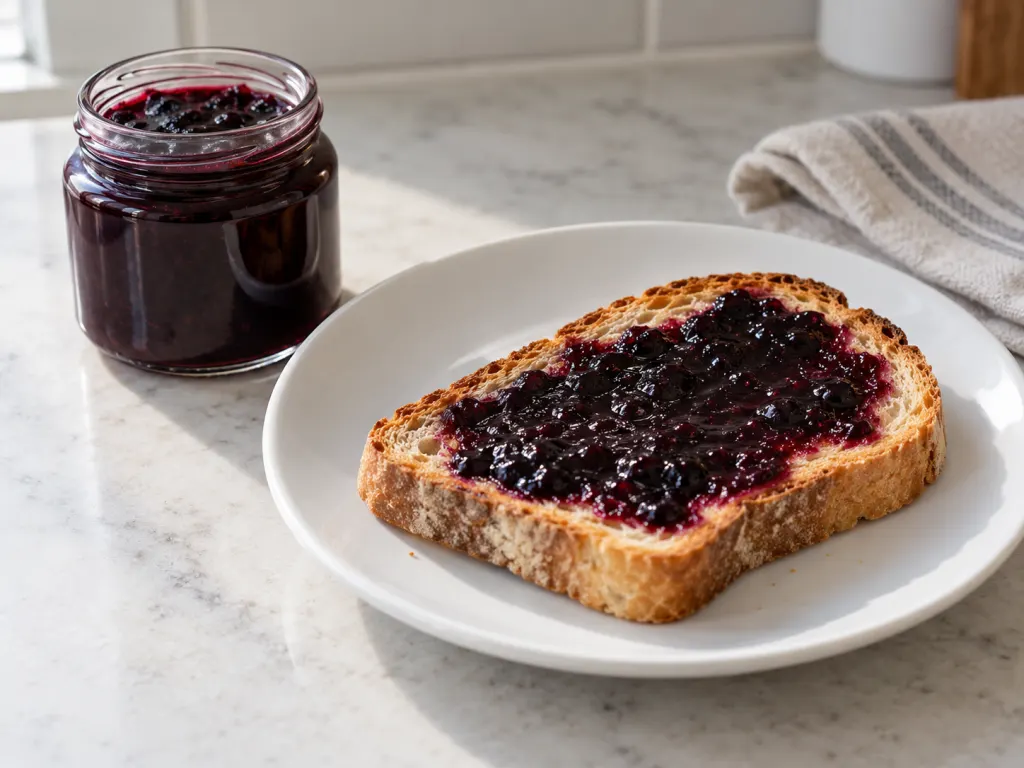
Cooked elderberries have a tart, earthy flavor and are used in foods such as jams and jellies, according to Cleveland Clinic’s overview. Enjoying that flavor is a different decision from evaluating a concentrated supplement. For an ordinary food, use the package’s serving information as a practical reference and consider how the item fits into the meal.
For example, if choosing a commercially prepared preserve for toast, compare the ingredients and the amount you would actually spread. Keep the comparison between foods you might use in the same way. Avoid turning a small culinary serving into an assumed equivalent of a research extract.
The Office of Dietary Supplements distinguishes properly processed commercial products from raw fruit in its elderberry safety discussion. That addresses a particular processing concern; it does not establish every commercial product’s suitability for every person.
A supplement on the shelf has not received FDA premarket approval
The FDA does not approve dietary supplements for safety and effectiveness before they are sold. Companies are responsible for meeting applicable safety and labeling requirements, and the agency can inspect facilities, review labeling and act against products that violate the law. The FDA’s consumer guide explains these responsibilities.
That distinction matters when assessing the confidence a package seems to convey. Availability in a familiar shop, professional packaging or a prominent online listing should not be read as an approval decision about clinical benefits. Equally, describing supplements as completely outside regulation would be inaccurate. Ask which specific requirement or check a seller is referring to, rather than accepting an undefined assurance.
Use the label to gather information, not to settle the evidence
Supplement labels must provide serving information and identify dietary ingredients and their amounts, as described in the FDA labeling overview. Use that information to prepare a focused comparison:
- Record the exact product. Include its manufacturer, form and full name.
- Read every ingredient. Note whether it is elderberry alone or a combination.
- Check the stated serving. Keep units and product forms visible in your notes.
- Ask for the relevant evidence. Look for a clear connection between the product and the study cited.
- Identify missing information. An unanswered question is a reason to pause the purchase.
Consider making this comparison before looking at testimonials. It keeps the discussion anchored to information that can be checked and gives you a useful record if you later ask a qualified professional about the product.
Prepare a useful conversation about personal suitability
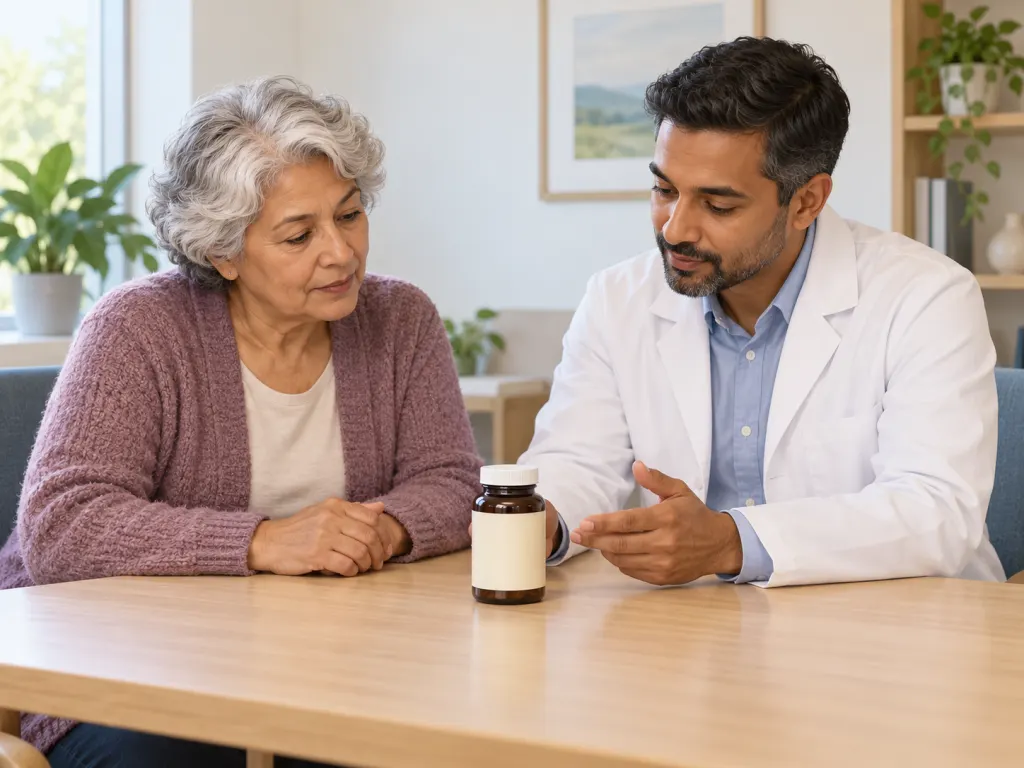
The FDA advises discussing supplements with a qualified health professional before buying or using them. Its consumer guidance also cautions against assuming that a product described as natural is safe.
Bring the actual package or clear photographs of all its panels. Explain why you are considering it and what question you want answered. Instead of asking only whether elderberry is good, ask whether this particular product makes sense for your circumstances and whether the evidence is strong enough to justify its cost. A useful outcome may be a decision to leave it on the shelf. You do not need to resolve every uncertainty by trying a product yourself.
If someone may have eaten unsafe plant material
If you suspect poisoning after someone consumes raw elderberries or other plant parts, contact a poison center promptly. In the United States, Poison Help is available at 1-800-222-1222; elsewhere, contact the regional poison service. Mayo Clinic recommends seeking poison-center guidance even when a person is stable and has no symptoms. Call 911 or the local emergency number immediately for difficulty breathing, unconsciousness or seizures. See Mayo Clinic’s poisoning first-aid guidance.
Be ready to describe what was consumed, approximately how much and when. Keep any relevant container or packaging available for the call. The purpose is to give the expert enough information to assess the exposure, rather than trying to decide its seriousness from an online description.
Apply the same questions to other ingredient claims
For related reading, see Papaya Seeds: Evidence, Safety and Parasite Claims and Magnesium Benefits and Supplement Safety. Keep each ingredient’s evidence separate. A useful comparison asks how the preparation was defined, what outcome was studied and which uncertainties remain. It does not transfer a conclusion from one ingredient to another simply because both appear in wellness products.
Wrap-Up
Decide what question you are trying to answer before choosing an elderberry product: flavor, product quality and clinical evidence require different information. Read the category and ingredient details, ask how any cited study applies, and keep unanswered questions visible. For personal decisions, take the specific package to a qualified health professional. There is no obligation to buy a supplement while the evidence remains uncertain.
Frequently Asked Questions
- → Why can two elderberry research summaries sound different?
They may emphasize different studies or limitations. Ohio State notes that human studies have been small and that larger investigations are needed. Check which preparation and outcome each summary discusses before comparing its conclusion. See Ohio State’s research overview.
- → Does a dark purple color tell me how much elderberry a product contains?
Do not use color as your measuring tool. Start with the ingredient information and ask the manufacturer about anything unclear. NIH notes that analyses have identified dilution or substitution in some elderberry supplements, illustrating why appearance alone is insufficient. See the Office of Dietary Supplements discussion.
- → Can I compare a jam serving directly with an extract used in research?
That comparison requires information about both preparations. Clinical research has primarily used extracts rather than the berries themselves, according to the NIH evidence summary. Keep a culinary serving and a study preparation separate unless there is a documented basis for connecting them.
- → What should I ask a company that advertises research?
Ask for the study, the exact product investigated and an explanation of how it matches the item being sold. Then check the comparison group and measured outcome. NCCIH’s study-design guide explains the distinction between experimental and comparison groups.
References
This content was developed and refined using reliable sources.
- https://www.nccih.nih.gov/health/elderberry
- https://www.fda.gov/drugs/frequently-asked-questions-popular-topics/dietary-supplements-questions-and-answers
- https://health.clevelandclinic.org/elderberry-benefits
- https://ods.od.nih.gov/factsheets/Immunefunction-HealthProfessional
- https://health.osu.edu/wellness/exercise-and-nutrition/what-to-know-about-elderberries
- https://www.nccih.nih.gov/health/know-science/how-to-make-sense-of-a-scientific-journal-article/methods/design-of-the-study
- https://www.fda.gov/consumers/consumer-updates/fda-101-dietary-supplements
- https://www.mayoclinic.org/first-aid/first-aid-poisoning/basics/art-20056657