 Save
Evidence for using papaya seeds against intestinal parasites is insufficient for a personal health recommendation. Small human studies raise research questions, but their findings do not establish what someone should do at home. Suspected parasites warrant professional assessment. The 2007 pilot study and Cleveland Clinic’s guidance help explain that distinction.
The useful question is what each piece of evidence actually concerns: ripe fruit, seeds, a particular experimental preparation or a confirmed infection. Keeping those subjects separate makes the discussion clearer and avoids turning a food into a medical instruction.
Ripe papaya flesh and seeds are different subjects
Ripe papaya contains vitamin C, beta-carotene and dietary fiber. Cleveland Clinic lists approximately 67 calories, 2.6 grams of fiber and 95.6 milligrams of vitamin C for a small papaya weighing 157 grams. Those are fruit nutrition figures; they are not a nutrient analysis of a spoonful of seeds. The same source describes the seeds as crunchy and peppery. See the fruit nutrition information.
A nutrient table answers a composition question. It does not, by itself, answer whether another part of the plant has a useful clinical effect. When reading a headline about papaya, first identify which part was examined. Otherwise, familiar facts about the orange flesh can lend unjustified credibility to a separate claim about the seeds.
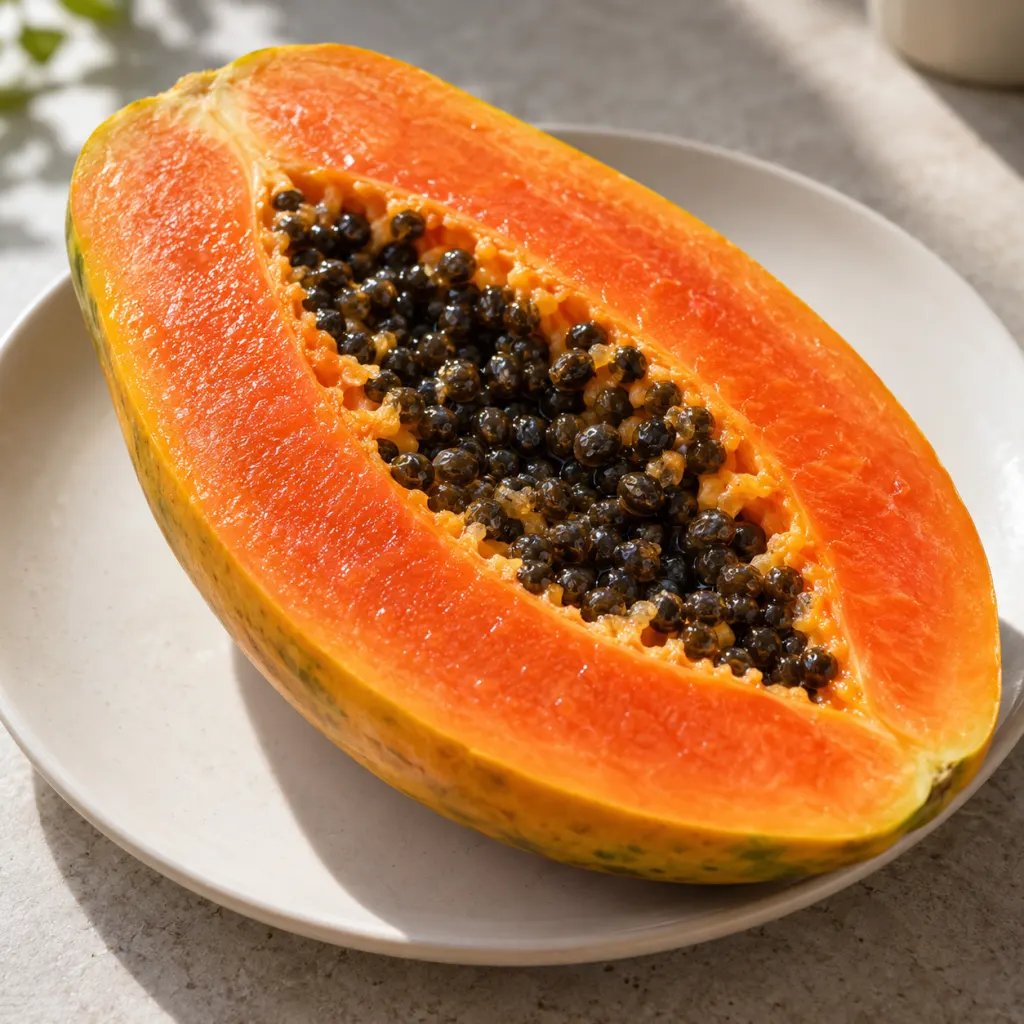
Preparation matters when comparing claims. Fresh seeds, dried seed powder and an extract should not be treated as interchangeable descriptions. Ask whether the article identifies the actual material studied and whether the product being discussed matches it. A photograph of a whole papaya supplies none of that information. It shows the fruit, while the underlying research may concern a much more specific preparation.
What the small 2007 human study can tell us
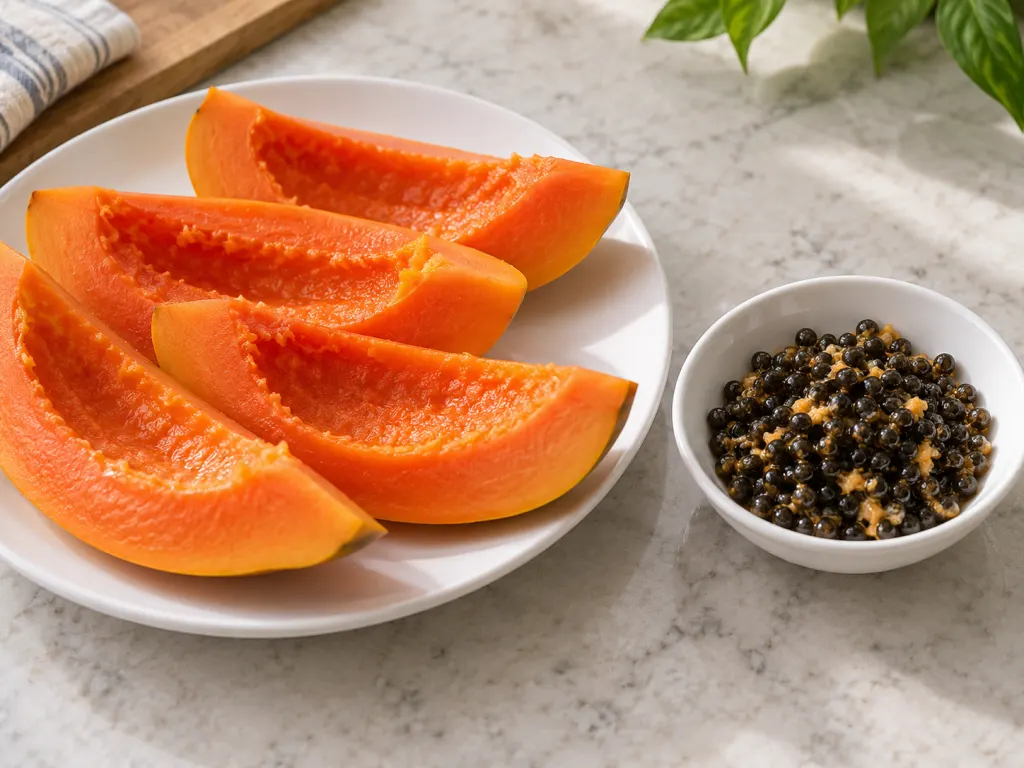
A frequently cited pilot study involved 60 Nigerian children who had intestinal parasites identified through stool microscopy but no symptoms. Researchers compared a dried papaya seed preparation combined with honey against honey alone and examined stool samples again seven days later. The seed-preparation group had more negative follow-up samples. The authors called for larger comparisons with established clinical options. Read the original study abstract.
This was a small study of a particular preparation in a particular population. Its short follow-up cannot establish long-term safety or predict results for adults with unexplained symptoms. The appropriate interpretation is that it identified a question for further investigation. Extending it into a general household recommendation would require evidence beyond what this pilot supplies.
Later research still needs careful interpretation
A 2018 preliminary study examined school porridge fortified with papaya seeds and assessed changes in stool findings over two months. It reported a reduction in roundworm egg counts in the seed-fortified group. That outcome concerns a measured change in a school-based research setting; it does not establish that every participant was free of infection or that a homemade preparation would produce the same result. See the 2018 study.
When weighing such research, look beyond whether the result was described as positive. Ask how participants were selected, what comparison was used, which organisms were assessed and how long follow-up continued. A narrow finding deserves a narrow conclusion. It should not quietly expand into a claim covering all parasites, all ages or all seed products.
Laboratory, animal and human findings also answer different questions. An experiment involving cells or animals cannot by itself establish a personal recommendation for people. When someone cites an animal study, ask to see the human evidence separately. Likewise, counting several papers is less useful than checking whether they independently examined the same preparation, population and outcome. These are questions to ask of a claim, rather than reasons to dismiss research automatically.
Intestinal parasites are not one interchangeable condition
The CDC distinguishes several broad parasite groups. Protozoa are microscopic, single-celled organisms, while helminths are worms. Intestinal protozoa can spread through contaminated food or water and person-to-person contact. Different organisms have different characteristics, so a general reference to parasites does not identify what a person might have. Read the CDC overview.
This distinction matters when judging a papaya seed claim. Evidence concerning one organism should not be presented as evidence concerning every intestinal parasite. A responsible explanation names the organism studied and preserves that boundary when describing the result.
Professional assessment starts with the right question
The CDC explains that test selection depends on symptoms, other medical conditions and travel history. Several kinds of testing exist, and more than one may be needed. Stool examination is one option; some suspected infections require additional laboratory methods. There is no single blood test that looks for every parasitic infection. See the CDC’s diagnostic guidance.
That makes the clinical question more specific than whether parasites are possible in general. A useful discussion asks which infection fits the circumstances and which test can investigate it. Ask the clinician what a proposed test looks for and what its limitations are. The name of a test alone does not explain the entire assessment.
What stool testing actually involves
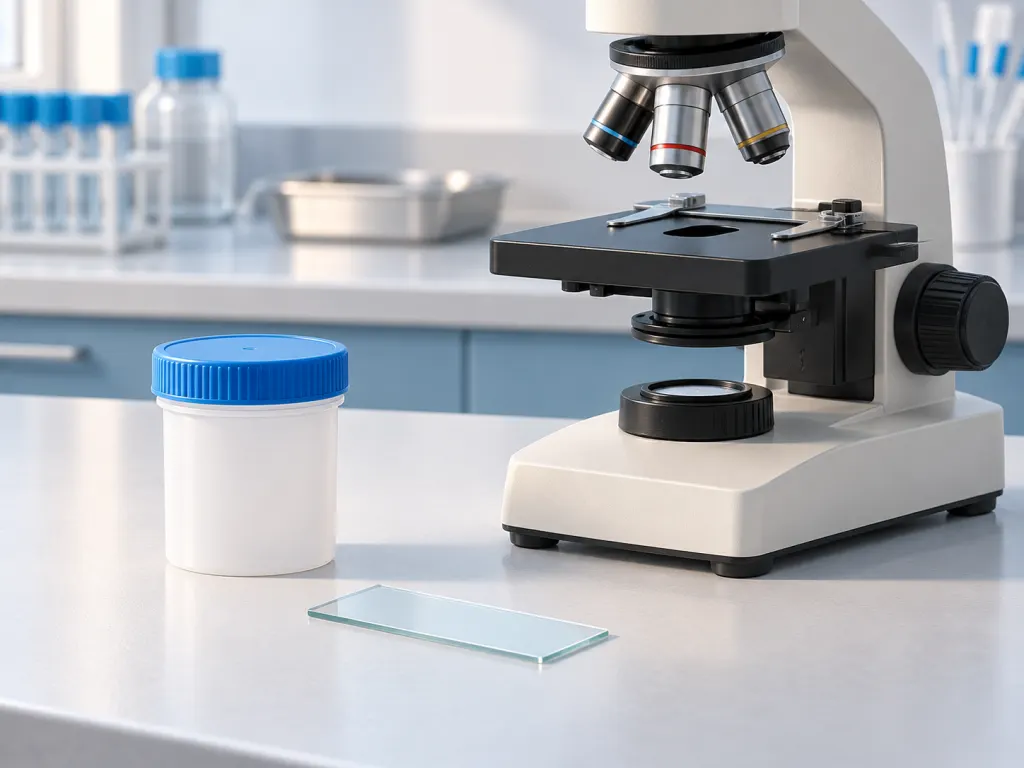
An ova and parasite examination looks for intestinal parasites and their eggs in a stool sample under a microscope. MedlinePlus explains that several samples over different days may be needed because parasites do not necessarily appear in every sample. Follow the collection kit’s instructions, including directions to avoid contamination with urine or toilet water and to return the container as instructed. Read the MedlinePlus test explanation.
This is a structured laboratory process. A social media photograph or a personal description cannot supply the same examination. If a sample is requested, ask the clinic about any unclear collection or delivery instructions before collecting it. Accurate handling is part of making the result useful.
Prepare a clear account for the appointment
The CDC identifies symptoms and travel history as relevant to choosing tests. Organizing that information beforehand can make the conversation easier. See the factors used in assessment. Consider bringing a brief written account:
- When the concern began and what has changed since then.
- Recent travel destinations and approximate dates.
- Any water, food or household exposure you want to ask about.
- The names or packaging of seed products or supplements you have used.
- The specific online claim that prompted your concern.
You do not need to arrive with a diagnosis. The purpose of the notes is to make your observations and questions easy to discuss.

Edibility does not settle every safety question
Cleveland Clinic describes papaya seeds as edible but warns that eating too many can cause stomach upset and diarrhea. That is a reason to distinguish ordinary food use from repeated consumption for a health objective. Read its seed safety discussion.
For any seed product, ask what is known about that exact preparation. A label calling something natural does not answer questions about its contents, intended use or evidence. This article provides no seed schedule or quantity for a medical purpose.
Assess toxin-removal claims separately
Claims about removing unspecified toxins require their own evidence. NCCIH reports that studies of commercial body-cleansing programs have generally been few and of low quality, with problems including small participant groups and weak study design. Its review does not establish broad benefits from these regimens. Read the NCCIH evidence review.
A useful starting question is: which substance is supposedly being removed, and how was that measured? If the explanation never identifies a substance, an appropriate assessment or a meaningful outcome, the claim remains too vague to evaluate. Evidence about stool findings in a parasite study cannot simply be transferred to a separate claim about the liver or kidneys. Each claim needs evidence that directly addresses it.
The same reading habit applies to other ingredient headlines. Our articles on avocado flesh and avocado seed claims and interpreting oregano research explore related evidence questions. For any ingredient, keep track of the plant part, preparation, study population and actual outcome before deciding what a headline means.
When to arrange medical care
The NHS advises seeing a doctor if you find a large worm or a piece of worm in stool, have unexplained weight loss, or have persistent sickness, diarrhea or abdominal discomfort. Its worm guidance also emphasizes reporting travel abroad, including travel within the previous two years, because some infections take time to cause symptoms. Read the NHS guidance.
The NHS describes established clinical care for confirmed worm infections. The practical implication is to seek an assessment and discuss the appropriate next step with a qualified professional. Bring questions about papaya seeds into that conversation rather than using an online experiment to decide what condition you have. Keep any follow-up appointments or testing instructions clear before leaving.
Symptoms that need more urgent attention
Seek urgent medical advice for bloody diarrhea, repeated vomiting that prevents you from keeping fluids down, or persistent signs of dehydration. Sudden severe abdominal pain or vomiting blood requires emergency assessment. These are general warning signs, not evidence of a particular parasite. Use the urgent or emergency service appropriate to your location. See the NHS urgent-care boundaries.
Do not wait to complete a seed experiment before seeking help for those symptoms. The immediate decision is how urgently you need assessment; identifying the cause comes through the clinical evaluation.
Wrap-Up
The evidence should stay attached to the question it actually examined. Papaya fruit nutrition, experimental seed preparations, laboratory findings and an individual’s clinical assessment are separate matters. Read the original study description, check the population and outcome, and bring personal concerns to a qualified professional. A useful explanation makes those boundaries visible instead of turning a preliminary result into instructions.
Frequently Asked Questions
- → Can I use papaya fruit nutrition figures for the seeds?
No. Cleveland Clinic presents its nutrient figures for papaya fruit and discusses the seeds separately. Do not apply the listed vitamin C or fiber amounts to a different weight of seeds or to a seed extract. See the nutrition information.
- → Does one negative stool result settle every parasite question?
Not necessarily. The CDC explains that diagnosis can require several specimens or different kinds of testing. Ask the clinician what your result means in the context of your symptoms and exposure history. Read the testing guidance.
- → What does ova mean on a laboratory request?
Ova means eggs. An ova and parasite examination looks for intestinal parasites and their eggs in stool using microscopy. The clinic or laboratory should provide collection instructions for the requested sample. See the MedlinePlus explanation.
- → Should I mention older travel when discussing a possible worm infection?
Yes. NHS guidance advises mentioning travel abroad within the previous two years because some worm infections can take a long time to cause symptoms. Include destinations and approximate dates rather than assuming only your most recent trip matters. Read the travel-related advice.
References
This content was developed and refined using reliable sources.
- https://health.clevelandclinic.org/papaya-benefits
- https://pubmed.ncbi.nlm.nih.gov/17472487
- https://pubmed.ncbi.nlm.nih.gov/30526582
- https://www.cdc.gov/parasites/about/index.html
- https://www.cdc.gov/parasites/testing-diagnosis/index.html
- https://medlineplus.gov/lab-tests/ova-and-parasite-test
- https://www.nccih.nih.gov/health/detoxes-and-cleanses-what-you-need-to-know
- https://www.nhs.uk/symptoms/worms-in-humans
- https://www.nhs.uk/symptoms/diarrhoea-and-vomiting