 Save
Grapes contain vitamin K, and vitamin K helps the body make proteins needed for normal blood clotting. That is the useful connection: an everyday fruit contributes a nutrient with an established function. Cleveland Clinic identifies vitamin K among the nutrients in grapes, while MedlinePlus explains its clotting role. Cleveland Clinic; MedlinePlus.
For the kitchen, the practical questions are straightforward: what counts as a portion, how whole grapes compare with juice, and how to fit them into meals you already enjoy. This article separates those everyday decisions from claims that go beyond the evidence.
What vitamin K actually does
Vitamin K is a fat-soluble vitamin. The liver uses it to make certain clotting proteins, known as clotting factors. This is a normal nutrient function, rather than a special property unique to grapes. MedlinePlus describes that role directly. MedlinePlus: Vitamin K.
The distinction matters when reading food headlines. A statement about what a vitamin does in the body answers a different question from whether eating a particular fruit produces a specific medical outcome. The first does not establish the second. Here, the supported message is about composition and normal function; it is not a reason to assign a medical task to a bowl of fruit.
A useful contribution without a nutrient ranking
Cleveland Clinic lists vitamin K alongside vitamin C, potassium, copper and several B vitamins in its discussion of grapes. That identifies grapes as a contributor to nutrient intake; it does not establish a required serving for an individual reader. Cleveland Clinic: Grapes.
You can make a practical shopping decision without turning that list into a competition. Choose grapes because you like their flavor, they fit your budget and you have a plan to use them. A fruit does not need to win a nutrient ranking to earn a place in the kitchen. Equally, a favorable nutrient description is not an instruction to buy larger quantities than you want.
Use an adult portion reference, not a grape count
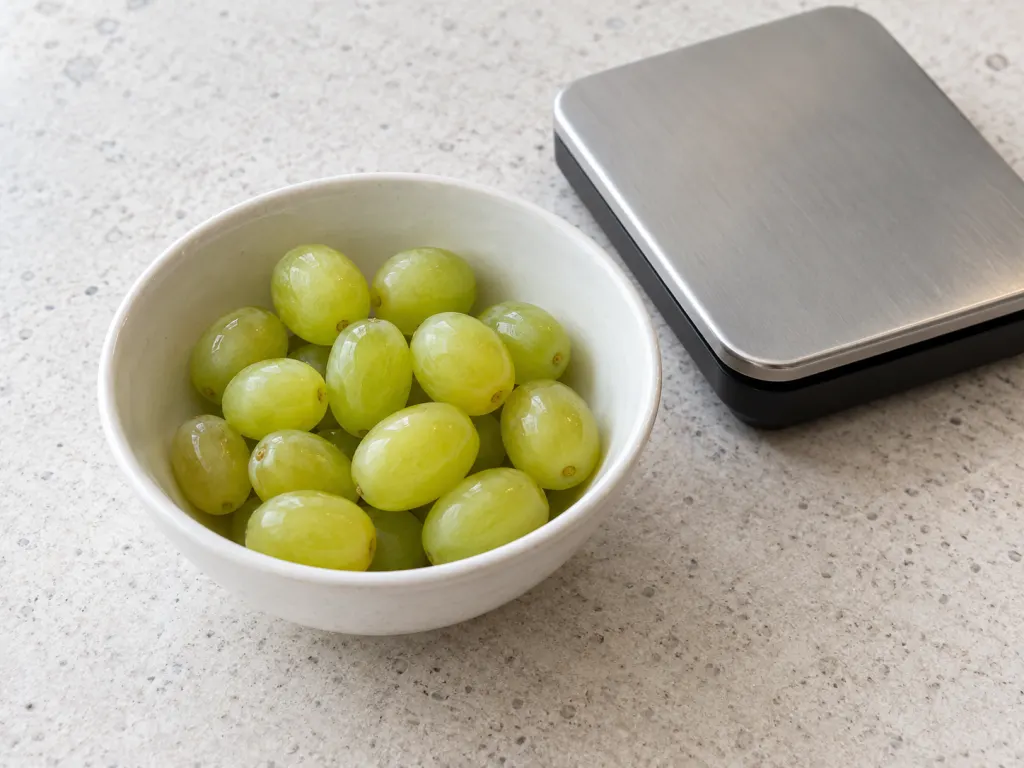
The NHS uses 80 g as an adult portion of fruit or vegetables within its 5 A Day guidance. That provides a useful reference for serving grapes. It is a food-group portion, not a prescribed amount for achieving a particular clotting effect. NHS: 5 A Day portion sizes.
If you want to picture that amount, weigh a serving once in a bowl you regularly use, subtracting the bowl's weight. Treat the result as a visual reference for future shopping and serving. A fixed number of individual grapes is less useful for this purpose because it leaves their size unspecified. There is no need to turn an ordinary snack into a counting exercise.
Make the portion fit the occasion
Think about what you are preparing before filling the bowl. A small side of grapes beside lunch, grapes shared at the table and grapes served as a separate snack are different occasions. Choose the presentation that suits the meal rather than assuming every occasion calls for the same container.
- For a desk snack, put the amount you intend to eat into a separate bowl.
- For lunch, serve grapes beside the other foods you have chosen.
- For a shared table, use a serving spoon and offer individual dishes.
- For shopping, decide how many occasions you want the bunch to cover.
These are organizational choices, not rules about medical effects. Their purpose is to make the purchase and serving decision deliberate. You can adjust the plan next time based on what you actually used.
Whole grapes and juice follow different guidance
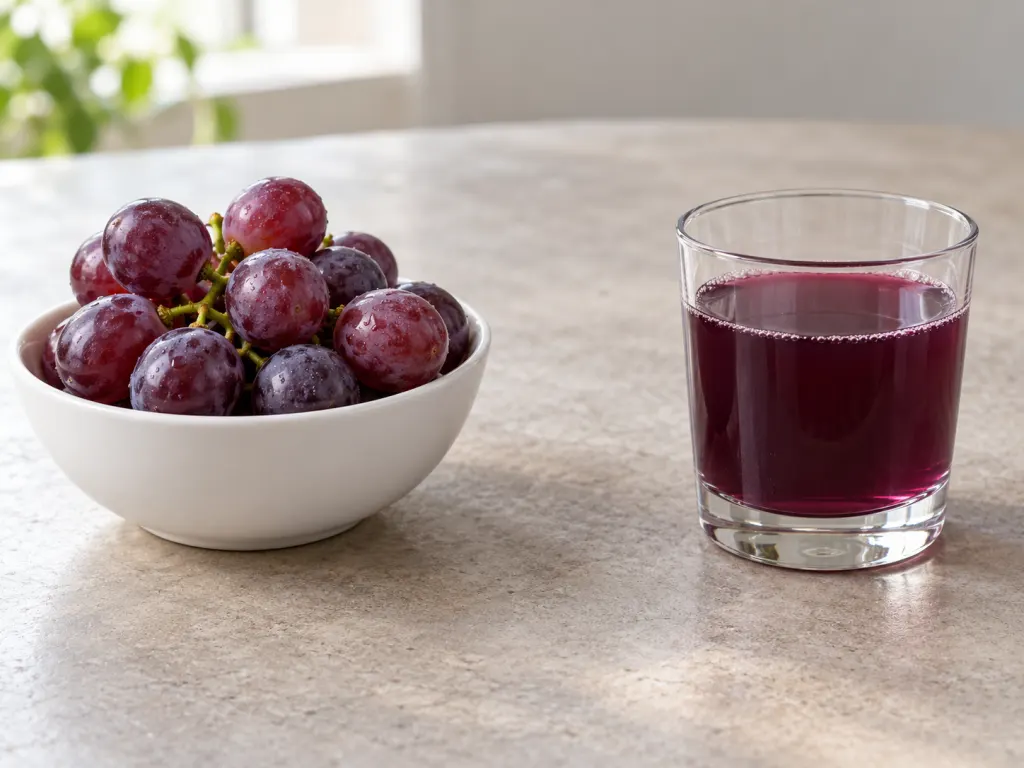
The NHS distinguishes whole fruit from juice and smoothies. Its guidance limits fruit juice, vegetable juice and smoothies to a combined 150 ml daily, counting as no more than one 5 A Day portion altogether. Drinking several glasses does not add several fruit portions within that system. NHS: Juice and smoothie portions.
At the table, choose the form that matches what you want to serve. A bowl of grapes is a whole-fruit snack; a glass of grape juice is a drink. Do not carry the portion reference for one across to the other. When planning a shopping list, write them as separate items rather than treating the bottle as an automatic substitute for the bunch.
Keep grapes within a varied eating pattern
The NHS Eatwell Guide recommends variety across food groups and explains that balance can be considered over a day or a week, rather than achieved perfectly at every meal. Grapes can occupy one place within that broader pattern. NHS: The Eatwell Guide.
For example, you might serve grapes alongside a sandwich, add them to a plate that already includes other foods, or choose a different fruit on another occasion. These are serving suggestions, not a formula. For more ideas to compare, browse our guide to fruit choices and normal clotting. Keep the focus on the complete meal rather than expecting one ingredient to carry the whole plan.
Vitamin K comes from a range of foods
Grapes are only one possible contributor. The NHS lists green leafy vegetables, vegetable oils and cereal grains among vitamin K sources, and says a varied, balanced diet should provide what most people need. This is a broader food-pattern message, rather than a requirement to select a particular fruit. NHS: Vitamin K.
When planning meals, separate two questions: which foods do you enjoy, and what does your overall pattern include? That approach gives you more useful choices than repeatedly asking whether a single ingredient is the best. If grapes are unavailable or expensive, make another ordinary fruit choice and consider the rest of the menu as a whole.
Consistency matters when you have an individual eating plan
If your care team has asked you to keep vitamin K intake consistent, follow that individual plan and ask your prescriber before making substantial changes. MedlinePlus emphasizes consistency and individualized professional guidance for people given this advice. MedlinePlus: Vitamin K guidance.
A useful conversation starts with a description of your usual meals. Explain whether grapes are an occasional purchase, a regular snack or part of a planned change in eating habits. Bring the question you actually need answered: whether the proposed change fits your existing plan. A general article cannot set that personal boundary from the name of one food alone.
Keep juice-only plans separate from ordinary fruit eating
Eating grapes with regular meals is a different proposition from following a juice-only or highly restrictive program. NCCIH describes limited, low-quality research on such programs and notes that severe restrictions can leave people without all the nutrients they need. NCCIH: Evidence and safety of restrictive programs.
For an everyday kitchen decision, there is no need to build a special regimen around this fruit. Plan ordinary meals, choose a serving you intend to eat and judge promotional claims separately from the food itself. A photograph of grapes or a list of vitamins does not supply evidence for a restrictive program. Those are separate claims requiring their own appropriate research.
Read grape claims by asking what was actually measured
Before accepting a broad claim, look for a clear description of the subject: whole grapes, juice, an extract or a named compound. Then ask what the source actually establishes. Does it describe nutrient composition, explain a normal function or report an outcome in people? Those categories should remain distinct.
Also check whether a serving amount and comparison are given. A claim that leaves both unstated offers little help with a real shopping decision. Finally, follow the cited link and look for the relevant passage. A recognizable institution's name is a starting point for checking evidence, not permission to attach every appealing statement to that institution. Use the same questions when comparing grapes with kiwi and its nutrient profile.

Handle grapes as fresh produce
The FDA recommends washing hands before produce preparation and rinsing produce thoroughly under running water before eating or preparing it. It advises against washing fruit with soap, detergent or commercial produce wash. Use clean utensils and keep ready-to-eat produce separate from raw meat, poultry and seafood. FDA: Selecting and serving produce safely.
For a simple grape snack, arrange a clean colander and serving bowl before starting. Rinse the fruit, then transfer it to the clean dish. The FDA also advises discarding rotten produce and drying washed produce with a clean cloth or paper towel. These are routine preparation practices, separate from any discussion of vitamins. FDA produce preparation guidance.
Choose a serving style you will actually use
Keep the presentation simple. For an adult snack, a small bowl of whole grapes may be all you want. At lunch, arrange them beside the meal rather than making a separate elaborate dish. For a shared plate, choose a vessel that is easy to pass. No special garnish, powder or concentrated ingredient is necessary to put grapes on the table.
Before buying another bunch, review the previous purchase. Was the quantity useful? Did you prefer serving grapes at breakfast, lunch or later in the day? Would a smaller purchase suit the next week? These practical observations can guide the next shopping trip without turning preference into a claim about superior nutrition.
Wrap-Up
The useful takeaway is modest: grapes can be an enjoyable whole-fruit choice, and their vitamin K belongs within the wider discussion of normal nutrient function. Use portion guidance as a practical reference, keep whole fruit and juice guidance distinct, and bring personal eating-plan questions to a qualified professional.
Frequently Asked Questions
- → Must I eat grapes every day for vitamin K?
No particular fruit is required. The NHS describes vitamin K as available from a range of foods and emphasizes a varied, balanced diet. Choose grapes according to preference and how they fit your meals. NHS: Vitamin K.
- → Is an 80 g portion a personal daily limit?
No. It is the NHS adult fruit-and-vegetable portion reference for its 5 A Day framework, rather than an individualized limit for grapes. A personal eating plan may require separate guidance. NHS: Portion sizes.
- → Which grape color should I buy?
This article does not establish a nutritional winner between grape colors. Choose according to flavor, availability, price and the serving you have planned. A different color alone is not a reason to infer a different medical outcome.
- → What should I ask if I already follow a specific eating plan?
Describe your usual grape portions and the change you are considering. Ask your qualified health professional whether that change fits the plan you already follow. A concrete example, such as adding grapes to lunch several days a week, makes the question easier to discuss.
References
This content was developed and refined using reliable sources.
- https://health.clevelandclinic.org/health-benefits-of-grapes
- https://medlineplus.gov/ency/article/002407.htm
- https://www.nhs.uk/live-well/eat-well/5-a-day/portion-sizes
- https://www.nhs.uk/live-well/eat-well/food-guidelines-and-food-labels/the-eatwell-guide
- https://www.nhs.uk/conditions/vitamins-and-minerals/vitamin-k
- https://www.fda.gov/food/buy-store-serve-safe-food/selecting-and-serving-produce-safely
- https://www.nccih.nih.gov/health/detoxes-and-cleanses-what-you-need-to-know