 Save
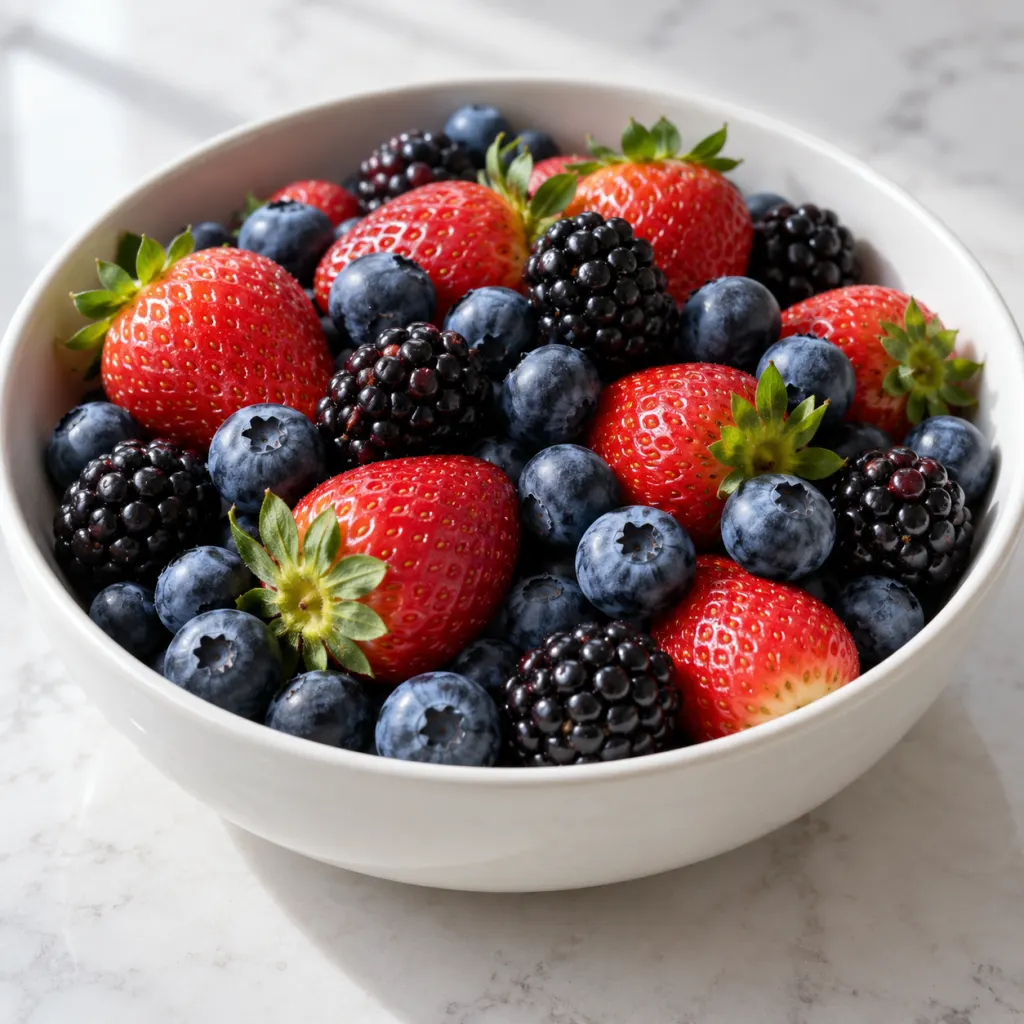
Berries bring fiber and vitamin C to the table, alongside their color and flavor. Strawberries, blueberries and blackberries can all have a place in everyday meals; choosing among them need not become a nutrition contest. Iowa State University identifies fiber and vitamin C as berry contributions, and the University of Minnesota describes both in blackberries. Iowa State berry guide; University of Minnesota blackberry guide.
The useful questions are practical: What does a serving contribute? What does the word antioxidant actually explain? Which form suits your shopping budget and the meal you want to make? This guide separates those questions so that an attractive bowl of fruit does not need an exaggerated promise attached to it.
Start with the food, rather than a ranking
Whole or cut fruit provides dietary fiber, while fruit juice generally contains little or none, according to New Mexico State University. That makes the form of the food an important part of the discussion. A bowl of berries and a berry-flavored drink deserve separate consideration, even when their packaging uses similar pictures. NMSU explains whole fruit and juice.
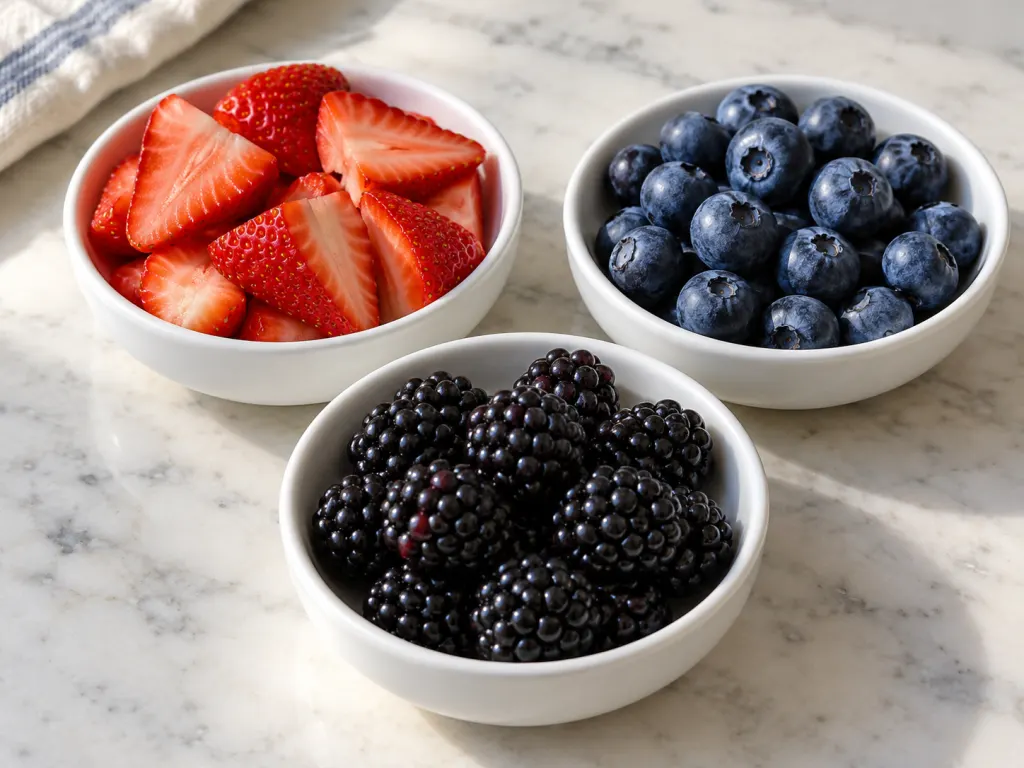
For your own kitchen, begin with preference and intended use. You might want sliced strawberries on breakfast oats, blueberries scattered over yogurt, or blackberries served alongside lunch. These are serving suggestions, not a hierarchy. There is no need to buy a mixed pack every time: choosing one variety today and another on a later shopping trip is a straightforward way to introduce variety.
Vitamin C has a normal nutritional role
Vitamin C is an essential nutrient that humans must obtain from food. It participates in collagen formation and functions as an antioxidant. The NIH Office of Dietary Supplements lists approximately 49 milligrams of vitamin C in half a cup of fresh sliced strawberries. That is a reference amount for a specified food and serving, rather than a measurement of every bowl. NIH vitamin C fact sheet.
MedlinePlus also explains that vitamin C assists iron absorption and identifies several berries among its food sources. These are ordinary nutrient functions. They give a sound reason to include vitamin C-containing foods without assigning special powers to a particular fruit. MedlinePlus on vitamin C.
Fiber is part of the contribution too
Antioxidant language can overshadow the more familiar components of fruit. The University of Minnesota lists about 8 grams of fiber in one cup of blackberries, along with carbohydrate and a small amount of protein. This figure describes that serving of blackberries; it should not be assigned to a cup of every berry or to an unspecified frozen mixture. University of Minnesota blackberry nutrition information.
When considering a packaged product, check the serving size before interpreting its fiber figure. Ask whether the number refers to the amount you plan to eat. For an informal breakfast at home, you might simply decide how much fruit fits alongside the other ingredients. For a precise comparison, use matching quantities and matching food forms.
What antioxidant does, and does not, tell you
Antioxidants are involved in a complex system. NCCIH explains that the body makes some antioxidants and obtains others from foods, and that different antioxidants have different properties. Vitamin C is one example. The presence of an antioxidant therefore describes one aspect of composition; it is not a complete assessment of a food or a prediction of an individual result. NCCIH explains antioxidants.
NCCIH also distinguishes purified antioxidant supplements from foods containing mixtures of substances. Findings from one form cannot simply be transferred to another. Observational research on eating patterns can show associations, but other foods and lifestyle factors may help explain them. The practical conclusion is to discuss berries as food, while treating claims for concentrated products as separate questions requiring their own evidence. NCCIH discusses interpretation of the evidence.
Use a portion guide as a reference point
In the UK's 5 A Day framework, the NHS defines an adult fruit or vegetable portion as 80 grams. Its practical examples include about seven strawberries. These are approximate serving illustrations within a particular public-health framework, rather than a special daily target for berries. The same guidance emphasizes a variety of fruit and vegetables. NHS portion guidance.
If you want to understand what 80 grams looks like in your usual bowl, weigh it once and observe the amount. Counting pieces is convenient, but strawberries differ in size. Also keep separate the amount used in a nutrient reference, the amount counted by a portion guide, and the amount you choose for a particular meal. They answer different questions.
Choose a form that fits the job
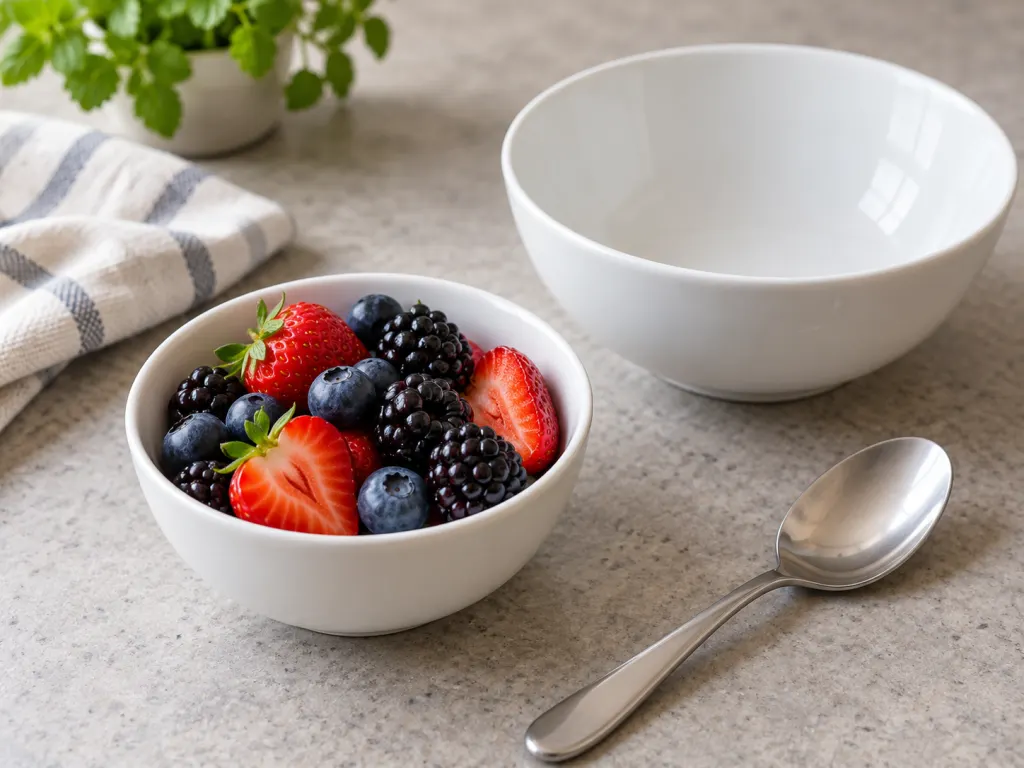
Fresh fruit is only one option. NMSU includes fresh, frozen, canned and dried fruit in its fruit-group guidance and recommends choosing frozen fruit without added sugars or sauces. These categories describe different products, so read the package rather than assuming every berry item contains only fruit. NMSU fruit-buying guidance.
Before shopping, decide whether you want fruit for a visible topping, a mixed breakfast bowl or a cooked dish. Then compare products intended for that use. If a package contains several ingredients, consider whether those ingredients suit your plan. A sweetened fruit preparation may be exactly what a dessert calls for, but that does not make its label interchangeable with a bag containing only berries.
Build variety around meals you already make
You do not need a separate berry routine. Choose one familiar meal and decide where fruit would be welcome. Start with a serving idea that requires little extra preparation, then change the variety when you feel like something different. Consider these combinations as options:
- Breakfast oats: finish a bowl with sliced strawberries, keeping the fruit visible rather than adding it automatically to every ingredient.
- Yogurt: serve blueberries on top or put them in a small bowl alongside it.
- Lunch: offer blackberries as a separate fruit component rather than expecting them to suit every savory dish.
- A shared dessert: place a bowl of mixed berries on the table and let people choose their own amount.
For a specific breakfast idea, explore Strawberries and Cream Oats. Use the recipe for its culinary purpose, while considering the complete serving rather than attributing the whole dish's nutritional character to its fruit topping.
Cooking changes the vitamin C question
Vitamin C content can decrease during cooking and prolonged storage, according to MedlinePlus. The NIH Office of Dietary Supplements likewise notes that vitamin C is sensitive to heat. This means a reference value for fresh sliced strawberries should not be presented as the exact vitamin C content of a baked strawberry dish. MedlinePlus food-source guidance; NIH on vitamin C in foods.
Let the dish determine the approach. If you want fresh fruit as a topping, add it at serving. If you want berries incorporated into baking, follow a suitable recipe and enjoy that preparation on its own terms. A useful menu can include both. There is no need to describe cooked fruit as a failed version of fresh fruit, or to attach a precise nutrient claim to a dish that has not been analyzed.
Keep drinks and whole-fruit portions distinct
The NHS treats juice and smoothies differently from whole fruit in its counting guidance: their combined total is limited to 150 milliliters a day and counts as no more than one 5 A Day portion. That is guidance for those drinks, not a volume limit for a bowl of whole berries. NHS guidance on juices and smoothies.
When choosing between a drink and a bowl, decide which you actually want. Avoid using a berry image on a bottle as a shortcut for understanding its contents. For a broader look at another fruit's contributions, see Kiwi Nutrition: Vitamin C, Collagen and Portions.
Buy carefully and handle berries simply
Iowa State recommends firm, plump, dry blueberries and strawberries, with green stems on strawberries. The University of Minnesota advises choosing blackberries without bruising or leakage. Use these checks when inspecting a pack, including the fruit visible near its base. Iowa State selection guidance; University of Minnesota selection guidance.
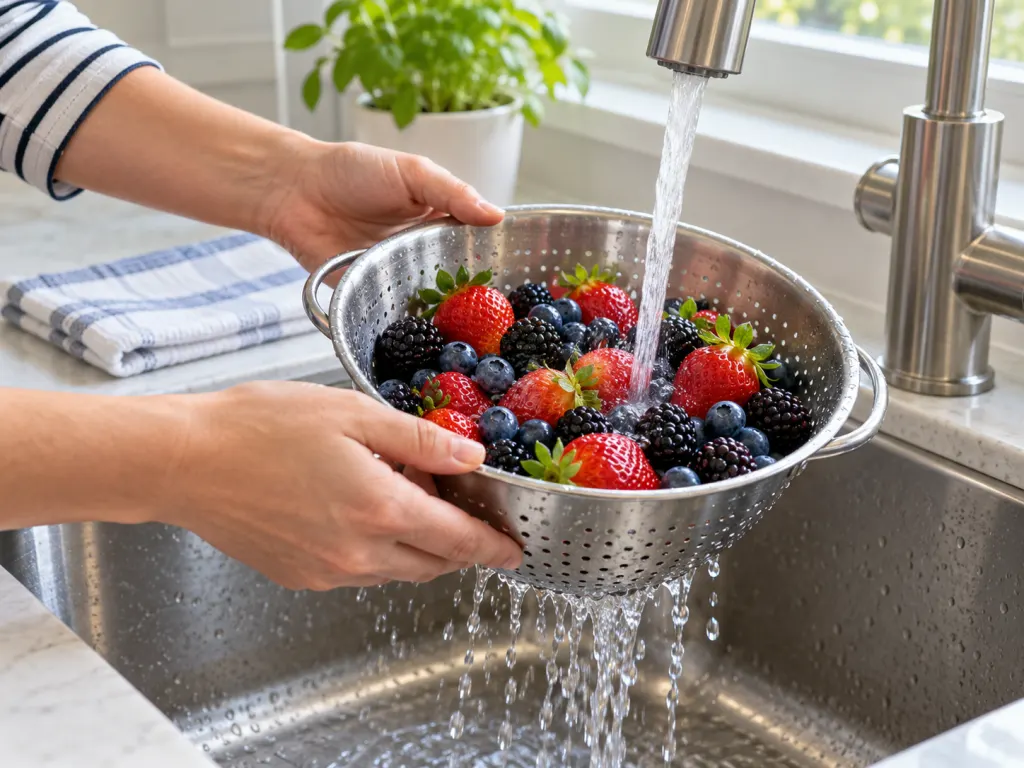
The FDA advises keeping perishable produce, including strawberries, in a clean refrigerator at 40°F or below, approximately 4°C. Keep fruit separate from raw meat, poultry, seafood and utensils used for them. Start preparation with clean hands. Wash produce under running water before preparing or eating it; the FDA does not recommend soap, detergent or commercial produce wash. Dry it with a clean towel and discard produce that looks rotten. Washing reduces surface bacteria but does not eliminate them. FDA produce-handling guidance.
For berries specifically, Iowa State recommends rinsing in a colander with cool running water right before eating. Make that a serving-time task rather than an extra step you must remember later. Iowa State cleaning guidance.
Make the next purchase a manageable one
Before buying several packs, name the meals where you intend to use them. For example, plan strawberries for two breakfasts and blackberries for a shared lunch. If you cannot identify a use for another pack, leave it off the list. The aim is a purchase that matches your household's habits, not an impressive collection.
You can also keep a brief preference note: which variety people chose, which serving idea worked, and whether the package size suited the week. This is a shopping aid, not a health score. On the next trip, adjust one thing: quantity, variety or intended dish. That gives you a concrete decision without turning an ordinary food choice into a daily calculation.
When reading a promotional claim, ask what it actually describes. Is it a nutrient amount, a laboratory property, a study of an eating pattern or a finding about a particular product? If the connection to an ordinary serving is unclear, return to the information you can use: ingredients, serving size, preparation and price.
Wrap-Up
Choose berries for meals you enjoy and consider their actual food form and portion. Their fiber and vitamin C contributions are useful starting points; antioxidant terminology requires more interpretation. Keep shopping manageable, use reference figures for the foods they describe, and follow simple produce-handling guidance. A varied fruit routine can be practical without a ranking or a promised outcome.
Frequently Asked Questions
- → Does a mixed bowl count as several fruit portions?
Count the amount rather than the number of varieties. Under the NHS framework, an adult fruit portion is 80 grams. Mixing strawberries, blueberries and blackberries does not automatically turn one small bowl into three portions. NHS portion guidance.
- → Do I need to buy fresh berries every time?
No. NMSU includes frozen fruit in the fruit group and recommends options without added sugars or sauces. Choose a product that suits your intended dish, and follow its preparation instructions. This does not mean every fresh and frozen product has an identical nutrient profile. NMSU fruit guidance.
- → Can I use the strawberry vitamin C figure for a mixed bowl?
Only for the specified strawberry amount, not the whole mixture. The NIH reference lists 49 milligrams for half a cup of fresh sliced strawberries. A bowl with different fruit proportions or preparation needs its own calculation if you require an estimate. NIH vitamin C food table.
- → Does an antioxidant claim explain how a product will work for me?
It provides limited information by itself. NCCIH distinguishes antioxidants in foods from purified supplements and explains that their effects can differ. Evaluating a product requires evidence relevant to that product and the claimed outcome. NCCIH antioxidant guidance.
- → How can I include berries without changing my whole breakfast?
Choose one addition: sliced strawberries beside toast, blueberries over your usual oats, or blackberries alongside yogurt. Begin with the meal you already like. There is no need to combine all three varieties, create a new routine or calculate an antioxidant score before serving breakfast.
References
This content was developed and refined using reliable sources.
- https://www.nccih.nih.gov/health/antioxidant-supplements-what-you-need-to-know
- https://medlineplus.gov/ency/article/002404.htm
- https://www.nhs.uk/live-well/eat-well/5-a-day/portion-sizes
- https://www.fda.gov/food/buy-store-serve-safe-food/selecting-and-serving-produce-safely
- https://pubs.nmsu.edu/_e/E141
- https://ods.od.nih.gov/factsheets/VitaminC-HealthProfessional
- https://spendsmart.extension.iastate.edu/produce-item/berries-strawberries-blueberries-raspberries
- https://reallifegoodfood.umn.edu/fruits/blackberries