 Save
Restrictive diets are not a routine recommendation for ADHD. Some children improved in supervised studies, but later research found that an elimination diet offered no advantage over a supported healthy diet. The practical starting point is balanced eating, regular meals and professional review of any repeated food-related concerns. The NHS guidance for families supports balanced meals and a food diary when particular foods seem relevant; the TRACE randomized trial helps explain why broad restriction deserves caution.
For parents reading striking diet claims online, the useful questions are specific: Who participated? What did the comparison group receive? Who judged improvement? And could families maintain the approach? Those details matter more than an isolated percentage.
ADHD is a neurodevelopmental condition, not a grocery verdict
ADHD involves brain development and can affect attention, activity levels and impulse control. It begins in childhood and can continue into adulthood. The CDC describes ADHD as a neurodevelopmental disorder and identifies genes as an important part of risk, while acknowledging that its causes are not fully understood.
That framework does not support explaining ADHD simply as the result of processed food. A shopping basket cannot establish why someone has ADHD, and a family should not be blamed for a child's diagnosis. Questions about the quality or variety of someone's meals are useful questions in their own right. They are different from explaining the origin of a developmental condition.
Different dietary approaches ask different questions
A balanced eating pattern, avoidance of a particular additive and a broad elimination diet are different interventions. A few-foods diet substantially narrows the foods allowed during an assessment period. Research may then include controlled food reintroduction. In contrast, a healthy-diet comparison can involve structured advice about everyday eating without such extensive exclusions. INCA and TRACE used different comparisons, so their results need to be read separately. See the INCA study description and the TRACE study description.
Before considering any proposal, ask what it actually requires. Is it a manageable change to meal planning, or does it remove several familiar food groups? Does it have a defined assessment question, review date and exit plan? Calling everything an ADHD diet conceals these practical differences.
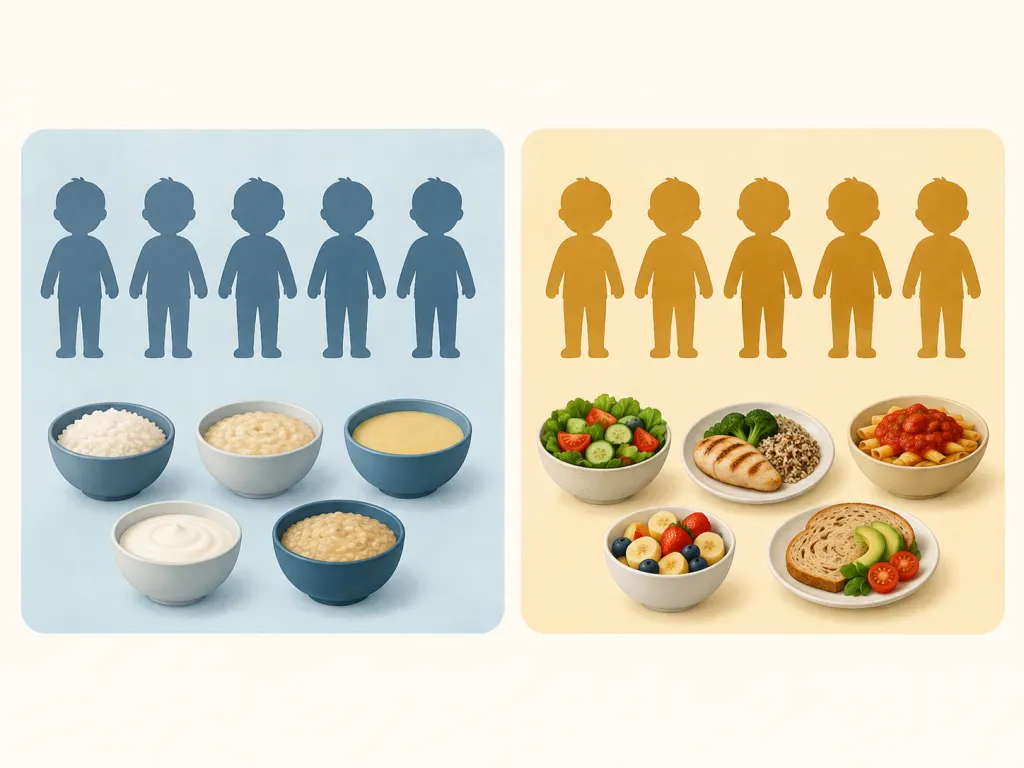
What the INCA trial actually enrolled
The 2011 INCA randomized trial enrolled 100 children total, aged 4-8: 50 were assigned to a restricted elimination diet and 50 to healthy-eating instructions for five weeks. The assessing pediatrician was unaware of allocation, but families knew their group. The study reported a substantial difference in symptom ratings favoring the elimination group.
Only initial responders qualified for the subsequent blinded food-challenge phase. In that phase, symptoms returned in 19 of 30 children after food challenges. That percentage describes a selected subgroup, not the original 100 participants or children with ADHD generally. The short duration and families' awareness of allocation also limit interpretation. These details come from the published INCA abstract.
TRACE used a more demanding comparison
The later TRACE trial randomly assigned 165 children aged 5-12 to an elimination diet or a structured healthy diet: 84 and 81 children, respectively. Both groups followed a dietary program, making the comparison more informative about the additional value of elimination. Allocation was unblinded, and the five-week outcome combined parent and teacher ratings of ADHD and emotion-regulation difficulties.
Partial-to-full response occurred in 35% of the elimination group and 51% of the healthy-diet group. The elimination approach showed no superiority. A separate usual-care group was not randomized, so comparisons with it need additional caution. These findings, published online in 2023 and in a 2024 journal issue, are reported in the TRACE short-term results.
Longer follow-up adds a feasibility question
The TRACE one-year follow-up also favored the healthy-diet pathway over the elimination pathway. At one year, 24% still followed the elimination diet and 37% still followed the healthy diet. However, participants could add or switch to usual care after the initial five weeks. The later outcomes therefore describe evolving care pathways, rather than a clean year-long comparison of diet alone. The one-year TRACE report explains this design.
For families, feasibility deserves a place beside symptom scores. Ask how a proposed plan would work at school, during shared meals and when another adult is cooking. A research result cannot answer those household questions, but a useful clinical conversation should make room for them.

How NICE guidance frames dietary restrictions
NICE dietary recommendations, reproduced in Essex Partnership University NHS Foundation Trust guidance, advise against generally recommending the removal of artificial colors and additives for children with ADHD. They describe limited short-term evidence for few-foods diets and uncertainty about long-term effectiveness and potential harms.
That uncertainty is meaningful. A short study cannot establish what years of restriction would mean for a growing child. Equally, the recommendation leaves room for individual concerns to receive a proper assessment. It does not turn every report about food into a reason for broad exclusions.
IgG testing did not identify useful food exclusions in INCA
In INCA, symptom recurrence after food challenges was independent of the foods' IgG blood-test classification. The researchers discouraged using these tests to prescribe diets. An IgG panel therefore cannot usefully select an ADHD exclusion list on the basis of that trial. This finding is reported in the INCA abstract.
A food diary should record observations, not assign blame
The NHS suggests keeping a food-and-drink diary when particular items seem to affect symptoms. Its value is in providing a clearer account for discussion. A single difficult afternoon is an observation, not a confirmed explanation.
Keep entries brief and concrete. For example, write that homework took longer than usual and required repeated reminders, rather than describing the child as badly behaved. Include ordinary days as well as difficult ones. A useful format could record:
- The food or drink, approximate time and whether a meal was missed.
- The specific difficulty noticed, its timing and its setting.
- Sleep, unusual events and changes in the day's schedule.
- Any changes already agreed with the clinical team.
- A teacher's or another caregiver's observations, where available.
These details help a conversation remain specific. They also make it easier to notice when several things changed together. Agree with the clinician how much recording is useful; an elaborate diary that the household cannot sustain may answer less than a simple one completed consistently.
What to ask a pediatric dietitian before excluding foods
Do not begin a broad restrictive diet without professional supervision. Ask for a registered dietitian with pediatric experience and coordination with the child's ADHD clinician. The British Dietetic Association's food guidance emphasizes regular eating, variety and individualized dietetic advice.
Bring a description of what the child actually eats, including familiar foods they reliably accept. Ask how the proposed plan would provide enough food and maintain nutritional adequacy, what growth information needs review, and how progress would be assessed. Request a clear explanation of the review date and who would oversee any reintroduction.
Discuss the practical burden as well: packed lunches, costs, cultural foods, siblings and the child's own preferences. These are reasonable planning questions, not signs that a parent lacks commitment. Ask what would happen if the approach proved unhelpful or too difficult to maintain. A proposal should include that answer before a family starts.

Make everyday eating easier to organize
Regular meals and a varied eating pattern are supported by the British Dietetic Association. Translating that broad advice into a household routine does not require a special menu. Begin with practical obstacles: Is breakfast rushed? Does the lunch container come home untouched? Is an afternoon snack difficult to find when everyone arrives home?
Possible organizational changes include choosing two familiar breakfasts, keeping lunch equipment together, or making a short list of snacks the child already enjoys. Frozen, canned and ready-prepared ingredients can be practical choices when cooking time is limited. These are suggestions for making meals manageable, not claims about changing ADHD symptoms.
For ordinary breakfast planning, our practical morning guide to eggs at breakfast offers a separate food-focused starting point. Choose foods according to individual needs and preferences. Avoid treating any particular breakfast as a test of whether a family is managing ADHD correctly.
Keep dietary questions within the existing care plan
Continue following prescribed care and take prescribed medicines as directed. Bring dietary concerns to the clinician responsible for that care. The National Institute of Mental Health places regular meals and routines within broader support and emphasizes following prescribing instructions.
At a review, explain what has changed and what you hope to understand. Useful questions include whether food intake needs a separate assessment, who can provide pediatric dietetic support, and how school observations should be included. If appetite, weight or eating variety is concerning, state that directly rather than presenting it only as a question about attention.
Adults should also be cautious about applying children's trial results to themselves. Adult assessment considers history, current difficulties and other possible explanations. Mayo Clinic's adult ADHD overview describes that broader process. A food response alone does not establish an adult ADHD diagnosis.
Read diet headlines with the study design beside them
When a post gives an impressive percentage, look for its denominator. Does it refer to everyone randomized, people who completed the program, or only initial responders? Then check the comparison group and follow-up period. A five-week result and a year-long outcome answer different questions.
Also separate a research finding from a ready-to-use recommendation. A supervised study has eligibility rules, assessments and resources that a social-media food list may omit. Our guide to evaluating morning spoonful wellness claims explores a related habit: asking what the evidence actually measured before adopting a daily routine.
The most useful conclusion here is proportionate. Dietary research deserves attention, and individual observations deserve a hearing. Neither removes the need to consider comparison groups, uncertainty, adequate nutrition and the child's wider daily life.
Wrap-Up
Restrictive-diet research in ADHD has produced mixed findings. INCA's selected food-challenge subgroup should not be confused with its full randomized sample, and TRACE found no advantage for elimination over a supported healthy diet. For families, the useful next steps are manageable meals, clear observations and coordinated clinical and dietetic advice while continuing prescribed care.
Frequently Asked Questions
- → Did 100 children follow the restrictive diet in INCA?
No. There were 100 children in the randomized trial overall: 50 in the elimination-diet group and 50 in the comparison group. Its later food-challenge findings concerned selected initial responders. See the INCA study record.
- → Can these studies tell me whether a restrictive diet will help my child?
They cannot reliably predict an individual child's response. TRACE found no advantage for the elimination approach over a structured healthy diet, despite some participants improving in each group. Discuss individual concerns with the child's clinician rather than choosing a plan from a group response rate. See the TRACE results.
- → What if school and home observations disagree?
Keep both accounts and describe the setting, task and timing. Avoid choosing only the account that fits an expected food connection. Bring the difference to the clinical review. It may help clarify what should be observed next without making an immediate change to the child's food choices.
- → Does the one-year TRACE follow-up prove a diet-only effect?
No. Participants could add or switch to usual care after the initial five weeks. Later outcomes therefore reflect care pathways that could include additional support. The follow-up report makes this design feature explicit.
- → What should I bring to a dietitian appointment?
Bring a brief description of usual meals, foods the child accepts, practical difficulties and any existing food diary. Write down your main question and what a manageable plan would look like at home and school. Ask whether the dietitian needs growth records or information from the ADHD clinician before the appointment.
References
This content was developed and refined using reliable sources.
- https://www.cdc.gov/adhd/about
- https://www.nhs.uk/conditions/adhd-children-teenagers
- https://pubmed.ncbi.nlm.nih.gov/21296237
- https://pubmed.ncbi.nlm.nih.gov/37430148
- https://pubmed.ncbi.nlm.nih.gov/40059999
- https://eput.nhs.uk/wp-content/uploads/2025/04/section-6-treatment-of-adhd-feb-2020.pdf
- https://www.bda.uk.com/resource/diet-behaviour-and-learning-children.html
- https://www.nimh.nih.gov/health/publications/attention-deficit-hyperactivity-disorder-what-you-need-to-know
- https://www.mayoclinic.org/diseases-conditions/adult-adhd/diagnosis-treatment/drc-20350883?p=1