 Save
Ever tried cherimoya? Its edible flesh contains fiber, which can contribute to normal digestion as part of a varied diet. The University of Rochester’s nutrition entry also lists vitamin C. The broader connection between fiber-containing foods and digestion is supported by NHS guidance; it is not evidence of a special effect unique to cherimoya. For preparation, eat the flesh and discard the skin and every seed.
Know which fruit you are buying
Cherimoya is Annona cherimola. University of California Cooperative Extension distinguishes it from soursop, Annona muricata, and from atemoya, a related hybrid. These names matter when shopping or reading nutrition information: a page about another fruit should not automatically be applied to cherimoya. Ask the seller to confirm the fruit if the display uses only a broad common name. UC Cooperative Extension’s cherimoya overview identifies the species and its relatives.
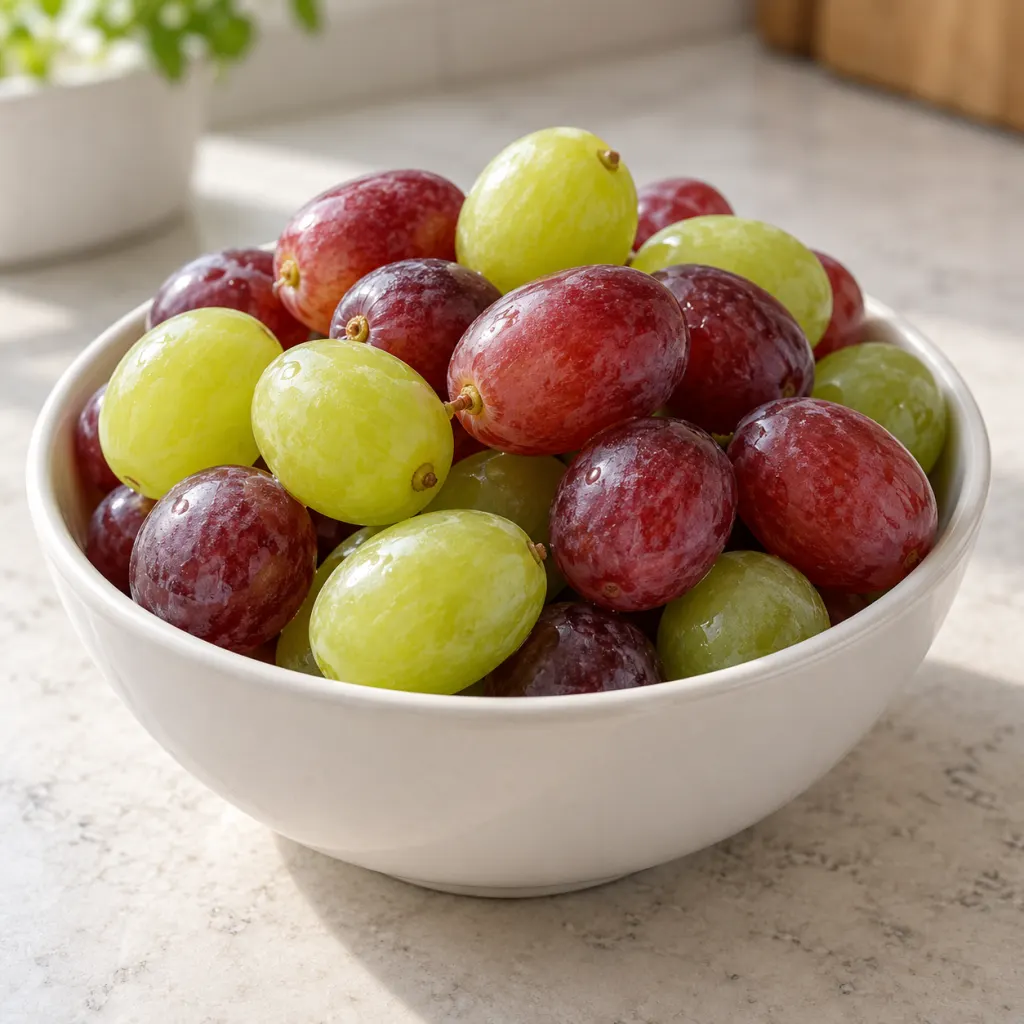
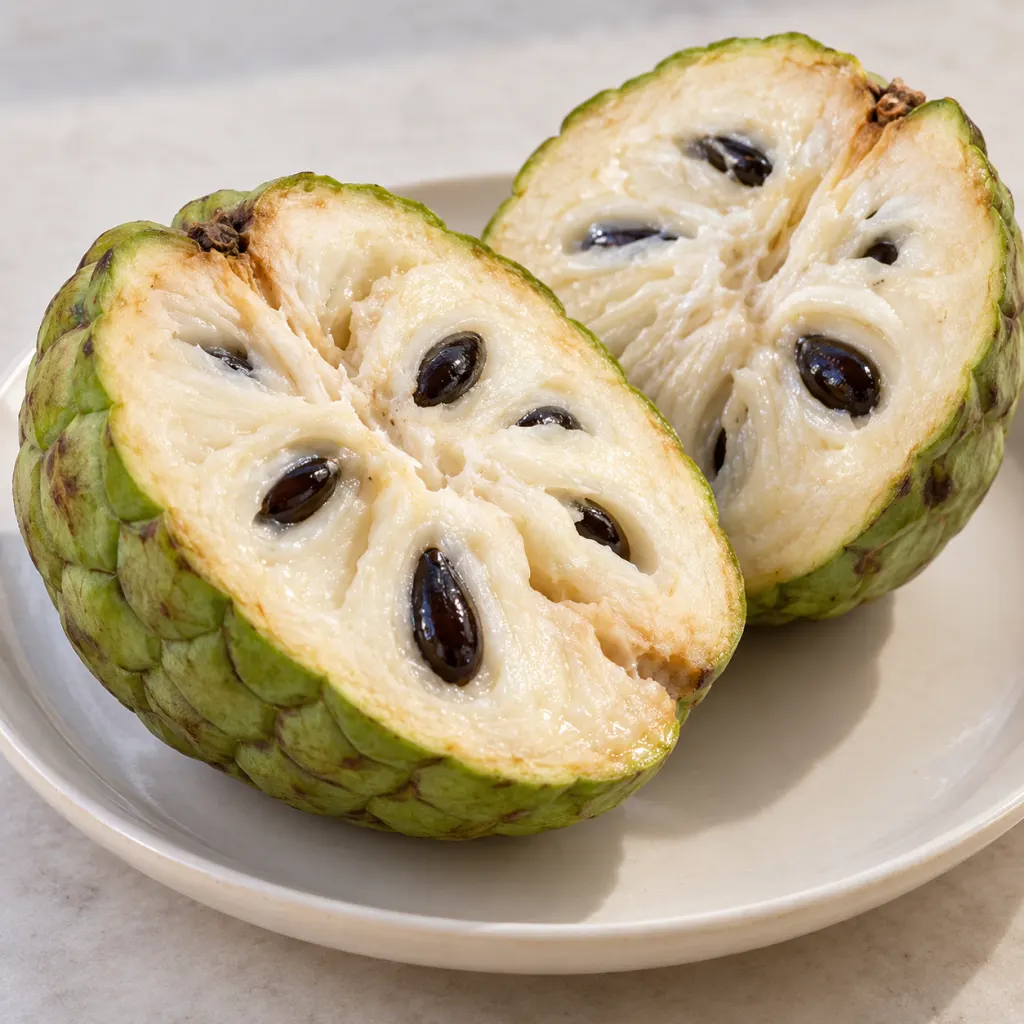
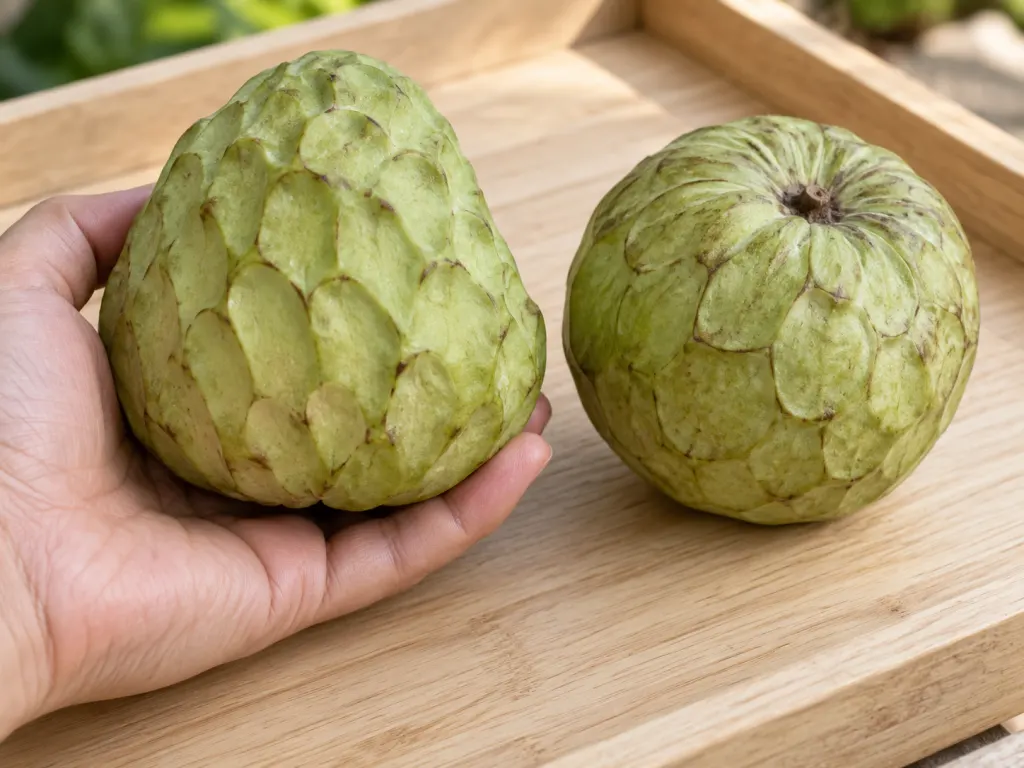
Its appearance can vary. A horticultural reference archived by the University of Hawai‘i describes fruit that is conical or somewhat heart-shaped, with skin ranging from fingerprint-like markings to rounded bumps. Inside is white flesh containing hard, dark seeds. Those details are more useful than expecting every fruit to resemble a single photograph. When checking an unfamiliar market purchase, look at the label alongside the fruit rather than relying on shape alone. See the archived cherimoya fruit reference.
What the nutrition information actually describes
The University of Rochester lists dietary fiber, vitamin C, carbohydrate, potassium and other nutrients in raw cherimoya. Crucially, its entry describes fruit without skin and seeds. That is the portion being analyzed, rather than the whole object placed on a grocery scale. The entry establishes that the flesh contributes nutrients; a composition table alone cannot establish a particular health outcome from eating it. Read the nutrition entry and its serving description together.
This distinction also makes comparisons more useful. A whole cherimoya, a spoonful of prepared flesh and a bowl containing several ingredients are different serving descriptions. Before comparing nutrition figures, check that both sources refer to the same edible weight. This article avoids attaching precise nutrient totals to “one fruit,” because that wording gives a home cook little help in matching the listed serving. If you want to record what you eat, weigh the prepared flesh after removing the discarded parts, then choose a database entry with a matching edible-weight basis.
Fiber supports an overall eating pattern
The reasonable digestion takeaway is modest: cherimoya can contribute fiber to a day that includes other fiber-containing foods. The NHS recommends obtaining fiber from varied sources, including whole grains, vegetables, fruit and pulses. Its guidance connects fiber-containing foods with digestion, but does not identify cherimoya as uniquely effective. A fruit’s presence on the plate is one part of the pattern, alongside what else you regularly eat. NHS advice emphasizes both fiber and variety.
If you are increasing fiber overall, make changes gradually rather than adding several unfamiliar foods at once. The National Institute of Diabetes and Digestive and Kidney Diseases advises introducing fiber a little at a time and drinking liquids to help it work. That is general fiber guidance, not a cherimoya-specific instruction. Keep any individual eating or fluid plan agreed with your health professional. NIDDK explains gradual increases and the role of liquids.
Choose a portion around the meal
Decide how you want to serve the fruit before preparing it. For a first taste, put a few spoonfuls of seed-free flesh in a small bowl. For a shared dessert, divide the prepared flesh between dishes rather than handing out equal-looking pieces of unprepared fruit. For breakfast, decide whether cherimoya will be the main fruit or a small topping. These are serving ideas, not a prescribed amount or a promise of a particular result.
A useful practical question is, “How much prepared flesh do I want on this plate?” That keeps the decision connected to the actual meal. You can prepare one fruit for sharing without treating its size as a target to finish. If keeping a food record, note the edible amount separately from yogurt, oats or other additions so the entry describes what was actually served.
Separate edible flesh from skin and seeds
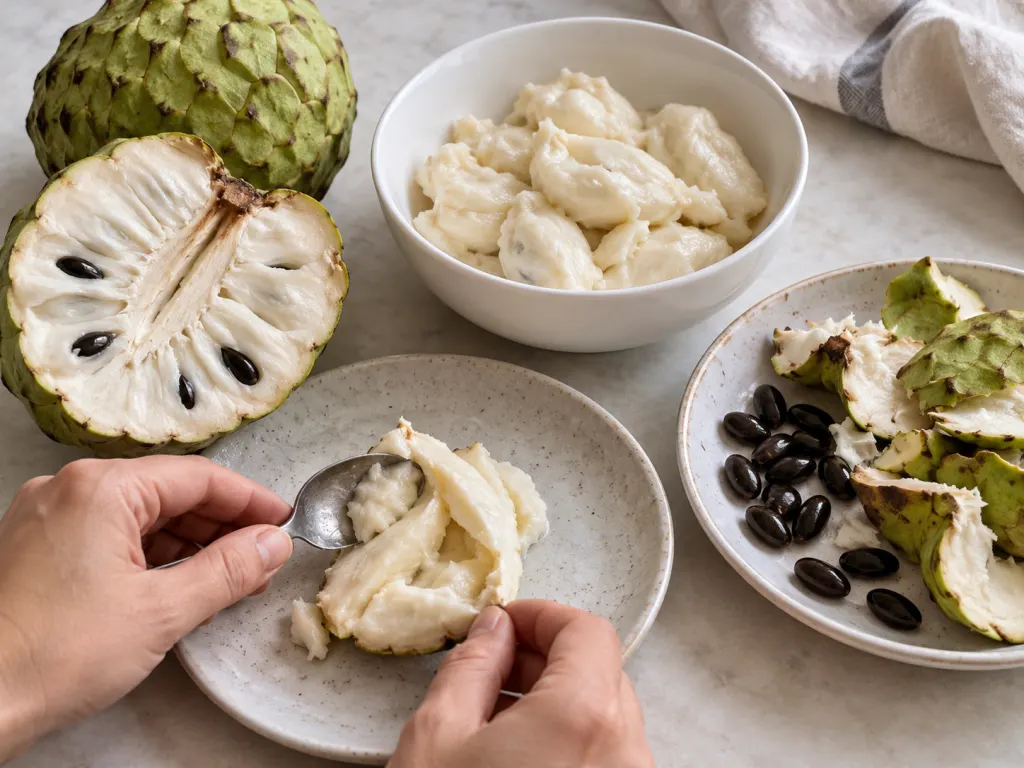
Use only the flesh for eating. Discard the outer skin and remove every seed before serving. UC Cooperative Extension specifically cautions against consuming cherimoya seeds. Keep them out of drinks and prepared mixtures: do not crush, grind or steep them, and do not put whole pieces containing seeds into a blender. Removing them while the flesh is still easy to inspect is the clearest preparation habit. The extension overview includes the seed warning.
Work over a clean plate or board and move the scooped flesh into a separate bowl. Open up each portion with a spoon so you can inspect it before adding it to the serving dish. The dark seeds contrast with the pale flesh, but a piece can still conceal one. The archived horticultural reference describes seeds within individual flesh segments. Keep the discarded parts together, away from the finished bowl. If you plan to mash the fruit, complete this inspection first; a smooth-looking mixture is harder to check afterward.
Wash the outside before cutting
Wash the whole fruit under running water before opening it, even though you will discard the skin. The FDA explains that cutting or peeling can transfer material from an unwashed surface to the inside. It recommends clean hands, clean preparation equipment and drying washed produce with a clean towel. Use running water rather than soap or commercial produce wash on the fruit. Keep the board and utensils separate from those used for raw meat, poultry or seafood. Discard produce that looks rotten. These are general produce-handling practices, not special properties of cherimoya. FDA produce guidance explains these precautions.
Ripeness and cold storage are different questions
Handle cherimoya gently: UC Davis describes these fruits as relatively soft and susceptible to bruising. Its postharvest guidance identifies a shift toward lighter green or greenish-yellow skin as a maturity indicator and explains that ripening continues after harvest. It also describes damage from excessive cold, with the response depending on variety and ripeness. These are produce-quality considerations, and they help explain why commercial handling advice can differ from ordinary refrigerator instructions. UC Davis discusses maturity, ripening and chilling sensitivity.
At the shop, ask whether the fruit is ready to eat and when the seller expects it to soften. At home, avoid repeatedly squeezing it to check progress. Plan the purchase around when you intend to prepare it, especially if the seller says it is already ready.
Refrigerate prepared portions promptly
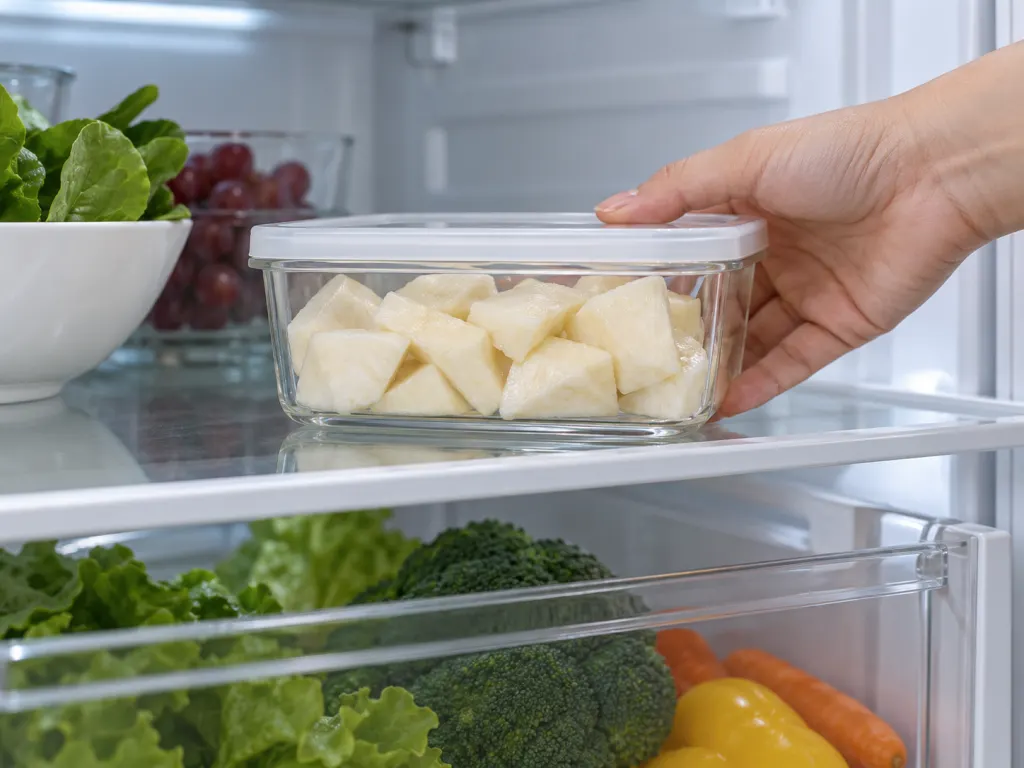
Once you have prepared the flesh, put any portion you are saving into a clean, covered container and refrigerate it promptly. FoodSafety.gov advises keeping perishable food refrigerated at 40°F (4°C) or below. Its general limit outside refrigeration is two hours, shortened to one hour when the temperature is above 90°F (32°C). Those limits are especially relevant when taking a prepared fruit bowl to an outdoor meal. FoodSafety.gov explains refrigeration and time limits.
Keep the distinction clear: guidance about maintaining the quality of an intact fruit during ripening does not justify leaving prepared flesh on the counter. Portion out what you intend to serve and return the remaining container to the refrigerator. For a shared meal, bringing out smaller quantities makes this easier than leaving the entire supply on the table.
Simple ways to serve the prepared flesh
Try the fruit plain first so you can decide whether you like its flavor and texture before combining it with other ingredients. A spoon and a small bowl are enough. For later servings, choose combinations according to the meal you want rather than assembling a long list of ingredients because they sound impressive together.
- A tasting dish: serve a small bowl of carefully checked, seed-free flesh on its own.
- A breakfast topping: spoon prepared flesh over porridge shortly before serving.
- A yogurt bowl: add pieces to plain yogurt and keep the fruit identifiable rather than immediately blending everything.
- A shared fruit plate: put the prepared cherimoya in its own small dish alongside other fruit.
If you enjoy comparing fruit options, our guide to bananas offers another ingredient to explore. The point of comparison is to broaden your choices, not to crown one fruit as the required everyday choice.
Read ingredient claims with the right question
Separate three questions when reading about cherimoya: What nutrients have been measured? What do broader guidelines say about those nutrients? What has actually been established about eating this particular fruit? A nutrition table answers the first question. General fiber guidance helps with the second. Neither automatically answers the third. Keeping those questions separate lets you appreciate the fruit without attaching unsupported expectations to a serving.
Also check whether the discussion concerns edible flesh, another plant part or a concentrated preparation. Evidence about one cannot simply be transferred to another. For another example of examining nutrient claims alongside practical serving questions, read our kiwi nutrition and portions guide. Use ingredient articles to inform ordinary food choices while leaving personal health decisions to a qualified professional.
Wrap-Up
Cherimoya is worth approaching as an unfamiliar fruit with a straightforward preparation task. Confirm what you are buying, plan when to serve it, wash the outside and inspect the flesh carefully as you remove the seeds. Keep the finished bowl separate from discarded parts and store saved portions promptly. The most useful first serving is one that helps you learn whether you enjoy the fruit and how you would like to use it again.
Frequently Asked Questions
- → Is cherimoya the same fruit as soursop?
No. Cherimoya is Annona cherimola, while soursop is Annona muricata. They are related but distinct fruits, so check the market label before applying information about either one. UC Cooperative Extension lists them separately.
- → Does cherimoya still contain fiber after the skin and seeds are removed?
Yes. The University of Rochester lists dietary fiber in cherimoya specifically described as being without skin and seeds. Removing those parts does not remove all the fruit’s fiber. The serving description appears above its nutrition table.
- → Can I blend the fruit before removing its seeds?
Remove and discard every seed before blending. Check the flesh in a separate bowl first, then transfer it to the blender. Do not rely on blending or straining to make seeds suitable for consumption. UC Cooperative Extension cautions against consuming the seeds.
- → Why can store handling advice mention temperatures warmer than a refrigerator?
Commercial advice can concern the ripening and quality of intact fruit, including sensitivity to cold, as described by UC Davis. Prepared flesh needs prompt refrigeration; follow the household storage principles explained by FoodSafety.gov.
References
This content was developed and refined using reliable sources.
- https://www.urmc.rochester.edu/encyclopedia/content?contentid=09062-1&contenttypeid=76
- https://www.nhs.uk/live-well/eat-well/digestive-health/how-to-get-more-fibre-into-your-diet
- https://ucanr.edu/county/cooperative-extension-ventura-county/cherimoya
- https://gms.ctahr.hawaii.edu/gs/handler/getmedia.ashx?dt=3&g=12&moid=3025
- https://www.niddk.nih.gov/health-information/digestive-diseases/constipation/eating-diet-nutrition
- https://www.fda.gov/food/buy-store-serve-safe-food/selecting-and-serving-produce-safely
- https://postharvest.ucdavis.edu/produce-facts-sheets/cherimoya-atemoya-sweetsop
- https://www.foodsafety.gov/keep-food-safe/4-steps-to-food-safety