 Save
If you find a tea bag on your doorstep, the most likely explanation is ordinary: windblown litter, a delivery or grocery spill, a neighbor’s harmless joke, a child’s game, or an object dropped by someone passing by. There is no reliable public evidence that a tea bag is a standard household warning code. The useful response is simple: pause, document it if it feels unusual, check for nearby clues, and escalate only if the object is part of a pattern or connected to mail, packages, threats, or suspicious contact.
Start With the Simplest Explanation
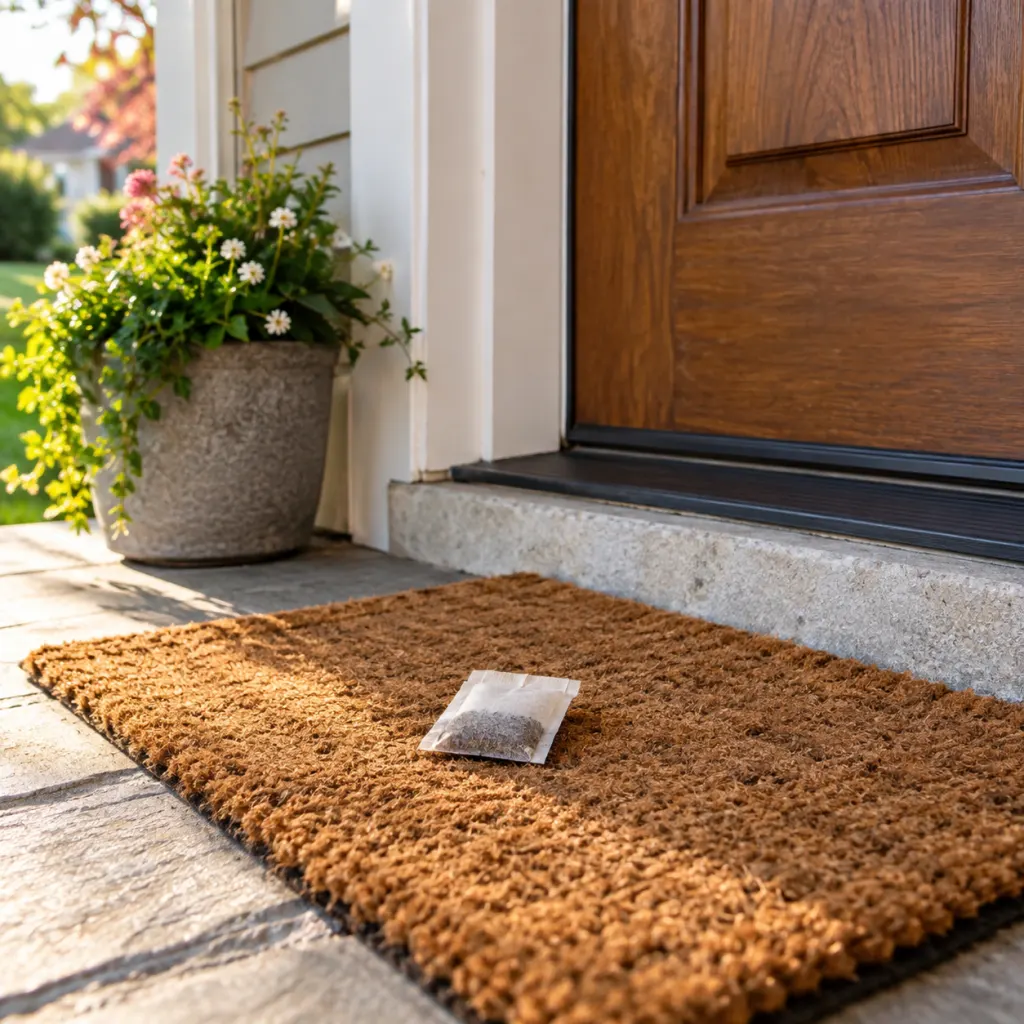
A single tea bag on a welcome mat feels oddly deliberate because doorsteps are personal boundaries. They are where visitors, deliveries, and neighbors meet the private home. That setting can make a small object feel meaningful even when it arrived by accident. Before attaching a symbolic meaning to it, look for ordinary context: Was trash collected recently? Did a grocery order, meal delivery, or package arrive? Is there a shared hallway, apartment landing, or windy porch where light items gather? Did a neighbor host guests, move boxes, or clean a car nearby?
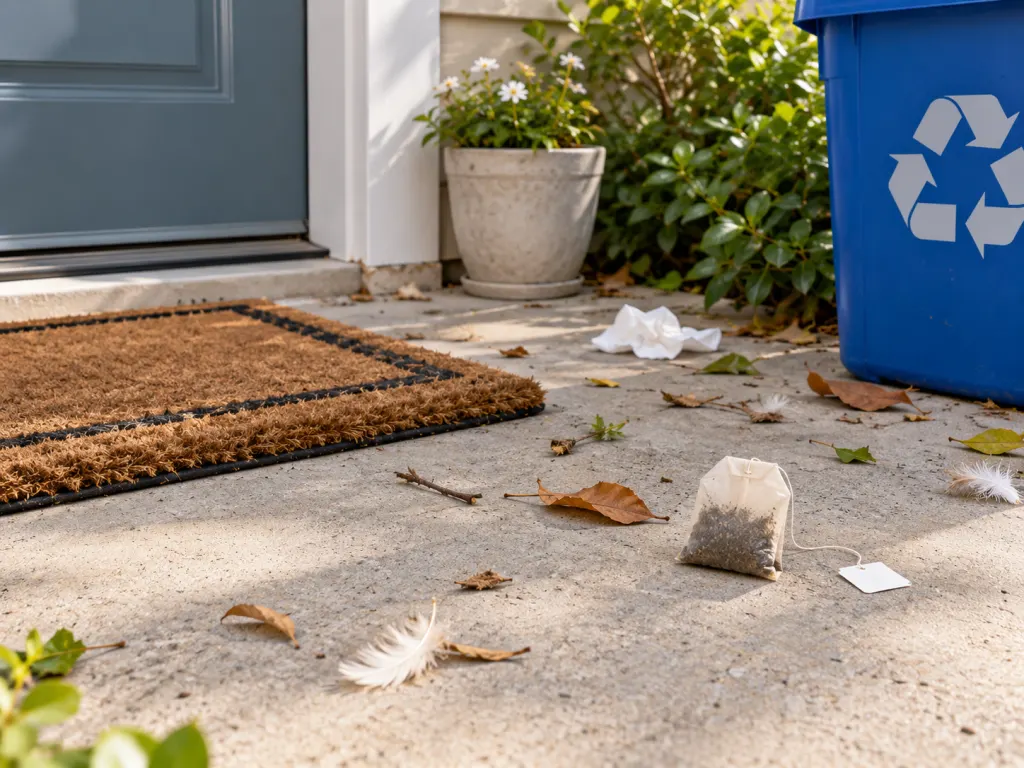
Tea bags are light, flat, and easy to drop. They can slip from a grocery bag, fall from a delivery tote, blow from a recycling bin, or stick to damp cardboard. If the tea bag is dry, sealed, and alone, it may have been carried by wind or placed as a joke. If it is wet, torn, or mixed with other debris, litter is more likely. None of those explanations requires a hidden message.
Why Online Posts Make It Feel More Ominous
Unusual doorstep objects often become social-media stories because they are visually simple and emotionally sticky. A photo of a tea bag on a mat invites people to guess: prank, superstition, scam, warning, or neighborhood code. The problem is that comment threads reward confident answers even when nobody has verified the object’s source. The Federal Trade Commission advises people to be careful with unexpected delivery-related messages and to verify through channels they know are legitimate rather than clicking or trusting a sudden prompt from an unknown source https://consumer.ftc.gov/consumer-alerts/2024/12/scammers-are-delivering-phishing-messages-holiday-season.
The same caution applies to viral claims. A dramatic explanation may be memorable, but that does not make it local, current, or true. A practical reader should separate three things: what is physically present, what can be independently checked, and what is only speculation. The tea bag itself is evidence that an object was there. It is not evidence of motive.
Mundane Possibilities to Check First
Use a short, grounded checklist before worrying about hidden meanings. This keeps the response useful and avoids spreading a rumor through the neighborhood.
- Recent deliveries: Check whether groceries, takeout, tea, pantry items, or a package passed through the porch area.
- Weather and bins: Look for open trash, recycling, compost, or windblown wrappers nearby.
- Shared spaces: In apartments or townhomes, another resident’s item may have landed at the wrong door.
- Children or pets: A tea bag may have been part of play, a dropped lunch item, or a carried object.
- Neighbor contact: If appropriate, ask a nearby neighbor casually whether they noticed a spill, prank, or delivery issue.
- Pattern: One item is usually noise; repeated objects, repeated timing, or added notes deserve more attention.
When It May Relate to Mail or Packages
A tea bag by itself is not a package, but a doorstep mystery can overlap with delivery issues. If the object appears alongside opened packaging, missing mail, a tampered mailbox, or a package you did not expect, shift from curiosity to documentation. The U.S. Postal Inspection Service advises people not to leave letters and packages unattended at the door or in a mailbox for long periods and recommends prompt pickup or alternate arrangements when you cannot be home https://www.uspis.gov/tips-prevention/mail-theft.
If there is an unexpected package, pay close attention to any note, return instruction, or QR code. The FBI has warned about unsolicited packages containing QR codes that can lead recipients toward websites asking for personal or financial information or toward downloads that compromise a device https://www.fbi.gov/investigate/cyber/alerts/2025/unsolicited-packages-containing-qr-codes-used-to-initiate-fraud-schemes. The FTC has issued similar guidance about QR codes on unexpected packages and advises against scanning unknown codes https://consumer.ftc.gov/consumer-alerts/2025/01/scam-alert-qr-code-unexpected-package.
Folklore, Symbolism, and the Limits of Meaning
Some people interpret threshold objects symbolically. Tea can suggest hospitality, comfort, a visit, a shared ritual, or a small charm depending on culture and personal belief. That does not mean a tea bag on your mat has a fixed spiritual meaning. The important distinction is between personal interpretation and verifiable intent. If a friend left it with a note, it may be playful. If a local group uses tea bags for a charity invitation and leaves printed information, the context explains it. Without context, the object remains ambiguous.
It is also worth being careful with folklore claims that sound precise. Phrases like “this means your house was marked” often circulate without proof, location, date, or a named authority. Public safety agencies generally advise people to report suspicious behavior and credible threats, not to assume that a single ordinary object is a coded signal. The FBI’s public FAQ says people should not put themselves in harm’s way or conduct their own investigation when they suspect criminal activity https://www.fbi.gov/about/faqs/should-a-citizen-verify-his-or-her-suspicions-about-criminal-activity-before-contacting-the-fbi.
A Calm Response Plan
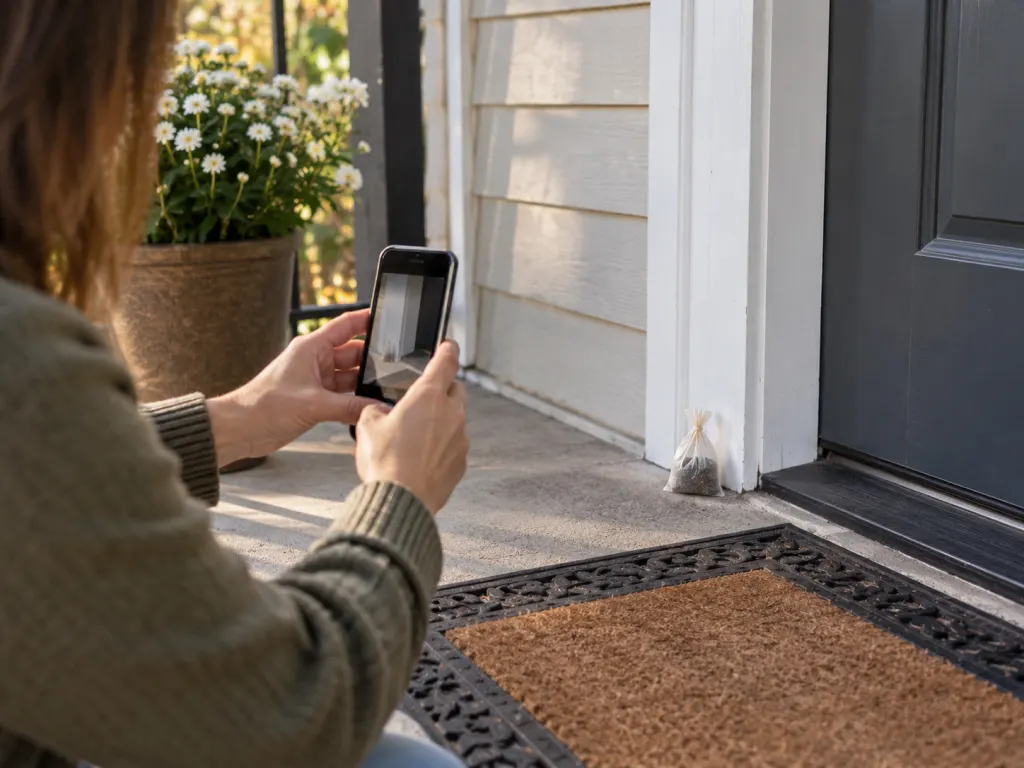
If the tea bag seems harmless, remove it and move on. If it feels unusual or appears after another odd event, take a photo before moving it. Include the doorway, the object, and enough surrounding area to show location. Note the date and time. Check a doorbell camera if you have one, but do not confront someone based only on a blurry clip or assumption. If the object returns, your notes will help you see a pattern instead of relying on memory.
For renters, shared buildings, and condos, the next step may be practical rather than dramatic: ask building management whether cleaning staff, delivery drivers, or neighbors reported a spill. In a close neighborhood, a simple message can solve the mystery: “Did anyone drop a tea bag near my porch this morning?” Keep the wording neutral. Neutral questions get better answers than accusations.
When to Treat It as Concerning
Escalate your response when the tea bag is not the only issue. A single object is usually not enough to indicate a problem, but patterns matter. Repeated objects at the same time of day, damaged mail, missing packages, unwanted notes, someone lingering near the door, or attempts to get you to scan a code or provide account information all deserve more care. The FBI’s phishing guidance explains that spoofed communications and links can be used to collect sensitive information, and it recommends looking up contact details yourself rather than using information supplied in an unsolicited message https://www.fbi.gov/how-we-can-help-you/common-frauds-and-scams/spoofing-and-phishing.
If you believe mail or packages were stolen, use the Postal Inspection Service reporting path. If there is immediate danger, contact local emergency services. If the concern involves online fraud, a malicious QR code, or account compromise, use official cybercrime reporting channels rather than replying to the sender. The goal is not to panic; it is to match the response to the evidence.
Doorbell Cameras and Neighborhood Awareness
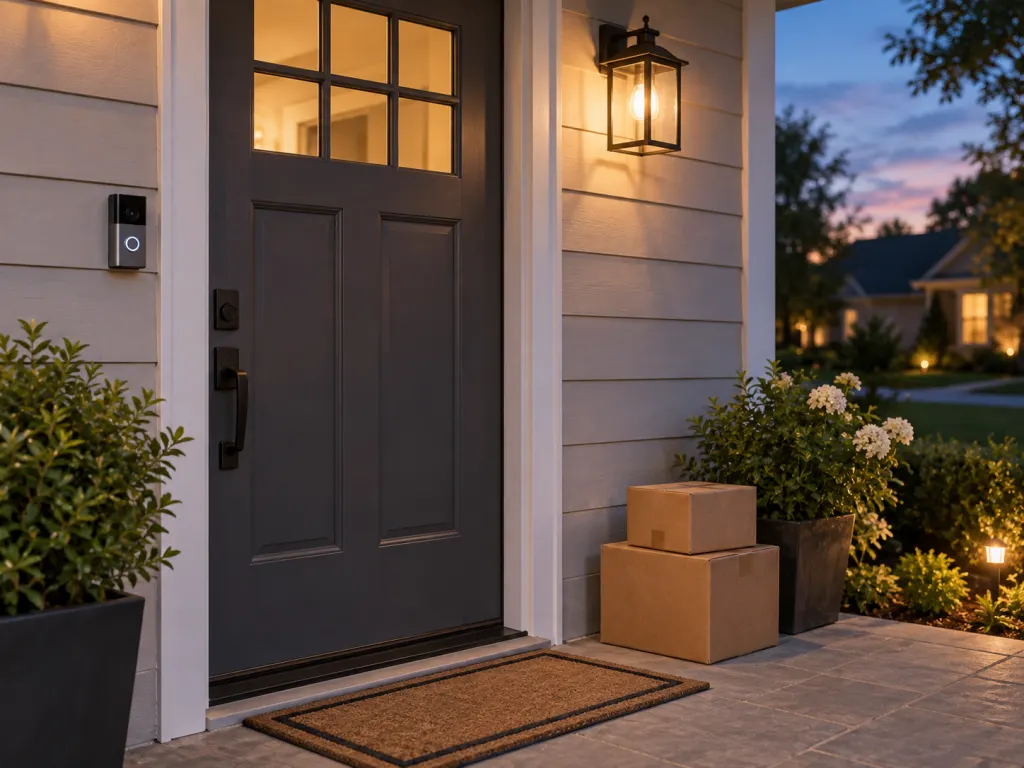
A camera can help answer the narrow question “how did this object arrive?” but it should not become the only safety plan. Public surveillance research reviewed by CrimeSolutions, a National Institute of Justice program, rates CCTV as promising for some property-crime outcomes while noting more limited effects for violent offenses https://crimesolutions.ojp.gov/ratedpractices/closed-circuit-television-cctv-surveillance. In a household setting, that means a doorbell camera may help document deliveries and visitors, but good lighting, prompt package pickup, neighbor communication, and sensible reporting habits still matter.
Neighborhood awareness works best when it is specific and fair. CrimeSolutions describes neighborhood watch programs as efforts where residents stay alert for suspicious activities and report them to police, while also noting components such as home security surveys and property marking https://crimesolutions.ojp.gov/ratedpractices/neighborhood-watch. The useful lesson for a tea bag mystery is modest: share facts, not rumors. “A small item appeared on my porch twice this week at 7 a.m.” is more useful than “someone is marking houses.”
How to Talk About It Without Spreading Fear
If you post in a neighborhood group, include only what you know. Say where the item was found in general terms, whether there was a note or package, and whether it happened once or repeatedly. Avoid naming or photographing strangers unless there is a clear reason and the platform rules allow it. Avoid claims that a tea bag “means” a specific threat unless a credible local authority has said so for your area.
Good wording looks like this: “I found a sealed tea bag on my porch this morning. Has anyone nearby had a grocery delivery spill or seen litter blowing around?” If there is a package with a QR code, say: “Unexpected package with a QR code; I am not scanning it and will report through official channels.” That kind of language helps neighbors respond with facts.
What to Do With the Tea Bag Itself
If there are no other concerns, dispose of it like ordinary trash. Wash your hands after handling outdoor debris, especially if it is damp or dirty, and avoid opening any packaging that looks tampered with. If you are documenting a repeated pattern, place the item in a small bag after photographing it and note the date. For most households, that level of recordkeeping is enough. If local police or postal inspectors later ask for details, your timeline will be clearer.
If the item has a note, a code, a label with someone’s name, or any delivery information, photograph those details before discarding anything. Do not post personal names, addresses, tracking labels, or account information publicly. Keep the evidence private unless you are sharing it with a trusted reporting channel.
The Bottom Line
A tea bag at your doorstep is usually not a message at all. It is an ambiguous object in a place that naturally attracts deliveries, foot traffic, windblown debris, and neighborly oddities. The most balanced response is to look for normal causes first, document anything repeated or connected to mail and packages, avoid unknown codes or links, and contact the appropriate authority only when there is a real pattern or immediate concern.
Wrap-Up
There is no established universal meaning for a tea bag left at a doorstep. Most cases are likely ordinary: litter, a dropped grocery item, a delivery mix-up, or a mild prank. Treat it as unexplained rather than ominous. Check simple causes, avoid scanning unknown codes, document repeated incidents, and report through official channels if the object appears with stolen mail, suspicious packages, threats, or repeated concerning behavior.
Frequently Asked Questions
- → Does a tea bag on my doorstep have a known secret meaning?
No reliable public source establishes a universal meaning for a tea bag left at a doorstep. It is better treated as an unexplained object until context points to something specific, such as a spill, prank, delivery issue, note, or repeated pattern.
- → Should I call the police for one tea bag on my porch?
Usually, no. For a single harmless-looking item, check simple explanations and dispose of it. Consider reporting if there are repeated incidents, threats, someone trying to enter your property, damaged mail, stolen packages, or immediate danger.
- → What if the tea bag came with a QR code or note?
Do not scan an unknown QR code or follow contact details supplied with an unexpected item. Photograph the item, verify through official websites or phone numbers you find yourself, and report suspected fraud through the appropriate official channel.
- → Could it be connected to package theft?
By itself, a tea bag does not prove package theft. Take it more seriously if it appears with opened packaging, missing deliveries, tampered mail, or repeated visits. In that case, document dates and times and use official mail or local reporting channels.
- → Is it okay to ask neighbors about it?
Yes, if you keep the question neutral. Ask whether anyone dropped something, had a delivery spill, or saw litter blowing around. Avoid accusing a person or repeating claims about hidden codes unless a credible local authority has confirmed a specific issue.
References
This content was developed and refined using reliable sources.
- https://www.uspis.gov/tips-prevention/mail-theft
- https://consumer.ftc.gov/consumer-alerts/2024/12/scammers-are-delivering-phishing-messages-holiday-season
- https://consumer.ftc.gov/consumer-alerts/2025/01/scam-alert-qr-code-unexpected-package
- https://www.fbi.gov/investigate/cyber/alerts/2025/unsolicited-packages-containing-qr-codes-used-to-initiate-fraud-schemes
- https://www.fbi.gov/about/faqs/should-a-citizen-verify-his-or-her-suspicions-about-criminal-activity-before-contacting-the-fbi
- https://www.fbi.gov/how-we-can-help-you/common-frauds-and-scams/spoofing-and-phishing
- https://crimesolutions.ojp.gov/ratedpractices/closed-circuit-television-cctv-surveillance
- https://crimesolutions.ojp.gov/ratedpractices/neighborhood-watch