 Save
Dates can be a nourishing regular food when they are eaten in modest portions as part of a varied diet. They are not a shortcut to better health, but they do bring useful qualities: plant fiber, naturally occurring sugars for quick food energy, small amounts of minerals, and enough sweetness to make simple foods feel more satisfying. The key is context. A few dates with yogurt, oats, nuts, or fruit can fit beautifully; eating them by the handful can crowd out balance because dried fruit is concentrated. The USDA describes FoodData Central as its comprehensive source of food composition data, and date nutrition is best understood through that lens: dates are fruit, but they are also dense because most of their water has been removed during ripening and drying (USDA FoodData Central).
What Makes Dates Different From Fresh Fruit
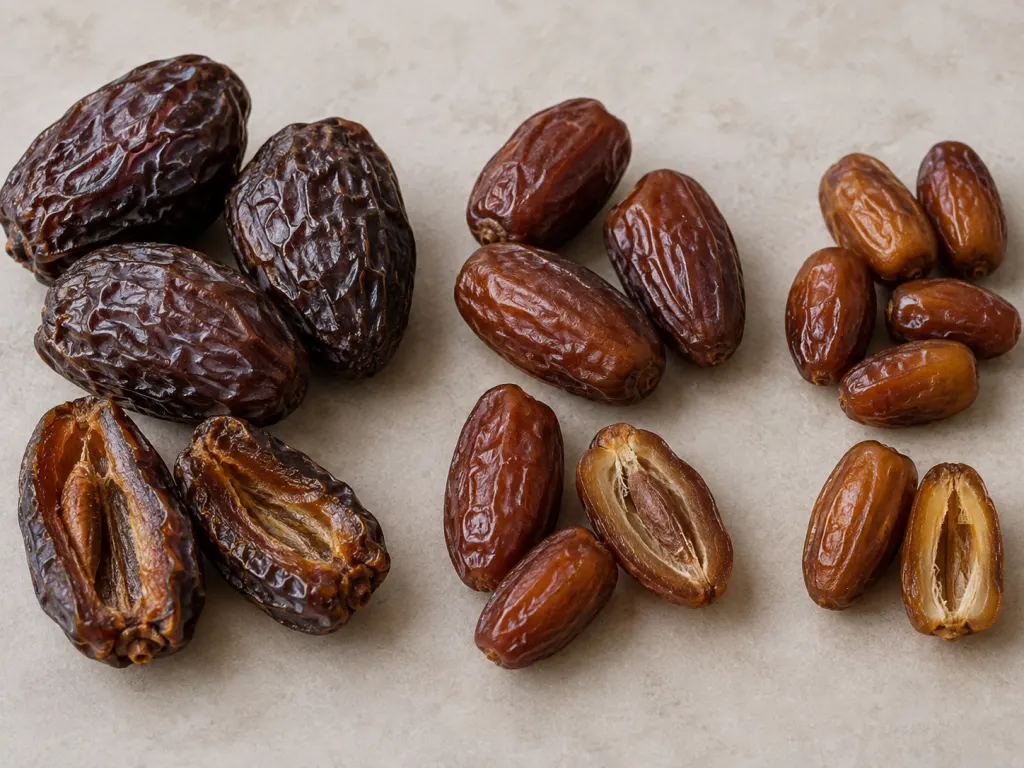
Dates come from the date palm and are usually sold soft, semi-dry, or dry. Unlike berries, oranges, or melon, dates are compact and sticky, which means a small serving carries more carbohydrate and more calories than the same volume of many fresh fruits. That is not a flaw; it simply changes how they work in the kitchen. Think of dates less like a bowl of grapes and more like a naturally sweet pantry fruit that can sweeten oatmeal, smoothies, sauces, snack plates, and baked goods.
FoodData Central explains that USDA food composition data include multiple data types and are intended to help users compare foods by nutrient content (USDA FoodData Central). In practical terms, that means dates are worth treating as a concentrated fruit: flavorful, useful, and easy to over-serve if they are eaten straight from the bag. Medjool dates are larger and softer; Deglet Noor dates are often smaller and firmer. The exact numbers vary by variety, size, and moisture, so portion awareness matters more than chasing a perfect count.
The Main Everyday Benefit Is Fiber
One of the strongest reasons to keep dates in the rotation is fiber. MedlinePlus describes dietary fiber as the edible plant material found in fruits, vegetables, grains, nuts, and seeds, and notes that it helps digestion and adds bulk to the diet (MedlinePlus dietary fiber). Dates are not the only way to get fiber, and they should not carry the whole job alone, but they can contribute meaningfully when paired with other plant foods.
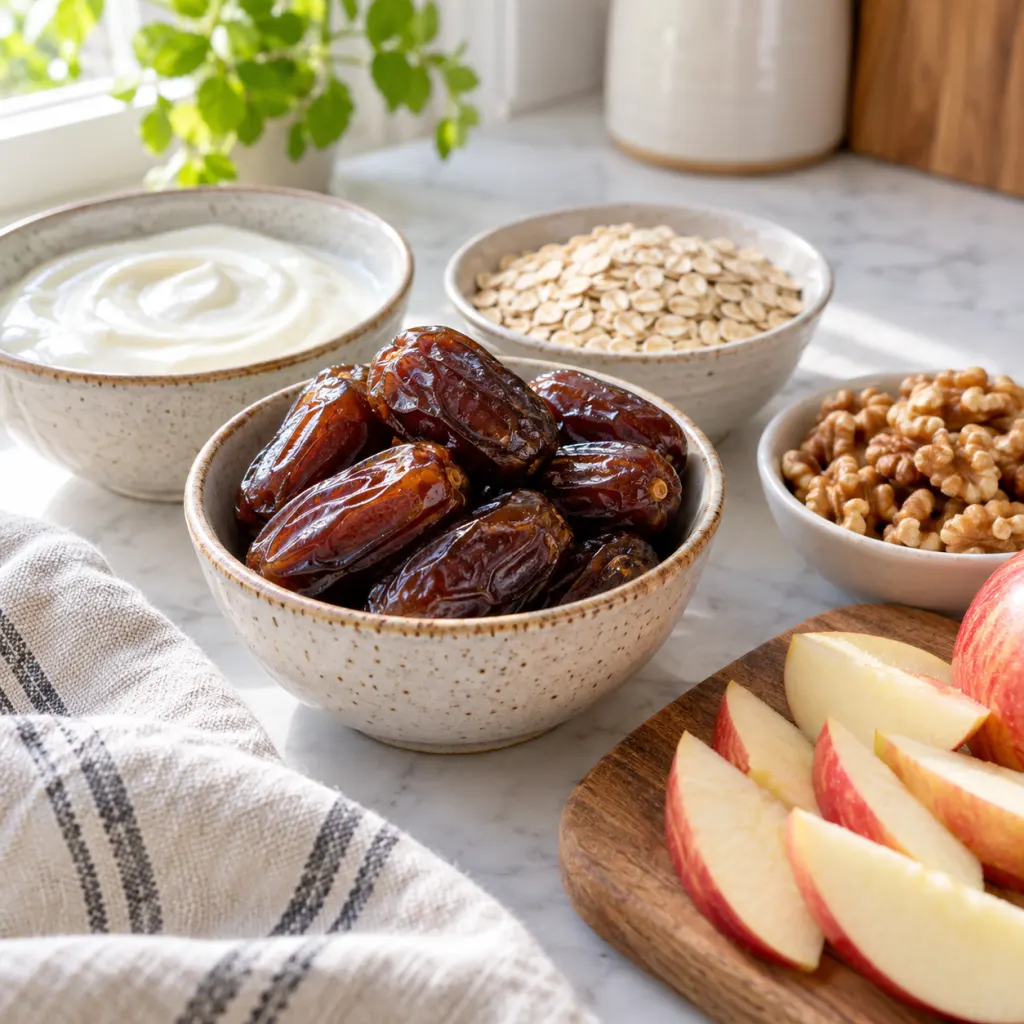
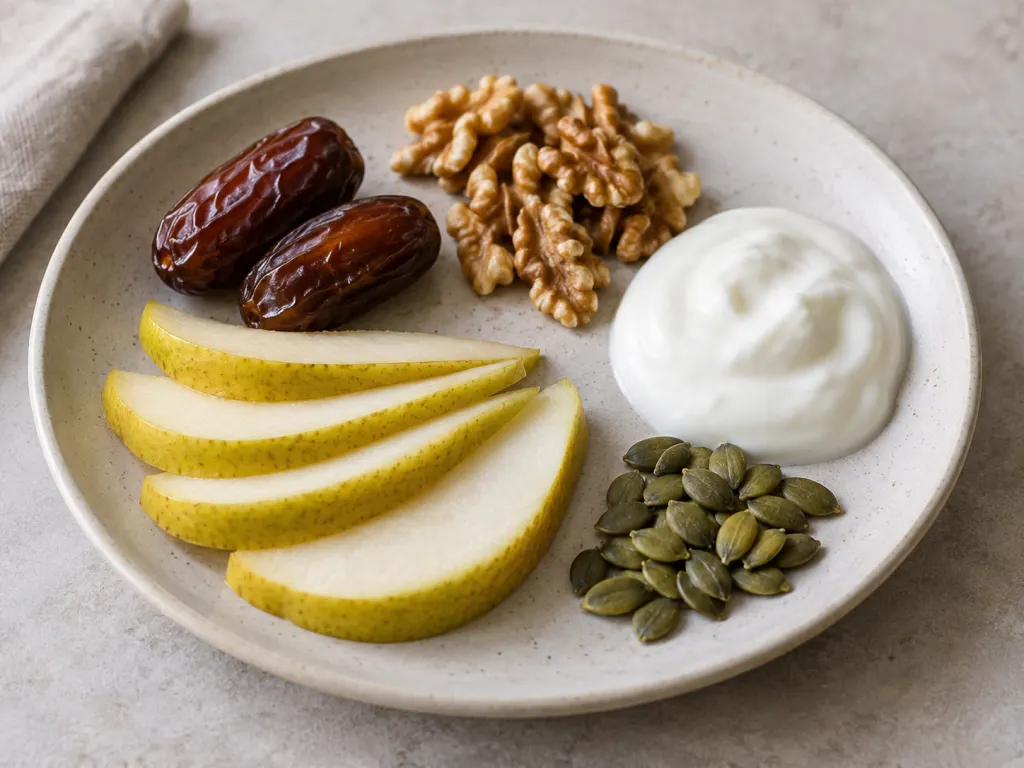
Fiber is also one reason dates feel more satisfying than candy with a similar sweet taste. The fruit structure brings chew, bulk, and other nutrients along with the sugar. That does not make dates unlimited, but it does make them a more useful sweet ingredient than many refined sweets. If your usual afternoon snack is a cookie or sweet bar, a small plate with dates, walnuts, apple slices, and plain yogurt can offer sweetness with more texture and variety.
How To Use Dates For Digestive Regularity Without Overdoing It
Because dates are fiber-containing fruit, they may support a regular eating routine when they are part of an overall fiber-rich pattern. The best approach is gradual. MedlinePlus cautions that adding too much fiber too quickly can lead to gas, bloating, or cramps, so it is sensible to increase fiber foods over time and drink fluids with meals (MedlinePlus dietary fiber). For dates, that might mean starting with one or two in a snack rather than turning them into the main event.
- Pair dates with protein-rich or fat-containing foods such as plain yogurt, cottage cheese, nuts, seeds, or nut butter.
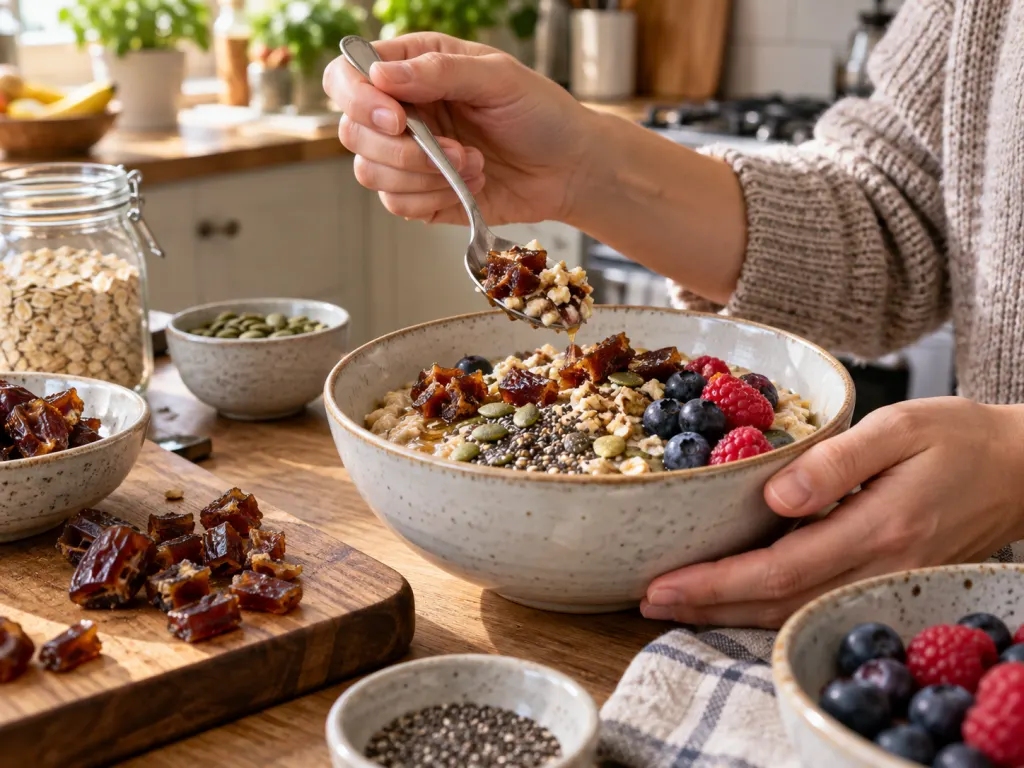
- Chop one or two dates into oatmeal instead of adding a large spoonful of sweetener.
- Use dates in a trail mix where nuts and whole-grain cereal balance the sweetness.
- Choose whole dates more often than date syrup when you want the fiber from the fruit itself.
- Notice the serving size on packaged dates, because pieces can vary a lot in size.
Dates Offer Quick Food Energy, But The Package Matters
Carbohydrates are one of the three main nutrients in foods and drinks, and the body uses carbohydrate as a major energy source. MedlinePlus explains that sugars can occur naturally in fruits, vegetables, and milk, while added sugars are put into foods during processing or preparation (MedlinePlus carbohydrates). Dates are rich in naturally occurring fruit sugars, which is why they taste so sweet and why they can be useful before a walk, a long errand, or a busy morning.
The distinction between naturally occurring sugars and added sugars is important, but it should not be stretched into a health halo. The FDA notes that total sugars include sugars naturally present in foods such as fruit and milk, while added sugars are added during processing or preparation and are listed separately on packaged-food labels (FDA added sugars). Whole dates generally bring naturally occurring sugars inside a whole fruit matrix. Date syrup, date paste in sweets, and packaged snacks made with dates can still be quite sweet and should be judged by the whole ingredient list.
Minerals Are A Supporting Benefit, Not The Whole Story
Dates contain minerals that matter in ordinary nutrition, including potassium and magnesium. The NIH Office of Dietary Supplements describes potassium as an essential nutrient present in many foods and involved in normal cell function, nerve transmission, and muscle contraction (NIH ODS potassium). Magnesium is also needed for many body processes, including muscle and nerve function, protein formation, and bone structure (NIH ODS magnesium). Dates can contribute to those mineral intakes, especially when they are part of a diet that also includes vegetables, legumes, whole grains, dairy foods or fortified alternatives, nuts, and seeds.
It is helpful to keep that contribution in proportion. A date snack is not a mineral plan by itself. It is one small part of the bigger pattern. The World Health Organization describes healthy diets as varied, balanced, adequate, and moderate, with fruits, vegetables, pulses, whole grains, and other nutrient-dense foods working together rather than one food doing all the work (WHO healthy diet). Dates fit best when they add pleasure and nutrients without pushing out less sweet foods.
Dates Can Help Replace Some Highly Processed Sweets
One of the most practical benefits of dates is culinary, not dramatic. Their sticky texture and caramel flavor can make a simple bowl of oats, a smoothie, or a homemade snack bite taste sweet without relying on candy-like ingredients. The CDC encourages choosing more whole, nutrient-dense foods and limiting highly processed foods, added sugars, added sodium, and refined carbohydrates (CDC healthy eating tips). Dates can support that direction when they are used as a whole-food sweet element rather than an excuse to make every snack dessert-like.
For example, a blended date can sweeten a smoothie made with plain yogurt and fruit. Chopped dates can soften the sharpness of a salad with bitter greens. A date stuffed with almond butter can feel special enough for dessert while still being a small, recognizable-food snack. These swaps are not about restriction; they are about making sweetness share the plate with fiber, minerals, and satisfying textures.
Portion Size Is Where The Benefits Stay Useful
Because dates are concentrated, a reasonable portion can look surprisingly small. For many adults, one to three dates may be enough in a snack, especially if the dates are large Medjool dates. Smaller Deglet Noor dates may be used in a slightly larger count, but the principle is the same: let dates be an accent, not the full meal. If you are adding dates to breakfast, try chopping them so the sweetness spreads through the bowl. If you eat them whole, pair them with foods that slow you down and make the snack feel complete.
A balanced date snack might include two dates with walnuts, a date chopped into plain Greek yogurt, or a small trail mix with pumpkin seeds and unsweetened whole-grain cereal. If you are using dates in baking, remember that replacing table sugar with date paste changes flavor and texture, but it does not make a baked good automatically light. The finished food still deserves the same common-sense portioning as any sweet baked item.
Fresh, Dried, Pitted, And Paste: Which Form Is Best?
The best form depends on the job. Whole pitted dates are the most versatile for snacking and chopping. Unpitted dates often stay softer, but they require attention at the table. Date paste is convenient for sauces, energy bites, and batters, but it is easier to use more than intended. Date syrup is smooth and pourable, yet it does not offer the same chewing experience as whole fruit. If your goal is a more satisfying snack, whole dates usually win because texture helps slow the pace.
Storage also matters. Dates keep well because they are low in moisture compared with fresh fruit, but they can dry out or absorb odors. Store them tightly covered in a cool pantry for short-term use, or refrigerate them if you buy a large container. If they become firm, a brief soak in warm water can make them easier to chop or blend. Discard dates that smell fermented, show visible mold, or taste off.
Who Should Be More Deliberate With Dates?
Dates are ordinary food, but some readers need more individualized guidance. If you follow a medical eating plan, have been advised to monitor carbohydrate intake, or have a condition that affects how you use certain minerals, ask a qualified health professional how dates fit your personal pattern. This does not mean dates are unsafe for everyone in those groups; it means concentrated fruit is worth planning rather than guessing.
Parents and caregivers should also think about texture and age. Whole sticky foods can be difficult for very young eaters, so dates may need to be finely chopped, softened, or used in a mixed food when appropriate. For adults, the main practical issue is usually dental stickiness and portion drift. Dates cling to teeth more than crisp fruit, so they are better with meals or planned snacks than as all-day grazing.
A Simple Way To Decide If Dates Belong In Your Routine
The easiest test is to look at what dates replace and what they accompany. If they replace a highly processed sweet snack and are paired with nourishing foods, they can be a smart upgrade. If they are added on top of an already sweet routine, the benefit is less clear. If they help you enjoy oatmeal, fruit, yogurt, salads, or homemade snacks that you otherwise skip, they are doing useful work in your kitchen.
A good weekly rhythm might be dates in oatmeal one day, dates with nuts as a snack another day, and chopped dates in a grain salad later in the week. That pattern keeps them enjoyable without making them the center of every meal. It also leaves space for other fruits with more water, different vitamins, and different textures. Variety is the quiet strength of a healthy kitchen.
Wrap-Up
Eating dates regularly can be beneficial when regular means planned, modest, and balanced. Their strengths are straightforward: fiber, natural sweetness, carbohydrate energy, and useful minerals such as potassium and magnesium. Their limitation is also straightforward: they are concentrated and easy to overeat. Use dates as a flavorful whole-fruit accent, pair them with foods that add protein, fat, or extra fiber, and let them support a varied diet rather than stand in for one.
Frequently Asked Questions
- → Is it good to eat dates every day?
Dates can fit into an everyday eating pattern if the portion is modest and the rest of the diet is varied. They work best as a small fruit accent with foods such as oats, yogurt, nuts, seeds, or fruit rather than as a large stand-alone snack.
- → How many dates is a reasonable serving?
There is no single serving that fits everyone, because dates vary in size and people have different nutrition needs. A practical starting point is one to three dates, especially for larger Medjool dates, paired with other satisfying foods.
- → Are dates better than candy?
Dates are whole fruit, so they bring fiber, minerals, chew, and flavor along with natural sweetness. Candy is usually mostly added sugar and flavoring. That said, dates are still concentrated and sweet, so portion size still matters.
- → Do dates count as fruit?
Yes. Dates are fruit from the date palm. Because they are usually sold soft-dried or dried, they are more concentrated than many fresh fruits, so a smaller amount can feel rich and sweet.
- → What is the best way to eat dates for breakfast?
Chop one or two dates into oatmeal, plain yogurt, chia pudding, or a smoothie. Chopping spreads the sweetness through the dish, so you may need less than if you eat them whole on the side.
References
This content was developed and refined using reliable sources.
- https://fdc.nal.usda.gov
- https://www.medlineplus.gov/dietaryfiber.html
- https://www.medlineplus.gov/carbohydrates.html
- https://www.fda.gov/food/nutrition-facts-label/added-sugars-nutrition-facts-label
- https://ods.od.nih.gov/factsheets/Potassium-HealthProfessional
- https://ods.od.nih.gov/factsheets/Magnesium-Consumer
- https://www.who.int/news-room/fact-sheets/detail/healthy-diet
- https://www.cdc.gov/nutrition/features/healthy-eating-tips.html