 Save
Beet, carrot, and apple juice can be a pleasant way to enjoy more produce variety, but its real value is modest and practical: it supplies water, natural plant compounds, color, and some vitamins and minerals from familiar fruits and vegetables. It is not a shortcut to perfect wellness. The most balanced answer is to treat it as a fresh beverage that can fit beside meals while still relying on whole fruits, vegetables, legumes, grains, proteins, and healthy fats for a full eating pattern. The current U.S. Dietary Guidelines emphasize whole, nutrient-dense foods such as vegetables and fruits, while USDA fruit guidance notes that juice is lower in dietary fiber than whole fruit when consumed in place of it ODPHP USDA Food Buying Guide.
Why This Blend Appeals to Home Cooks
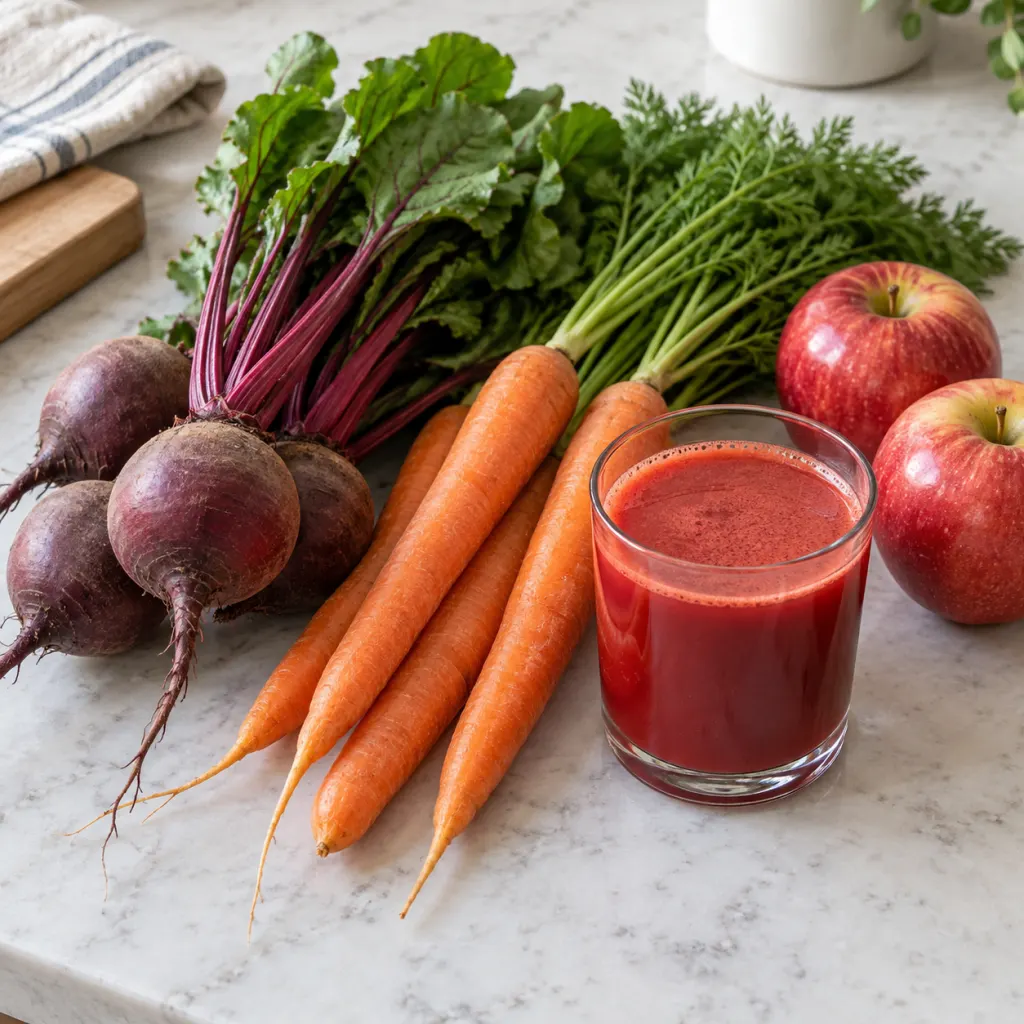
The appeal of beet, carrot, and apple juice starts in the kitchen, not in a headline. Beets give the drink a deep ruby color and a gently earthy flavor. Carrots bring sweetness and a softer orange note. Apples brighten the mixture with acidity, aroma, and familiar fruit sweetness. Together, the three ingredients create a drink that feels more rounded than beet juice alone and less candy-sweet than plain apple juice. For someone who finds raw vegetables hard to fit into breakfast or an afternoon snack, a small glass can make produce feel easier and more enjoyable.
The benefit is also behavioral. Many people eat the same few foods on repeat. A juice like this can make carrots and beets feel less like side-dish obligations and more like ingredients worth keeping in the crisper. That matters because the overall pattern of what a person eats usually matters more than any single glass. A homemade blend also lets you control what goes in: no added sugar, no unnecessary syrups, and no oversized bottle that quietly turns into several servings.
The Main Nutrients Worth Knowing
Carrots are the nutritional anchor most people recognize. USDA FoodData Central lists raw carrots with dietary fiber, potassium, vitamin C, folate, and vitamin A activity, including beta-carotene, a provitamin A carotenoid USDA FoodData Central. NIH explains that provitamin A carotenoids are found in fruits and vegetables and can be converted by the body into vitamin A, which is important for normal vision and immune function NIH Office of Dietary Supplements. That does not make carrot juice a special medical tool; it simply means carrots are a useful source of a well-known nutrient family.
Apples and beets round out the blend in different ways. Apples are part of the fruit group and contribute familiar fruit flavor, water, and plant compounds. Beets contribute vegetable character, color, and minerals in the broader FoodData Central composition system, which USDA describes as its comprehensive source of food composition data USDA FoodData Central. Because exact nutrients vary with variety, ripeness, storage, juicer type, and how much pulp is retained, it is more honest to think of this drink as a produce-based beverage than as a precise supplement-style serving.
For a practical kitchen view, the blend offers these everyday advantages:
- Color and appeal: the deep red-orange shade can make a simple glass feel special without artificial color.
- Produce variety: one drink can include one fruit and two vegetables, which may help vary routine choices.
- Gentle sweetness: apple and carrot soften the earthy beet flavor without added sugar.
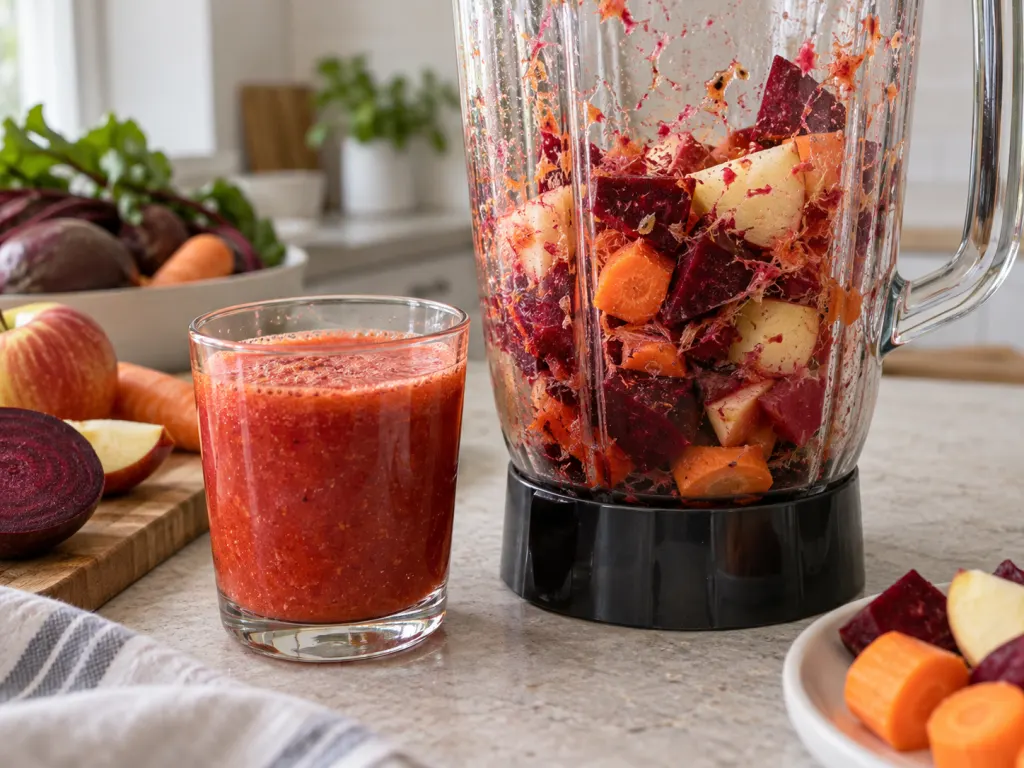
- Flexible texture: blending with some pulp keeps more body than a fully strained juice.
- Easy pairing: a small glass works best with food that contains protein, fat, and fiber, such as eggs, yogurt, beans, nuts, or whole grains.
Juice Versus Whole Produce
The biggest limitation is fiber. USDA child nutrition guidance notes that fruit juice is lower in dietary fiber than whole fruit and that, when consumed in excess, it can add extra calories USDA Food Buying Guide. The same common-sense idea applies at home: when you run apples, carrots, and beets through a juicer and discard the pulp, you also discard some of the structure that makes whole produce filling. A blended version keeps more pulp, but even then, drinking produce is usually quicker than chewing it.
This is why a sensible serving is usually smaller than the giant glasses shown in many social posts. A few ounces alongside a meal can be enjoyable. A very large glass can crowd out other foods, especially if it becomes a daily replacement for breakfast or lunch. Whole apples, carrot sticks, roasted beets, salads, soups, and cooked vegetables still deserve space because they give texture, chewing satisfaction, and meal balance in ways juice cannot fully copy.
How to Prepare It More Safely
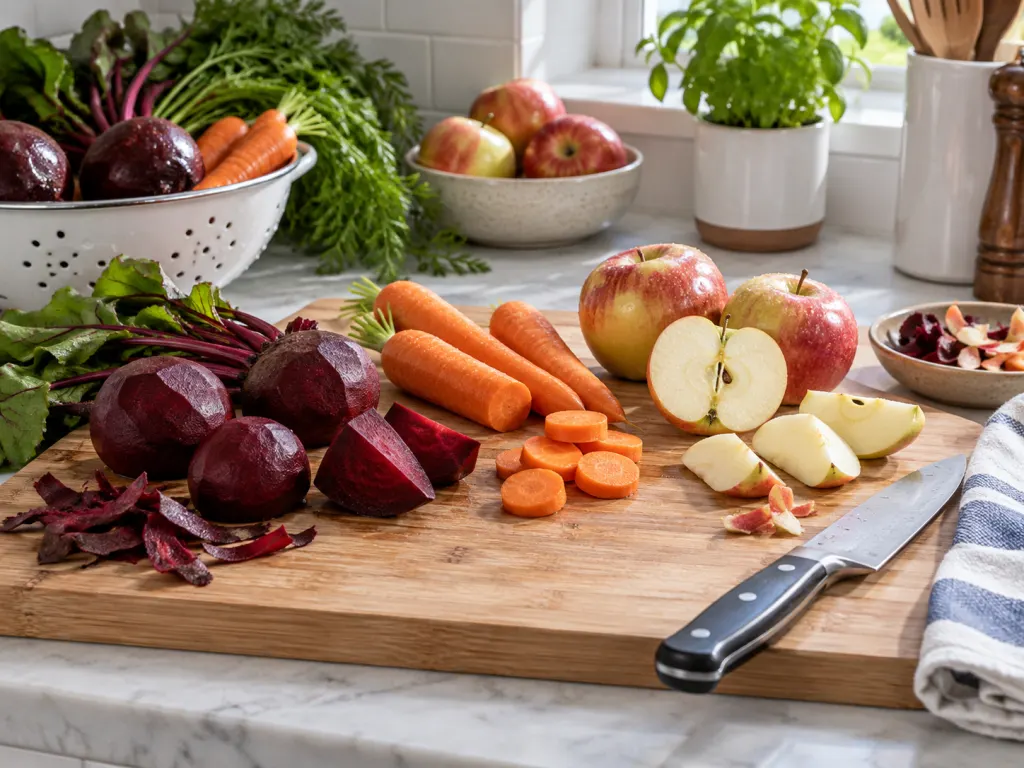
Because this drink is made from raw produce, cleanliness matters. FDA advises choosing produce that is not bruised or damaged, keeping fruits and vegetables separate from raw meat, poultry, and seafood, washing produce thoroughly under running water, and avoiding soap, detergent, or commercial produce wash on fruits and vegetables FDA. Firm items can be scrubbed with a clean produce brush, and washed produce should be dried with a clean towel. These steps are ordinary, but they are especially important when the produce will be consumed raw.
At home, wash hands before cutting, use a clean board and knife, trim away damaged spots, and rinse the beet, carrots, and apple before peeling or slicing. If you juice more than you drink at once, chill the extra promptly in a clean covered container and use it soon for best quality. Fresh juice changes flavor quickly, and separation is normal. Stirring before serving is fine, but a sour smell, gas buildup, mold, or an unpleasant change in taste is a reason to discard it.
How It Fits Into a Balanced Day
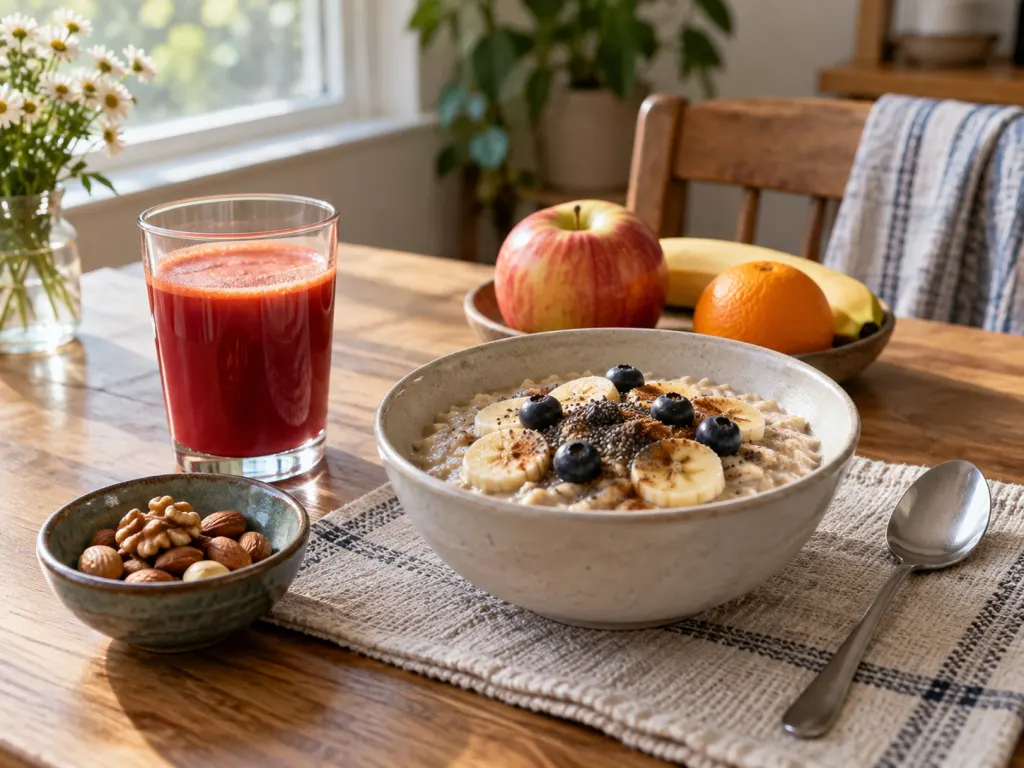
A good way to use beet, carrot, and apple juice is as a supporting beverage, not the center of the meal. For breakfast, it might sit beside oatmeal with nuts or plain yogurt with fruit. At lunch, it can go with a sandwich, soup, or grain bowl. In the afternoon, it can replace a sweetened drink when you want something colorful and fresh. The point is not to chase a dramatic result; the point is to make produce easier to include while keeping the rest of the plate steady.
Flavor balance also helps keep the habit sustainable. If the beet flavor is too strong, use more carrot or apple and a squeeze of lemon. If the juice tastes too sweet, use more carrot and beet, add cucumber, or serve it over ice in a smaller glass. Ginger can add brightness, but it should be used for flavor rather than as a health promise. A drink that tastes good and fits calmly into your day is more useful than one made from a rigid formula you do not actually enjoy.
Who Should Be More Thoughtful
Some readers may need a more individualized approach. People managing a nutrition plan, digestive sensitivity, dental concerns, or a condition that affects what they eat may want personal guidance rather than broad internet advice. Children may also do better with small portions and whole fruit habits rather than frequent large juices. The safest general rule is simple: keep the glass modest, keep whole produce in the rotation, and ask a qualified professional when your situation is not average.
Wrap-Up
Beet, carrot, and apple juice is best understood as a colorful produce drink with real culinary appeal and reasonable nutrition value, not as a special wellness shortcut. Its strengths are flavor, hydration, carotenoid-rich carrots, fruit-and-vegetable variety, and the ease of preparing a fresh glass at home. Its limits are just as important: juicing can reduce fiber, large servings can add more natural sugar and calories than expected, and raw produce needs careful washing and clean handling. For most people, the smartest use is a small serving alongside a balanced meal, with whole fruits and vegetables still doing much of the daily work.
Frequently Asked Questions
- → Is beet, carrot, and apple juice better blended or juiced?
Blending usually keeps more pulp, so the drink has more body and may retain more of the produce structure. Juicing makes a smoother, lighter drink but leaves more pulp behind. If you like juice, keep the serving modest and continue eating whole fruits and vegetables too.
- → Can I drink beet, carrot, and apple juice every day?
For many people, a small glass can fit into a varied eating pattern. The better question is what it replaces. If it replaces soda or a very sweet drink, it may be a useful swap. If it replaces whole meals or whole produce, it is less balanced.
- → Why add apple to beet and carrot juice?
Apple adds acidity, aroma, and familiar sweetness. It helps soften the earthy taste of beet and the dense sweetness of carrot, making the blend easier to enjoy without adding sugar or syrup.
- → Does this juice count the same as eating vegetables and fruit?
It can contribute produce flavor and some nutrients, but it is not identical to eating whole produce. Whole apples, carrots, and beets provide chewing texture and more intact fiber. Think of the juice as a companion to whole foods, not a full substitute.
- → How long does fresh beet, carrot, and apple juice keep?
Fresh juice tastes best soon after making it. If you store it, use a clean covered container, refrigerate it promptly, and discard it if the smell, taste, or appearance seems off. Clean produce handling matters because the drink is made from raw ingredients.
References
This content was developed and refined using reliable sources.
- https://odphp.health.gov/our-work/nutrition-physical-activity/dietary-guidelines/current-dietary-guidelines
- https://foodbuyingguide.fns.usda.gov/FoodComponents/ResourceFruits
- https://api.nal.usda.gov/fdc/v1/food/170393?api_key=DEMO_KEY
- https://ods.od.nih.gov/factsheets/vitamina-consumer
- https://fdc.nal.usda.gov
- https://fdc.nal.usda.gov/api-guide
- https://www.fda.gov/food/buy-store-serve-safe-food/selecting-and-serving-produce-safely