 Save
Spruce tips are powerful because they turn a familiar evergreen into a short-season kitchen ingredient: bright, aromatic, tart, and deeply tied to spring. They are not a magic health food. Their best use is practical and sensory: learn what true spruce looks like, gather the tender new tips modestly, handle them cleanly, and use their lemony-resin flavor where you would otherwise reach for citrus zest, herbs, or a foresty accent.
What Spruce Tips Actually Are
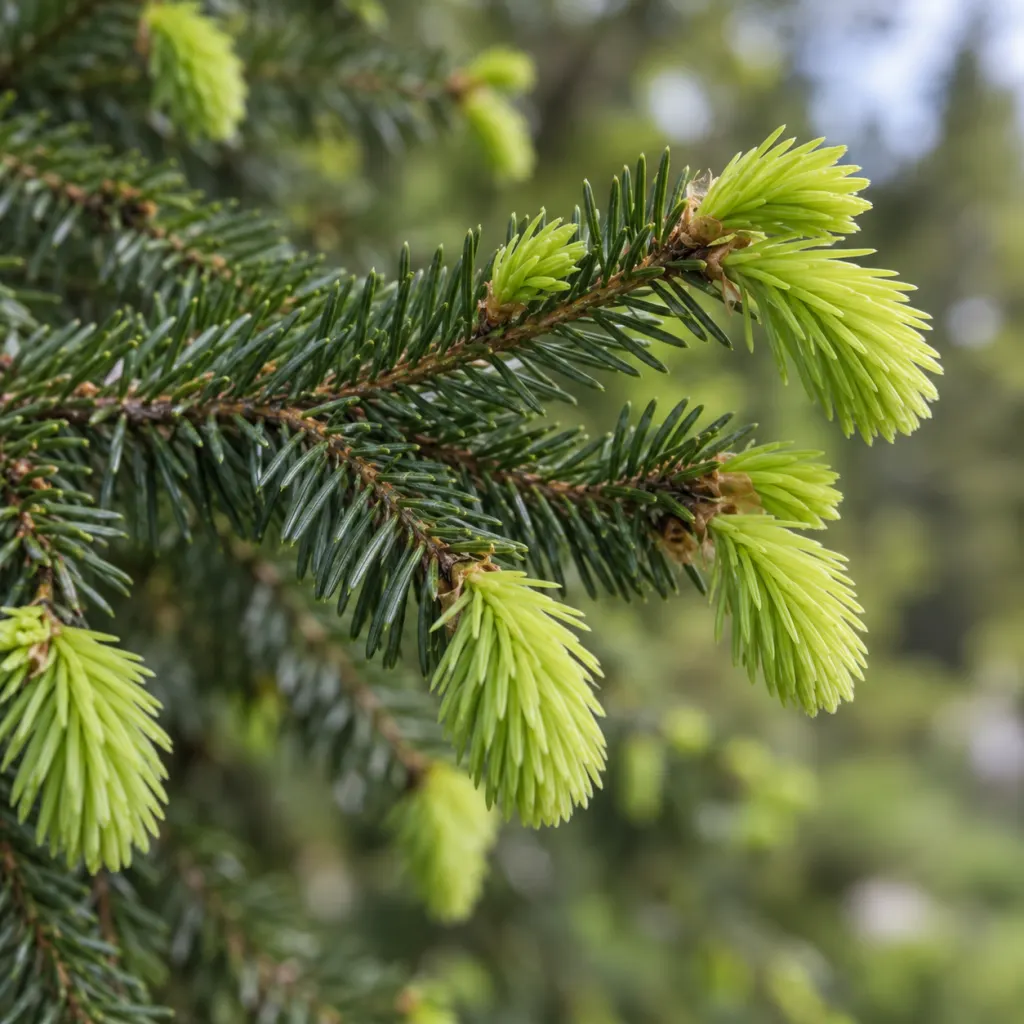
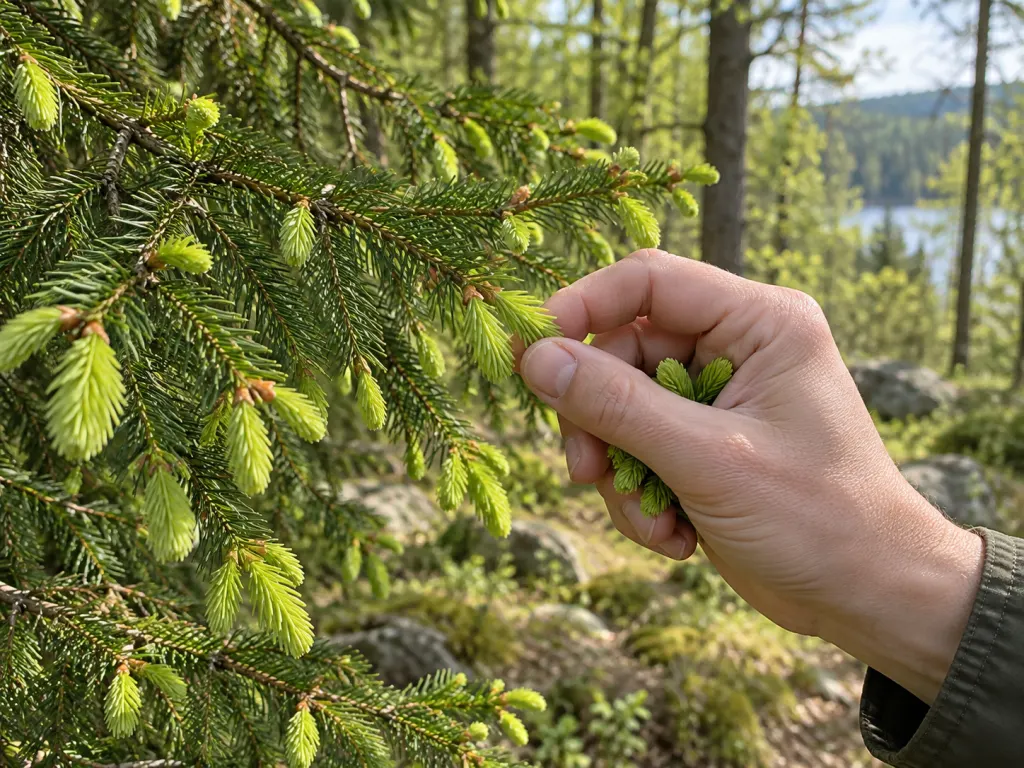
Spruce tips are the pale green, soft new shoots that appear at the ends of spruce branches during spring growth. Botanically, spruce belongs to the genus Picea. These shoots eventually harden into the darker needles that stay on the tree, but for a brief window they are tender enough to pinch between the fingers. That short timing is why spruce tips feel special in the kitchen: they are seasonal, fragile, and strongly flavored before they become woody.
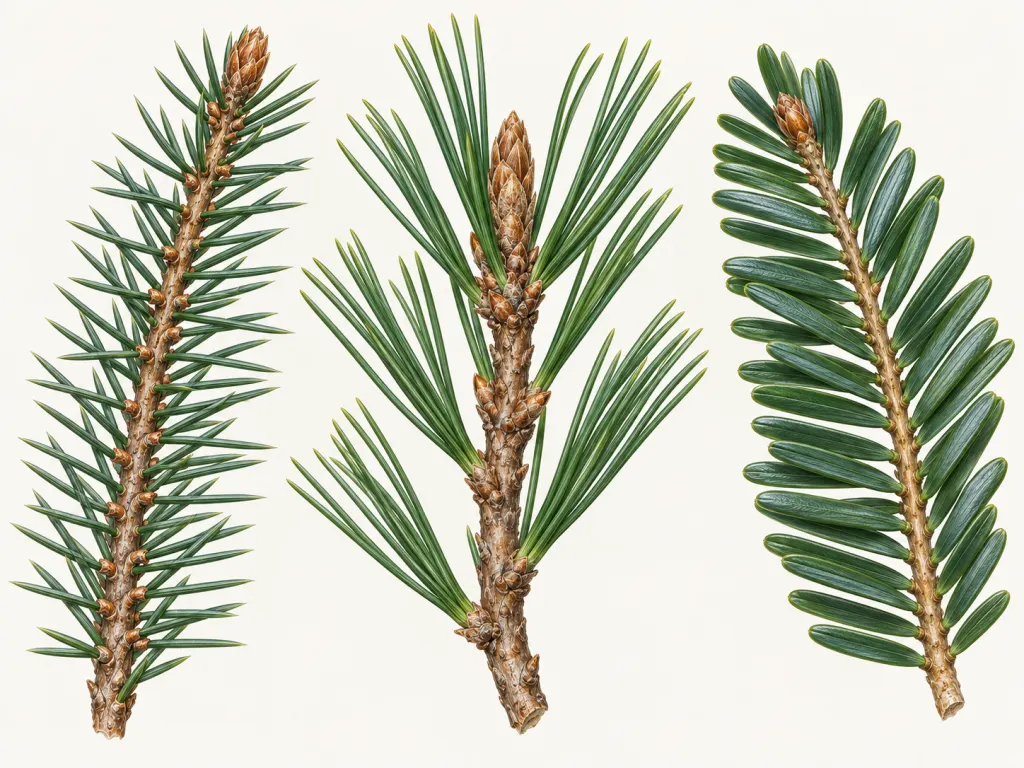
The first skill is identification. Cornell Cooperative Extension explains that spruce needles grow singly from tiny woody pegs on the twig, called sterigmata, and that spruce needles are often four-sided rather than flat like fir needles or bundled like pine needles. That matters because casual names such as evergreen, pine, and Christmas tree are not precise enough for foraging. Start with genus-level confidence before thinking about taste. See Cornell's conifer identification guidance at https://smallfarms.cornell.edu/2019/02/arent-they-all-just-pines-how-to-id-conifer-trees/.
The Flavor Is the Main Event
The appeal of spruce tips is not subtle once you notice it. Fresh tips can taste bright, tangy, resinous, lightly bitter, and almost citrus-like, though the exact balance changes by species, weather, and the age of the shoot. Very young tips are usually softer and more delicate; older tips become firmer, darker, and more resin-forward. That is why cooks often use them as an accent rather than a bulk green. A small amount can perfume a syrup, vinegar, salt, butter, cream, or dough without making the whole dish taste like a tree.
A useful way to think about spruce tips is as a bridge between herbs and citrus. They can bring lift to rich foods, a fragrant edge to sweets, and a clean bitterness to drinks. They are also interesting in savory cooking, especially with roasted vegetables, mushrooms, fish, poultry, grains, and creamy sauces. Because the flavor is unusual, it is wise to begin with a small culinary amount in a familiar preparation and adjust from there. The goal is balance, not intensity for its own sake.
Why People Connect Them With Wellness
Some of the reputation around spruce tips comes from their nutrient and plant-compound profile. A 2020 study on Norway spruce sprouts and older needles found that the sprouts had higher concentrations of vitamin C, magnesium, potassium, and phosphorus than older needles in the samples studied, and that processing and storage affected quality. The same paper also reported that freeze-drying preserved quality better than warm air drying in that setting. That is useful composition information, but it should not be stretched into a promise about personal outcomes. The study is available through PubMed at https://pubmed.ncbi.nlm.nih.gov/32932686/.
Vitamin C itself is an essential nutrient. The National Institutes of Health notes that it is naturally present in some foods, involved in collagen biosynthesis, functions as a physiological antioxidant, supports immune function, and improves absorption of nonheme iron from plant foods. Those roles explain why vitamin C-rich foods matter in a varied diet, but they do not turn any single seasonal ingredient into a stand-alone wellness plan. For the NIH fact sheet, see https://ods.od.nih.gov/factsheets/VitaminC-HealthProfessional/.
Positive Identification Comes Before Harvesting
Foraging rules are simple in theory and serious in practice. Mississippi State University Extension advises being completely certain of a wild plant's identity before eating it, using multiple good plant resources, and knowing which plant parts are used and how they should be prepared. That advice fits spruce tips especially well because many needle-bearing plants share a general evergreen look from a distance. Read more at https://extension.msstate.edu/publications/forgotten-foods-introduction-wild-edible-plants.
Look for the combination of spruce traits rather than relying on one cue. Spruce needles generally attach one by one, sit on small woody pegs, and feel sharp or stiff compared with many firs. Pines have needles in bundles. Firs tend to have flatter, softer needles attached differently, and their cones stand upright rather than hanging. Yew is a separate plant group and should not be confused with spruce. MedlinePlus identifies yew as an evergreen-like plant with toxic parts and advises avoiding unfamiliar plants; its page is at https://www.medlineplus.gov/ency/article/002877.htm.
- Confirm the tree as spruce before tasting any part.
- Harvest only the soft, new, pale tips, not older woody needles.
- Skip trees near roadsides, sprayed lawns, industrial edges, or unknown chemical exposure.
- Ask permission on private land and check rules on public land.
- Take a small amount from many healthy branches rather than stripping one branch.
- Leave enough new growth for the tree and for wildlife habitat.
Sustainable Harvesting Is Part of the Power
The phrase sustainable harvesting can sound vague, but for spruce tips it has a very concrete meaning: the new tips are the tree's current growth. Removing too many from a young tree, a stressed tree, or one branch can affect shape and vigor. Mississippi State University Extension's wild edible plant guidance includes a conservation rule to avoid over-harvesting native plant populations and to take no more than one-third of any plant or population in one location. For home foragers, an even lighter touch is often better because spruce tips are concentrated growth points, not loose leaves.
USDA organic wild-crop guidance uses a broader management lens: wild harvesting should maintain or improve the natural resources of the area, document the harvest site, consider contamination sources, and monitor harvest practices. A home cook does not need an organic system plan for a small kitchen project, but the principle is useful. Know the site, avoid questionable edges, keep records if you return year after year, and treat the tree as a living source rather than a one-time supply. USDA's wild crop harvesting guidance is at https://www.ams.usda.gov/rules-regulations/organic/handbook/5022.
How to Handle Spruce Tips in the Kitchen
Once harvested, spruce tips behave more like delicate herbs than sturdy vegetables. Sort them soon after gathering, removing woody bits, insects, browned pieces, and anything that does not match the expected plant material. Keep them cool, loosely packed, and dry until you are ready to clean them. If they arrive warm and crushed at the bottom of a bag, their flavor can flatten quickly, so a shallow container or breathable basket is kinder to the harvest.
For cleaning, follow the same basic habits used for fresh produce. The FDA advises washing produce thoroughly under running water before preparing or eating it, using clean hands and surfaces, keeping produce separate from raw meat, poultry, and seafood, and storing perishable fresh produce in a refrigerator at 40 degrees F or below. Soap, detergent, and commercial produce washes are not recommended for produce. The FDA guidance is here: https://www.fda.gov/food/buy-store-serve-safe-food/selecting-and-serving-produce-safely.
Fresh, Frozen, Dried, or Infused
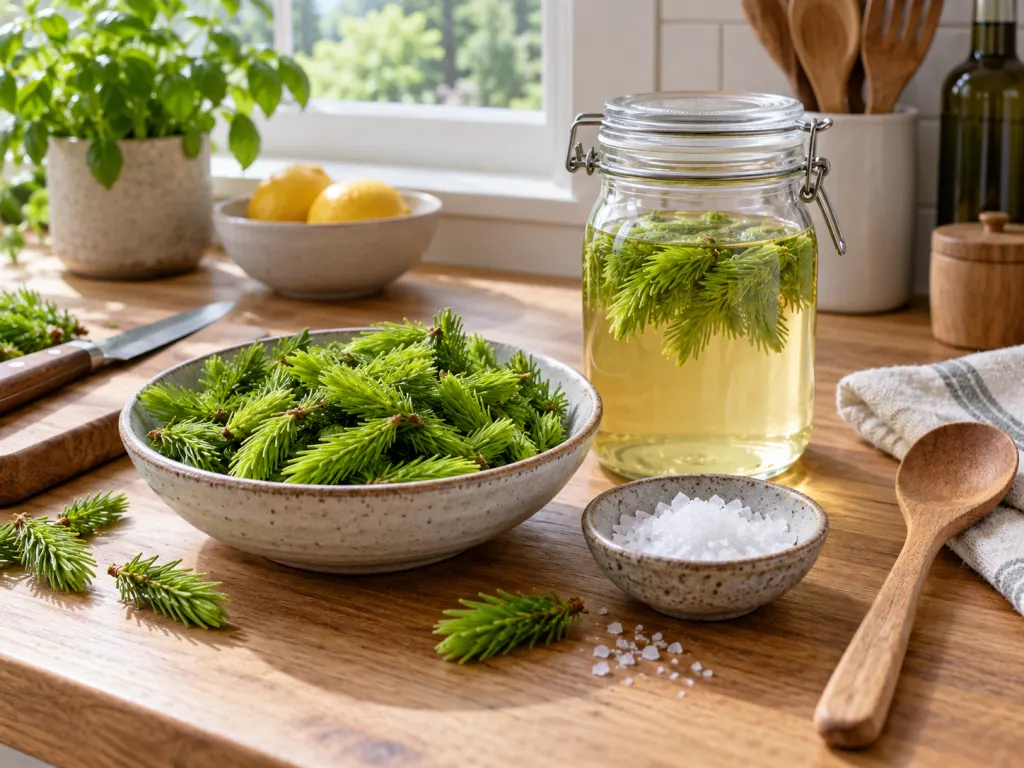
Fresh tips give the cleanest spring flavor. Use them soon in a simple tea, a quick syrup, a vinegar infusion, a compound butter, or as a finely chopped accent in baked goods. Freezing is useful when the harvest is brief: spread clean, dry tips on a tray until firm, then move them into a sealed container. Drying can be convenient, but warm drying may reduce some quality markers compared with freeze-drying in the Norway spruce study, so expect dried tips to taste more muted and resinous than fresh ones.
Infusions are where spruce tips often shine. A vinegar infusion can carry brightness into salad dressings and marinades. A sugar syrup can sweeten sparkling water, cocktails, cakes, or fruit. A salt blend can season roasted potatoes or grilled vegetables. Oil infusions require extra care because low-acid, homemade herb oils can be risky if handled poorly; for a casual home kitchen, vinegar, salt, sugar, freezing, or immediate use are simpler choices. Keep batches small, label them with the date, and discard anything that smells off, looks moldy, or has been held in uncertain conditions.
A Sensible View of Nutrition Claims
Spruce tips can be part of a varied kitchen, but they should not be framed as a shortcut to health. Their composition is interesting, especially because research has measured vitamin C and minerals in Norway spruce sprouts, but species, growing site, age of the shoot, handling, and processing can all change what ends up in the bowl. A spoonful in syrup is mostly a flavoring. A handful steeped as tea is a beverage. Neither one should carry the burden of meeting daily nutrient needs.
The more grounded way to appreciate them is culinary diversity. Seasonal wild foods can make cooks pay closer attention to local plants, timing, and land stewardship. They can also add flavor without relying only on packaged extracts. That is meaningful, even without grand claims. If spruce tips encourage a cook to learn tree identification, respect harvest limits, and make a bright spring vinegar for salads, that is already enough power for one small green shoot.
Common Mistakes to Avoid
The first mistake is harvesting before identification is certain. The second is taking too much from one tree because the tips look abundant. The third is gathering from a tree that may have been sprayed or exposed to runoff. The fourth is expecting every spruce species, every region, and every batch to taste the same. Flavor changes quickly with age, and a tip that was tender last week may be tough and strong this week. The final mistake is treating spruce tips as a health product rather than a seasonal ingredient with some measured nutrients and many open variables.
There is also a tone mistake: making spruce tips sound mysterious when the best practice is careful and ordinary. Identify. Ask permission. Take little. Wash. Store cold. Use thoughtfully. Those steps do not make the ingredient less enchanting; they make it more usable. The beauty of spruce tips is that they ask for attention before they reward you.
The Takeaway for Home Cooks
Spruce tips are worth knowing because they connect flavor, season, botany, and care. Their value is not in exaggerated claims, but in a very real kitchen experience: a few soft green shoots can make a drink brighter, a vinegar more complex, or a dessert unexpectedly fresh. Learn the tree first, harvest as if you plan to meet it again next spring, and let the flavor do the convincing.
Wrap-Up
Spruce tips are the tender spring growth of true spruce trees. They are best understood as a seasonal culinary ingredient with a bright resin-citrus flavor, not as a stand-alone health solution. Use authoritative identification guidance, harvest lightly from clean and permitted sites, wash and store the tips like fresh produce, and keep nutrition claims modest. Their real power is the way they bring careful foraging and fresh woodland flavor into the kitchen.
Frequently Asked Questions
- → When are spruce tips usually ready to harvest?
They are usually gathered in spring when the new growth is pale green, soft, and still tender. The exact timing depends on local climate, elevation, species, and weather. Once the tips darken and stiffen, they become stronger and less pleasant for most kitchen uses.
- → Can I use any evergreen tips the same way?
No. Evergreen is a broad description, not an edible identity. Confirm that the tree is a true spruce before using the tips, and avoid any plant you cannot identify with confidence. Good identification relies on needle attachment, twig structure, cones, habitat, and multiple reliable references.
- → What do spruce tips taste like?
Fresh spruce tips often taste tart, aromatic, resinous, and lightly citrus-like. Young tips are usually softer and brighter, while older tips can become tougher and more bitter. Use them as an accent in drinks, syrups, vinegars, salts, baked goods, and savory dishes.
- → How much should I harvest from one tree?
Take only a small amount, spread the harvest across healthy branches, and avoid stripping branch ends. New tips are active spring growth, so restraint protects the tree's shape and vigor. If a tree is small, stressed, newly planted, or on land where harvesting is not allowed, leave it alone.
- → How should I store fresh spruce tips?
Sort them promptly, keep them cool, and wash them under running water before use. Store clean, dry tips in the refrigerator for short-term use, or freeze them in a single layer before sealing. Label preserved batches with the date and discard anything with mold, off odors, or uncertain storage history.
References
This content was developed and refined using reliable sources.
- https://smallfarms.cornell.edu/2019/02/arent-they-all-just-pines-how-to-id-conifer-trees
- https://extension.msstate.edu/publications/forgotten-foods-introduction-wild-edible-plants
- https://www.fda.gov/food/buy-store-serve-safe-food/selecting-and-serving-produce-safely
- https://pubmed.ncbi.nlm.nih.gov/32932686
- https://www.medlineplus.gov/ency/article/002877.htm
- https://www.ams.usda.gov/rules-regulations/organic/handbook/5022
- https://ods.od.nih.gov/factsheets/VitaminC-HealthProfessional