 Save
Soaking strawberries in salt water can reveal tiny pale larvae when berries are infested by certain fruit flies, especially spotted wing drosophila. It does not prove that all strawberries are unsafe, and it should not replace basic produce handling. For home kitchens, the more reliable routine is to buy sound berries, keep them cold, rinse them under running water before eating, and throw away fruit that is moldy, rotten, badly bruised, or leaking. Extension programs use salt or sugar solutions to monitor berry pests, while the FDA’s consumer guidance still centers on running water, clean hands, separation from raw animal foods, refrigeration, and drying produce after washing Oregon State University Extension FDA.
What the Salt Water Test Really Does
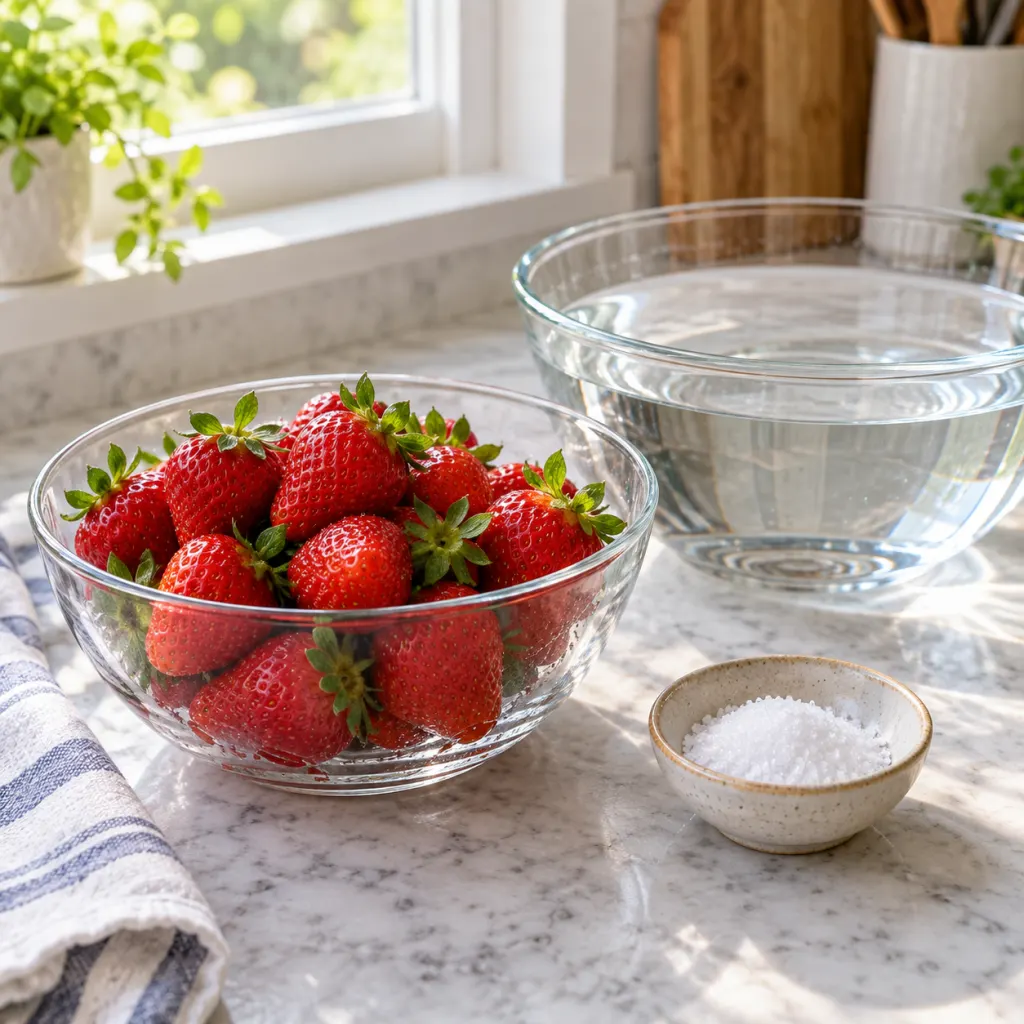
The viral version of the salt water soak often makes the result look mysterious, but the underlying idea is fairly ordinary entomology. When soft fruit is crushed or submerged in a salt or sugar solution, larvae that are already inside the fruit may be irritated, leave the pulp, and float where they are easier to see. Oregon State University Extension describes this as a detection method for spotted wing drosophila larvae, not as a normal table-side washing method for every bowl of berries Oregon State University Extension.
The test is most useful for growers, scouts, and educators who need to check a fruit sample. In those settings, the fruit is often crushed in a bag or tray, mixed with a measured salt or sugar solution, and inspected under good light. That is different from soaking intact berries at home and expecting the water to certify them as safe. A home soak may reveal something visible, but a clear bowl is not a guarantee that every berry is free of hidden pests or microbes.
The Likely Insect: Spotted Wing Drosophila
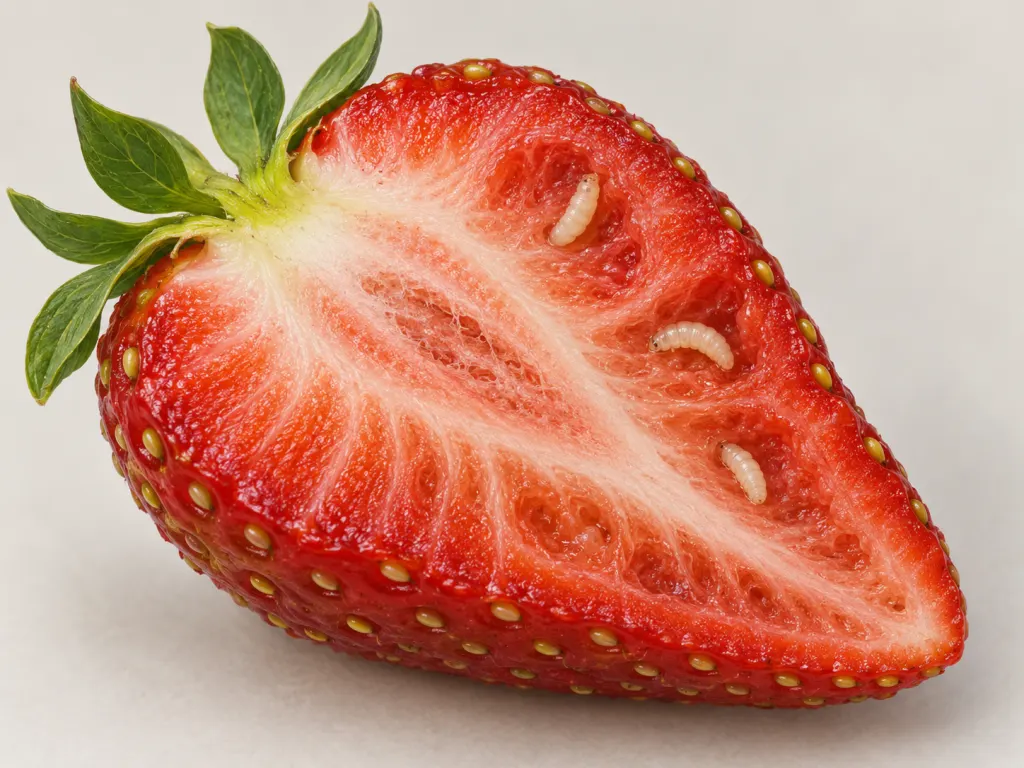
When tiny pale larvae are found in otherwise ripe soft fruit, one common suspect is spotted wing drosophila, known scientifically as Drosophila suzukii. NC State Extension explains that this invasive fruit fly affects soft-skinned fruit and that female flies can lay eggs in ripe and ripening fruit, with larvae feeding inside. Strawberries are one possible host, though the level of concern varies by region, season, growing conditions, and whether the fruit is early or later-season NC State Extension.
Rutgers Cooperative Extension describes spotted wing drosophila as different from many familiar vinegar flies because females have a serrated egg-laying structure that can pierce ripening soft fruit. Adults are small, and the larvae are small, pale, legless, and difficult for a casual shopper to identify with certainty. That matters because not every speck or thread in a bowl is a larva, and not every larva can be identified by sight at the kitchen counter Rutgers NJAES.
Why a Clear Soak Does Not Mean Zero Risk
A salt soak is a visibility tool, not a full safety screen. Some larvae may remain hidden, small debris can be mistaken for insects, and microbes are not visible in the bowl. The FDA notes that washing produce can reduce bacteria that may be present but does not eliminate all of it. That is one reason the advice around fresh produce is broader than any single rinse, soak, or kitchen trick FDA.
For everyday berries, think in layers: buy carefully, store correctly, wash just before eating, dry well, and keep raw meat, poultry, and seafood away from ready-to-eat fruit. The CDC’s food-safety basics also place rinsing fresh fruits and vegetables inside a larger clean, separate, cook, and chill framework, because foodborne germs can move by hands, surfaces, utensils, and storage habits CDC.
How to Wash Strawberries for Eating
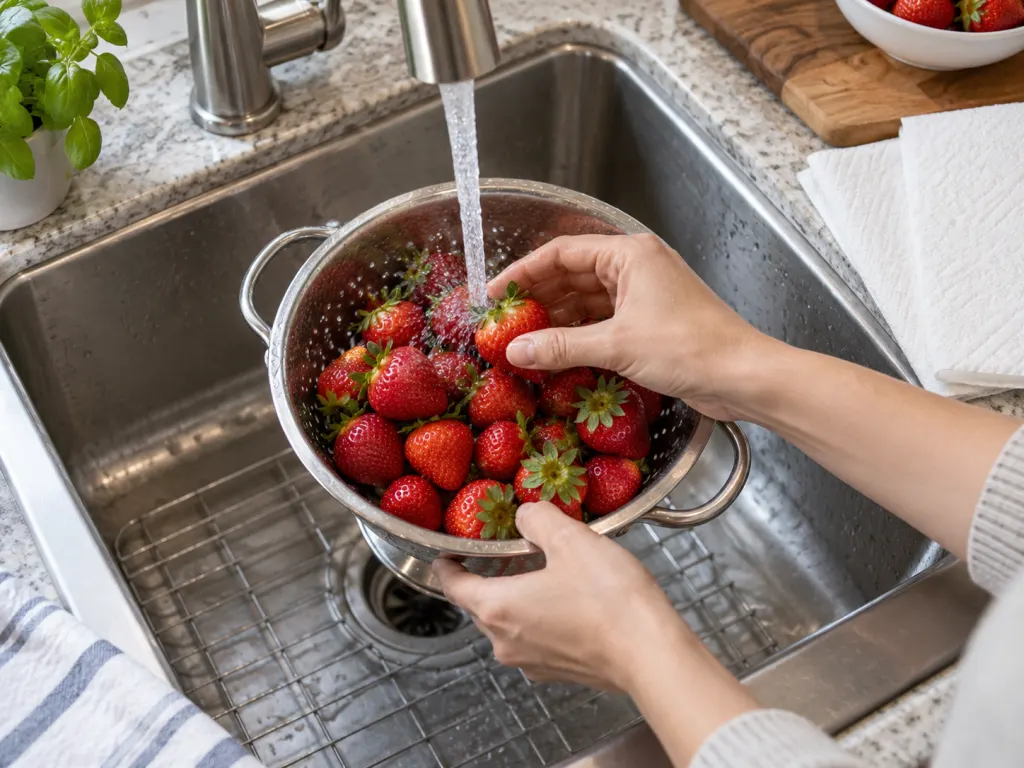
The simplest routine is usually the best one. Wait to wash strawberries until shortly before you plan to eat or use them, because extra moisture can shorten their storage life. Sort through the container first and remove berries that are moldy, rotten, crushed, or leaking. Rinse the remaining berries under cool running water, moving them gently with clean hands. Drain them, then dry them with a clean towel or paper towel before serving or storing them briefly.
Do not wash strawberries with soap, detergent, or household cleaning products. The FDA specifically advises against washing produce with soap, detergent, or commercial produce wash, noting that produce is porous and that residues may be unsafe or untested for this use FDA. Strawberries are delicate, so scrubbing is not appropriate; a gentle running-water rinse is enough for ordinary preparation.
If You Still Want to Try a Salt Soak
If curiosity wins and you want to do a salt-water check, treat it as an inspection step rather than a cleanliness guarantee. Use clean equipment, keep the soak brief, and rinse the berries afterward so the fruit is not left salty. For a more inspection-oriented version, extension protocols generally call for crushed fruit samples, measured solutions, good lighting, and close observation. Rutgers describes a salt flotation approach in which berries are gently crushed, mixed with a saturated salt solution, and checked for larvae that exit and float Rutgers NJAES.
For home eating, intact berries do not need a dramatic treatment. A long soak can make strawberries waterlogged, dull their flavor, and leave them softer. If a soak reveals larvae, many people understandably choose to discard that batch. If berries are moldy, smell fermented, collapse when handled, or have visible spoilage, discarding them is the more practical choice than trying to rescue them.
- Best everyday wash: rinse under cool running water shortly before eating.
- Best storage habit: refrigerate strawberries and keep them dry until use.
- Best sorting rule: discard moldy, rotten, leaking, or badly bruised berries.
- Best salt-soak mindset: use it as a check for visible larvae, not as a promise of safety.
- Best kitchen habit: keep washed fruit away from raw meat, poultry, seafood, and their juices.
Storage Matters as Much as Washing
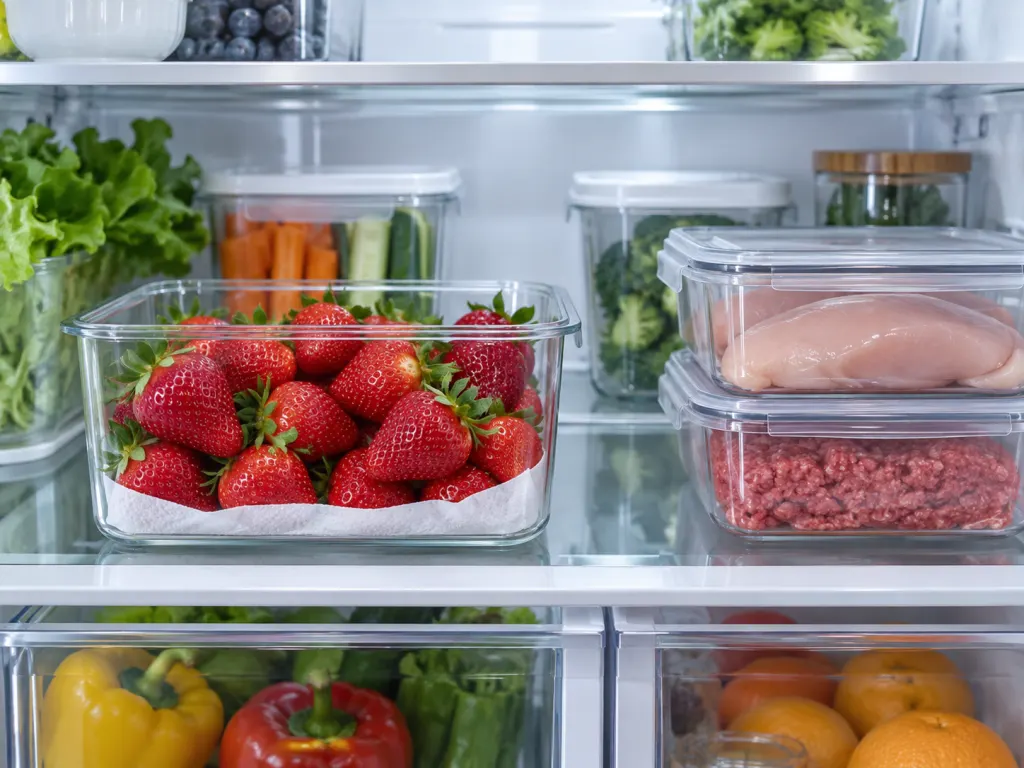
Strawberries are perishable. The FDA recommends storing perishable fresh fruits and vegetables, including strawberries, in a clean refrigerator at 40 degrees F or below and refrigerating pre-cut produce. Keeping berries cold helps preserve quality and supports safer handling, especially when fruit will be eaten raw FDA.
At home, remove obviously spoiled berries as soon as you notice them, because one moldy berry can affect the rest of the container. Keep berries in a clean container with some airflow, avoid sealing wet berries in a tight bag, and wash only the amount you plan to use. If you cut strawberries for a fruit salad, return the cut fruit to the refrigerator promptly rather than leaving it on the counter for a long stretch.
What About Eating a Berry That Had a Tiny Larva?
Many readers are mainly wondering whether the idea is disgusting, dangerous, or both. The honest answer is that finding larvae is a quality and comfort issue as well as a sign that the fruit was infested. It does not automatically prove that a person will feel sick. However, raw fruit can carry germs from soil, water, handling, storage, or kitchen surfaces, and those risks are managed with the broader food-safety habits discussed above, not with salt alone.
The CDC lists unwashed fruits and vegetables among foods that can carry harmful germs and notes that some groups are more likely to become very sick from foodborne germs, including adults 65 and older, children under 5, pregnant people, and people with weakened immune systems CDC. If someone in the household is in one of those groups, it is reasonable to be more conservative with questionable produce.
When Symptoms Need Prompt Attention
If someone develops stomach symptoms after eating and the symptoms are severe, persistent, or worrying, the question moves beyond berry washing. CDC guidance says severe food poisoning symptoms can include bloody diarrhea, diarrhea lasting more than three days, fever over 102 degrees F, frequent vomiting that prevents keeping liquids down, or signs of dehydration such as little urination, dry mouth or throat, or dizziness when standing CDC. Those situations call for medical guidance rather than home troubleshooting.
A Practical Takeaway for Home Cooks
Salt water can answer one narrow question: are there larvae visible after a berry sample is soaked or crushed in a solution? It cannot answer every question about freshness, microbial safety, storage history, or whether a batch will taste good. For most households, the best routine is calm and simple: buy berries that look sound, keep them refrigerated, wash them under running water before eating, dry them, and discard berries that show spoilage.
If the thought of hidden larvae ruins the fruit for you, that reaction is understandable. You do not have to eat berries that make you uncomfortable. But the internet’s most startling versions of this test can make a normal produce-quality issue feel more dramatic than it is. Strawberries grow outdoors, insects exist around fruit crops, and food-safety habits are designed to reduce everyday risk without turning every snack into a lab project.
Wrap-Up
Soaking strawberries in salt water is best understood as a pest-checking method, not a required cleaning ritual. Agricultural extensions use salt or sugar solutions to help float larvae from soft fruit samples, especially when monitoring spotted wing drosophila. In a home kitchen, the main habits remain choosing sound berries, refrigerating them, rinsing under running water shortly before eating, drying them, avoiding cross-contact with raw animal foods, and discarding spoiled fruit.
Frequently Asked Questions
- → Does soaking strawberries in salt water make them safer to eat?
A salt soak can help reveal some visible larvae in infested fruit, but it is not a complete food-safety step. The FDA’s consumer guidance emphasizes rinsing produce under running water, using clean hands and surfaces, refrigerating perishable produce, and discarding damaged or rotten fruit.
- → What are the tiny pale larvae sometimes seen after a salt soak?
One possible source is spotted wing drosophila, a small fruit fly that can lay eggs in ripe or ripening soft fruit. The larvae are small, pale, and hard to identify with certainty at home, so a visible finding is best treated as a reason to discard questionable fruit rather than as a precise species diagnosis.
- → Should I wash strawberries as soon as I bring them home?
Usually, no. Strawberries keep better when they stay dry until shortly before use. Sort out spoiled berries, refrigerate the rest, then rinse the amount you plan to eat under cool running water and dry them before serving.
- → Is vinegar, soap, or produce wash better than water?
Do not use soap or detergent on strawberries. FDA guidance advises against washing fruits and vegetables with soap, detergent, or commercial produce wash. For routine preparation, use running water, clean hands, clean surfaces, and careful storage.
- → What should I do if a salt soak reveals larvae?
Many people choose to discard that batch, especially if the fruit is soft, leaking, moldy, or unpleasant to eat. If the berries otherwise look sound, the decision is partly about comfort and quality. When serving higher-risk household members, being more conservative with questionable raw produce is sensible.
References
This content was developed and refined using reliable sources.
- https://www.fda.gov/food/buy-store-serve-safe-food/selecting-and-serving-produce-safely
- https://extension.oregonstate.edu/catalog/em-9097-spotted-wing-drosophila-quick-7-step-guide-detecting-swd-larvae-fruit
- https://content.ces.ncsu.edu/spotted-wing-drosophila-in-strawberries
- https://njaes.rutgers.edu/fs1246
- https://www.cdc.gov/food-safety/about/index.html
- https://www.cdc.gov/food-safety/signs-symptoms/?CDC_AAref_Val=https://www.cdc.gov/foodsafety/symptoms.html