 Save
The main indicators of possible blocked arteries are chest pressure, breathlessness, pain spreading to the arm, back, neck, jaw, or upper belly, cold sweat, nausea, lightheadedness, unusual fatigue, palpitations, leg cramping with walking, cold or discolored feet, slow-healing sores on the feet or legs, sudden stroke-like symptoms, and severe abdominal pain after meals. These signs do not prove an artery is blocked, but they are important because atherosclerosis can reduce oxygen-rich blood flow and may not cause symptoms until narrowing is advanced, according to the National Heart, Lung, and Blood Institute https://www.nhlbi.nih.gov/health/atherosclerosis/symptoms.
What blocked arteries usually means
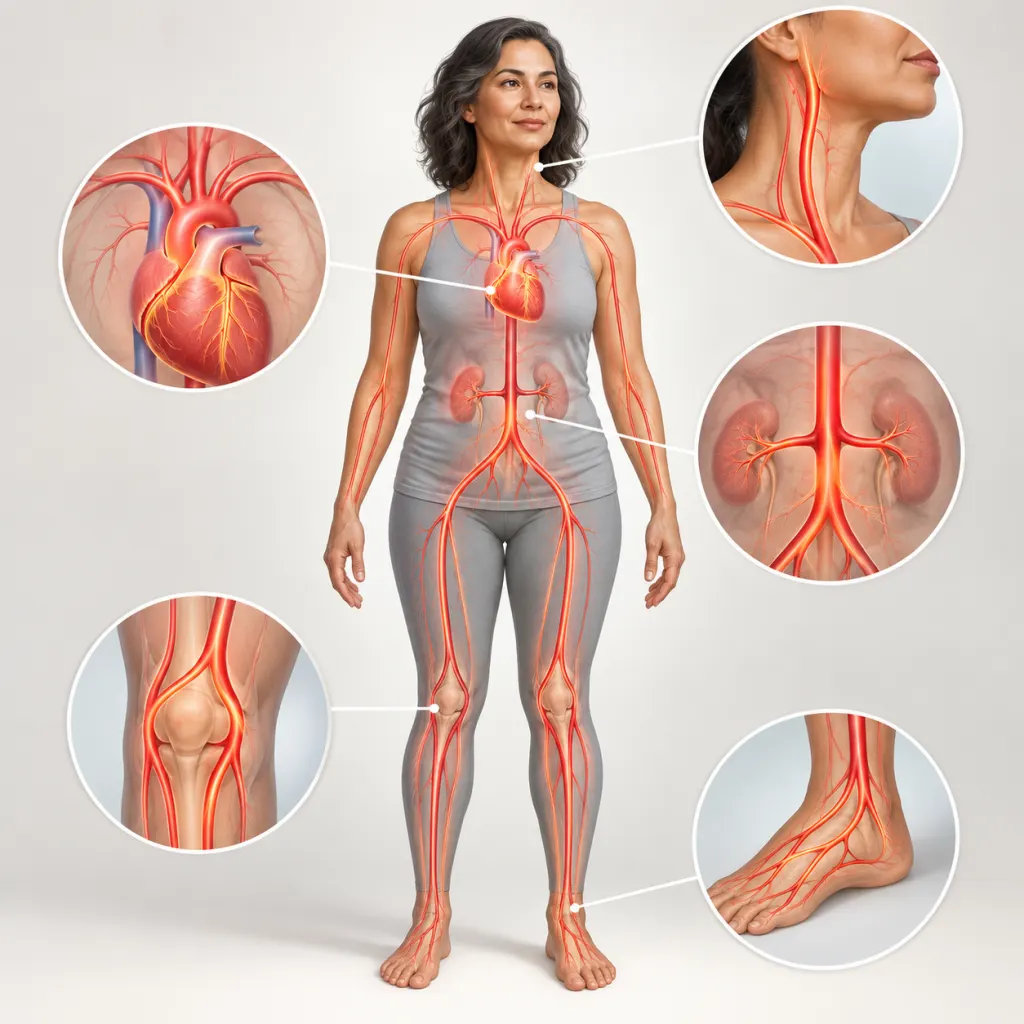
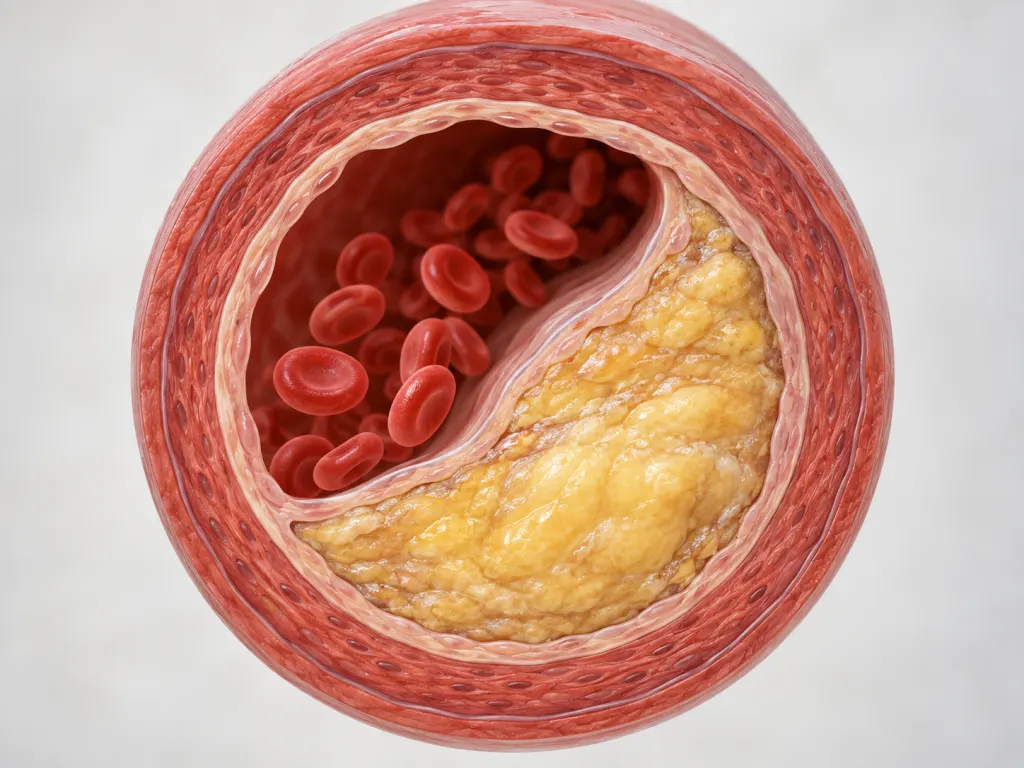
Most everyday discussions of “blocked arteries” are really about atherosclerosis. MedlinePlus describes atherosclerosis as plaque buildup inside arteries; plaque can include fat, cholesterol, blood cells, calcium, and other substances in the blood. Over time, this buildup can narrow arteries and limit oxygen-rich blood flow to organs and tissues https://medlineplus.gov/atherosclerosis.html. The same process can show up in different places, so the warning signs depend on which artery is affected. Coronary arteries supply the heart. Carotid and vertebral arteries supply the brain. Peripheral arteries supply the legs and feet. Mesenteric arteries supply the intestines. That is why one person may notice chest pressure, another may notice leg pain while walking, and another may have sudden trouble speaking or seeing.
The most useful way to read the list below is not as a self-test, but as a map for deciding what deserves prompt attention. Symptoms can overlap with many non-artery problems, including muscle strain, reflux, anxiety, lung conditions, nerve problems, and infections. Still, recurring, worsening, sudden, or activity-related symptoms should not be brushed aside. NHLBI notes that early atherosclerosis often causes no symptoms and that symptoms may first appear during physical or emotional stress, when the body needs more oxygen https://www.nhlbi.nih.gov/health/atherosclerosis/symptoms.
- Chest pressure or tightness: especially in the center or left side of the chest.
- Shortness of breath: with activity, at rest, or along with chest discomfort.
- Discomfort spreading beyond the chest: arm, shoulder, back, neck, jaw, teeth, or upper belly.
- Cold sweat, nausea, lightheadedness, or sudden dizziness: especially when combined with chest or breathing symptoms.
- Unusual fatigue or weakness: a marked drop in ordinary activity tolerance.
- Palpitations: a racing, pounding, or irregular-feeling heartbeat.
- Leg pain or cramping while walking: often easing after rest.
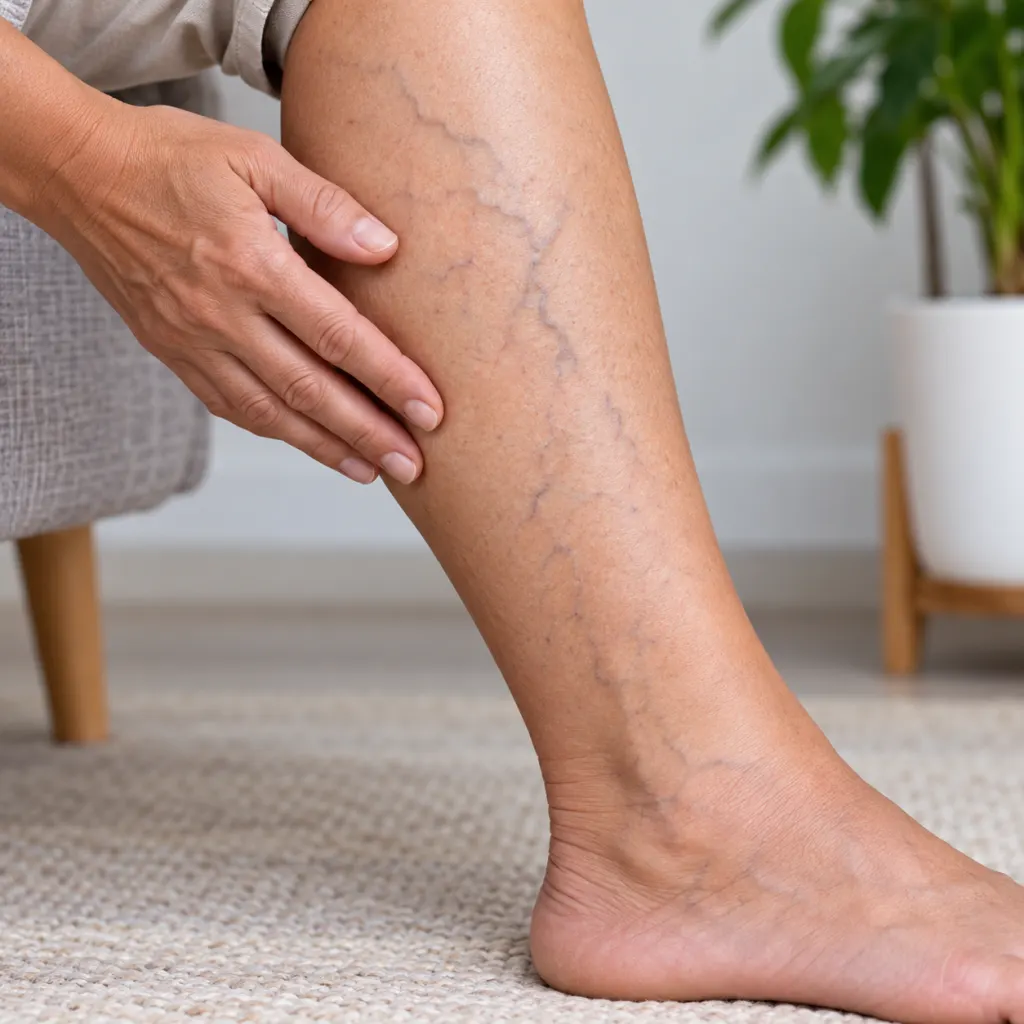
- Cold, pale, blue, or discolored feet or legs: especially when one side differs from the other.
- Slow-healing sores on toes, feet, or legs: a possible sign of poor circulation.
- Sudden stroke-like or severe after-meal abdominal symptoms: depending on which arteries are involved.
1. Chest pressure, tightness, heaviness, or pain
Chest discomfort is one of the best-known warning signs because narrowed coronary arteries can limit blood flow to the heart muscle. Mayo Clinic describes coronary artery disease symptoms as chest pain, shortness of breath, and fatigue when the heart is not getting enough oxygen-rich blood https://www.mayoclinic.org/diseases-conditions/coronary-artery-disease/symptoms-causes/syc-20350613. This discomfort may feel like pressure, squeezing, fullness, heaviness, burning, or aching rather than a sharp stab. It may appear with exertion, strong emotion, cold weather, or after a heavy meal, then improve with rest. It can also come on suddenly. Because symptom patterns vary, any new, severe, recurring, or unexplained chest discomfort deserves medical attention, and possible heart attack symptoms call for emergency help.
2. Shortness of breath that feels out of proportion
Shortness of breath can happen when the heart is struggling to meet the body’s demand for oxygen-rich blood. The American Heart Association lists shortness of breath among heart attack warning signs, and notes that it can occur with or without chest discomfort https://www.heart.org/en/health-topics/heart-attack/warning-signs-of-a-heart-attack. The important clue is change: becoming breathless during a walk that used to be easy, needing to stop on stairs, feeling winded while doing light chores, or having breathlessness together with chest pressure, sweating, nausea, or dizziness. Breathlessness has many causes, but when it is sudden, severe, or paired with other warning signs, it should be treated as urgent.
3. Discomfort that spreads to the arm, back, neck, jaw, or upper belly
Heart-related discomfort does not always stay in the chest. The American Heart Association lists discomfort in one or both arms, the back, neck, jaw, or stomach as possible heart attack warning signs https://www.heart.org/en/health-topics/heart-attack/warning-signs-of-a-heart-attack. This can feel like pressure, aching, tightness, heaviness, or an unexplained deep discomfort. It may be easy to misread as indigestion, a pulled muscle, dental pain, or stress. Context matters: discomfort that appears with exertion, returns repeatedly, comes with breathlessness, sweating, nausea, or lightheadedness, or feels unlike a familiar minor ache needs prompt evaluation.
4. Cold sweat, nausea, lightheadedness, or sudden dizziness
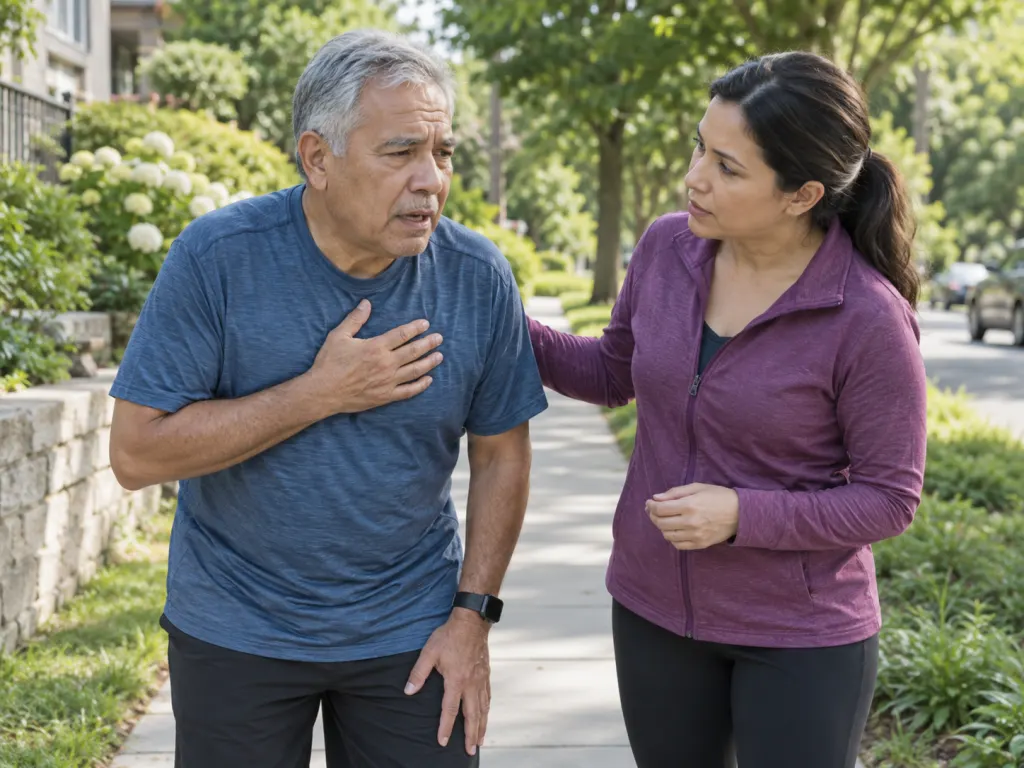
Blocked or suddenly narrowed coronary blood flow can trigger whole-body symptoms, not just chest symptoms. The American Heart Association includes cold sweat, nausea, rapid or irregular heartbeat, unusual tiredness, and lightheadedness among possible heart attack warning signs https://www.heart.org/en/health-topics/heart-attack/warning-signs-of-a-heart-attack. These signs are especially concerning when they arrive abruptly, are intense, or occur together with chest discomfort, breathlessness, or pain spreading to the upper body. Nausea or dizziness by itself can come from many causes, but sudden clusters of symptoms should not be explained away as “just stress” or “just something I ate” without considering urgent care.
5. Unusual fatigue, weakness, or a clear drop in stamina
Fatigue is tricky because it is common and often has everyday explanations. The artery-related clue is a noticeable change in capacity: a routine walk becomes difficult, chores require unexpected rests, or activity brings a heavy, washed-out feeling. Mayo Clinic lists fatigue among coronary artery disease symptoms when the heart cannot pump enough blood to meet the body’s needs https://www.mayoclinic.org/diseases-conditions/coronary-artery-disease/symptoms-causes/syc-20350613. Fatigue is not specific enough to identify blocked arteries on its own, but persistent, unexplained fatigue that is new, activity-related, or paired with chest, breathing, sweating, nausea, or dizziness symptoms deserves a conversation with a qualified clinician.
6. Palpitations or a racing, pounding, irregular-feeling heartbeat
Palpitations can feel like fluttering, pounding, racing, skipped beats, or an uneven rhythm. NHLBI includes heart palpitations among symptoms that may occur with coronary heart disease related to atherosclerosis https://www.nhlbi.nih.gov/health/atherosclerosis/symptoms. Palpitations are not automatically a blocked-artery sign; caffeine, dehydration, stress, thyroid problems, and rhythm disorders can also contribute. They become more concerning when they are new, sustained, associated with faintness, chest pressure, shortness of breath, or sweating, or when they happen during exertion. A clinician can decide whether rhythm testing, heart evaluation, or another workup is appropriate.
7. Leg pain, aching, heaviness, or cramping while walking
Peripheral artery disease, often shortened to PAD, occurs when blood flow to the limbs is reduced. NHLBI describes the most common PAD symptom as pain, aching, heaviness, or cramping in the legs that appears while walking or climbing stairs and improves after rest; the discomfort is often in the calf but can also be felt in the buttock, thigh, or foot https://www.nhlbi.nih.gov/health/peripheral-artery-disease/symptoms. This pattern is easy to mistake for aging, being out of shape, or ordinary soreness. The important detail is repeatability: pain that reliably starts after a certain distance and eases after stopping may reflect limited circulation and should be checked.

8. Cold, pale, blue, or discolored feet or legs
Circulation problems in the legs and feet may show up visually or by temperature. NHLBI lists a foot that feels colder than the other, pale or blue discoloration, leg weakness or numbness, and pins-and-needles sensations among possible PAD symptoms https://www.nhlbi.nih.gov/health/peripheral-artery-disease/symptoms. A single cold foot after sitting oddly is not the same as a persistent circulation change. More concerning signs include one foot repeatedly feeling cooler than the other, color changes that are new or pronounced, numbness with walking difficulty, or pain in the foot at rest. These symptoms need timely medical assessment because poor blood flow can affect tissue health.
9. Slow-healing sores on toes, feet, or legs
Reduced blood flow can make it harder for skin and soft tissue to recover from small injuries. NHLBI notes that PAD may cause sores or wounds on the toes, feet, or legs that heal slowly or do not heal at all https://www.nhlbi.nih.gov/health/peripheral-artery-disease/symptoms. This is different from a normal scrape that steadily improves. Warning patterns include a sore that lingers, a wound that keeps reopening, darkening skin around a toe or foot sore, increasing redness or drainage, or pain that seems out of proportion. These signs should be evaluated promptly, especially when combined with leg pain while walking or cold, discolored feet.
10. Sudden stroke-like symptoms or severe belly pain after meals
Atherosclerosis can affect arteries beyond the heart and legs. NHLBI lists weakness or numbness on one side of the body or face, vision trouble, and problems with thinking and memory among symptoms linked with vertebral artery disease; it also notes that carotid artery disease may remain unnoticed until a transient ischemic attack or stroke https://www.nhlbi.nih.gov/health/atherosclerosis/symptoms. The CDC says stroke symptoms can include sudden face, arm, or leg numbness or weakness, sudden confusion or trouble speaking, sudden vision trouble, sudden trouble walking or balance problems, and sudden severe headache, and advises calling 911 right away https://www.cdc.gov/stroke/signs-symptoms/index.html. Arteries to the intestines can also be affected; NHLBI describes mesenteric artery ischemia as severe belly pain after meals, weight loss, and diarrhea https://www.nhlbi.nih.gov/health/atherosclerosis/symptoms. These are not symptoms to monitor casually at home.
When symptoms need emergency help
Call 911 immediately for possible heart attack or stroke symptoms. For heart attack warning signs, the American Heart Association emphasizes not waiting, even when symptoms are mild or uncertain https://www.heart.org/en/health-topics/heart-attack/warning-signs-of-a-heart-attack. For stroke signs, the CDC stresses that every minute counts and recommends calling 911 rather than driving to the hospital https://www.cdc.gov/stroke/signs-symptoms/index.html. Emergency symptoms include chest pressure that lasts, returns, or comes with breathlessness, sweating, nausea, or lightheadedness; sudden weakness or numbness on one side; sudden speech trouble; sudden vision loss; sudden severe headache; fainting; or severe unexplained shortness of breath.
When to book a non-emergency evaluation
Not every symptom on this list is an emergency, but recurring patterns should be documented and discussed. Write down what the symptom feels like, where it is, when it starts, what you were doing, how long it lasts, what makes it better, and whether it comes with breathlessness, sweating, nausea, dizziness, weakness, or color changes. This kind of timeline helps a qualified health professional decide whether to check circulation, heart rhythm, blood pressure, cholesterol, walking capacity, or other causes. Avoid using symptom checklists to reassure yourself when the pattern is new or changing. Atherosclerosis can be quiet for years, and symptoms may appear only when demand for oxygen-rich blood increases.
The bottom line
Blocked arteries are not identified by one symptom alone. The signal comes from patterns: chest pressure with exertion, breathlessness that is new or severe, discomfort spreading into the upper body, sudden sweating or nausea with chest symptoms, unexplained fatigue, palpitations with faintness or breathlessness, leg cramping that eases with rest, cold or discolored feet, slow-healing foot or leg sores, sudden stroke-like symptoms, or severe belly pain after meals. The safest response is to treat sudden heart or brain symptoms as urgent, and to bring persistent circulation-type patterns to a qualified clinician before they become harder to manage.
Wrap-Up
Blocked arteries can reduce blood flow in different parts of the body, so symptoms vary by location. Heart-related signs often include chest pressure, shortness of breath, upper-body discomfort, sweating, nausea, lightheadedness, fatigue, or palpitations. Leg artery symptoms may include cramping with walking, cold or discolored feet, numbness, and slow-healing sores. Brain-related artery problems may cause sudden weakness, speech trouble, vision changes, balance trouble, or severe headache. Severe abdominal pain after meals can also be a circulation warning sign. Call 911 for possible heart attack or stroke symptoms, and seek a medical evaluation for recurring or unexplained patterns.
Frequently Asked Questions
- → Can blocked arteries cause no symptoms?
Yes. Atherosclerosis can develop for years without noticeable symptoms. NHLBI notes that early stages often do not cause symptoms, and symptoms may first appear during physical or emotional stress when the body needs more oxygen-rich blood.
- → Is leg pain while walking always a circulation problem?
No. Leg pain can come from joints, muscles, nerves, the back, or footwear. A circulation pattern is more likely when pain, aching, heaviness, or cramping appears with walking or stairs and eases after rest. That recurring pattern is worth discussing with a qualified health professional.
- → What symptoms should make someone call 911?
Call 911 for possible heart attack or stroke symptoms, including chest pressure with breathlessness, sweating, nausea, or lightheadedness; sudden weakness or numbness on one side; sudden trouble speaking; sudden vision changes; sudden balance trouble; fainting; or sudden severe headache.
- → Can stomach symptoms be related to arteries?
Sometimes. NHLBI lists severe belly pain after meals, weight loss, and diarrhea among symptoms of mesenteric artery ischemia, which involves reduced blood flow to the intestines. These symptoms can also have other causes, so severe or recurring after-meal pain needs medical evaluation.
- → How can a person describe symptoms clearly at an appointment?
Track where the symptom occurs, what it feels like, what triggers it, how long it lasts, what improves it, and whether it comes with breathlessness, sweating, nausea, dizziness, weakness, numbness, or color changes. A clear pattern helps the clinician decide what evaluation is appropriate.
References
This content was developed and refined using reliable sources.
- https://www.nhlbi.nih.gov/health/atherosclerosis/symptoms
- https://medlineplus.gov/atherosclerosis.html
- https://www.heart.org/en/health-topics/heart-attack/warning-signs-of-a-heart-attack
- https://www.nhlbi.nih.gov/health/peripheral-artery-disease/symptoms
- https://www.cdc.gov/stroke/signs-symptoms/index.html
- https://www.mayoclinic.org/diseases-conditions/coronary-artery-disease/symptoms-causes/syc-20350613