 Save
The best kitchen appliances to unplug for energy savings are the ones that sit idle while still drawing power: countertop ovens, air fryers, coffee makers with clocks or warming plates, microwaves you rarely use, digital blenders, chargers, and smart kitchen devices. The savings from one appliance may be small, but standby power adds up across a home. Lawrence Berkeley National Laboratory explains that many products draw power in low-power modes, and a typical American home can use about 5% to 10% of residential electricity this way https://standby.lbl.gov/. The goal is not to unplug everything. It is to unplug the quiet extras while leaving essential cold-storage appliances alone.
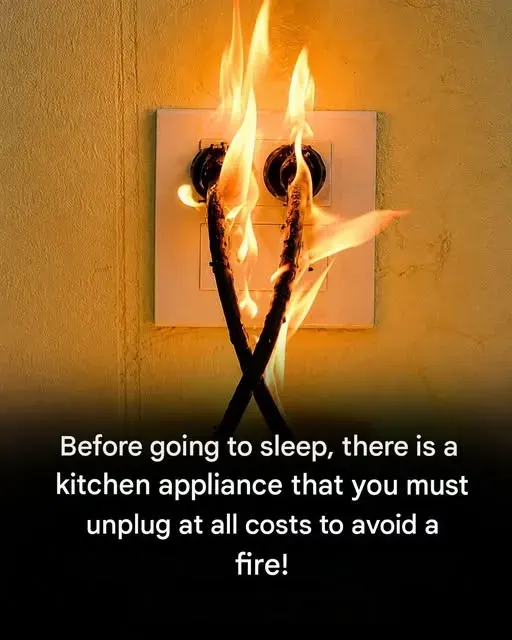
The fire warning in the original image
The picture shows a burning electrical connection and says one appliance must be unplugged before bed. It does not identify a particular appliance, and the photograph cannot prove a universal “one appliance” rule. The U.S. Fire Administration advises unplugging small appliances when they are not in use and connecting major appliances directly to wall outlets. Follow the device’s own instructions. Stop using damaged cords or hot, discolored or loose outlets and have the fault checked. Keep refrigerators and freezers powered for food storage. If there is smoke or fire, leave and call emergency services; do not handle the burning connection.
Start With Standby Power, Not Guesswork
Standby power is the electricity a device uses when it is switched off, waiting, displaying a clock, sensing a button press, charging a battery, or keeping a network connection alive. The U.S. Department of Energy describes standby power as consumption that happens when devices appear to be off, and it points to IEC 62301 as a formal method for measuring standby and other low-power modes https://www.energy.gov/cmei/femp/measuring-standby-power. In the kitchen, that means the biggest unplugging opportunities are usually not the largest appliances. They are the small items with electronics: anything glowing, beeping, remembering settings, listening for a button, or staying warm.
A simple mechanical toaster may use little or no power when the lever is up, while a microwave clock, smart coffee maker, rechargeable wine opener, or touch-control air fryer may draw a small amount continuously. That is why a practical unplugging plan begins with visible clues, then moves to measurement if you want precision. Berkeley Lab notes that products with external power supplies, internal batteries, remote controls, continuous displays, or constant network connections are likely to draw power continuously, even when there is no obvious sign https://standby.lbl.gov/frequently-asked-questions.
The Best Kitchen Items to Unplug First
Put your attention on appliances that are used briefly, have electronic features, and do not need to remember anything important. These are the easiest wins because unplugging them changes very little about your day. A coffee maker that brews once in the morning, a toaster oven used only for snacks, or a blender that comes out twice a week can be disconnected after use. If an appliance must be reprogrammed every time, decide whether the inconvenience is worth the small savings. ENERGY STAR recommends using a power strip as a central shutoff point for equipment because even turned-off electronics can use a small amount of electricity https://www.energystar.gov/products/recent_program_updates/low-no-cost-tips.
- Countertop ovens and toaster ovens: unplug after cooling if the appliance has a digital display, lighted controls, or a standby mode.
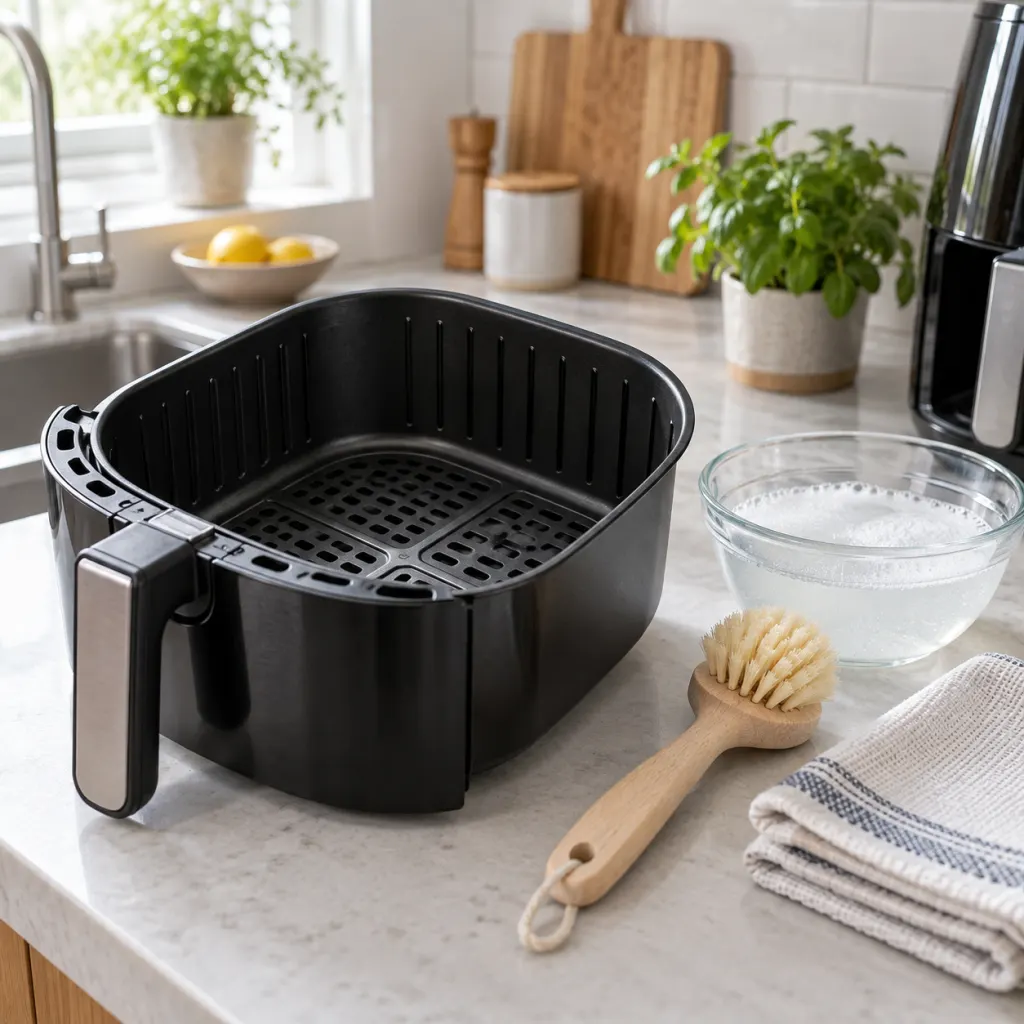
- Air fryers and multicookers: unplug when clean and cool, especially if they have touch panels or preset memory.
- Coffee makers and espresso machines: unplug models with clocks, warming plates, ready lights, or app controls when you do not need delayed brewing.
- Microwaves used only occasionally: consider unplugging if the clock is not useful to you, but keep the plug accessible so the habit is easy.
- Chargers and battery bases: unplug electric knife, milk frother, vacuum sealer, scale, thermometer, or wine-opener chargers once the item is charged.
- Smart kitchen devices: disconnect smart speakers, displays, hubs, or connected plugs that are not actively helping with schedules or monitoring.
Appliances That Usually Should Stay Plugged In
Refrigerators and freezers are not unplugging candidates for ordinary energy savings. They are designed to cycle on and off to keep food cold, and interrupting that power can turn a tiny standby saving into wasted groceries. FoodSafety.gov says a refrigerator keeps food cold for about four hours during a power outage if the door stays closed, and a full freezer can hold temperature for about 48 hours if closed https://www.foodsafety.gov/food-safety-charts/food-safety-during-power-outage. Those time windows are emergency guidance, not a reason to unplug cold storage as a routine habit.
Use a Power Strip for Clusters, Not for Heat-Producing Loads
A switched power strip can make unplugging realistic when several small, low-power items live together. For example, a corner with a digital kitchen scale, recipe tablet charger, coffee grinder, and under-cabinet radio can be controlled with one switch. This works best for electronics and chargers. Be more cautious with heat-producing appliances. A toaster oven, air fryer, electric kettle, or high-wattage multicooker should follow the manufacturer’s instructions and should not be crowded onto a strip that is not rated for the load. When in doubt, plug heat-producing appliances directly into a wall outlet during use, then unplug the cord from the wall after the appliance is off and cool.
Kitchen routines also matter. If you make a quick microwave dessert such as Peanut Butter Cake Mug every evening, unplugging the microwave between uses may be more annoying than helpful. If the same microwave is used once a week, its clock is probably not earning its keep. The same logic applies to small prep appliances: a food processor used for weekend cooking can stay unplugged all week, while the everyday kettle may be better handled with an off switch and a clear counter routine.
Check for Always-On Features
Some kitchen appliances use power because they are designed to be ready. Common examples include clocks, delayed-start timers, memory settings, warming functions, app connections, and sensors. Berkeley Lab’s standby FAQ lists functions such as powering an internal clock, charging a battery, displaying information, energizing soft keypads, and monitoring conditions as reasons a device may need small amounts of electricity while idle https://standby.lbl.gov/frequently-asked-questions. The useful question is not whether the appliance uses any standby power. The useful question is whether that standby function helps your kitchen run better.
A delayed-brew coffee maker may deserve power overnight if it prevents a rushed morning. A smart oven you control from an app might be worthwhile if it supports accessibility or a genuine household routine. But many always-on features are decorative: a second clock, a blue light, a ready tone, or a forgotten charger. Those are good places to cut. When you are choosing between convenience and savings, rank the appliance by frequency of use, effort to unplug, and consequence of losing settings.
Measure One Weekend If You Want Real Numbers
If you want to move past rules of thumb, use a plug-in watt meter. DOE’s standby-power measurement page explains that stable power consumption can be read directly from a meter, while fluctuating consumption is better measured over time and averaged https://www.energy.gov/cmei/femp/measuring-standby-power. For a home kitchen, you do not need laboratory precision. You need a comparison that tells you whether the coffee maker, microwave, countertop oven, or charger base is worth changing.
Try this small test: plug one appliance into a meter when it is off but still connected, leave it for several hours, and record the watts or kilowatt-hours. Repeat with the items you suspect are always on. Berkeley Lab gives a helpful mental conversion: one watt used continuously for a year is roughly nine kilowatt-hours https://standby.lbl.gov/frequently-asked-questions. Your electricity rate determines the dollar value, so the same appliance can matter more in a high-rate area than in a low-rate area. The bigger value of measuring is behavioral: it tells you which habit is worth keeping and which one is just kitchen theater.
Safety and Maintenance Still Matter
Unplugging should be paired with ordinary kitchen care. Keep appliance cords away from hot surfaces, let heat-producing appliances cool before storing them, and keep counters around cooking equipment clear. The Consumer Product Safety Commission’s fire-safety guidance emphasizes working smoke alarms and staying in the kitchen while cooking https://www.cpsc.gov/Safety-Education/Safety-Education-Centers/Fire-Safety-Information-Center. For countertop appliances, that translates into a calm routine: turn it off, let it cool, clean crumbs or splatter as directed by the manual, then unplug if it does not need continuous power.
Maintenance can save energy too. A clean appliance usually works closer to its intended performance. Crumb trays, vents, fans, seals, and coils all affect how appliances run, though the exact tasks vary by product. ENERGY STAR’s broader appliance guidance notes that appliances are part of household energy use and that efficient products reduce operating costs over time https://www.energystar.gov/products/recent_program_updates/low-no-cost-tips. For a recipe-heavy kitchen, this means the best energy habit is a combination: choose efficient equipment when replacing items, run full dishwasher loads, avoid unnecessary preheating, and unplug the small idle devices that do not serve you.
Build an Easy Nightly Shutdown Routine
The best unplugging system is the one you can repeat without thinking. After dinner, scan the counter from left to right. Unplug the coffee maker if you are not programming it for morning. Switch off the strip that controls chargers and small electronics. Unplug the air fryer, blender, toaster oven, or mixer once each is clean, dry, and cool. Leave the refrigerator, freezer, dishwasher controls, and any needed safety or accessibility equipment alone. If you batch no-bake snacks such as Easy Oatmeal Energy Balls, take advantage of those low-appliance days by shutting down the rest of the counter.
A Practical Unplugging Priority List
If you want a quick order of operations, start with chargers and rarely used digital appliances, then move to clocks and connected devices. Do not spend your best effort chasing a simple toaster that has no display and no electronics unless you also prefer the counter clear. A Lawrence Berkeley National Laboratory field study of miscellaneous electrical loads included kitchen plug loads such as coffee and espresso makers, microwave ovens, toaster ovens, toasters, rice or slow cookers, and wine chillers, and found opportunities for savings in many device categories because of time spent in different modes and power levels https://seta.lbl.gov/publications/field-data-collection-miscellaneous. That supports a targeted approach: focus on what is plugged in for many hours and useful for only a few minutes.
For most kitchens, the final list looks like this: unplug spare chargers immediately; unplug digital countertop appliances after use; consider unplugging the microwave if the clock is redundant; use a switched strip for low-power electronics grouped together; keep cold-storage appliances powered; and measure anything you are unsure about. The savings may not transform a utility bill on their own, but they are low-cost, low-disruption, and easy to combine with bigger kitchen energy habits.
Wrap-Up
Kitchen unplugging works best when it is selective. Target appliances with standby features, chargers, screens, clocks, and smart connections, especially when they are used only briefly. Leave refrigerators and freezers plugged in, use power strips only where appropriate, and rely on a plug-in meter if you want exact numbers. A clear counter shutdown routine can reduce standby power without making cooking feel fussy.
Frequently Asked Questions
- → Which kitchen appliance should I unplug first?
Start with chargers and small appliances that have lights, clocks, touch panels, or smart features but are used only briefly. Coffee makers, countertop ovens, air fryers, digital blenders, and charger bases are common first checks.
- → Should I unplug my microwave to save energy?
It depends on how you use it. If the microwave clock is useful every day, the convenience may be worth the small standby draw. If it is rarely used and the clock duplicates another clock, unplugging can be reasonable.
- → Can I unplug my refrigerator overnight?
No. Refrigerators and freezers need continuous power for cold storage. FoodSafety.gov treats loss of refrigerator power as an emergency situation with limited time windows, so routine unplugging is not a good energy-saving strategy.
- → Do simple toasters use standby power?
Many basic mechanical toasters use little or no power when off, but designs vary. If the toaster has electronic controls, a display, or an indicator light, it may draw standby power. A plug-in watt meter gives the clearest answer.
- → Is a power strip a good kitchen energy tool?
Yes, for clusters of low-power electronics and chargers. Use caution with heat-producing appliances, and follow the appliance manual and the strip rating. High-wattage cooking appliances are often best plugged directly into a wall outlet during use.
References
This content was developed and refined using reliable sources.
- https://www.energy.gov/cmei/femp/measuring-standby-power
- https://standby.lbl.gov
- https://standby.lbl.gov/frequently-asked-questions
- https://www.energystar.gov/products/recent_program_updates/low-no-cost-tips
- https://www.foodsafety.gov/food-safety-charts/food-safety-during-power-outage
- https://www.cpsc.gov/Safety-Education/Safety-Education-Centers/Fire-Safety-Information-Center
- https://seta.lbl.gov/publications/field-data-collection-miscellaneous