 Save
The quickest reliable way to clean an air fryer is to loosen grease with warm water and a few drops of dish detergent in the removable basket, then scrub gently, rinse, and dry completely. Unplug the appliance first, let the basket cool, and keep water out of the powered base. The real trick is not a dramatic shortcut; it is a short soak that gives the detergent time to soften oily residue so you do less scraping. South Dakota State University Extension notes that air fryers move very hot air around food and advises letting the basket or rack cool before cleaning and reading the user manual before first use https://extension.sdstate.edu/air-fryer-101.
Why the Warm Soak Works
Air fryer messes are usually a combination of oil film, browned crumbs, sticky starch, and small bits of seasoning caught in corners. A dry paper towel can remove loose crumbs, but it usually smears grease. A long, aggressive scrape can damage the basket coating. A short warm soak sits in the middle: it softens the residue before you scrub, so the cleaning effort comes from time, water, detergent, and light friction instead of force.
University of Minnesota Extension explains that dish detergent or soap meant for dishes and food-contact equipment should be used according to the product directions, followed by a thorough rinse to remove soap and food residue https://extension.umn.edu/about/our-stories/news/cottage-food-connection/sink-essentials-for-your-home-kitchen. That is the practical reason a few quiet minutes at the sink can beat impatient scrubbing. The detergent helps loosen grease, the warm water helps residue release, and the rinse keeps leftover soap from carrying into the next meal.
The Five-Minute Basket Reset
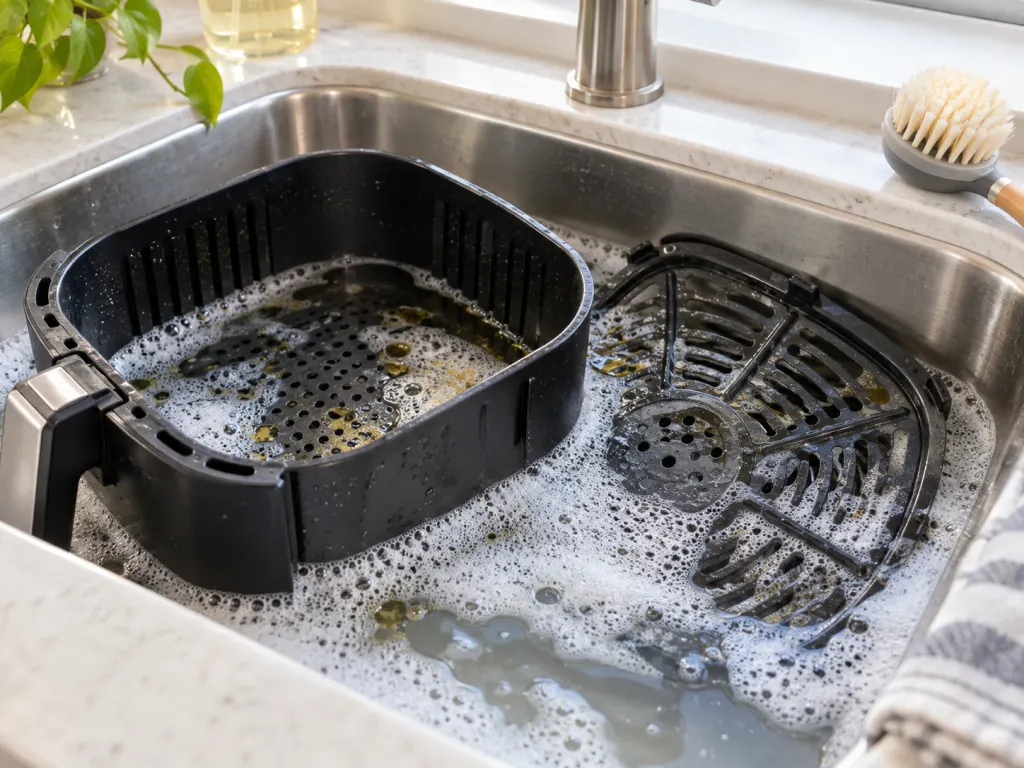
Start after cooking, not hours later if you can help it. Let the air fryer cool until the basket, tray, and drawer can be handled comfortably. Remove the basket or tray and tip loose crumbs into the trash. Add warm water and a small amount of dish detergent directly to the removable drawer or a sink basin, then let the parts sit for about five minutes while you clear the counter. If the mess is heavy, use ten minutes rather than stronger chemicals.
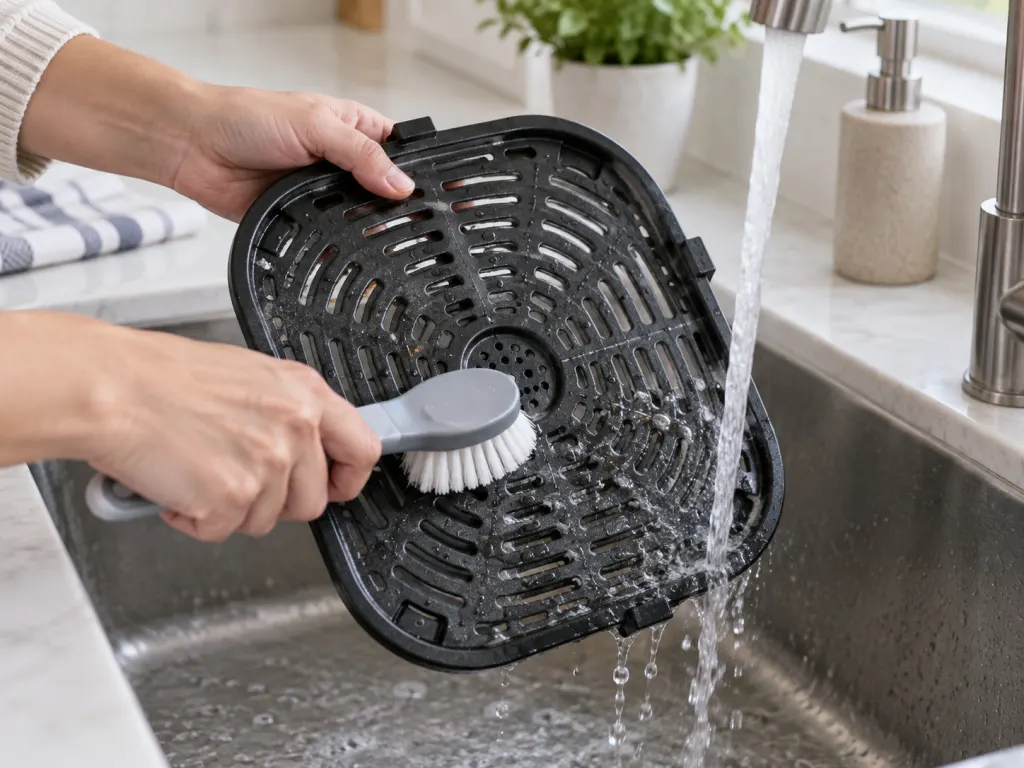
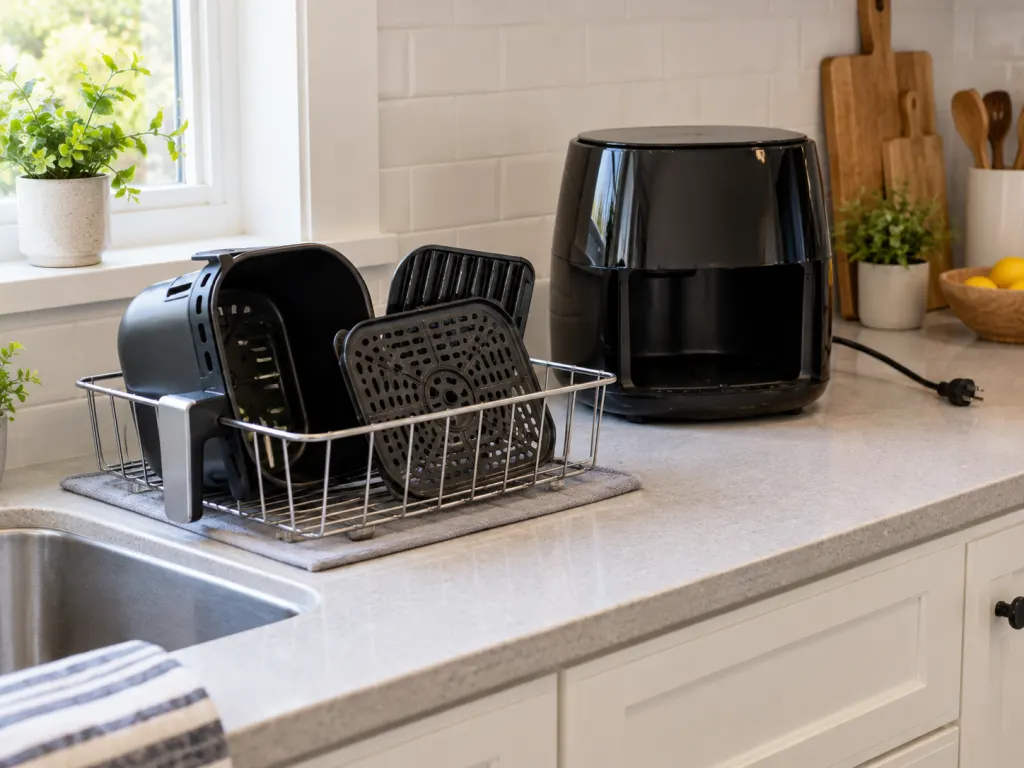
After soaking, scrub with a soft dish brush, a clean cloth, or a non-scratch pad. Pay attention to the corners, the underside of the crisper plate, and any raised grid where oil can pool. Rinse under clean water until the surface feels free of slipperiness, then set the pieces on a clean rack or towel to dry. The same University of Minnesota guidance distinguishes cleaning from sanitizing: cleaning removes food, grease, and debris, while sanitizing is a separate step that reduces microorganisms to a safer level https://extension.umn.edu/about/our-stories/news/cottage-food-connection/sink-essentials-for-your-home-kitchen.
What to Use and What to Skip
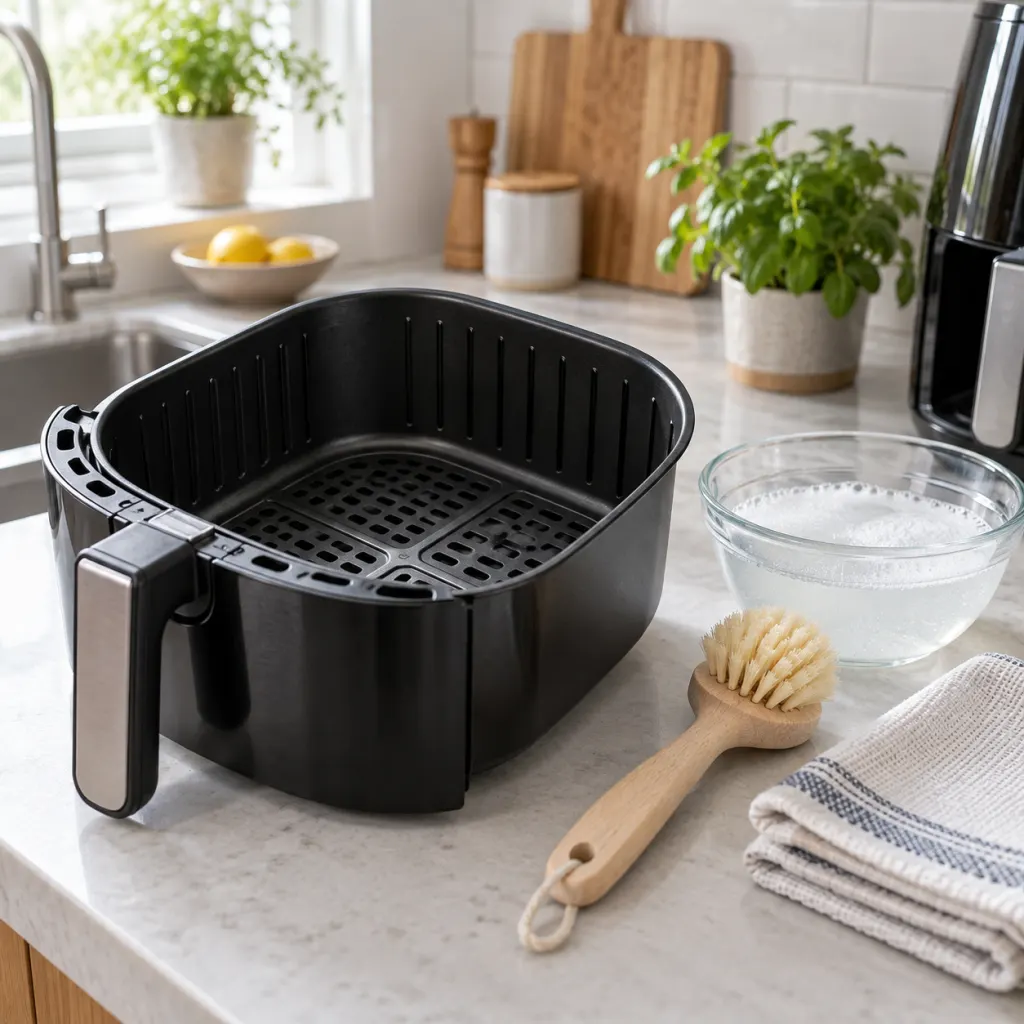
A basic air fryer cleaning kit is smaller than many people think. Use warm water, dish detergent, a soft brush, a non-scratch pad, a microfiber cloth, paper towels for greasy first wipes, and a dry towel for the outside. Skip steel wool, metal forks, abrasive powders, oven cleaner, and any cleaner not approved by the appliance manual for that surface. Illinois Extension gives the same broad appliance principle: follow manufacturer instructions for cleaning and sanitizing equipment https://extension.illinois.edu/food-safety/cleaning-and-sanitizing.
For everyday cleanup, this simple list is enough:
- Warm water: loosens fresh residue without shocking hot parts.
- Dish detergent: helps lift oily film from food-contact pieces.
- Soft brush or cloth: reaches corners without scraping the coating.
- Clean rinse water: removes detergent and loosened residue.
- Complete drying time: keeps moisture away from the heating area and storage space.
Do Not Soak the Powered Base
The basket and removable tray are the parts designed to come out. The powered base is different. It contains the heating element, fan area, controls, and electrical components. Wipe the outside with a damp cloth, then dry it. For the inside, use a lightly damp cloth once the unit is unplugged and cool, being careful around the heating element and vents. If a crumb is stuck near the top, use a soft dry brush or cloth rather than pouring water into the appliance.
This is also where patience matters. Illinois Extension advises unplugging small appliances when they are not in use, cleaning cooking spills to limit grease buildup, and making sure appliances are completely cool before cleaning https://extension.illinois.edu/food-safety/kitchen-fires. That advice fits air fryers well because the appliance is compact, heats quickly, and often sits close to cabinets, towels, paper packaging, or other counter items. Cleaning is easier when the tool is cool, stable, and cleared of nearby clutter.
When to Sanitize and When Cleaning Is Enough
Most air fryer basket care after cooked foods is cleaning: remove crumbs, wash with detergent, rinse, and dry. Sanitizing may matter when removable food-contact parts have held raw meat juices, a recalled food, or a mess that spread across other sink surfaces. University of Minnesota Extension describes a sanitation routine as a sequence: remove debris, wash with detergent and warm water, rinse, apply an appropriate sanitizer when needed, and dry according to directions https://extension.umn.edu/food/preparing/cooking-at-home/sanitizing-equipment-and-food-contact-surfaces.
The order is important. Sanitizer belongs on a clean surface, not on top of crumbs and grease. The FDA has also reported that a full wash, rinse, sanitize, and air-dry procedure was effective in a study of food-contact surface cleaning, and that pre-scraping food from surfaces helped removal https://www.fda.gov/food/retail-food-protection/allergen-removal-and-transfer-using-wiping-and-cleaning-methods-retail-food-establishments. At home, that translates into a plain habit: scrape loose food first, wash second, rinse third, and only then consider a sanitizer that is safe for the specific part and used exactly as labeled.
How Often to Clean an Air Fryer
Clean the removable basket, drawer, or tray after every greasy or sticky use. For dry toast-like foods, a crumb shake and quick wipe may be enough immediately, but do not let crumbs build up under a crisper plate. Wipe the exterior whenever oil mist or fingerprints collect. Check the upper interior and heating area weekly if you use the air fryer often, because fine oil droplets can collect where they are less visible.
A useful rhythm is to match the cleanup to the food. Breaded chicken, bacon, sausage, sauced vegetables, cheese-topped foods, and anything with sugar or glaze need a full wash after use. Plain reheated bread or dry roasted nuts may leave mostly crumbs, but even then the basket should be inspected. If you smell old grease when preheating, see sticky residue, or notice smoke from leftover crumbs, the appliance is asking for a deeper reset before the next round.
Troubleshooting Stubborn Grease
For a basket that still feels tacky after washing, repeat the warm soak with fresh detergent rather than moving to harsher products. Use the soft brush in small circles around raised texture and corners. If residue is baked on, lay a warm, soapy cloth over the spot for several minutes, then scrub again. Avoid scraping with metal tools; once a nonstick coating is gouged, food can cling more aggressively and the part may become harder to clean.
If the appliance has a lingering odor, look for hidden crumbs first. Remove the tray, check the drawer corners, wipe the upper interior once cool and unplugged, and clean the exterior vent area with a dry or barely damp cloth. Odor often comes from a tiny piece of browned food left behind rather than the whole basket. Dry the parts completely before reassembling so the closed appliance does not trap dampness.
A Better Habit for Next Time
The easiest air fryer to clean is the one that never gets heavily coated. Avoid overcrowding, because food stacked too tightly can shed crumbs and oil unevenly. SDSU Extension notes that overloading the basket or rack can lead to uneven cooking https://extension.sdstate.edu/air-fryer-101. Leave room for air to move, shake or turn foods when the recipe calls for it, and use accessories only when the manual says they are safe for your model.
Liners can help with some messes, but they are not magic. A liner that blocks airflow can affect cooking, and loose paper can shift inside a fan-driven appliance. If you use a liner, choose one meant for air fryers, keep it weighted with food, and make sure it does not touch the heating element. A light coating of oil on food, rather than pooled oil in the drawer, also helps reduce sticky buildup.
When Cleaning Is Not the Whole Answer
If an air fryer repeatedly smokes despite careful cleaning, smells like hot plastic, has a damaged cord, has loose parts, or shows melting, stop using it until you can check the manual, the manufacturer’s safety information, or a product recall source. The Consumer Product Safety Commission has documented air fryer recalls involving overheating, fire, and burn hazards, including a 2023 recall of certain Cosori models https://www.cpsc.gov/Recalls/2023/Two-Million-COSORI-Air-Fryers-Recalled-by-Atekcity-Due-to-Fire-and-Burn-Hazards. Cleaning fixes residue; it does not fix an unsafe appliance.
The Takeaway
The quick trick is a repeatable routine: cool, unplug, remove crumbs, soak removable parts briefly in warm soapy water, scrub gently, rinse well, dry completely, and wipe the base without soaking it. It sounds almost too ordinary, but it works because it respects the materials, the food-contact surface, and the electrical appliance at the same time. Keep the habit small enough to do after dinner, and the air fryer stays easier to use the next time.
Wrap-Up
A clean air fryer does not require dramatic hacks. The safest quick method is a warm, soapy soak for removable parts, gentle scrubbing, thorough rinsing, and complete drying. Keep the powered base dry, follow the manual, avoid abrasive tools, do not mix cleaning products, and check for recalls or appliance damage when cleaning no longer explains smoke, odor, or overheating.
Frequently Asked Questions
- → Can I put water and soap in the air fryer basket while it is still warm?
Let the basket cool until it can be handled comfortably first. Warm parts are fine; hot parts are not. Once removed from the powered base, the basket or tray can usually be washed with warm water and dish detergent, then rinsed and dried. Check your manual for dishwasher rules and coating care.
- → Can I clean the air fryer by running it with soapy water inside?
No. Do not operate an air fryer with soapy water in the drawer or basket. The safer quick method is passive soaking after the appliance is unplugged and the removable parts are out of the base. Running the appliance with liquid inside can create spills, steam, residue, or damage depending on the model.
- → Is vinegar enough to clean air fryer grease?
Vinegar may help with some odors, but dish detergent is usually better for oily residue because it is made for washing dishes and food-contact equipment. For everyday grease, use warm water, dish detergent, gentle scrubbing, rinsing, and full drying. Avoid mixing vinegar with other cleaning products.
- → Why does my air fryer smoke after I cleaned it?
Common causes include hidden crumbs, oil film near the heating area, food that is too close to the element, or residue trapped under the crisper plate. Unplug the appliance, let it cool, remove the basket and tray, and inspect corners and upper surfaces. If smoke continues despite cleaning or you notice melting, cord damage, or an electrical smell, stop using the appliance and check manufacturer safety information.
- → Should I sanitize the basket every time?
For normal cooked-food cleanup, washing, rinsing, and drying are usually the routine steps. Sanitizing is a separate step to consider when there has been raw-food contact, a recalled food, or a cross-contact concern. Use only a sanitizer appropriate for food-contact surfaces and the basket material, and follow the label and appliance manual.
References
This content was developed and refined using reliable sources.
- https://extension.sdstate.edu/air-fryer-101
- https://extension.umn.edu/about/our-stories/news/cottage-food-connection/sink-essentials-for-your-home-kitchen
- https://extension.umn.edu/food/preparing/cooking-at-home/sanitizing-equipment-and-food-contact-surfaces
- https://extension.illinois.edu/food-safety/cleaning-and-sanitizing
- https://extension.illinois.edu/food-safety/kitchen-fires
- https://www.fda.gov/food/retail-food-protection/allergen-removal-and-transfer-using-wiping-and-cleaning-methods-retail-food-establishments
- https://www.epa.gov/indoor-air-quality-iaq/biological-contaminants-and-indoor-air-quality
- https://poisonhelp.hrsa.gov/what-you-can-do/prevention-tips
- https://www.cpsc.gov/Recalls/2023/Two-Million-COSORI-Air-Fryers-Recalled-by-Atekcity-Due-to-Fire-and-Burn-Hazards