 Save
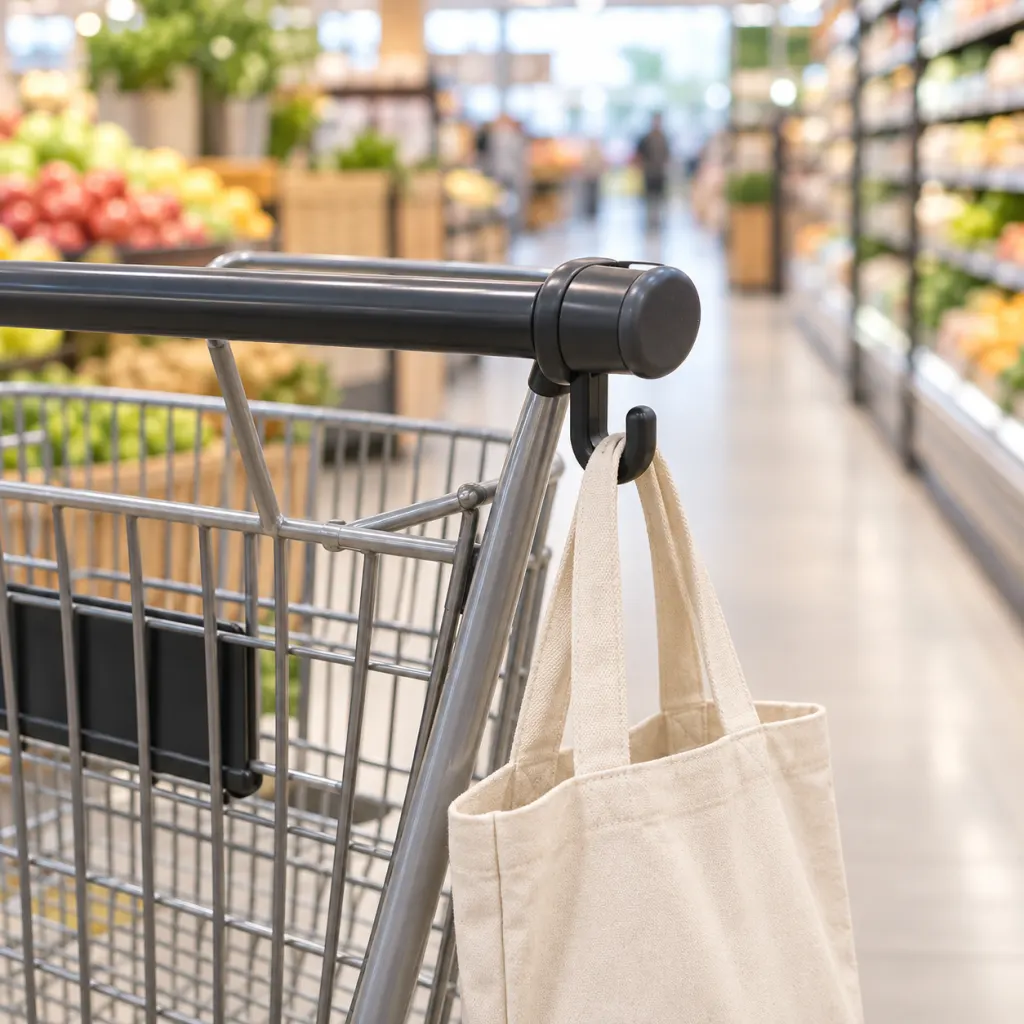
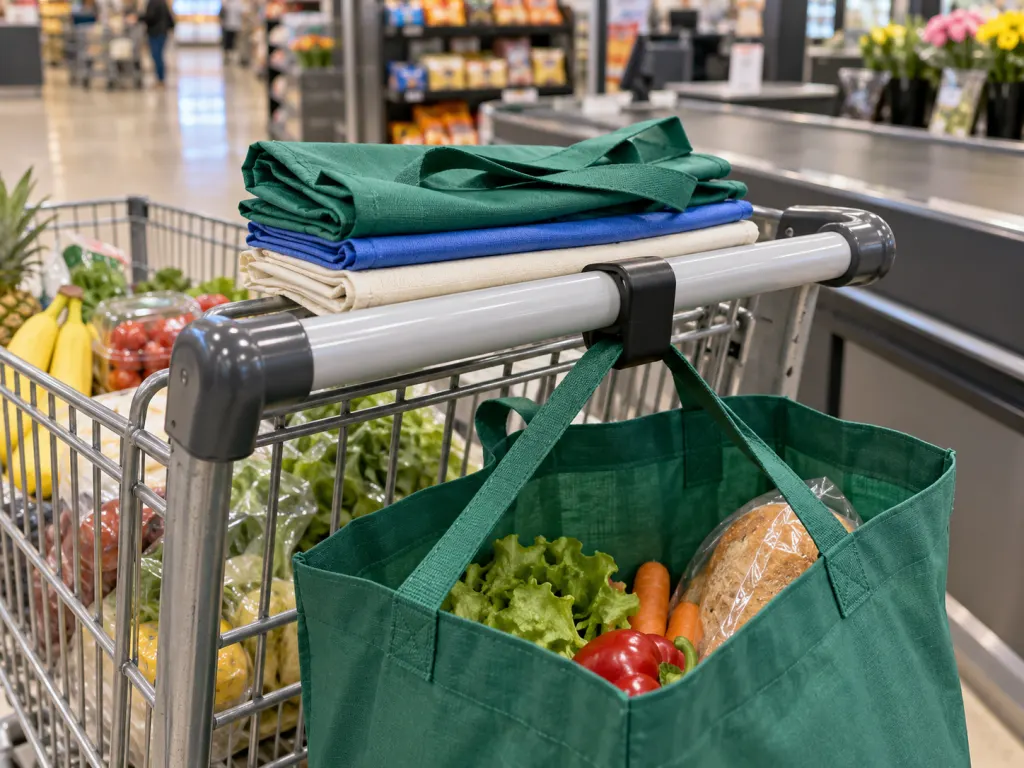
The small hook near a shopping cart handle is usually a bag hook. Its job is simple: it gives a bag handle a place to hang so the bag can ride from the cart rim instead of sliding around in the basket. Some carts use a molded tab, some use a metal loop, and some hide the feature in a slot near the basket edge. A USPTO Official Gazette record for a shopping cart bag support system describes a hook configured to receive a bag handle so the bag can hang along the outside surface of the basket, which matches the practical way many shoppers use these pieces today: to manage reusable bags, separate delicate items, and keep the cart easier to unload later. The hook is not magic, and it is not meant to carry everything. Used with ordinary judgment, though, it is one of those small retail details that can make a grocery trip feel less clumsy.
The Hook Is Mostly a Bag Holder
On many newer grocery and big-box carts, the hook near the handle is there to hold a shopping bag by its handles. The clearest public description comes from the USPTO Official Gazette record for a shopping cart with a bag support system, which describes a cart basket that includes a hook for receiving a bag handle so the bag can hang outside the basket. A separate USPTO design record also identifies a shopping cart with bag hook. Those records do not mean every cart hook is identical, but they confirm the general purpose: holding a bag, not decorating the handle.
The feature is easy to miss because it is small and often blends into the same plastic or metal as the handle area. It may look like a stub, an open notch, a curved tab, or a downward-facing hook inside a narrow slot. The location matters. Near the handle, the shopper can see the bag, reach it quickly, and keep it away from heavier items placed deeper in the basket. Near the rear rim, the hook also keeps the hanging bag from dragging into the cart wheels or sticking out far enough to bump shelves.
- Reusable bags: The hook can hold one or two handles while the bag is open or partly full.
- Light purchases: Bread, chips, herbs, cards, and other crush-prone items can ride away from cans and bottles.
- Small personal items: Some shoppers briefly hang an empty tote, umbrella sleeve, or folded bag there, as long as it stays visible and secure.
- Checkout organization: A bag on the hook can become a quick landing place after scanning or a reminder to use the bags you brought.
Why It Is Near the Handle
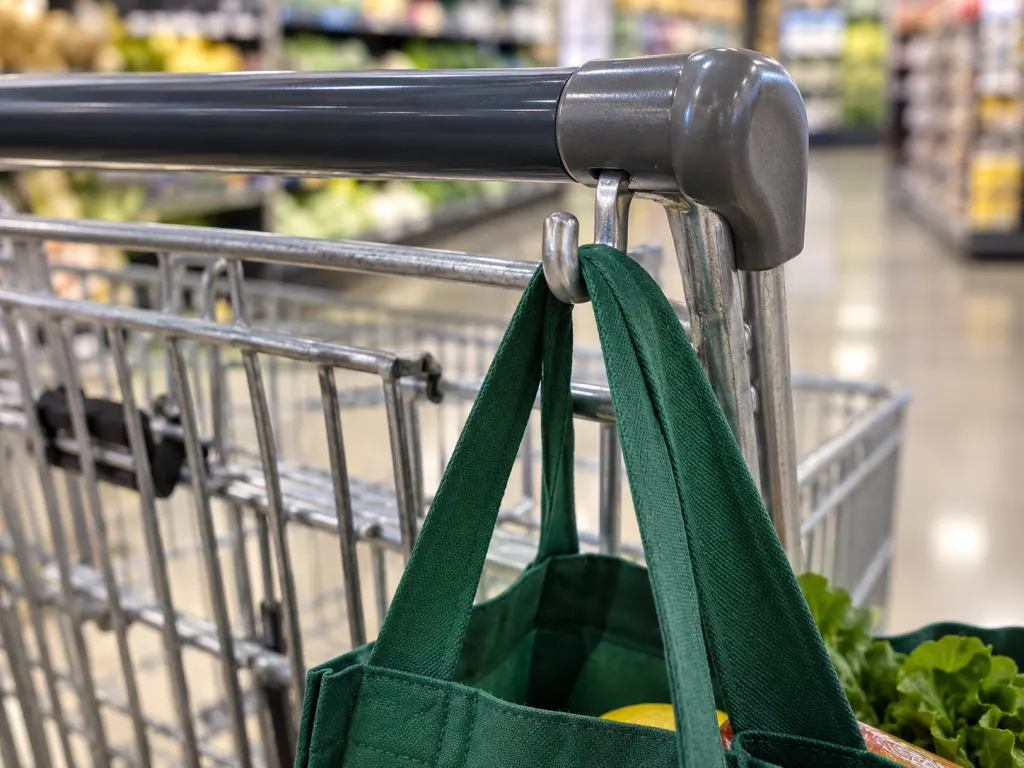
The handle end is the most useful place for a bag hook because that is where the shopper naturally stands, steers, and sorts. If the hook were placed deep inside the basket, a loaded bag could interfere with groceries already in the cart. If it were placed on the front, the shopper might not notice a slipping handle until the bag was already swinging. By placing the hook near the rear rim, cart designers make the bag accessible without asking the shopper to stop and rearrange the whole basket.
The rear position also helps with the sequence of a shopping trip. Early in the store, the hook can hold empty reusable bags so they are not buried under produce or pantry items. During checkout, it can help keep a bag upright while purchases are transferred. After checkout, it can hold a filled or partly filled bag close to the shopper. This is especially handy when buying a small number of items, when the main basket feels larger than necessary, or when the cart is shared with bulky goods such as paper towels or a case of sparkling water.
What It Does Better Than the Basket
A cart basket is good at carrying volume, but it is not always good at protecting shape. A single loaf of bread placed at the bottom of the basket can be pressed by jars, cans, or freezer boxes as the trip goes on. A hanging bag gives the shopper a small, separate zone. That separation can be useful for delicate groceries, return items, flowers, greeting cards, or the ingredients you want to keep together for a planned meal such as Carrot and Lentil Soup or Effortless Chicken Veggie Bowl.
The hook also reduces the little annoyance of bag handles collapsing into the cart. Reusable bags often have soft sides, so when they lie flat, the handles tangle around groceries or disappear under packages. Hanging one handle on the hook can keep the bag oriented, making it quicker to open at checkout. It is a small workflow improvement: less rummaging, fewer awkward pauses, and a clearer place for the next item.
Use It for Light, Stable Loads
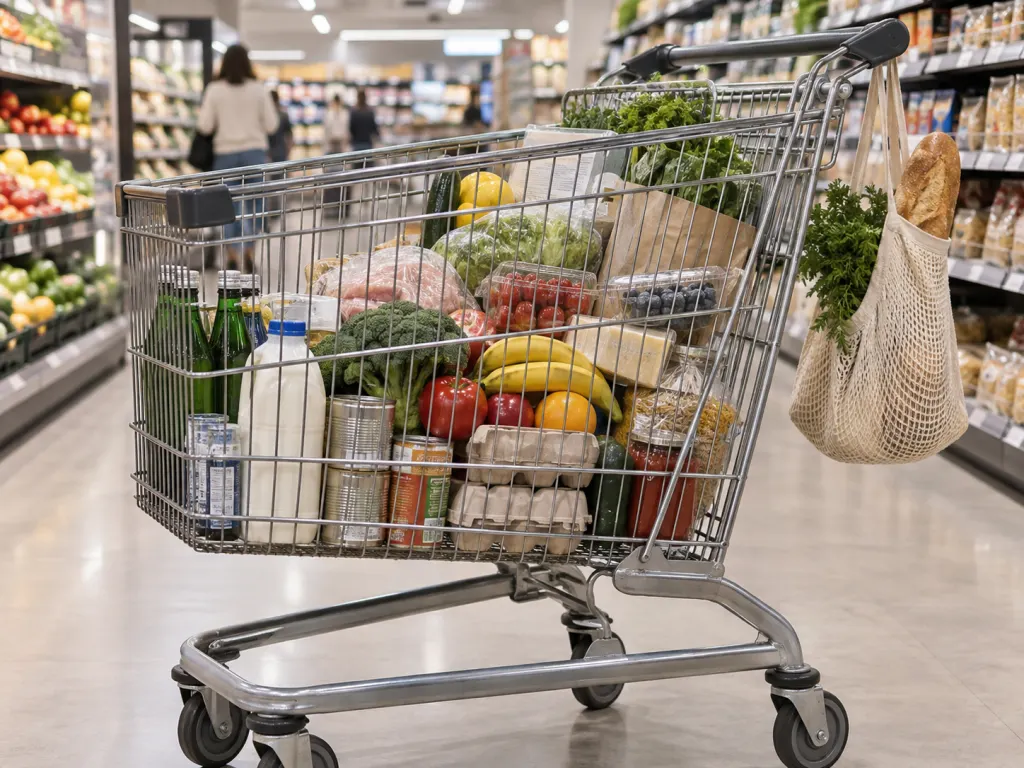
The hook is best for light to moderate loads that hang neatly. A bag filled with marshmallows, bread, napkins, boxed tea, or produce bags makes sense. A bag full of glass bottles, canned goods, or a large watermelon does not. The hook may be sturdy, but the cart can still become awkward when weight is hung high and toward the handle. If the cart starts to pull sideways, the bag swings, or the hook flexes noticeably, move the items into the basket.
How to Use It Without Making the Cart Messier
The easiest method is to hang one handle or both handles over the hook, then check that the bag hangs flat against the outside or just inside the rear of the basket. A flat-hanging bag is less likely to swing into your knees, catch on a display, or make the cart feel lopsided. If the cart has a slot with a small hook inside it, wrap the bag handle over the rim first and settle the handle into the slot. That arrangement is similar to the configuration described in the USPTO bag support system record, where the bag handle is received by the hook after being wrapped around a portion of the basket.
For reusable bags, it often helps to start with the bag empty and then add only the light items you already know belong together. For example, use the hook bag for bakery items, produce that bruises easily, paper goods, or the last few items you grabbed near checkout. Keep heavier groceries low in the main basket, where the cart is designed to carry weight with better balance.
Not Every Tab Is the Same Feature
One reason shoppers are confused is that carts have several small plastic and metal details near the handle. Some are true bag hooks. Others are part of the child seat gate, the nesting mechanism, a cup holder, a scanner mount, a store label holder, or a molded reinforcement. If the piece is open, curved, and shaped to receive a handle, it is probably meant for bags. If it locks, pivots, has a warning label, or forms part of the child seat, leave it alone and use only the clearly open hook area.
Regional cart designs vary, too. In the United States, many large stores now use carts with plastic rear panels and integrated bag features. In other places, the equivalent feature may be a metal loop below the handle. Some warehouse carts have no bag hook at all because their baskets are designed around large packages rather than small groceries. The practical rule is to look for the intended path of a handle: if the shape lets a bag hang without forcing, twisting, or wedging, it is probably the right spot.
Why Stores Add Hooks in the First Place
Bag hooks fit a wider shift in how people shop. Many customers bring reusable bags, and the EPA encourages consumers to reduce single-use bag waste, reuse bags, and recycle bags when they can no longer be used through appropriate options rather than assuming they belong in curbside bins. EPA guidance on recycling frequently asked questions notes that consumers can reduce waste by using reusable shopping bags, while its plastic waste guidance encourages shoppers to bring reusable bags when carrying purchases. A cart hook supports that routine by giving those bags a dedicated place during the trip.
There is also a store-operation reason. A shopper who can manage bags more easily may move through checkout more smoothly. Empty bags are visible before scanning begins. Filled bags are easier to gather at the end. The cart remains more organized, which helps when a shopper is using self-checkout, checking a receipt, or loading bags into a vehicle. None of this changes the basic task of shopping, but it removes small frictions that add up during a busy errand.
When the Hook Is Especially Useful
The hook earns its keep on quick trips. If you are picking up a handful of items, one reusable bag on the hook can act almost like a removable mini-basket. It also helps when buying a mix of heavy and fragile groceries: heavy items stay low, while delicate items ride higher and separate. Parents shopping without using the child seat, commuters carrying a backpack, and anyone trying to keep a compact list organized may notice the benefit most.
It is also useful for meal-specific shopping. If you are buying just the ingredients for one dinner or one dessert, a hook bag can keep those items together from aisle to checkout. That can make unpacking simpler at home because you are not hunting through every bag for the one lemon, bunch of herbs, or carton you needed. When the trip includes a treat such as Sicilian Lemon Cake with Limoncello or Deviled Egg Macaroni Salad, a small grouped bag can keep specialty ingredients from disappearing under bulkier groceries.
When to Skip the Hook
Skip the hook when the bag is heavy, unstable, wet on the outside, or likely to swing. Skip it in tight aisles if the bag protrudes beyond the side of the cart. Skip it if the cart is already difficult to steer, because hanging weight near the handle can make steering feel less predictable. Also skip it when the hook area is cracked, loose, or sharp-edged. A rough hook can snag fabric handles, and a damaged one may not hold a load consistently.
It is also smart to skip the hook for valuables. A purse, phone pouch, or wallet may physically hang there, but visibility is not the same as security. If an item would be expensive or stressful to lose, keep it on your person instead of treating the cart hook as a storage place. The hook is a grocery-management tool first.
A Small Detail That Rewards Noticing
Shopping cart hooks are not essential, which is why many people use carts for years without noticing them. Once you do notice them, they make sense. They hold bags where your hands already are, keep lightweight items from being crushed, and help reusable bags become part of the shopping routine instead of something remembered too late at checkout. The next time you take a cart, glance near the handle. If there is a small open hook or slot, try it with an empty reusable bag first. You may find that the whole cart feels a little easier to manage.
Wrap-Up
Shopping cart hooks are usually designed to hold bag handles, especially reusable shopping bags. Use them for light, stable items and for keeping delicate groceries separate from heavier goods. Avoid overloading them, forcing handles into a part that is not clearly a hook, or hanging valuables there. The simplest habit is to place an empty reusable bag on the hook at the start of the trip, then use it for small or crush-prone purchases as you shop.
Frequently Asked Questions
- → Are shopping cart hooks only for reusable bags?
No. Reusable bags are the most obvious use, but the hook can also hold a lightweight store bag, a folded tote, or a small bag of delicate purchases. The key is that the bag should hang neatly and should not make the cart harder to steer.
- → Can I hang a purse on a shopping cart hook?
It may fit, but it is not a great habit. The hook is meant for ordinary shopping bags, not for valuables. Keep wallets, phones, keys, and personal bags with you rather than leaving them on the cart.
- → Why do some carts have hooks and others do not?
Cart designs vary by store, manufacturer, and shopping format. A grocery cart may include a small bag hook because shoppers often use reusable bags, while warehouse-style carts may skip the feature because they are built around larger boxed items.
- → How much weight can a shopping cart hook hold?
There is no universal shopper-facing weight limit across all cart designs. Use the hook for light, stable loads. If a bag feels heavy, pulls the cart off balance, or makes the hook bend, place the bag in the basket instead.
- → What if the hook is inside a narrow slot?
Some carts use a slot-and-hook design. In that case, the bag handle may wrap over the rim and settle into the slot so the bag hangs from the side of the basket. Do not force a thick handle into a tight opening; use the main basket if it does not fit easily.
References
This content was developed and refined using reliable sources.
- https://patentsgazette.uspto.gov/week47/OG/html/1540-4/US12479489-20251125.html
- https://patentsgazette.uspto.gov/week04/OG/html/1542-4/USD1110659-20260127.html
- https://www.uspto.gov/learning-and-resources/official-gazette/official-gazette-patents
- https://www.epa.gov/recycle/frequent-questions-recycling
- https://www.epa.gov/plastics/what-you-can-do-reduce-plastic-waste