 Save
A sweet watermelon is chosen mostly by checking maturity clues, not by guessing from size alone. Watermelons do not keep getting sweeter after harvest, so the best time to choose carefully is before you buy. This guide shows the simple signs that point to a ripe, juicy melon.
Step 1: Shop when watermelons are in season
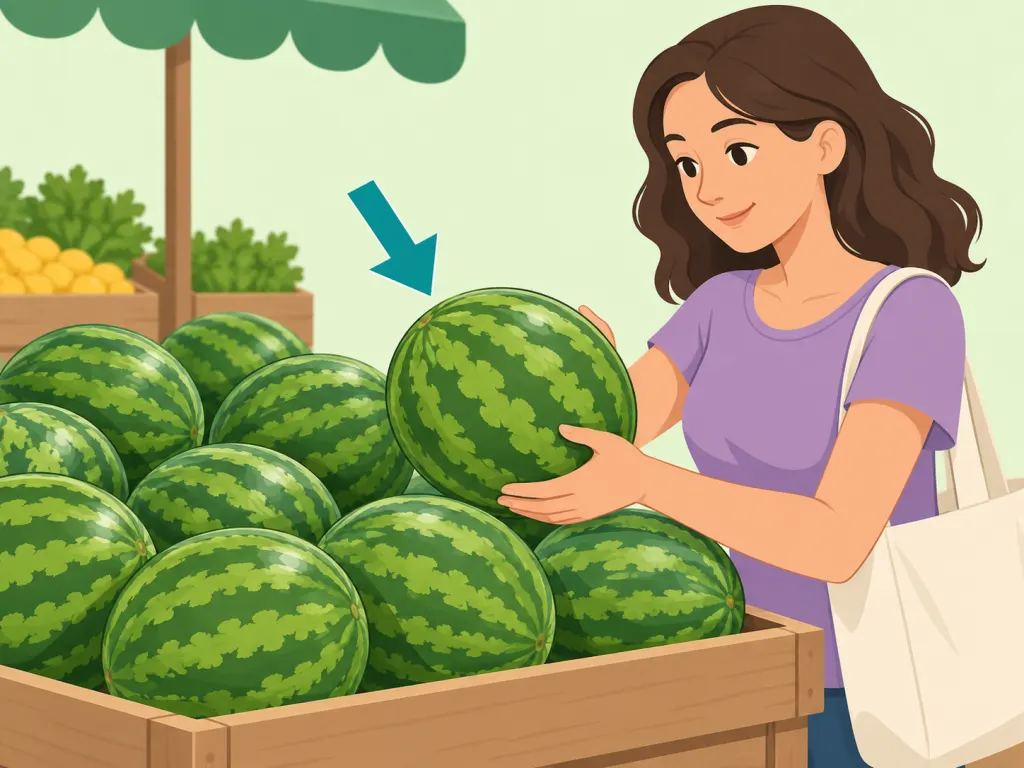
Start with the freshest-looking display you can find, especially during warm-weather watermelon season in your area. Because watermelons do not ripen further after harvest, a melon picked at the right stage has the best chance of tasting sweet. If you are at a farmers market, ask when the melons were harvested and choose from the newest batch.
Step 2: Look for a creamy yellow field spot
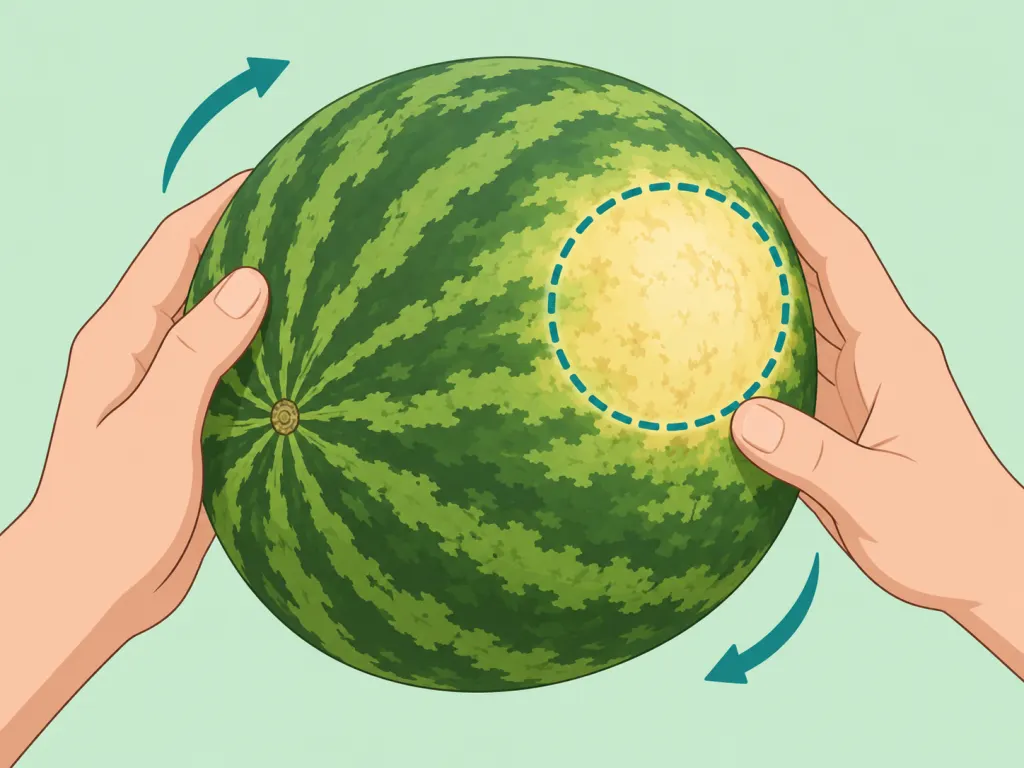
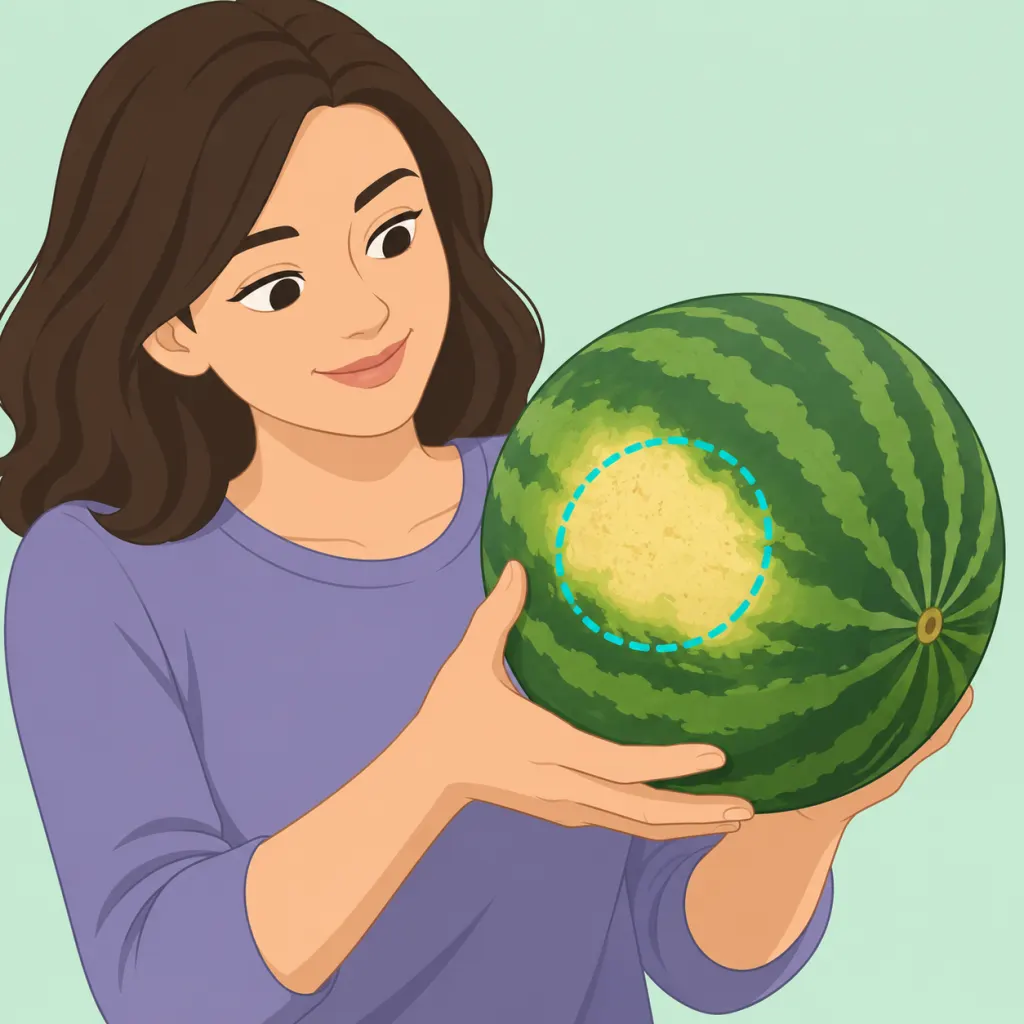
Turn the watermelon over and find the lighter patch where it rested on the ground. A creamy yellow ground spot is one of the clearest signs that the melon matured before harvest. Skip melons with a white or barely visible field spot when you have better options.
Step 3: Choose one that feels heavy for its size
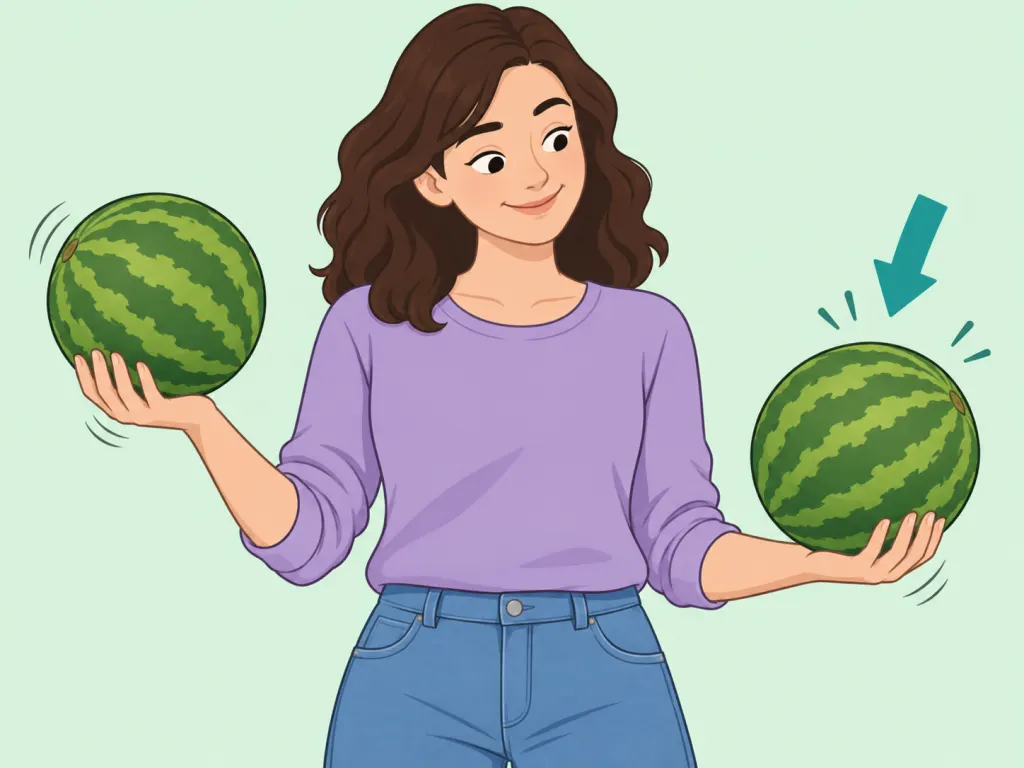
Pick up two or three watermelons that are roughly the same size, then choose the one that feels heaviest. Illinois Extension recommends this heavy-for-size check when selecting watermelon. A heavier melon often has a fuller, juicier feel than a lighter one from the same display.
Step 4: Check the rind for damage
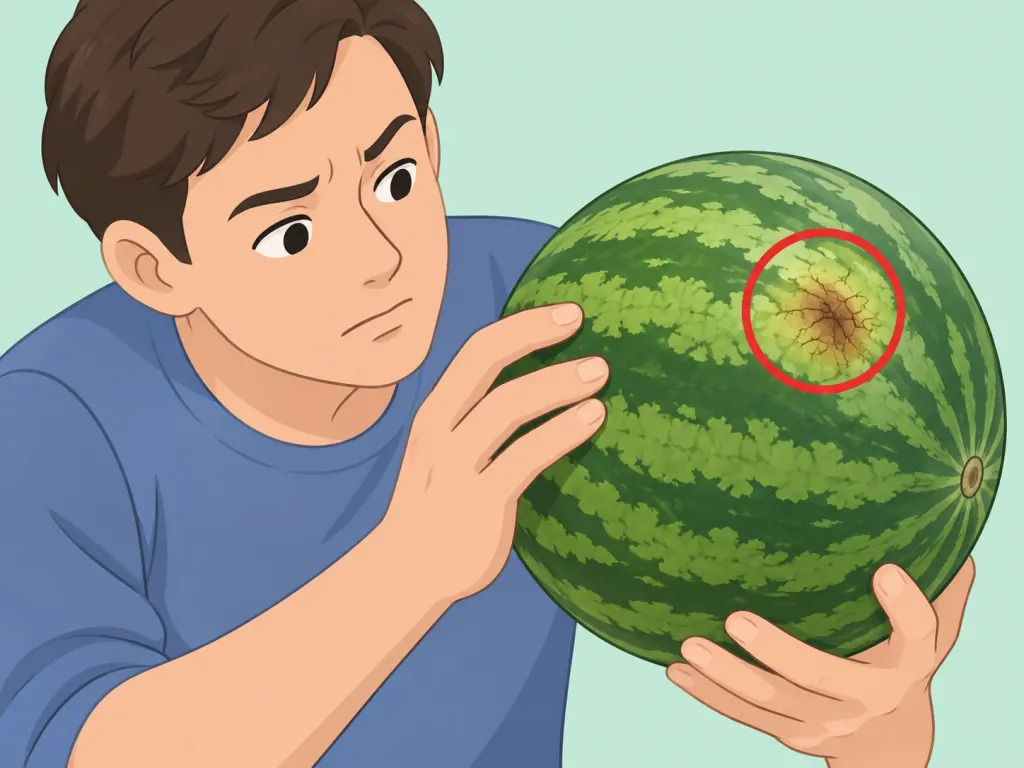
Choose a watermelon with a firm rind and no deep cracks, punctures, soft spots, or large bruises. The FDA recommends choosing produce that is not bruised or damaged, and the same rule helps you avoid melons that may be past their best texture. Small dry surface scuffs are less concerning than areas that feel sunken or soft.
Look for skin that appears more dull than shiny and a stem end that looks dry rather than fresh green. University of Maryland Extension lists rind appearance and a dried nearby tendril as watermelon maturity clues. In the store, you may not see the vine tendril, but a dry stem end can still support the other signs.
Step 6: Use the thump test only as a tie-breaker
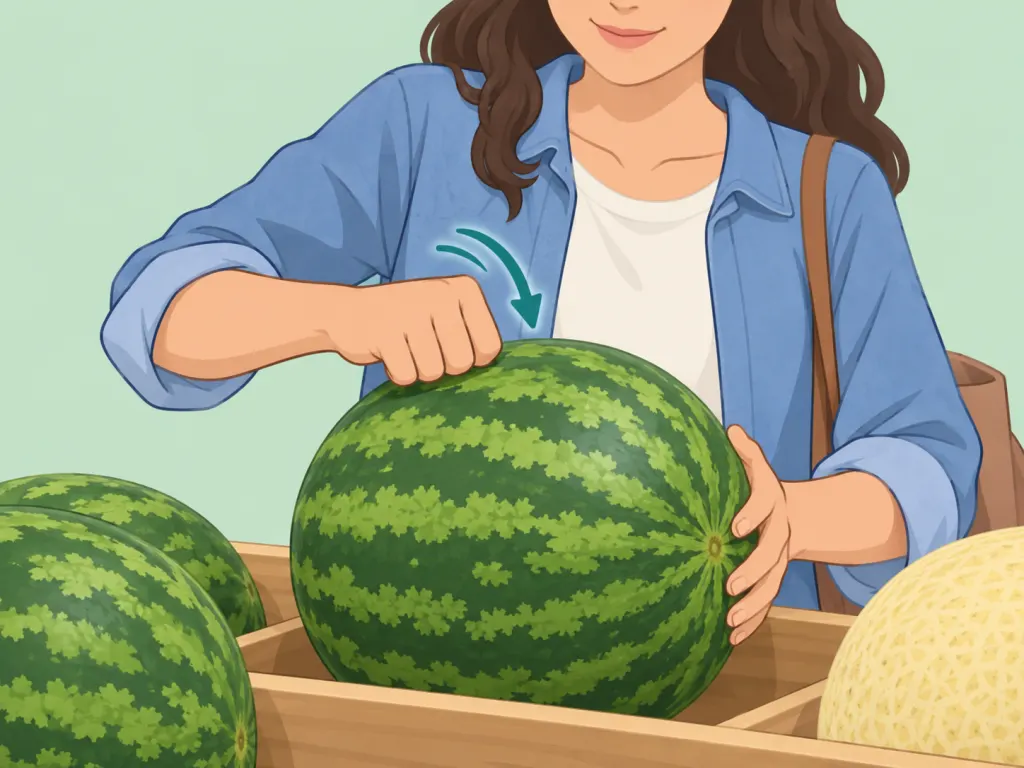
If two melons pass the main checks, tap each one with your knuckles and listen for a resonant sound rather than a flat, dead one. Still, Extension experts caution that listening for a hollow sound is not dependable by itself. Let the field spot, weight, rind, and stem make the real decision.
Wrap-Up
The bottom line: look for a creamy yellow field spot, compare melons by weight, avoid damaged rinds, and treat thumping as only one small clue. No sign is perfect, but using several together gives you a much better chance of bringing home a sweet watermelon.
Frequently Asked Questions
- → Can a watermelon get sweeter after I buy it?
No. University of Maryland Extension explains that watermelons do not ripen further after harvest, and Utah State University Extension notes that sugar content does not increase after picking.
- → Is a darker yellow field spot always better?
A creamy yellow field spot is a strong ripeness clue because it shows where the melon rested on the ground as it matured. A white or very pale spot usually points to less maturity, according to Extension maturity guidance.
- → Should I thump a watermelon before buying it?
You can, but do not rely on it alone. Illinois Extension says the hollow-sound test is not very reliable, so use it only after checking the field spot, weight, rind, and stem.
- → Does a bigger watermelon taste sweeter?
Not necessarily. Instead of choosing the largest melon, compare watermelons of similar size and pick the one that feels heavier, since Extension produce guidance recommends choosing melons that feel heavy for their size.
- → What should I look for if I buy cut watermelon?
Choose pieces with rich, even color and avoid packages that look dry, mushy, or poorly chilled. The FDA advises buying pre-cut produce only when it is refrigerated or surrounded by ice.
- → Are scratches or marks on the rind a problem?
Small surface scuffs are usually less important than cracks, punctures, soft spots, or bruised areas. The FDA recommends choosing produce that is not bruised or damaged.
References
This content was developed and refined using reliable sources.
- https://www.extension.umd.edu/resource/ripening-behaviors-and-harvest-indexes-watermelons-cantaloupes-and-honeydew-melons
- https://extension.usu.edu/vegetableguide/cucurbits/harvest-handling
- https://extension.illinois.edu/news-releases/selecting-and-harvesting-melons
- https://www.fda.gov/food/buy-store-serve-safe-food/selecting-and-serving-produce-safely