 Save
Here is the direct answer: the leg symptoms most closely tied to a possible stroke are sudden weakness or numbness in one leg, especially on one side of the body, and sudden trouble walking, dizziness, loss of balance, or lack of coordination. The CDC says these stroke symptoms call for 911 right away, particularly when they appear with face drooping, arm weakness, speech trouble, vision changes, confusion, or a sudden severe headache https://www.cdc.gov/stroke/signs-symptoms/index.html. Other leg changes can matter too, but they often point to circulation problems, peripheral arterial disease, or a possible blood clot rather than stroke itself. For women over 60, the safest approach is to separate true emergency patterns from slower changes that still deserve a timely medical conversation.
Why this topic needs a careful answer
Articles about “leg signs of stroke” can easily become frightening or misleading. A stroke happens when blood flow to part of the brain is blocked or when a blood vessel in the brain bursts; symptoms usually come on suddenly because the brain area controlling movement, sensation, balance, speech, or vision is affected. MedlinePlus lists sudden weakness or numbness of the face, arm, or leg, especially on one side, as a major symptom of stroke, along with sudden confusion, trouble speaking, vision trouble, dizziness, loss of balance, and severe headache https://medlineplus.gov/stroke.html. That does not mean every heavy, cold, swollen, or sore leg is a stroke. It means sudden one-sided neurological change is different from a chronic ache or a gradually changing circulation symptom.
Women over 60 have a real reason to pay attention
Age matters. Stroke risk increases as people get older, and the CDC notes that women have more strokes over their lifetimes partly because women generally live longer than men. The CDC also identifies high blood pressure as a main risk factor for stroke in women and reports that many women do not know their personal level of risk https://www.cdc.gov/stroke/about/women-and-stroke.html. This is why a new leg symptom in an older woman should not be waved away as “just age.” At the same time, a careful article should not turn ordinary leg discomfort into a stroke prediction. The useful middle ground is pattern recognition: sudden neurological symptoms are emergencies, while persistent circulation-type symptoms are reasons to arrange care and ask better questions.

The 10 leg changes to take seriously
Think of these as ten leg-related warning patterns, not ten automatic stroke signs. Some are stroke red flags when they are sudden and one-sided. Others point more toward blood flow problems in the legs or a possible clot. A practical checklist looks like this:
- Sudden weakness in one leg: the leg buckles, drags, or feels hard to lift without a clear injury.
- Sudden numbness in one leg: the leg feels absent, wooden, or strangely reduced in sensation, especially on one side.
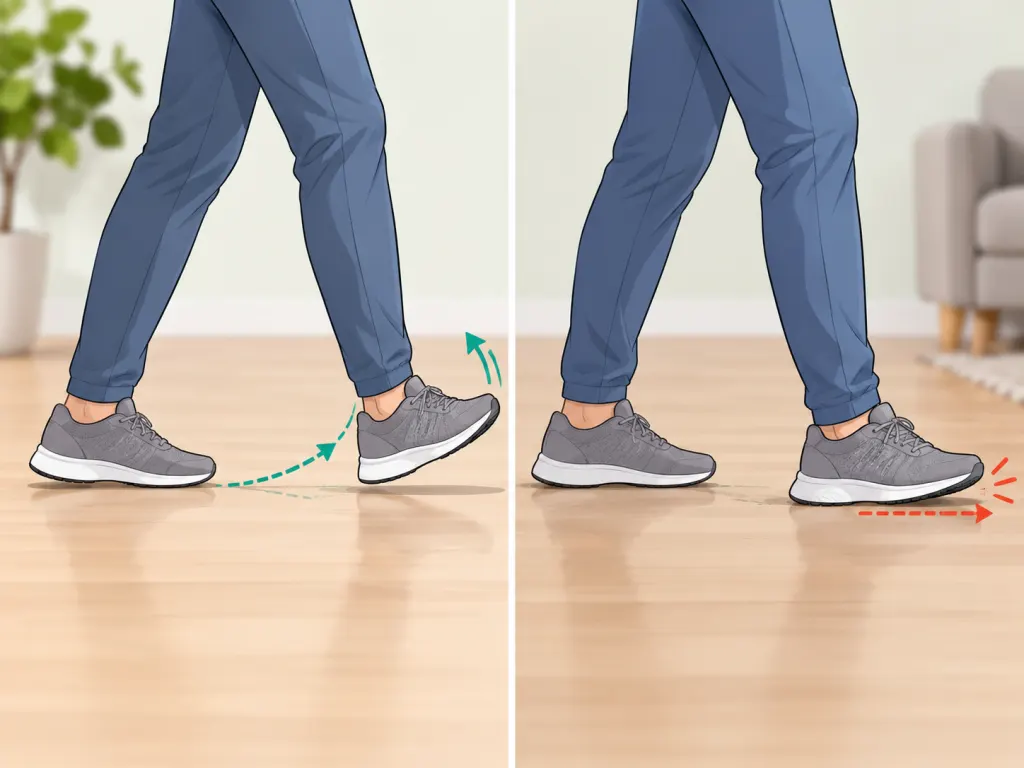
- Sudden trouble walking: steps become uncoordinated, uneven, or unusually difficult.
- Sudden loss of balance: the person feels off-balance or cannot steady herself normally.
- New lack of coordination: the foot misses the floor, trips repeatedly, or does not respond as expected.
- Calf, thigh, or buttock pain with walking: discomfort appears predictably with exertion and eases with rest.
- Leg heaviness or fatigue with activity: the muscles feel unusually heavy during walking or stairs.
- One leg that is colder, paler, or bluish: a noticeable temperature or color difference appears between legs.
- One-sided swelling, warmth, or calf soreness: especially after immobility, travel, illness, or surgery.
- Slow-healing sores or rest pain in the foot or leg: wounds linger, or pain appears even when not walking.
Signs 1 to 5 are the stroke-focused patterns
The first five items are the ones most closely connected to stroke recognition: sudden weakness, sudden numbness, sudden trouble walking, sudden balance loss, and sudden coordination problems. The CDC includes sudden numbness or weakness in the face, arm, or leg, especially on one side, and sudden trouble walking, dizziness, loss of balance, or lack of coordination among stroke symptoms https://www.cdc.gov/stroke/signs-symptoms/index.html. The word “sudden” matters. A leg that has slowly become stiff over months is a different story from a leg that abruptly will not move normally. A woman who suddenly drags one foot, cannot stand steadily, or feels one leg go numb should be treated as possibly having a stroke until emergency clinicians say otherwise.
How one-sided symptoms differ from ordinary aches
Everyday leg aches often have a context: gardening, a long walk, a new pair of shoes, a known knee problem, or sitting awkwardly. Stroke-type leg symptoms are more concerning when they appear out of nowhere, affect one side more than the other, or arrive with changes in the face, arm, speech, vision, thinking, or balance. A transient ischemic attack, often called a TIA, can look like a stroke and then clear within minutes; MedlinePlus explains that a TIA happens when blood supply to the brain is blocked briefly and that it raises later stroke risk https://medlineplus.gov/stroke.html. Because symptoms may fade, people sometimes wait. That waiting is risky. A cleared symptom still belongs in an urgent medical conversation.
Signs 6 and 7 may point to peripheral arterial disease
Calf, thigh, or buttock pain that arrives during walking and eases after rest can fit a pattern called claudication, often linked with peripheral arterial disease. MedlinePlus explains that peripheral arterial disease occurs when blood vessels outside the heart narrow, commonly reducing blood flow to the legs. Symptoms may include pain, numbness, achiness, or heaviness in leg muscles when walking or climbing stairs https://www.medlineplus.gov/peripheralarterialdisease.html. This is not the same as saying a walking cramp is a stroke. It is saying that leg artery disease and stroke can share underlying vascular risk factors, so recurring exertional leg symptoms deserve evaluation rather than repeated dismissal.
Signs 8 to 10 suggest circulation or clot concerns
A leg that is noticeably colder than the other, skin that looks pale or bluish, weak or absent pulses, and slow-healing sores are listed by MedlinePlus among possible peripheral arterial disease symptoms https://www.medlineplus.gov/peripheralarterialdisease.html. One-sided swelling, warmth, color change, and calf pain can also raise concern for deep vein thrombosis, a clot in a deep vein, which Mayo Clinic says most often occurs in the legs and may cause swelling, pain, cramping, soreness, skin color change, or warmth in the affected leg https://www.mayoclinic.org/diseases-conditions/deep-vein-thrombosis/symptoms-causes/syc-20352557. These symptoms are not classic stroke symptoms, but they are not trivial either.
When swelling needs urgent attention
Leg swelling has many causes, including injury, prolonged sitting or standing, fluid buildup, inflammation, vein problems, kidney problems, or heart-related issues. Mayo Clinic notes that unexplained leg swelling or pain with trouble breathing or chest pain needs emergency help, and that sudden unexplained swelling in one leg, especially if painful or paired with cool pale skin, should be evaluated right away https://www.mayoclinic.org/symptoms/leg-swelling/basics/causes/sym-20050910. For an older woman, the key questions are not “Is this definitely stroke?” but “Is this sudden, one-sided, neurological, or paired with breathing, chest, fainting, or severe symptoms?” Those answers guide how urgent the response should be.

A simple way to describe symptoms
Clear details help clinicians sort neurological symptoms from circulation symptoms, joint problems, spine issues, medication side effects, or injury. If symptoms are not an immediate 911 situation, write down what happened before the appointment. Note the exact time symptoms began, which leg was affected, whether the face or arm was involved, whether speech or vision changed, whether walking made the symptom worse, whether rest helped, whether the skin looked pale, bluish, red, or warm, and whether swelling was one-sided or both-sided. Also list recent travel, surgery, illness, falls, new prescriptions, and known conditions such as high blood pressure, diabetes, heart rhythm problems, or previous TIA. This is not to diagnose yourself; it is to make the clinical story less fuzzy.
What not to assume
Do not assume that a leg symptom is harmless because there is no chest pain. Do not assume that it is stroke because the leg feels odd. Do not wait for every classic symptom to appear before acting on sudden one-sided weakness, numbness, or walking trouble. And do not rely on online checklists to decide that a clot, artery problem, or neurological symptom is safe. The body can give overlapping signals. A circulation problem may show up as walking pain, cool skin, color change, or slow-healing sores; a possible stroke may show up as a sudden control or sensation problem; a clot may show up as swelling, calf soreness, warmth, or color change. The safest next step depends on timing, severity, and accompanying symptoms.
The bottom line for women over 60
The most stroke-relevant leg signs are sudden and neurological: one-sided weakness, numbness, trouble walking, balance loss, or poor coordination. Those belong in the same emergency category as face drooping, arm weakness, speech trouble, vision change, confusion, or sudden severe headache. Other leg symptoms, including exertional calf pain, heaviness, coldness, color change, swelling, warmth, rest pain, or slow-healing sores, are often circulation or clot clues rather than stroke clues. They still matter because vascular health is connected across the body. A calm response is not a passive response: call 911 for sudden stroke-pattern symptoms, seek urgent care for concerning one-sided swelling or breathing/chest symptoms, and schedule medical review for persistent or recurring leg changes.
Wrap-Up
For women over 60, leg symptoms are most concerning for stroke when they begin suddenly and affect movement, sensation, walking, balance, or coordination, especially on one side. Chronic or recurring leg pain with walking, coldness, color change, swelling, warmth, or slow-healing sores more often points toward circulation or clot concerns, but those patterns still deserve medical attention. The practical rule is simple: sudden neurological leg symptoms call for 911; persistent or recurring circulation-type leg changes call for a timely conversation with a qualified health professional.
Frequently Asked Questions
- → Can leg weakness be the only sign of a stroke?
Sudden weakness in one leg, especially on one side of the body, can be a stroke warning sign. It may also appear with face, arm, speech, vision, balance, or confusion symptoms. Because stroke symptoms can vary, sudden one-sided weakness should be treated as urgent.
- → Is calf pain while walking a stroke symptom?
Calf pain that appears predictably during walking and eases with rest is more often discussed as a possible circulation symptom, such as peripheral arterial disease, than as a classic stroke symptom. It still deserves medical review, especially if it is new, worsening, or limiting normal activity.
- → What leg symptoms should make someone call 911?
Call 911 for sudden one-sided leg weakness or numbness, sudden trouble walking, sudden loss of balance, or sudden poor coordination, especially with face drooping, arm weakness, speech trouble, vision changes, confusion, or a sudden severe headache.
- → Does one swollen leg mean a stroke is happening?
One swollen leg is not a classic stroke sign. It can have several causes, including a possible clot or circulation problem. Sudden unexplained one-sided swelling, swelling with pain, or swelling with chest pain, breathing trouble, fainting, or coughing blood needs urgent medical attention.
- → Why focus on women over 60?
Stroke risk increases with age, and women experience many strokes over their lifetimes because they often live longer. Older women may also have risk factors such as high blood pressure, diabetes, heart conditions, or previous TIA, making new symptoms worth taking seriously.
References
This content was developed and refined using reliable sources.
- https://www.cdc.gov/stroke/signs-symptoms/index.html
- https://www.cdc.gov/stroke/about/women-and-stroke.html
- https://medlineplus.gov/stroke.html
- https://www.medlineplus.gov/peripheralarterialdisease.html
- https://www.mayoclinic.org/diseases-conditions/deep-vein-thrombosis/symptoms-causes/syc-20352557
- https://www.mayoclinic.org/symptoms/leg-swelling/basics/causes/sym-20050910