 Save
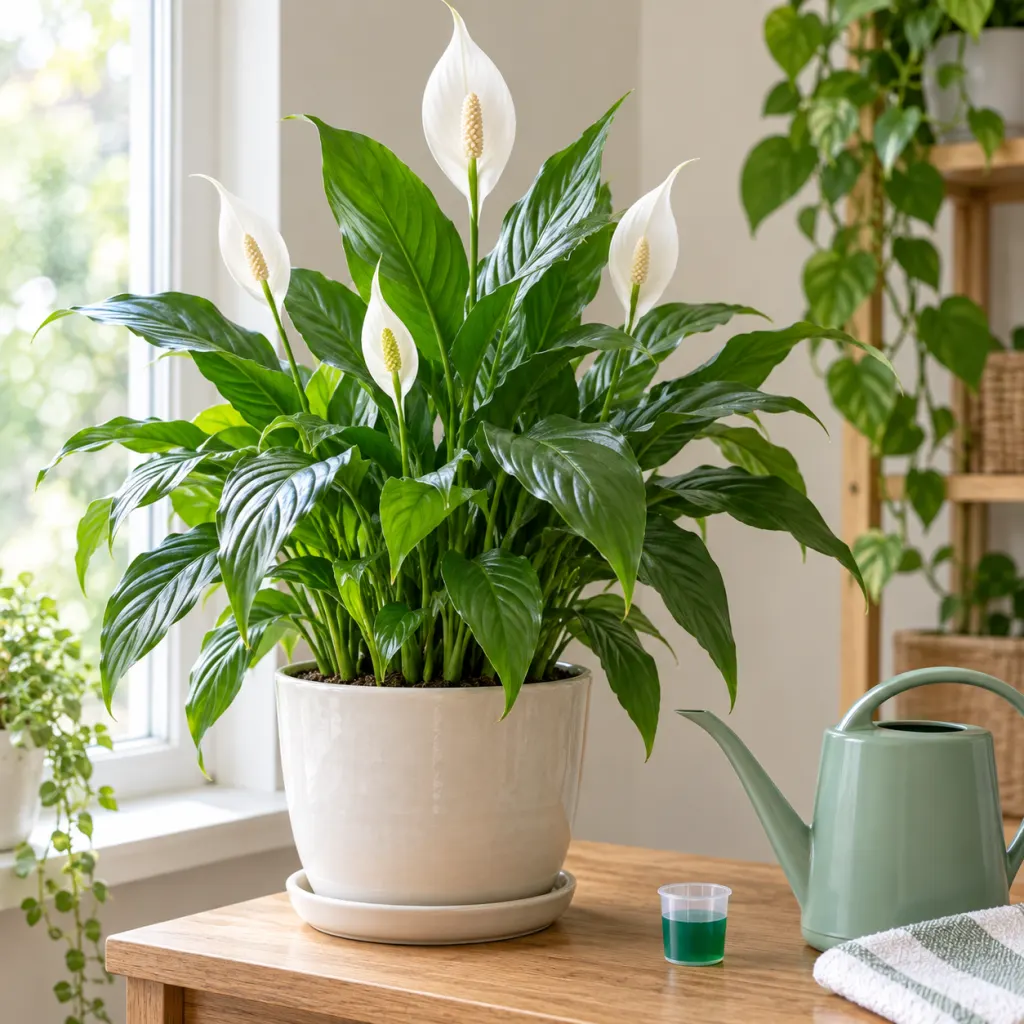
The one ingredient most likely to help a peace lily bloom year after year is a diluted complete houseplant fertilizer, used lightly and only during active growth. It will not force flowers by itself. Peace lilies also need enough indirect light, steady but not soggy moisture, warm room conditions, and a pot that drains well. Extension sources consistently warn that too much fertilizer can damage roots and leaf tips, so the winning move is restraint: a weak, regular feeding routine paired with better placement and watering.
Why the One-Ingredient Claim Needs a Careful Answer
Peace lilies are popular because they look generous even in ordinary rooms: glossy green leaves, upright growth, and white spathes that read like flowers. Botanically, that white sail is a spathe surrounding a central spadix, but most home growers simply call it a bloom. The key point is practical: a peace lily can flower repeatedly indoors, yet it does so when several conditions line up. North Carolina State Extension describes peace lily as a flowering houseplant that prefers shade to partial shade, warm conditions, moist but not soggy potting mix, and light fertilizing at one-quarter strength with flushing between fertilizer applications (NC State Extension).
That is why the promised pantry-style secret is too simple. A peace lily is not short on one magical household powder. It needs a small, usable supply of mineral elements in the root zone, and a complete houseplant fertilizer is the reliable way to provide that. Complete fertilizers are labeled with three numbers for nitrogen, phosphorus, and potassium, often called N-P-K. For an indoor peace lily, the useful answer is not a stronger fertilizer or a constant fertilizer. It is a weaker dose, applied at the right time, so the plant can support new leaves and flowers without salt buildup in the potting mix.
The Ingredient: Diluted Complete Houseplant Fertilizer
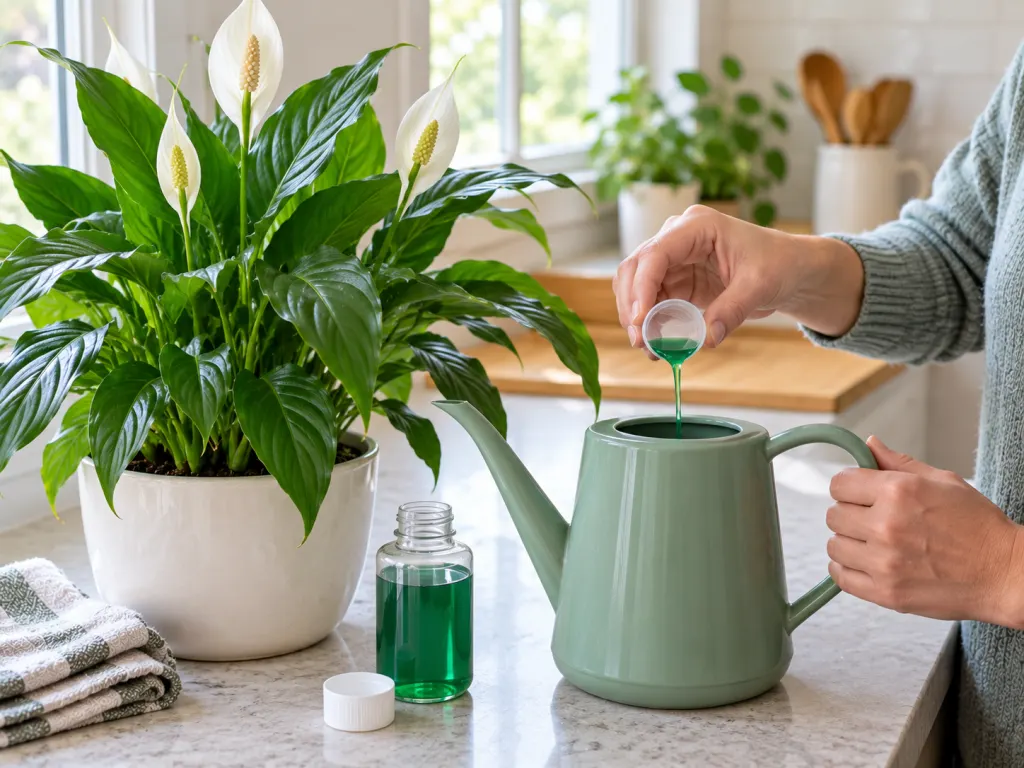
For a peace lily, the practical ingredient is a complete liquid houseplant fertilizer mixed weaker than the label's full rate. NC State Extension recommends fertilizing peace lilies at one-quarter of the recommended strength and flushing the soil between applications (NC State Extension). University of Illinois Extension gives similar guardrails for houseplants in general: fertilize only when plants are actively growing, do not over-fertilize, and never use a stronger mixture than recommended (Illinois Extension).
This matters because potted plants live in a limited volume of mix. Every application leaves dissolved salts behind unless water carries some of them out through the drainage holes. In a garden bed, rain and soil volume buffer mistakes. In a small indoor pot, a heavy hand shows up quickly as brown tips, stalled growth, or a plant that looks worse after feeding. The best bloom routine is closer to seasoning a dish than pouring on a sauce: enough to support growth, not enough to dominate the whole system.
A Simple Feeding Routine That Fits Peace Lilies
Use the fertilizer only while the plant is making new growth, most often from spring into early fall in a bright indoor spot. A conservative routine is to mix a complete liquid houseplant fertilizer at one-quarter to one-half strength and apply it after the potting mix has already been lightly moistened. Do not feed a wilted, dry plant first. Water it normally, let it recover, and feed another day. If the plant sits in a low-light corner, feed less often because growth is slower and the plant uses fewer nutrients.
A reasonable home schedule looks like this:
- Spring: begin lightly once new leaves appear and days are longer.
- Summer: feed every six to eight weeks for a peace lily in bright indirect light, or less often in lower light.
- Fall: taper as growth slows.
- Winter: skip fertilizer unless the plant is under strong grow lights and actively producing new leaves.
- Every few months: water thoroughly so extra water drains from the bottom, then empty the saucer.
Light Is the Real Bloom Trigger Many People Miss
Fertilizer can support bloom, but light is often the reason a peace lily refuses to flower. University of Georgia Extension lists light as the most important factor for indoor plant growth, because plants need light to make the sugars that support new tissue (University of Georgia Extension). Peace lilies tolerate lower light better than many houseplants, but tolerance is not the same as best flowering. In very dim spots, a plant may stay alive and leafy while producing few or no white spathes.
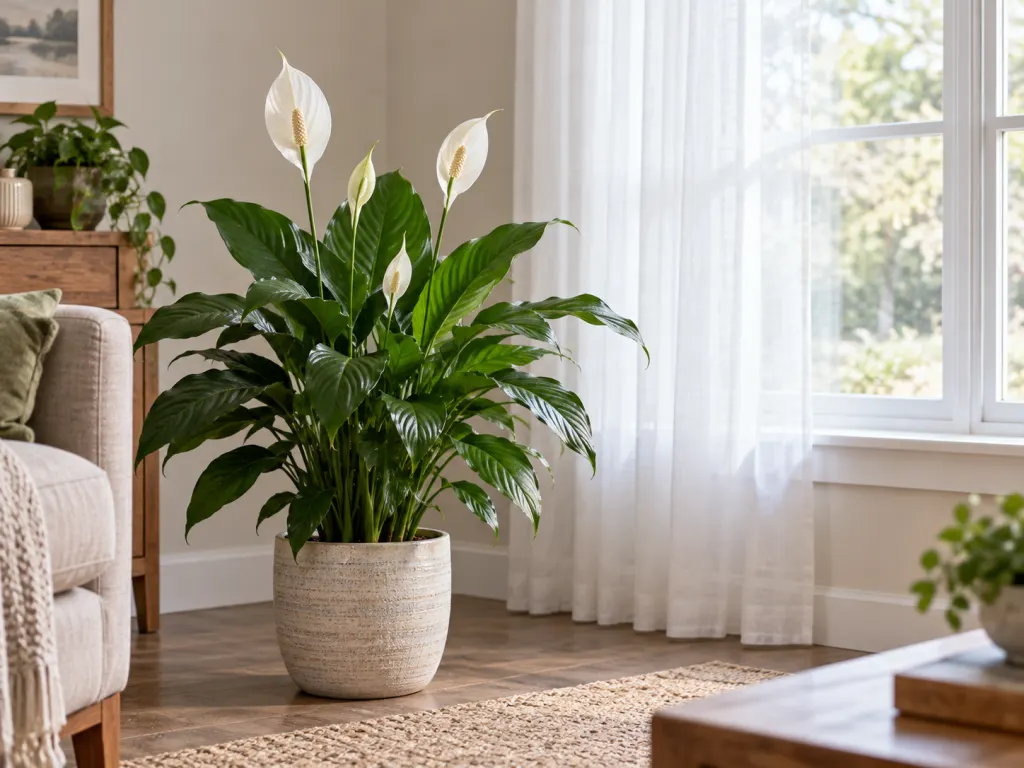
The best position is bright, indirect light. Think of an east-facing window with gentle morning light, a north window with clear open sky, or a spot a few feet back from a brighter south or west window. Direct hot sun can scorch leaves, while a dark room can leave the plant short on energy. University of Illinois Extension lists Spathiphyllum, also known as white flag, among low-light houseplants, but its lighting guide also explains that light intensity and duration shape plant performance indoors (Illinois Extension). For blooming, aim for the brighter end of what the plant can comfortably take.
Watering: Moist, Drained, and Never Soggy
The other half of bloom care is moisture control. Peace lilies like even moisture, but they dislike sitting in a waterlogged pot. NC State Extension says to keep the soil moist but not soggy and to let it dry between waterings (NC State Extension). That means the calendar is less useful than the pot itself. A small plant in a warm bright room may dry faster than a large plant in a cool low-light corner. A plastic pot holds water longer than terra cotta. A dense decorative outer pot can trap extra water if the inner pot is left standing in runoff.
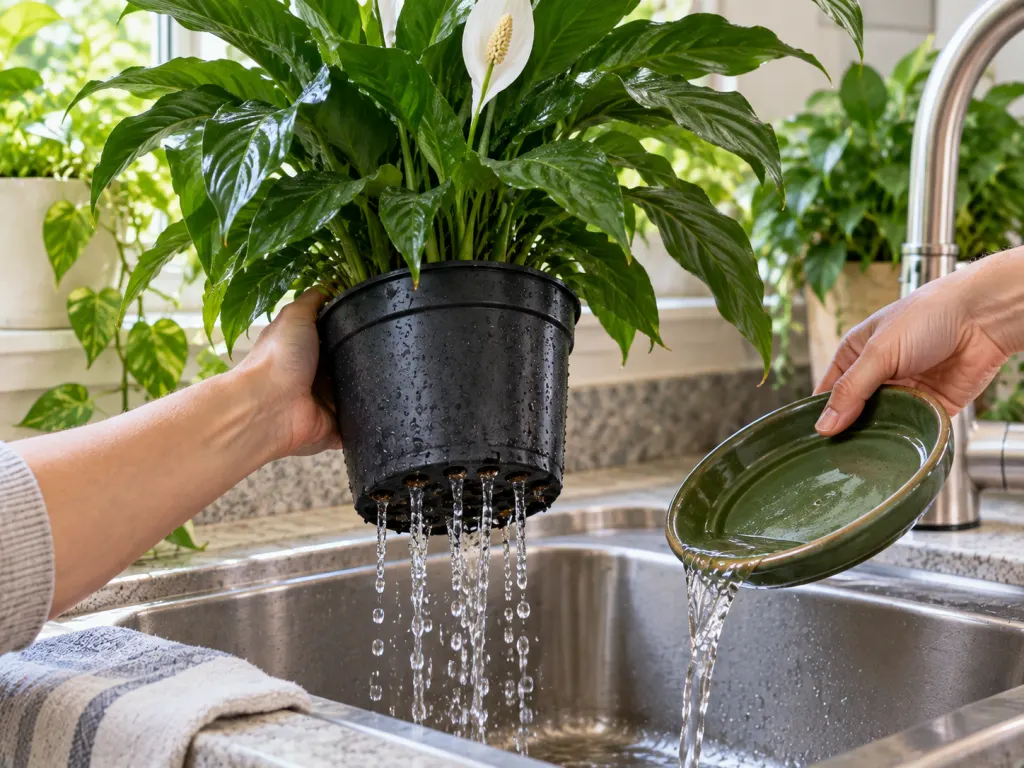
Check the top inch of potting mix with your finger. If it still feels damp, wait. If it feels lightly dry, water thoroughly until some water drains from the bottom, then empty the saucer. University of Minnesota Extension gives the same broad rule for spring houseplants: check the soil, water when the top inch feels dry, and empty saucers so roots are not sitting in water (University of Minnesota Extension). That pattern is much better than giving a small splash every day, which can leave the upper layer damp while the lower root zone behaves unpredictably.
How to Tell Whether Fertilizer Is Helping or Hurting
A peace lily that is benefiting from light feeding usually makes firm new leaves, holds a rich green color, and sends up occasional white spathes when the plant is mature and well placed. A peace lily receiving too much fertilizer may develop brown leaf tips or margins, especially if the pot is not flushed. NC State Extension specifically notes that over-fertilizing and salt buildup can burn the leaf tips and roots (NC State Extension). Illinois Extension also warns that too much fertilizer can burn roots and that pots should be leached every four to six months to help avoid salt buildup (Illinois Extension).
If the plant looks stressed after several feedings, stop feeding and reset the basics. Run plain room-temperature water through the potting mix until it drains freely, empty the saucer, and let the mix return to its normal moisture rhythm. Trim only leaves that are fully spent or badly browned. Then wait for new growth before feeding again. Peace lilies respond better to patient correction than to a new additive every week.
Why Pantry Powders Are a Risky Shortcut
Some home tips suggest starches, flours, peels, or sweet kitchen liquids as bloom boosters. The problem is not that every kitchen material is instantly harmful. The problem is that a pot indoors is a small, closed system. Powdery or sugary additions can clump, sour, attract fungus gnats, or change the potting mix in ways that are hard to predict. They also do not give the grower a clear N-P-K analysis, so it is hard to know what the plant is receiving. A labeled houseplant fertilizer is less romantic, but it is measurable.
When an article promises years of flowers from one spoonful of a pantry ingredient, the safer interpretation is this: peace lilies flower for years when their growing conditions are steady. The single ingredient worth adding is a diluted complete fertilizer, because it is designed for plants and can be measured. The rest of the result comes from light, water, pot size, and restraint. In plant care, repeatable beats mysterious.
Pot Size, Roots, and the Blooming Sweet Spot
Peace lilies often perform best when they are slightly pot-bound rather than swimming in a much larger container. NC State Extension notes that the plant should be kept somewhat pot-bound and repotted when necessary, often in late winter or early spring (NC State Extension). A pot that is much too large can hold more water than the roots can use, which makes watering harder to manage. A pot that is far too tight may dry too quickly and leave the plant unable to support new growth.
Repot only when there are clear signs: roots circling tightly, roots emerging from drainage holes, potting mix drying unusually fast, or a plant that tips over because the top is much larger than the pot. Move up just one pot size, usually about one to two inches wider in diameter. Use a well-drained indoor potting mix, settle the plant at the same depth, and water thoroughly. Then hold fertilizer for several weeks so the roots can adjust.
A Year-Round Bloom Plan
For long-term flowering, think in seasons rather than tricks. In spring, clean dust from leaves so they can use the increasing light, move the plant gradually into a brighter indirect spot if winter left it in a dim corner, and begin weak fertilizer only when new growth is visible. University of Minnesota Extension points out that dust can block light and that spring is a useful time to clean leaves, assess roots, and start gentle fertilizing as growth resumes (University of Minnesota Extension).
In summer, keep the pot evenly moist and protect the plant from direct hot sun. In fall, reduce fertilizer as days shorten. In winter, focus on placement, warmth, and watering judgment. Avoid cold drafts, heating vents, and sudden moves from a bright window to a dark corner. Illinois Extension notes that most foliage plants prefer moderate indoor temperatures and should be protected from extreme temperature changes, including hot or cold air blasts from vents and windows (Illinois Extension).
Common Reasons a Peace Lily Still Will Not Bloom
If a peace lily has leaves but no flowers, do not assume it needs more fertilizer. First, check age and light. Young plants may need time before they flower well, and plants in insufficient light often stay green without sending up spathes. Next, check the potting mix. If it is constantly wet, watering is likely the problem. If water runs straight through and the plant wilts again quickly, the root ball may be crowded or the mix may have become difficult to rewet evenly.
Also look at expectations. Peace lilies do not need to carry white spathes every week of the year to be doing well. The white spathes naturally age toward green and then decline. A good plant may bloom in waves, with quieter leafy periods between. Your goal is not nonstop display at any cost. It is a strong plant that has enough resources to bloom repeatedly over time.
The Bottom Line for Years of Flowers
The best one-ingredient answer is a diluted complete houseplant fertilizer, but it works only as part of a calm routine. Give the peace lily bright indirect light, water when the top inch of mix begins to dry, keep the pot drained, feed weakly during active growth, and flush the pot occasionally. Skip pantry powders and heavy feeding. A peace lily that is treated gently is more likely to reward you with repeated white spathes for years.
Wrap-Up
A peace lily blooms best when fertilizer is treated as support, not as a shortcut. The one useful ingredient is diluted complete houseplant fertilizer, applied lightly while the plant is actively growing. Bright indirect light, careful watering, a draining pot, and occasional flushing matter just as much. If the plant is leafy but not blooming, improve light and watering before adding more fertilizer.
Frequently Asked Questions
- → What is the one ingredient that helps a peace lily bloom?
The most reliable ingredient is a diluted complete houseplant fertilizer. Use it lightly during active growth, and do not rely on pantry powders or heavy homemade mixtures.
- → Can fertilizer make a peace lily bloom in a dark room?
No. Fertilizer supports growth, but light drives the plant's ability to make and use energy. Move the plant to bright indirect light before increasing fertilizer.
- → How often should I fertilize a peace lily?
A conservative routine is every six to eight weeks during active growth, mixed at a weak rate such as one-quarter strength for peace lilies. Feed less in low light and skip feeding when growth slows.
- → Why are the tips turning brown after I feed my peace lily?
Brown tips can appear when fertilizer salts build up or the mix dries too much between waterings. Pause feeding, flush the pot with plain water, empty the saucer, and restart later with a weaker mix.
- → Should I repot my peace lily to make it flower?
Repot only when the plant truly needs it, such as roots circling tightly or growing through drainage holes. A slightly pot-bound peace lily can still bloom well, while an oversized pot can stay wet too long.
References
This content was developed and refined using reliable sources.
- https://plants.ces.ncsu.edu/plants/spathiphyllum/common-name/peace-lily
- https://extension.illinois.edu/houseplants/care
- https://extension.illinois.edu/houseplants/lighting
- https://fieldreport.caes.uga.edu/publications/B1318/growing-indoor-plants-with-success
- https://extension.umn.edu/garden-and-home/yard-and-garden/gardening-in-minnesota/houseplants/spring-houseplant-care