 Save
A natural fabric softener can be as simple as using plain white vinegar in the rinse cycle. Vinegar is acidic, so it can help counter alkaline laundry residue, but it should be used carefully and never mixed with bleach or other cleaners. This guide shows you how to make a small batch, use it safely, and avoid common laundry mistakes.
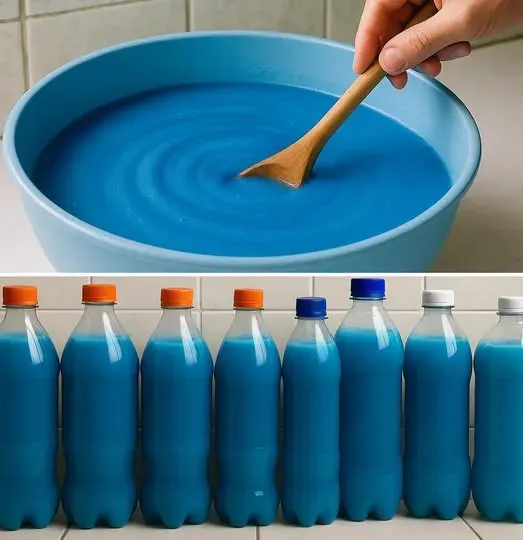
Step 1: The blue bottled mixture in the photograph
The blue color does not reveal what the pictured liquid contains. The plain-vinegar method below is a separate option, not a reconstruction of that blue mixture. Check the washer manufacturer’s instructions before using vinegar, because not every machine or material permits it. Never store laundry chemicals in beverage bottles like those shown: keep products in their original labeled containers, away from food and children. Do not infer that “natural” means suitable for every fabric or appliance.
Step 2: Choose plain distilled white vinegar
Use regular distilled white vinegar, not colored vinegar, concentrated cleaning vinegar, or a scented cleaner. Utah State University Extension notes that vinegar can be used as a softener in laundry, and University of Georgia Extension identifies white vinegar as a textile-care product that should still be checked for colorfastness. Keep the formula simple so you know exactly what is going into the rinse.
Step 3: Make a small unscented batch
Pour 1 cup of distilled white vinegar into a clean, clearly labeled bottle and add 1 cup of water if you want a gentler starter mix. Do not add baking soda, salt, bleach, ammonia, or detergent to the storage bottle. The EPA notes that some homemade cleaning chemicals can be useful, but they can also be unsafe or less effective when used the wrong way, so a simple one-ingredient rinse is easier to control.
Step 4: Test a hidden part of the fabric
Before using the rinse on a special garment, dab a tiny amount of the diluted vinegar mix on an inside seam and blot it with a white cloth. University of Georgia Extension advises checking colorfastness when using vinegar on textiles because some dyes can change color. If any color transfers or the fabric looks altered, skip the homemade softener for that item.
Use 1/4 to 1/2 cup for a regular load, placing it in the washer’s fabric softener dispenser or adding it when the final rinse begins. Do not pour vinegar directly onto clothes, and use the smaller amount for delicate fabrics or small loads. If your washer manual warns against vinegar or acidic additives, follow the manual instead.
Step 6: Keep vinegar away from bleach and ammonia
Never combine vinegar with chlorine bleach, ammonia, or other laundry chemicals. The CDC warns that bleach should not be mixed with other cleaners or disinfectants, and its chlorine information explains that household bleach can release chlorine gas when mixed with certain cleaning products. If you use bleach in a wash load, skip vinegar for that load entirely.
Step 7: Skip fragrance or add it outside the washer
For the safest homemade version, leave the softener unscented. If you want a light scent, add 1 or 2 drops of essential oil to a wool dryer ball after washing, then dry the load as usual; do not pour essential oil into the dispenser or onto clothing. NIH’s aromatherapy safety summary notes that essential oils can irritate skin or cause contact reactions, especially with prolonged contact.
Step 8: Store the bottle safely
Label the bottle clearly as vinegar laundry rinse and store it away from children, pets, bleach, and ammonia. The EPA’s Safer Choice FAQ says cleaning chemicals can be toxic when misused, and University of Georgia Extension recommends keeping laundry products out of children’s reach. Replace the batch if it looks cloudy, dirty, or contaminated.
Step 9: Seek help for strong fumes or irritation
If you accidentally mix products and notice strong fumes, coughing, eye irritation, or trouble breathing, leave the area and get fresh air right away. The CDC’s chlorine guidance says to get away, get clean, and get help after chlorine exposure; in the United States, call Poison Help at 1-800-222-1222 or emergency services if symptoms are serious. Rinse skin or eyes with water if product touches them.
Wrap-Up
The bottom line: make a plain vinegar rinse, keep it separate from bleach and other cleaners, test fabrics first, and use only a small amount in the final rinse. Skip fragrance if anyone in the household is sensitive to scents.
Frequently Asked Questions
- → Can I mix vinegar and baking soda for fabric softener?
It is better not to store them together as a bottled softener. Vinegar is acidic and baking soda is alkaline, so the mixture fizzes and loses much of the useful acidity you want for the rinse.
- → Will my laundry smell like vinegar?
The vinegar smell usually fades as the laundry rinses and dries. If you still notice it, use less next time and make sure you are adding it to the rinse cycle, not directly onto dry clothes.
- → Can I use this on towels?
Yes, you can try it on ordinary cotton towels in the rinse cycle. Avoid overusing any softener because too much residue can make towels feel less absorbent over time.
- → Can I put essential oil in the washer?
You can skip it completely, which is the safest choice for fragrance-sensitive households. If you use essential oil, use only a drop or two on a wool dryer ball after washing, not poured straight into the washer or onto fabric.
- → Is vinegar a disinfectant for laundry?
No. Treat this as a softening rinse, not a laundry sanitizer. For sanitizing laundry, use a product labeled for that purpose and follow the label directions.
- → Can I use cleaning vinegar instead of white vinegar?
Use regular distilled white vinegar unless a care label or appliance manual says otherwise. Stronger cleaning vinegar can be harsher than ordinary household vinegar and is not needed for this rinse.
References
This content was developed and refined using reliable sources.
- https://extension.usu.edu/archive/greener-cleaners
- https://site.extension.uga.edu/textiles/care/products
- https://www.cdc.gov/hygiene/about/cleaning-and-disinfecting-with-bleach.html
- https://www.cdc.gov/chemical-emergencies/chemical-fact-sheets/chlorine.html
- https://www.epa.gov/saferchoice/frequently-asked-questions-safer-choice
- https://www.ncbi.nlm.nih.gov/books/NBK65874/?report=reader